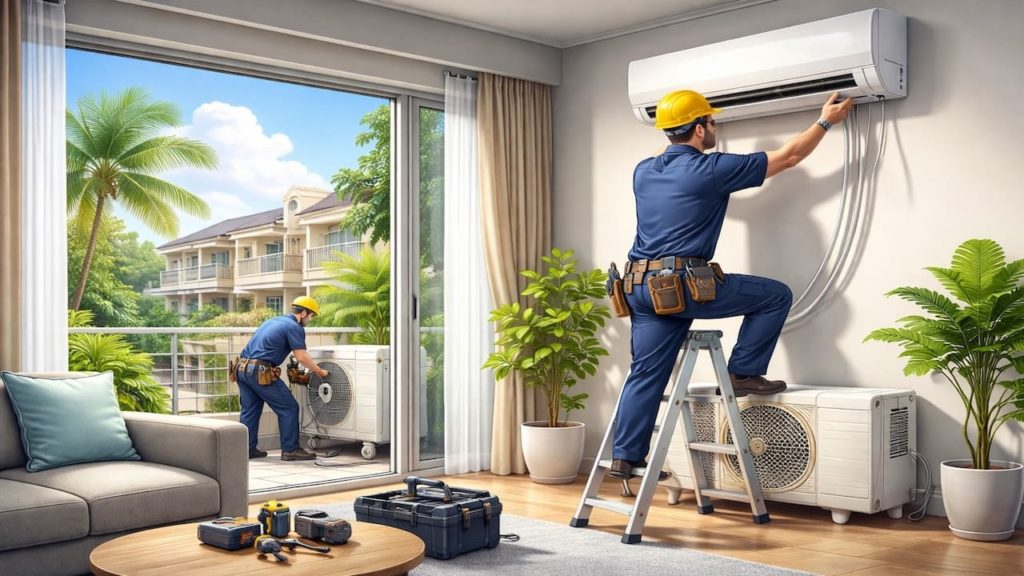
You’re planning an aircond installation because your condo or terrace house feels hot and sticky, especially in Malaysia’s humid afternoons and rainy season nights.
Weak cooling and later leaks often come from small install shortcuts, not from the aircond brand. The indoor unit, piping, drain, and wiring all have to match your room and local moisture.
In this guide, you’ll learn how to install an aircond the right way in Malaysias heat and humidity so you avoid water leaks, poor airflow, and repeat technician visits later.

Hi, I’m Ken. I write practical home guides for Malaysia—no fluff, just what works.
I hold a formal building design qualification and have spent about 20 years on job sites across hundreds of projects. My goal is simple: help you avoid costly mistakes with clear, safe steps—a quick way to decide what to do next.
1. Aircond installation: 5 tips
Choose install details that prevent future trouble
In Malaysia, moisture finds every gap—your drain slope and pipe insulation matter as much as the unit size. Small details now save you months of drip stress.
- Pick an indoor unit position that allows a clear drain slope to the outlet
- Use proper insulation thickness on both pipes to stop condensation sweating
- Make sure the drain pipe is secured and not bent upward anywhere
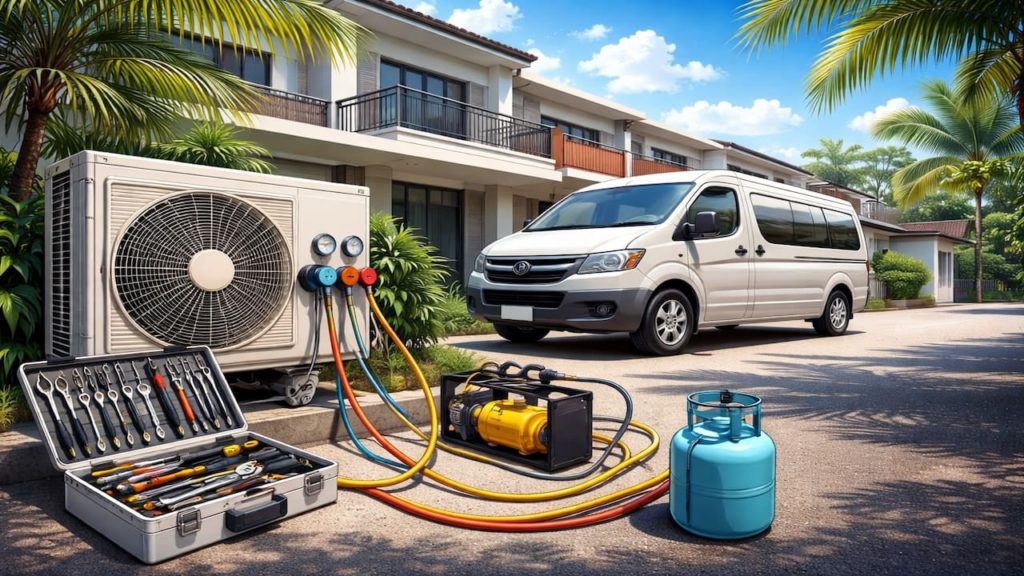
- Confirm the installer will vacuum the lines before releasing refrigerant
- Ask for a final test run that checks cooling and water drainage together
Some people say any installer can do it fast and it will be fine. Speed is not quality, and humid climates punish sloppy work quickly, so protect yourself.
2. Prevent leaks and weak cooling later
Lock the leak risks down before they drill
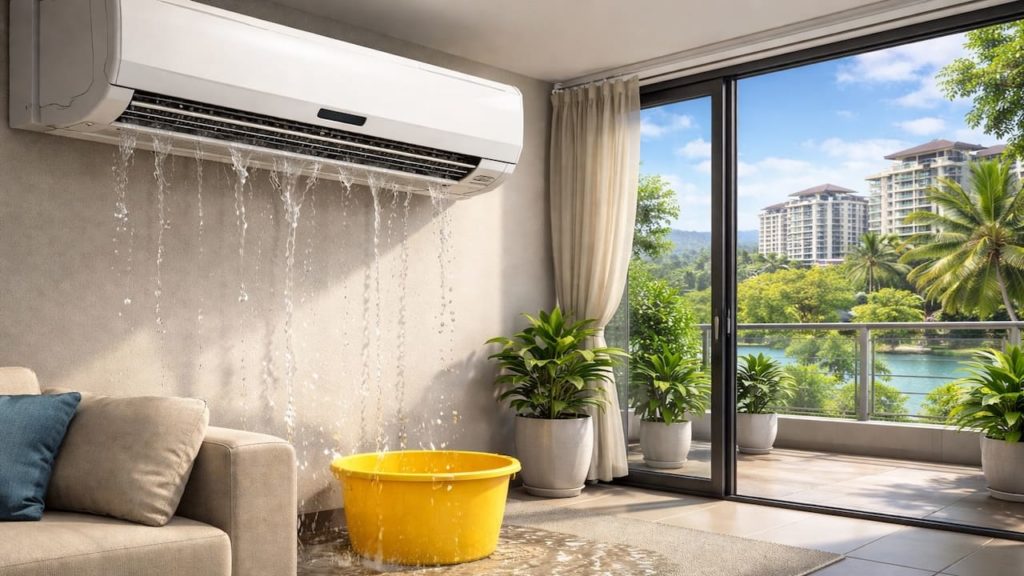
Leaks usually come from drain routing, bad insulation, or a loose flare joint. Weak cooling often comes from air leaks, wrong pipe work, or poor airflow design.
- Ask where the drain will exit and how they ensure continuous downward slope
- Confirm flare nuts will be torqued and checked with a leak test
- Check that pipe insulation will be sealed at joints with proper tape
- Make sure the outdoor unit has clear airflow and is not boxed in tight
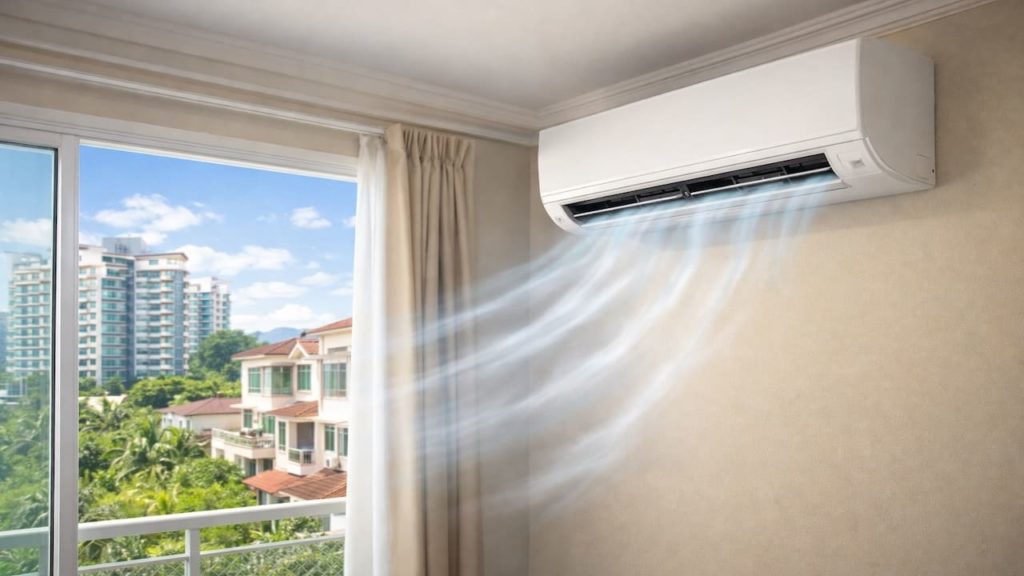
- Request the installer to show the temperature drop after 15 minutes
You might think leaks show up immediately. Sometimes they do, but many start after a few weeks of rain and daily humidity, so install-proofing is smarter.
3. Why installations fail in Malaysia homes
Humidity exposes bad drains and bad insulation fast
Condos often have limited drain routes and tight service ledges, while terrace houses may have long piping runs. Both make shortcuts tempting, and problems follow.
- Drain pipe is level or uphill so water backs up into the indoor tray
- Insulation is thin or gaps exist so pipes sweat and drip on the wall
- No vacuum is done so moisture stays in lines and cooling stays weak
- Outdoor unit placement traps heat and reduces efficiency in hot weather
- Wrong unit size causes short cycling and uncomfortable clammy rooms
Some owners blame the aircond model. The same unit performs fine when installed correctly, so focus on workmanship, not just the brand.
4. How to supervise the install without being annoying
Watch 3 checkpoints and document the finish
Most installers are busy and will move fast, so you need a simple checklist. In Malaysia’s high-rise condos, access rules also matter. Calm control.
- Before work confirm drain route pipe length and outdoor unit location
- During piping check insulation coverage and no sharp bends in the drain
- Before gas release confirm vacuum pump time and gauge reading
- During test run check water drainage by pouring a little water if safe
- After install take photos of piping drain outlet and outdoor bracket
You may feel like you are micromanaging. You are not, because you are protecting your walls and ceiling from moisture damage in a humid country.
5. FAQs
Q1. Should I oversize the aircond for faster cooling
No, oversizing can cool too fast and leave humidity behind, especially in Malaysia. A right-sized unit runs longer and feels drier.
Q2. How can I tell if the drain slope is correct
Ask the installer to show the drain path and confirm it always slopes down. In condos, hidden routing is common, so check the outlet location.
Q3. Is vacuuming the piping really necessary
Yes vacuuming is essential for strong cooling and long life. It removes air and moisture that can reduce performance and cause later issues.
Q4. What is a normal temperature difference after installation
It depends on room load, but you should feel a clear temperature drop within 10 to 20 minutes. Ask them to measure at the vent and compare to room air.
Q5. How soon do installation leaks usually appear
Some leaks show on day 1, but many appear after weeks when insulation loosens or drains clog. Monitor during the rainy season and act early.
Pro’s Tough Talk

I’ve been on site for 20+ years and handled hundreds of jobs, and I can tell you this: Malaysia heat plus humidity will expose a lazy aircond install fast. Condo, terrace house, doesn’t matter, water will find the weakest point.
3 causes. Drain slope is wrong, insulation is sloppy, or the pipes were never vacuumed. So do 3 steps. Before drilling, lock the drain route and slope. During the job, check insulation is continuous and sealed. Before they leave, confirm vacuum was done and test cooling plus drainage. Done.
Listen installation quality beats brand choice. A bad install is like a leaky roof, you can repaint forever and it still drips. And skipping vacuum is like cooking soup with dirty water, then acting shocked it tastes weird. When they say “can lah, same same,” throw a mental comeback, since when does “same same” stop water. Two classics: the owner who goes for lunch and returns to a wet wall, and the owner who buys a premium unit then hires the cheapest installer. Congrats. Don’t be that guy.
Summary
The best aircond installation prevents future leaks and weak cooling by getting the drain, insulation, vacuum, and airflow right from day 1. No drama.
If you see dripping, smell dampness, or feel clammy cooling, treat it as an installation or drainage issue first, not a “need gas” problem.
Confirm drain slope insulation vacuum then test. Today, save install photos and your checklist, then read the “technician visit” and “condensation” guides so you can spot shortcuts early and avoid repeat call-outs.