You turn on the aircond and notice a musty smell, or your nose feels irritated, even though the room looks clean.
That can happen when moisture stays inside the unit and dust becomes a surface for mold and slime to grow.
In this guide, you’ll learn 5 signs your aircond may have mold risk and what to do safely before it spreads or affects your comfort.

Hi, I’m Ken. I write practical home guides for Malaysia—no fluff, just what works.
I hold a formal building design qualification and have spent about 20 years on job sites across hundreds of projects. My goal is simple: help you avoid costly mistakes with clear, safe steps—a quick way to decide what to do next.
1. Aircond mold risk: 5 signs
The clearest warning is musty odor plus moisture symptoms that keep coming back.
Mold risk is not always visible—smell and patterns often show up first. Early signal.
- Musty or sour smell that appears within minutes of turning the aircond on
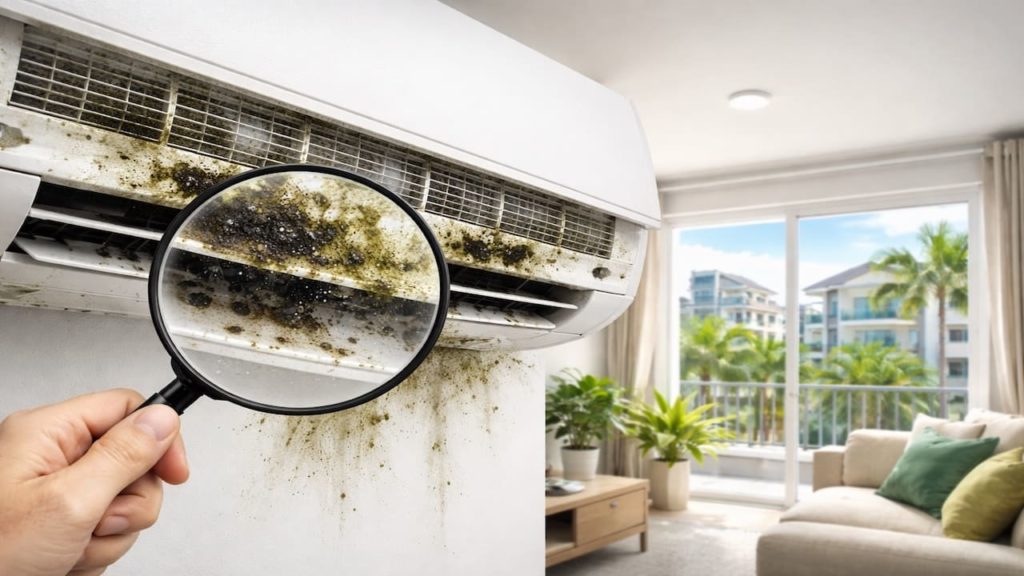
- Black specks or gray dust appearing near the vents or on nearby walls
- Watery dripping or damp marks near the indoor unit that were not there before
- Itchy nose, sneezing, or eye irritation that feels worse when the aircond runs
- Cooling feels weak and the air feels damp even at a low temperature setting
You might think the smell is “normal humidity,” but recurring odor and dampness are a sign to act. Ignore it and it usually gets worse.
2. When it’s time to clean
If the smell returns, cleaning should happen now not “someday when it gets really bad.”
Waiting lets slime build inside the drain path and on coils, and then simple cleaning becomes harder. Timing matters.
- Clean the filter immediately and dry it fully to remove the easiest source of odor
- Wipe the intake grille and louvers so dust is not feeding moisture buildup
- Run Fan mode for 30 minutes after cooling to dry the coil and reduce moisture
- Check drain flow by observing steady dripping during cooling and no backup signs
- Plan deeper cleaning if odor returns within 3 to 7 days after basic cleaning
Some people spray perfume or room freshener to hide the smell, but that only masks the problem while buildup grows. Clean first, then enjoy clean air.
3. Why mold grows in airconds
Mold grows when moisture stays on dusty surfaces inside a dark airflow path.
Airconds naturally create condensation, so the key is drainage and drying—if either fails, growth accelerates. Simple ecology.
- Dirty filters push dust deeper, giving mold more surface to cling to
- Clogged drains keep water in the tray and feed slime growth
- Running very cold settings can increase condensation and moisture retention
- Weak airflow keeps parts wet longer and reduces drying during operation
- Rare maintenance allows biofilm to form and become a recurring odor source
You might assume mold means the unit is old, but even new units can grow mold if moisture and dust stay trapped. Maintenance beats age.
4. How to reduce mold risk safely
The safest approach is clean what you can reach and dry the system without opening sealed parts.
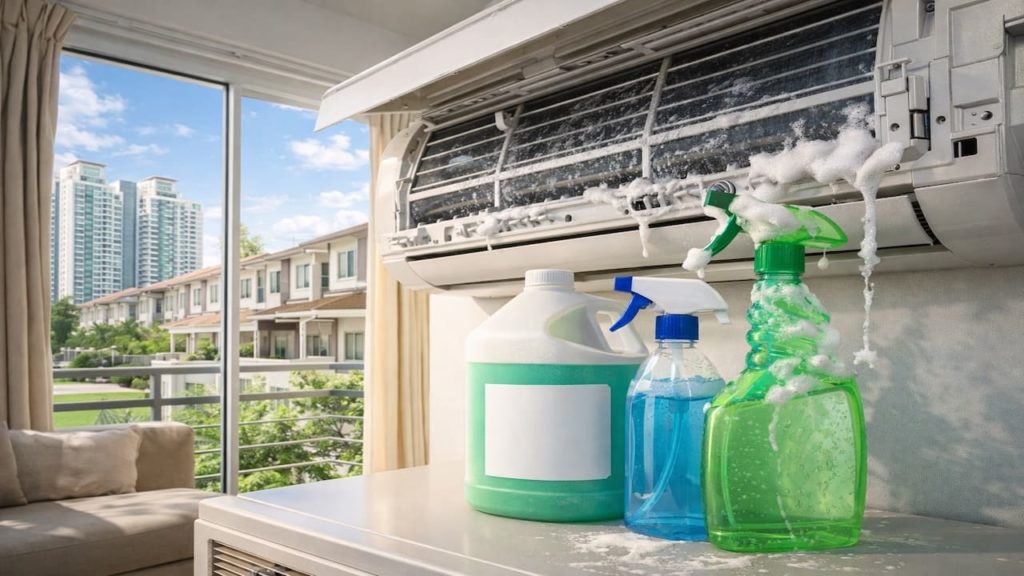
Do not spray random chemicals deep into the unit—residue can worsen smells and damage surfaces. Stay smart.
- Switch off the unit and clean the filter with mild soap then dry fully in shade
- Wipe visible louvers and the front cover using a damp cloth and gentle cleaner
- Run Fan mode after cooling sessions to reduce internal moisture buildup
- Keep the room reasonably ventilated when the unit is off so trapped humidity drops
- Call for professional cleaning if odor persists or you see slime and heavy staining
You may want to DIY everything, but deep coil cleaning is where many people cause leaks or damage. Do the safe steps, then hand off if needed.
5. FAQs
Q1. Is a musty smell always mold?
Not always but it is a strong warning sign because moisture and buildup can create odor even before visible mold appears. Treat it as a trigger to clean.
Q2. Can mold from aircond affect health?
It can irritate sensitive people and worsen allergies, especially with long daily use. If symptoms track closely with aircond runtime, clean and monitor quickly.
Q3. Will cleaning the filter remove the smell?
Sometimes, especially if the smell source is dust and moisture near the intake. If odor returns fast, deeper cleaning of coil and drain areas may be needed.
Q4. Should I use “anti-mold” sprays inside the unit?
Be careful, because sprays can leave residue and may not reach the real source. Use safe surface cleaning and drying first, then consider professional cleaning.
Q5. When should I call a technician for cleaning?
Call if the smell returns within a week after filter cleaning, or if you see slime, heavy stains, or persistent dripping issues. A full service clean may be required.
Pro’s Tough Talk

I’ve been on site for 20+ years and handled hundreds of jobs, and the “mold smell” complaint is one of the most common. People think it’s just humidity. Then they live with it for months. Bad habit.
It breaks into 3 buckets: dust feeds it, moisture keeps it alive, and weak airflow lets it stay wet. Steps are 3 too: clean the filter, wipe the intake and louvers, then dry the coil with Fan mode after cooling. Simple.
A moldy aircond is like a wet towel left in a gym bag, and like a fridge that never gets wiped. One comment: stop masking it with perfume like it’s a magic spell. Two aruaru: people run super cold all day, and people never check the drain until water hits the wall. Clean it when the first smell shows up or you’ll keep paying to breathe swamp air.
Summary
Mold risk signs include musty odor, black specks, damp marks, irritation symptoms, and humid weak cooling. Patterns matter more than one-off moments.
If the smell returns quickly after basic cleaning, or if dripping and dampness continue, that is the trigger to schedule deeper cleaning. No waiting.
Clean the filter, wipe what you can reach, and run Fan mode to dry the unit, then move to related reads on filter mistakes and maintenance routines. Stop mold early and keep the air fresh with less effort.