You’re stuck choosing between repairing your aircond or replacing it, because the unit still runs but comfort keeps slipping.
In Malaysia, high humidity and long cooling hours in condos and terrace houses turn small faults into repeat costs, especially during rainy season.
In this guide, you’ll learn how to decide repair vs replace with 5 simple questions so you stop guessing, protect your budget, and avoid endless delays.

Hi, I’m Ken. I write practical home guides for Malaysia—no fluff, just what works.
I hold a formal building design qualification and have spent about 20 years on job sites across hundreds of projects. My goal is simple: help you avoid costly mistakes with clear, safe steps—a quick way to decide what to do next.
1. Aircond repair vs replace: 5 questions
Answer 5 questions before you approve any repair
Malaysia heat makes quick fixes tempting, but the right questions expose whether you are paying for a real solution— or buying time for a failing unit. Clarity.
- How old is the unit and is this the first major repair
- Is cooling weak because of airflow dirt or suspected refrigerant leak
- Did the problem return within 30 to 90 days after the last service
- Is the outdoor unit accessible and ventilated on your condo ledge or yard
- Will the technician provide a written scope with parts warranty and timeline
Some people say any repair is cheaper than replacement. Not always, because repeat visits stack up and downtime in humid weather costs comfort fast.
2. Decide with simple cost logic
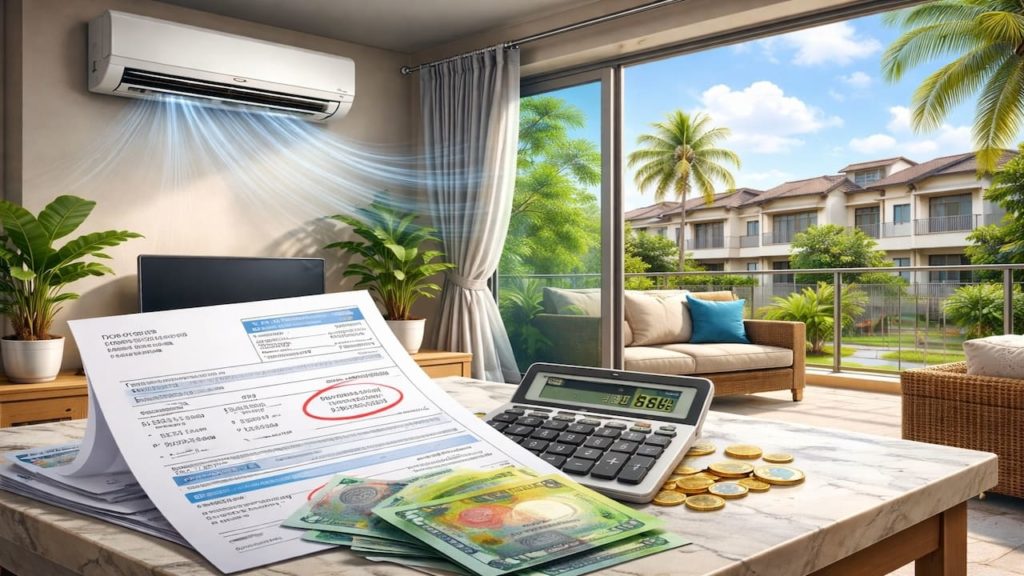
Compare 1 year cost not today price
A cheap repair that repeats is expensive, while a higher one-time fix can be reasonable. Malaysia usage is heavy, so yearly logic wins. Simple.
- Add the quoted repair plus at least 1 follow up visit buffer
- Estimate power cost difference if the unit is struggling and running nonstop
- Count lost comfort days if parts take time or the technician keeps rescheduling
- Include cleaning and drain work if humidity and smell keep coming back
- Compare to replacement cost minus any trade in or installation bundle offers
You might feel this is too much math. It is basic budgeting, and it prevents the common trap of paying small amounts every month.
3. Why repairs become endless in Malaysia homes
Endless repairs happen when the root cause is never proven
In condos and terrace houses, issues like poor drainage, airflow restriction, and vibration can mimic bigger failures. Misdiagnosis is common. Reality.
- Gas top up done without leak finding so symptoms return
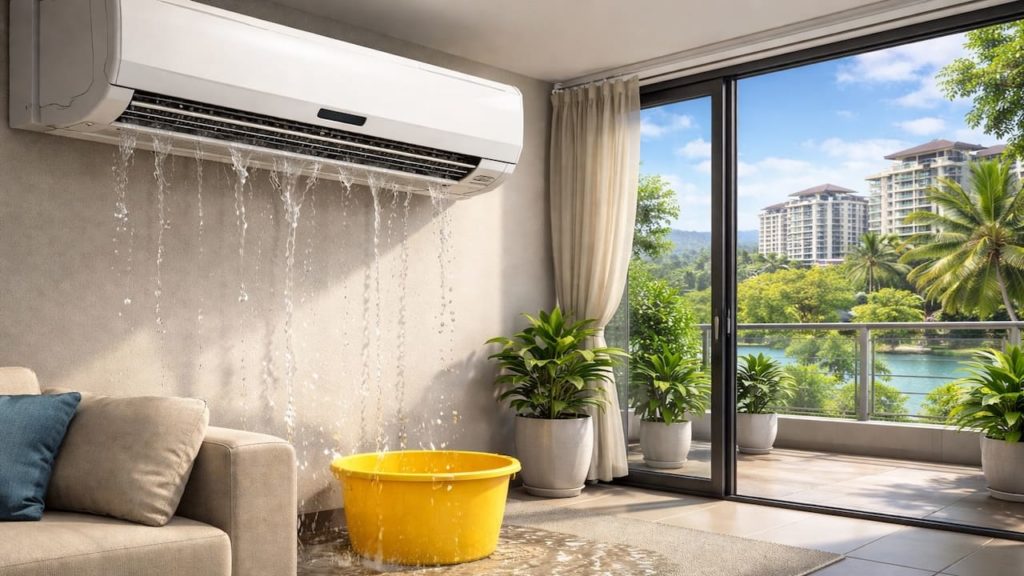
- Dirty blower wheel and drain slime left behind so smell and dampness repeat
- Oversized or undersized BTU causing short cycling and sticky comfort
- Outdoor unit trapped in hot air on tight ledges so performance drops daily
- Electrical parts stressed by storms and power trips then failing intermittently
Some people blame the brand or the technician immediately. The structure is the issue, so demand proof steps and stop paying for guesses.
4. How to decide and act without wasting money
Choose repair when the fix is clear and limited
Replacement is not always the answer, but neither is endless patching. In Malaysia humidity, you want stable cooling and stable timelines. Decision.
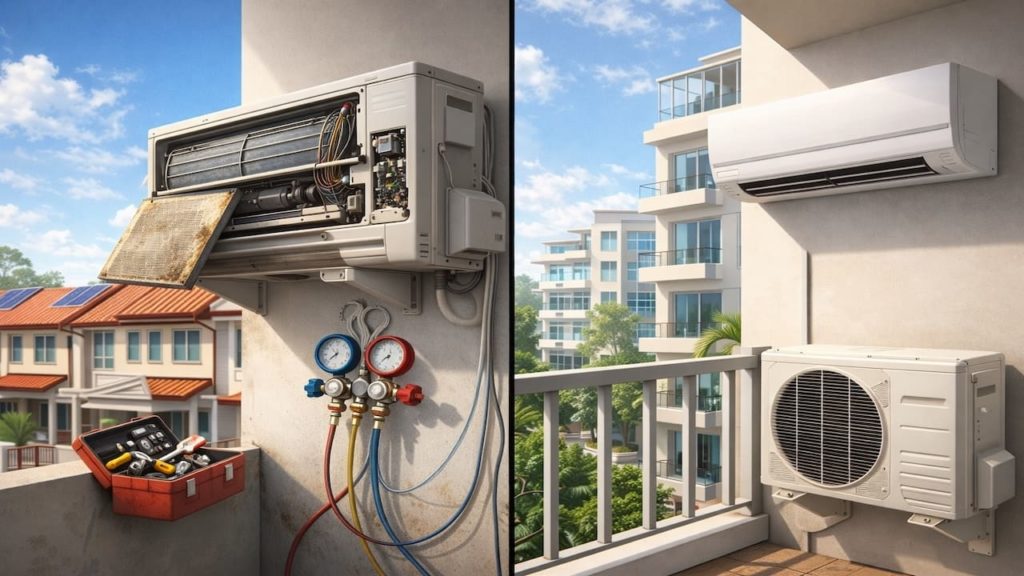
- Repair if the unit is younger and the fault is isolated with a clear part
- Replace if you have repeat gas top ups or recurring major leaks
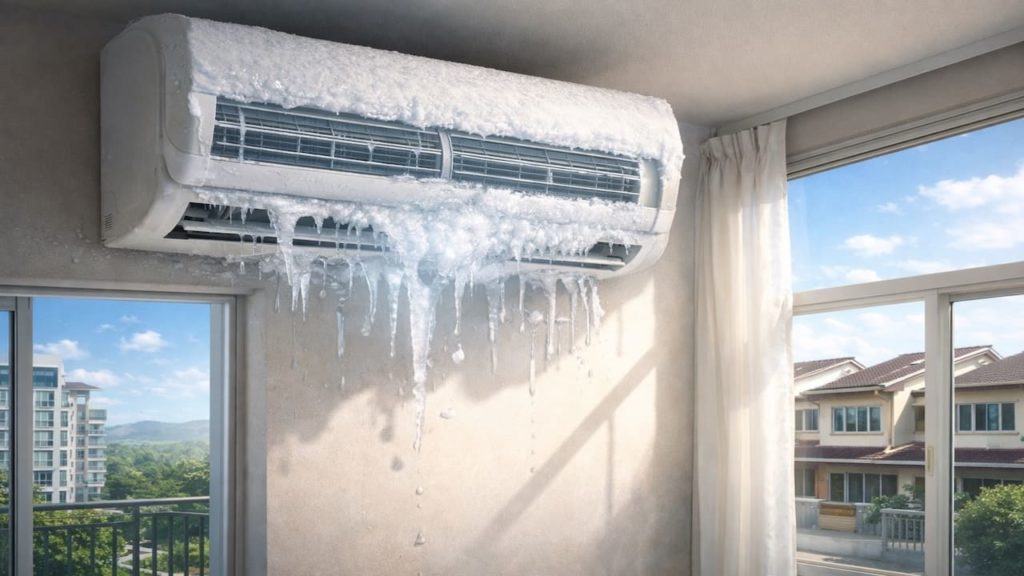
- Repair if airflow and drainage work fixes comfort and stops icing
- Replace if downtime and repeat call outs are disrupting sleep and work
- Before approving ask for the final test checklist and exact completion time
You may worry replacement is always costly. A controlled replacement can be cheaper than a year of repeated repairs, so decide with the same logic every time.
5. FAQs
Q1. What is a fair rule of thumb for repair vs replace
If the repair cost is low and the issue is proven, repair can make sense. If repairs keep repeating, replacement usually wins over a 1 year view.
Q2. Is it okay to keep doing gas top ups
No because gas does not disappear without a leak. If topping up is suggested again, ask for leak finding and repair before any refill.
Q3. How do I avoid getting overcharged for a replacement
Ask for a written scope that lists unit capacity, piping work, and warranty—then compare like for like. Also confirm what is included for drain routing and bracket work.
Q4. What signs mean I should stop using the unit and call
Stop if you see icing, smell burning, hear loud buzzing, or the breaker trips. Those signs can turn a small issue into a big compressor problem.
Q5. Can a bad installation make a new unit feel weak
Yes, poor drainage, trapped outdoor airflow, and sloppy piping can ruin performance. Installation quality matters as much as the unit choice.
Pro’s Tough Talk

I’ve been on site for 20+ years and handled hundreds of jobs, and “repair or replace” is where Malaysia homeowners get quietly drained. Humidity in condos and terrace houses punishes lazy decisions.
3 causes. People approve vague repairs, they accept gas top ups with no proof, and they ignore airflow and drainage like it is optional. 3 steps. Ask for a proven cause, ask for a written scope and warranty, then compare the 1 year total cost to replacement.
Listen Paying for guesses is paying twice. A failing unit is like a leaky bucket, you can keep pouring money and still stay thirsty. And a bad install is like shoes that never fit, every step annoys you. And when someone says “just try first,” come on, what is this, a lottery ticket. Two classics: rainy season starts and the unit suddenly smells like a wet towel, and the person who keeps topping up gas then acts surprised next month. Keep guessing and your wallet will learn the lesson for you.
Summary
Repair vs replace gets easy when you force a proven cause, a written scope, and a 1 year cost comparison in Malaysia’s heavy usage conditions.
If the fix is clear and limited, repair is smart, but if gas top ups repeat, downtime grows, or comfort stays sticky, replacement becomes the cheaper path.
Prove scope compare then decide—today, write down the 5 questions and send them before any visit, then read “gas leak signs” and “refrigerant myths” to avoid the most expensive misunderstandings.