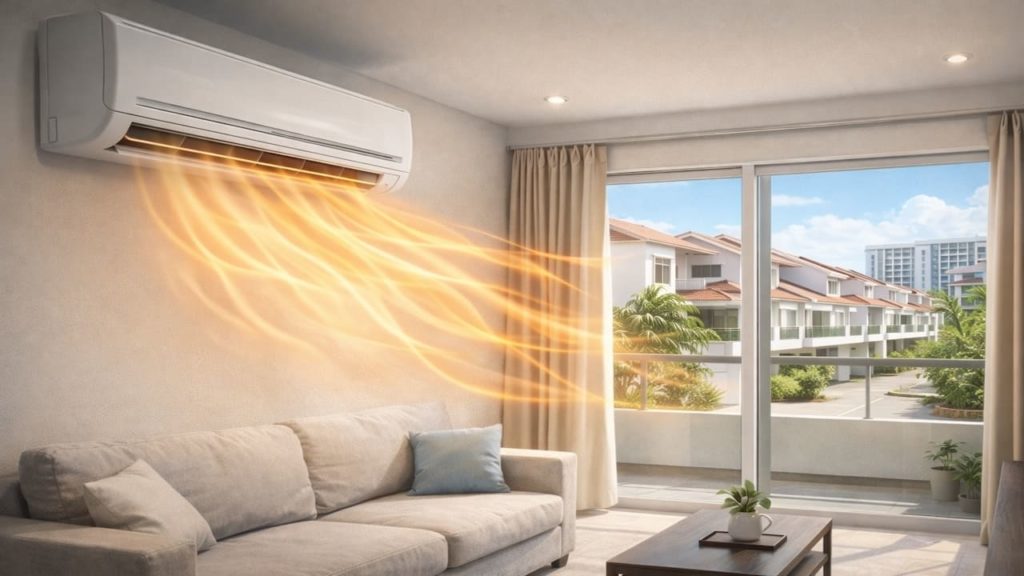
Your aircond is on, the fan is blowing, but the air feels warm like someone swapped cooling for a hair dryer.
This can come from simple things like the wrong mode or poor airflow, but it can also point to icing, a bad capacitor, or low refrigerant.
In this guide, you’ll learn how to identify the cause fast by checking 5 common issues, spotting warning signs, and knowing when to call help.

Hi, I’m Ken. I write practical home guides for Malaysia—no fluff, just what works.
I hold a formal building design qualification and have spent about 20 years on job sites across hundreds of projects. My goal is simple: help you avoid costly mistakes with clear, safe steps—a quick way to decide what to do next.
1. Aircond blowing warm air: 5 common causes
Warm air almost always comes from one of 5 common causes and the clues are usually visible.
Start with the easy checks—most warm-air complaints are settings or airflow, not a sudden “major failure.” Quick truth.
- Wrong mode like Fan or Dry so the unit moves air but does not cool it
- Dirty filter or blocked intake so airflow drops and cooling cannot reach the room
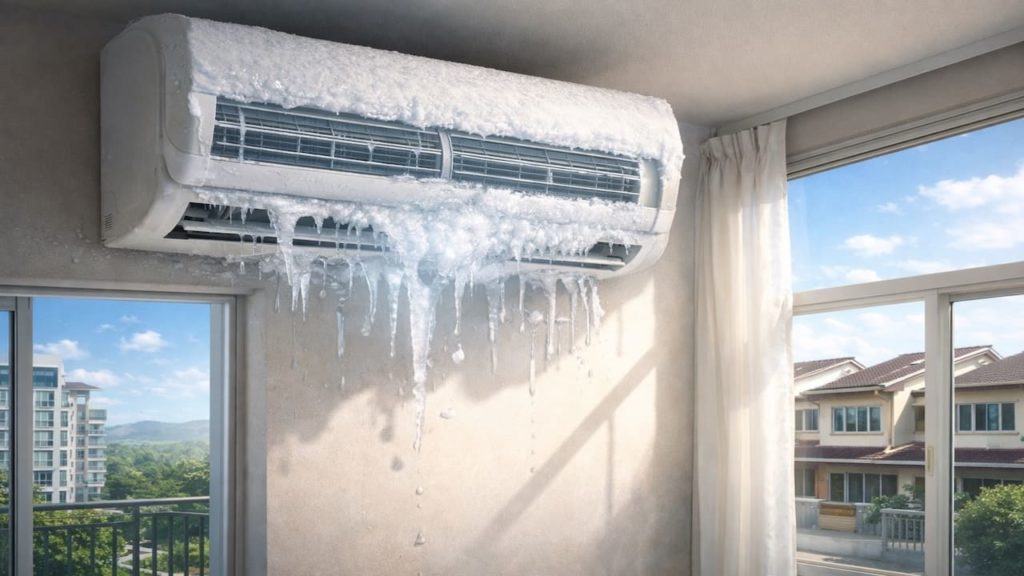
- Iced coil so air cannot pass through and the unit warms after a short cool start
- Outdoor unit problem so heat cannot be released and indoor air stays warm
- Low refrigerant or a leak so cooling power fades and gets worse over time
You might think “it must be gas” because that is the popular answer, but many cases are fixed by settings and airflow first. Check the 5 causes in order, then decide.
2. Find the cause before you call a technician
Do a 10 minute diagnosis so you pay for repair not guessing and you avoid repeat visits.
Good technicians work faster when you give clear symptoms—your notes help them skip the obvious and test the right parts. Less hassle.
- Confirm Cool mode and set 22 to 24°C for a short test to rule out a simple setting mistake
- Feel airflow strength at the indoor unit because weak airflow often means a filter or blower issue
- Check for ice or heavy condensation around the indoor coil area and stop if you see frosting
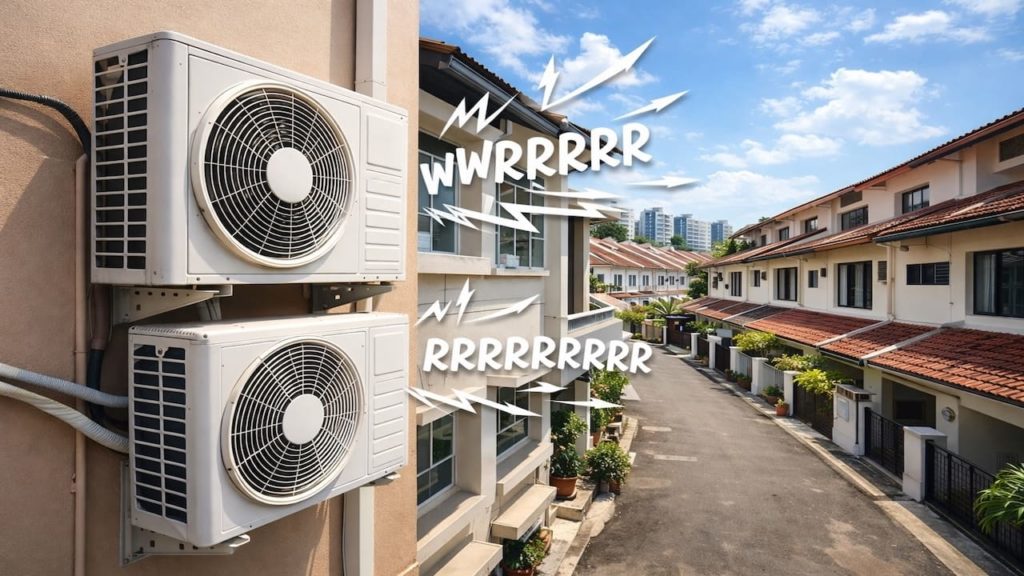
- Listen and look outside to confirm the outdoor fan runs and hot air is being pushed out
- Write down the pattern like cool then warm or always warm because timing points to specific causes
Some people call immediately because they fear damage, but a fast diagnosis is safer than random button smashing. Find the cause first, then choose the next step.
3. Why an aircond can blow warm air
Cooling fails when heat cannot move through the system so the air you feel never gets chilled.
An aircond is a chain of heat transfer—if one link breaks, the room stays hot even while the fan keeps spinning. Physics.
- Airflow restriction stops the coil from exchanging heat so the room never cools properly
- Coil icing blocks air and the system collapses after brief cooling
- Outdoor heat rejection failure traps heat so indoor air feels warm and humid
- Control or sensor errors can stop the compressor at the wrong time
- Refrigerant loss reduces cooling capacity and often signals a leak that needs fixing
You might assume warm air means the compressor is dead, but many warm-air cases come from airflow and icing that are reversible. Diagnose the heat path, then act.
4. How to fix warm air safely at home
Fix warm air by restoring airflow and preventing icing first before you touch anything technical.
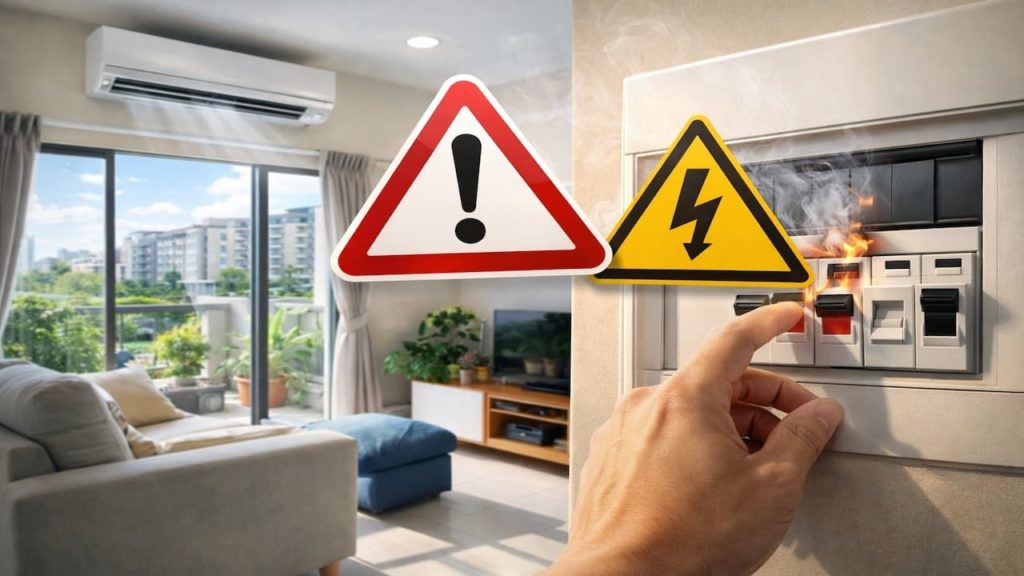
Keep it safe—if you smell burning, hear loud electrical buzzing, or the breaker trips, stop and get help. No hero moves.
- Switch off the unit for 20 to 30 minutes if you suspect icing then run Fan mode to dry the coil
- Wash the filter and dry it fully then test cooling again for 10 minutes
- Clear the indoor intake and outlet so air can circulate without furniture or curtains blocking it
- Clear space around the outdoor unit so it can push heat out without obstruction
- If warm air continues record symptoms and request a proper inspection for leaks or control faults
Some people keep lowering the set temperature and hope it “kicks in,” but that can worsen icing and spike your bill. Do the safe steps, then escalate with facts.
5. FAQs
Q1. Should I turn the aircond off right away?
Turn it off if you see ice or smell burning because continuing can damage parts. If it is only weak cooling, do the quick checks first.
Q2. Why does it cool for a few minutes then blow warm air?
This pattern often points to coil icing, poor airflow, or a sensor issue. It can also happen when the outdoor unit cannot release heat well.
Q3. Is a dirty filter really enough to cause warm air?
Yes, because airflow can drop fast and the coil cannot do its job. Cleaning the filter is often the fastest win.
Q4. Does warm air always mean low refrigerant?
No, and topping up without finding a leak can waste money. Rule out settings, airflow, and icing before you assume refrigerant loss.
Q5. When is it worth calling a technician?
Call if you confirmed Cool mode, cleaned the filter, and the unit still blows warm after a proper test. Call sooner if icing repeats or electrical smells appear.
Pro’s Tough Talk

I’ve been on site for 20+ years and dealt with hundreds of jobs, and warm air is usually a basic miss hiding in plain sight. Heat makes people panic. Normal.
Causes break into 3 buckets: airflow is choked, the outdoor unit can’t dump heat, or the coil ices up and blocks everything. Steps are 3 too: power off, wash the filter, clear outdoor airflow and test again. Fast.
An aircond with bad airflow is like trying to breathe through a stuffed nose, and like drinking iced coffee through a clogged straw. And come on, did you buy it to run a home sauna? Two aruaru: Fan mode by mistake, and a filter so dirty it looks like a floor mat. Do the basics before you pay for guesswork or you’ll fund your own “premium indoor summer” again.
Summary
Warm air usually comes from settings, airflow problems, icing, outdoor unit issues, or refrigerant loss. Checking in that order saves time.
If you see repeated icing, burning smell, loud electrical noise, or breaker trips, that is your line to stop and escalate. Safety first.
Spend 10 minutes to test Cool mode, clean the filter, and observe the outdoor unit, then write down the pattern for service. Find the cause before you book the visit and you will move faster and pay less.