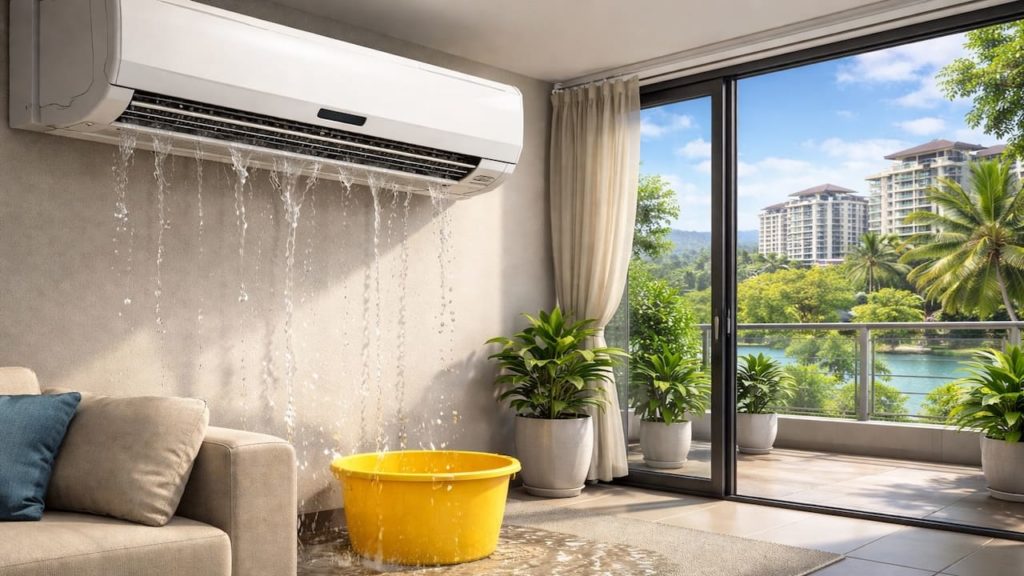
Your aircond is running, but water is dripping inside, and you notice damp marks on the wall or a small puddle forming below the unit.
Sometimes it is a simple drain blockage, but it can also be airflow, icing, or installation issues that push water the wrong way.
In this guide, you’ll learn how to stop indoor leaks before damage spreads by checking the most common causes and doing safe quick checks at home.

Hi, I’m Ken. I write practical home guides for Malaysia—no fluff, just what works.
I hold a formal building design qualification and have spent about 20 years on job sites across hundreds of projects. My goal is simple: help you avoid costly mistakes with clear, safe steps—a quick way to decide what to do next.
1. Aircond leaking indoors: 5 causes
Indoor leaking usually comes from drainage overflow so finding the exact source is the fastest way to protect your wall and ceiling.
Most leaks start small, then grow when humidity stays high—water damage spreads. Fast clue.
- Clogged drain pipe or tray so water backs up and spills from the indoor unit
- Dirty filter reducing airflow which can cause coil icing and messy melt water later
- Loose or cracked drain connection letting water drip inside instead of outside
- Poor insulation on piping so warm humid air creates sweating and drips on surfaces
- Wrong tilt or installation alignment so the tray cannot drain smoothly
You might think it is “just condensation” and keep running it, but indoor dripping is a warning sign and staining can become permanent. Stop the leak, then cool again.
2. 【Prevent ceiling drips with quick checks】
Quick checks can prevent ceiling drips because most indoor leaks are visible within minutes when you know what to look for.
Start simple and stay calm—protect the area first. No mess.
- Turn the unit off and place towels or a container under the wet spot to prevent spreading
- Check the filter and clean it if dusty because weak airflow can trigger icing and overflow
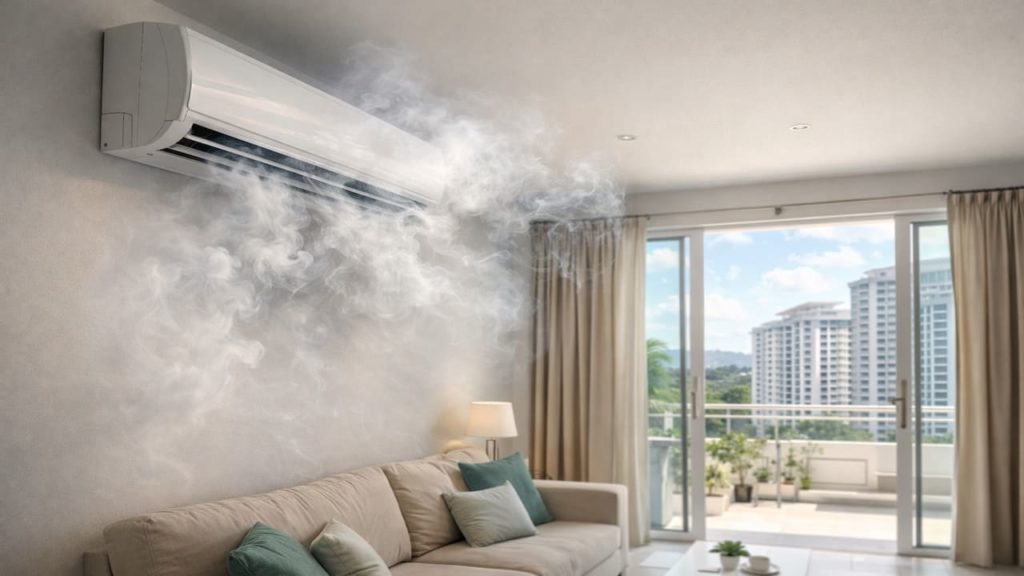
- Look for ice or frost signs and wait for thawing if you suspect icing caused the leak
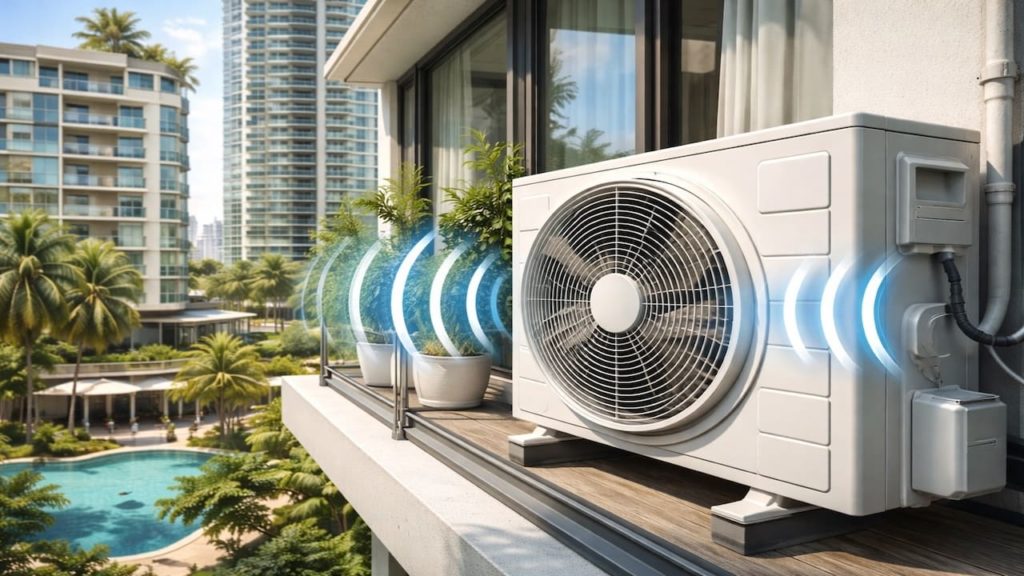
- Find the drain outlet outside and confirm water is actually dripping during cooling
- Inspect for new damp marks above the unit because ceiling moisture can spread sideways
You may worry that turning it off makes the room worse, but running through a leak risks bigger repairs and hidden mold. Do the checks, then decide the next step.
3. Why indoor leaks happen
Indoor leaks happen when water cannot exit the drain path and the overflow finds the easiest route into your room.
The system is designed to collect moisture, then send it out—when that path fails, water goes indoors. Simple.
- Drain line sludge builds up and narrows the pipe until flow becomes weak and intermittent
- Airflow drops and the coil gets too cold which creates icing and sudden melt bursts
- Warm humid air hits cold casing or pipes and forms sweating that looks like a leak
- Drain tray angle is wrong so water pools at the edge instead of flowing to the outlet
- Drain hose gets kinked or saggy so water stalls and creates a clog point
Some people blame “old units” instantly, but even new units leak if drainage and airflow are ignored. Cause first, then action.
4. How to stop the leak safely
Stop indoor leaks by restoring drainage flow and removing airflow restrictions before you try anything risky or technical.
Safety matters—if you smell burning or see water near sockets, shut it down. Hard rule.
- Switch off the unit and wipe up water so you can see if dripping continues after restart
- Clean and fully dry the filter then run cooling for 10 minutes and observe drip behavior
- Check the outdoor drain outlet and clear visible debris without pushing anything inside
- Run Fan mode after cooling to dry the coil and reduce leftover moisture in the tray
- If leaking repeats take photos and request drain clearing and alignment inspection
You might want to pour chemicals or blast water into the unit, but that can dislodge hoses and create bigger leaks. Stick to safe steps and escalate with evidence.
5. FAQs
Q1. Is indoor dripping ever normal?
No indoor dripping is not normal because water should exit outside through the drain. Treat indoor water as a drainage or airflow problem and act fast.
Q2. Why does it leak more on rainy days?
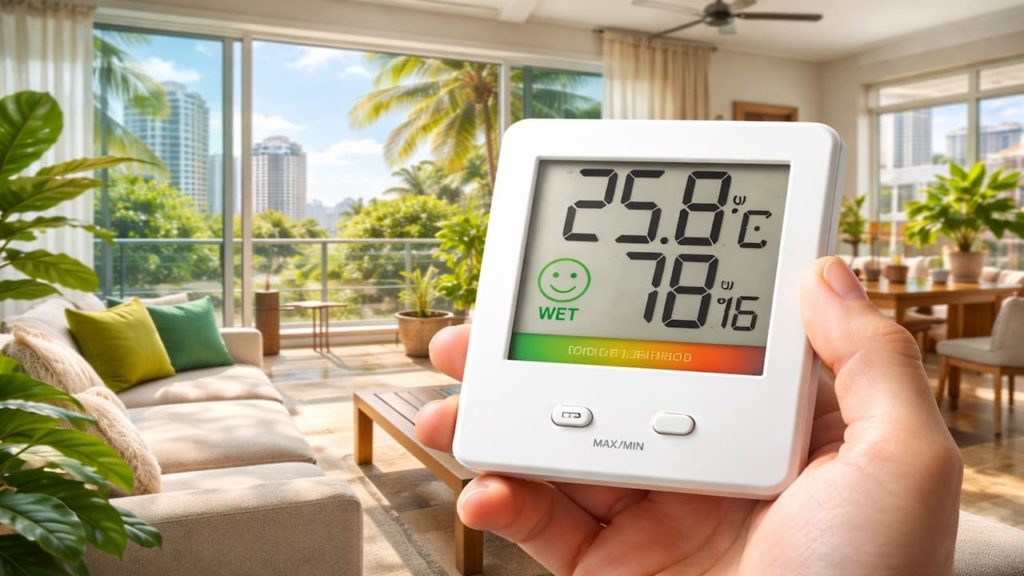
Humidity creates more condensation, so a partial clog can overflow faster. Rainy-day timing often reveals a drain issue that was already building.
Q3. What if the leak is sudden and heavy?
That can happen when coil icing melts and dumps water quickly. Turn it off, let it thaw, and check airflow and filter condition.
Q4. How can I tell if the drain is clogged?
If the outdoor drain has little to no dripping while cooling, suspect blockage—also watch for gurgling sounds or musty smell. Indoor staining is a strong clue too.
Q5. When should I call a technician?
Call if indoor leaking returns after filter cleaning and drain outlet checks, or if you see ceiling stains growing. Water damage gets expensive fast.
Pro’s Tough Talk

I’ve been on site for 20+ years and handled hundreds of jobs, and indoor leaking is where people either panic or pretend it will “dry on its own.” Both lose.
Causes fall into 3 buckets: the drain is blocked, airflow is weak and icing is happening, or the alignment is off and water pools the wrong way. Steps are 3 too: stop the unit and protect the area, restore airflow basics, then confirm outdoor dripping.
This mess is like a cup with a hairline crack on your top shelf, and like a sink that “kind of drains” until it floods. One comment: stop running it like nothing happened. Two aruaru: filters never cleaned, and stains ignored until repainting time. Fix the water path first then chase cooling or you’ll keep paying for dumb surprises.
Summary
Indoor leaking is usually drainage overflow, icing from weak airflow, or alignment and insulation issues that push water into the room. Not random.
If the outdoor drain is not dripping, or stains keep growing, treat it as a real maintenance problem and stop feeding water damage. Clear trigger.
Turn it off, protect the area, clean the filter, and check outdoor drainage today, then read the drain clog and condensation guides next. Stop the drip before it becomes a ceiling repair.