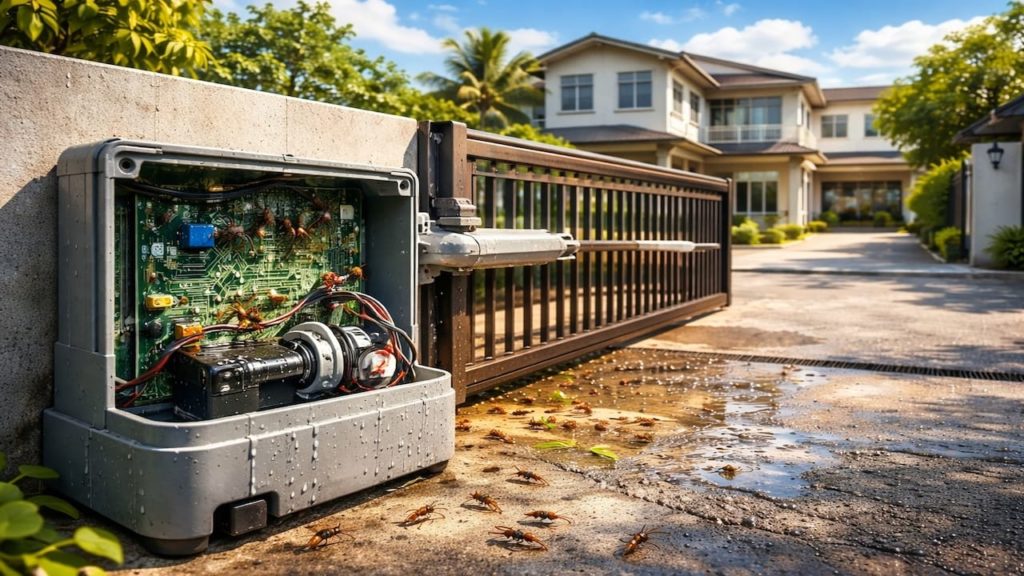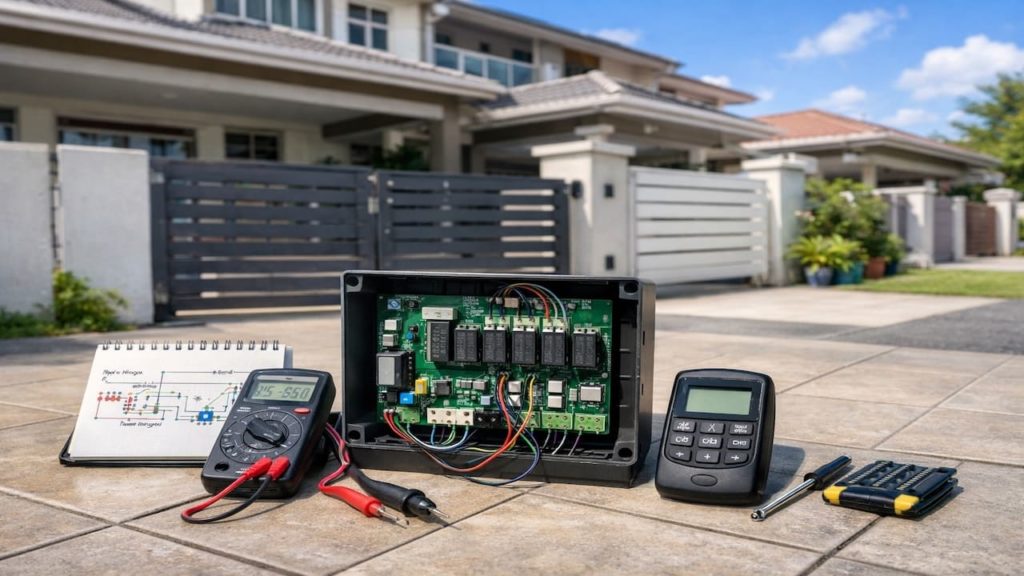
Your autogate makes a grinding sound, and it feels like metal is chewing metal. You start thinking about stripped gears and a stuck gate at the worst time. Fair fear.
In Malaysia, wet-season grit, porch dust, and humid air speed up wear on rack teeth, pinions, and chains. Condos and terrace houses also trap splash and sand near the gate path. Wear happens fast.
In this guide, you’ll learn the 5 signs that reveal rack pinion and chain wear and the simple checks that show what is normal noise versus damage you should not ignore.

Hi, I’m Ken. I write practical home guides for Malaysia—no fluff, just what works.
I hold a formal building design qualification and have spent about 20 years on job sites across hundreds of projects. My goal is simple: help you avoid costly mistakes with clear, safe steps—a quick way to decide what to do next.
1. Autogate grinding sound: 5 signs
Grinding means friction is rising beyond normal contact.
Healthy gates have a steady motor tone, but grinding usually changes with position and load—especially after rain and after a hot afternoon in Malaysia. A warning.
- Mark the noisy spot along the gate path
- Listen for pitch change under heavy closing load
- Check for vibration on the rack mounting strip
- Look for metal dust near rack or gearbox
- Test manual travel to feel rough resistance
You might say “it still opens so it is fine.” But grinding is often the step before teeth chip or chain jumps. Treat it early and you save the expensive parts.
2. Rack, pinion, & chain wear you can spot
You can often see wear before the gate fails.
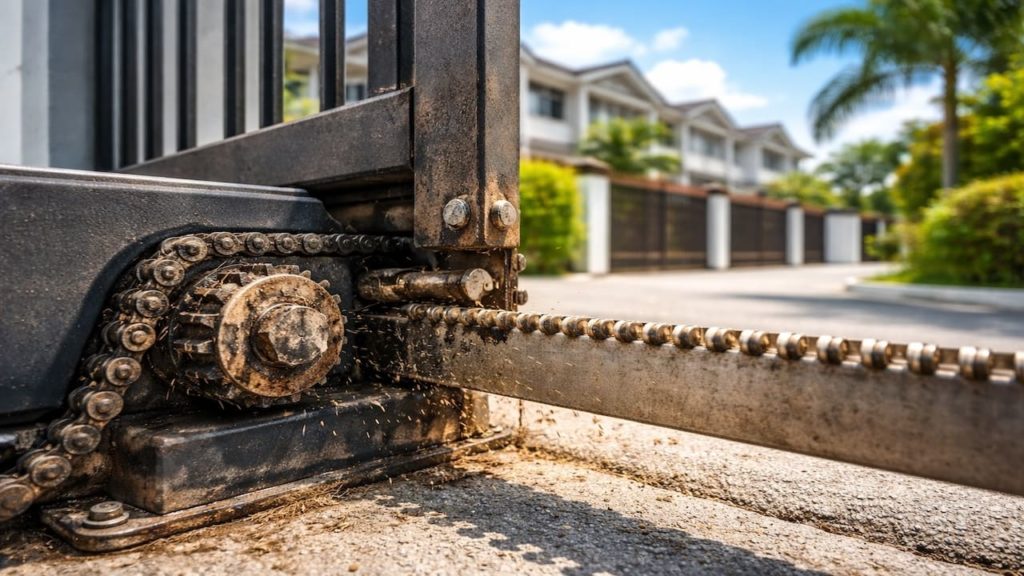
Rack teeth should look even and clean, while pinions and chains should run straight without wobble—Malaysia grit makes shiny polished spots and black dust appear. Visual proof.
- Sweep rack teeth and remove grit buildup
- Inspect rack teeth for chips and rounding
- Check pinion gear for wobble and play
- Check chain tension and sag along full travel
- Check rack bolts for looseness and movement
Some people think “it is just dry noise.” Dryness can be part of it, but chipped teeth and black powder are not harmless. If you can see wear, it is already working against you.
3. Why grinding starts around drive parts in Malaysia
Grit and misalignment turn normal contact into grinding.
Malaysia rain brings sand into tracks, humidity encourages rust film, and small alignment shifts make the pinion bite the rack at the wrong angle—then the sound becomes a grinder. Root cause.
- Wet sand packed into rack teeth grooves
- Loose motor mount tilting pinion into rack
- Gate sag changing rack height and engagement
- Rust film on chain links increasing friction
- Worn rollers creating uneven load on drive
You might blame the motor first. But many grinding cases start from alignment and load, not the motor itself. Fix the geometry and the noise often drops immediately.
4. How to inspect and reduce grinding safely
Reduce load and correct alignment before replacing parts.
Work when the porch area is dry and stable—Malaysia floors stay slippery after storms, so take it slow and keep fingers away from pinch points. Safe steps.
- Power off and clean rack pinion and chain
- Tighten motor mounts and rack mounting bolts
- Adjust rack height to mesh smoothly with pinion
- Replace worn rollers or guides causing drag
- Relearn limits after movement becomes smooth
You might want to increase force to “push through” the grind. That only speeds up tooth damage and can strip the rack. Fix friction and alignment first, then tune gently if needed.
5. FAQs
Q1. Is grinding always rack and pinion damage?
Not always, because roller drag and a loose mount can mimic rack grinding. Check if the noise happens at one repeat spot, then inspect rack teeth and pinion engagement there.
Q2. I see black dust near the rack. What does that mean?
It often means metal or plastic is wearing off from friction. Clean the area and inspect teeth shape and alignment, because dust usually returns quickly if wear continues.
Q3. Can rain alone cause grinding noises?
Rain brings grit into the drive parts and can wash away protective film, so grinding can appear only during wet weeks. Wet season grit is a common grinding trigger in Malaysia porch setups.
Q4. Should I lubricate the rack to stop grinding?
Lubrication can help only after cleaning and alignment are correct. If you lubricate a dirty rack, you can create a sticky grinding paste that accelerates wear.
Q5. When should I stop using the gate and call a technician?
If the gate jerks, slips, skips teeth, or stalls with a loud grind, stop using it. Continued use can strip the rack or damage the gearbox and control board.
Pro’s Tough Talk

I’ve been on site for 20+ years and handled hundreds of autogates, and grinding sound is the gate begging for mercy. Malaysia humidity makes light rust, wet season brings sand, and the rack eats that grit like crunchy cereal. Ugly.
3 causes, clean split. First, dirt and grit in rack teeth and chain links, so it grinds like sandpaper on glass. Second, misalignment, loose motor mount, sagging gate, wrong rack height, and the pinion bites sideways. Third, uneven load from bad rollers, so the gear engagement changes every meter. Do 3 steps. Power off, clean the rack and pinion until you see the teeth clearly. Tighten mounts and bolts, then set engagement so it meshes smooth. Fix drag rollers, because a struggling gate will destroy good gears.
Don’t blame yourself, and don’t call every installer a villain, but the structure is brutal: outdoor drive parts plus Malaysian rain grit equals wear on schedule. A worn rack is like a zipper missing teeth, and a loose pinion is like a bicycle chain jumping under load. Also stop pretending “it will last forever” like magic, come on. Two classics: it grinds loudest when you are late, and it goes quiet when you want to record evidence. Bottom line Fix alignment and clean grit before teeth chip or your next upgrade will be a wallet workout. Yeah. Enjoy that.
Summary
If your autogate makes a grinding sound, focus on rack teeth, pinion engagement, and chain condition, then confirm if the noise repeats at the same spot. Pattern first.
If cleaning reduces noise only briefly, look for misalignment, loose mounts, sagging, and roller drag that creates uneven gear engagement. Fix load before parts shopping.
Clean the drive parts today and tighten mounts, then move to the next guide on jerky starts and noisy motors—Early wear checks prevent stripped gears and sudden lockouts.