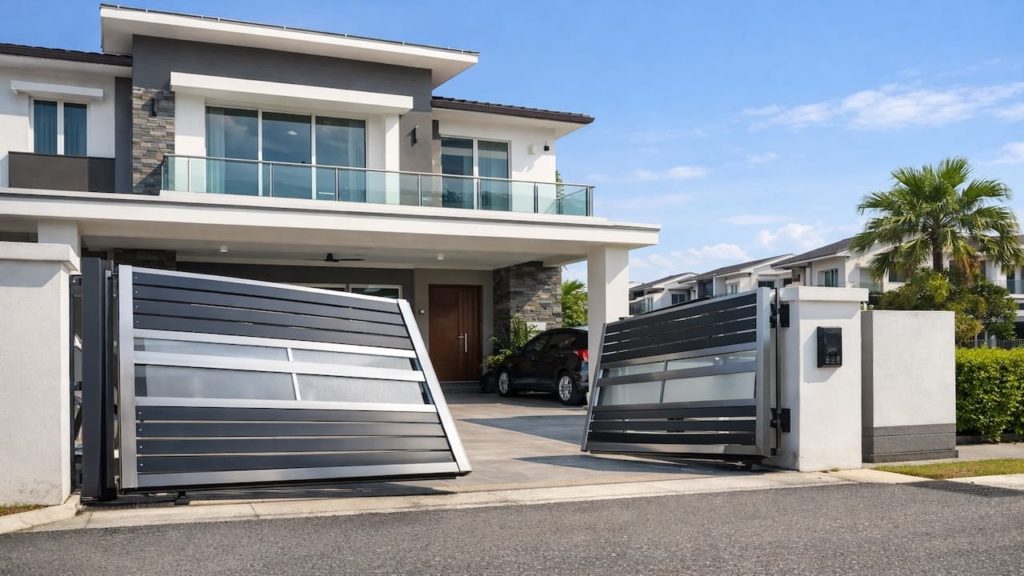
Your autogate moves unevenly, so one side lags, the gate jerks, or the leaf twists mid-travel. In a Malaysia terrace house driveway, that uneven motion feels risky and loud.
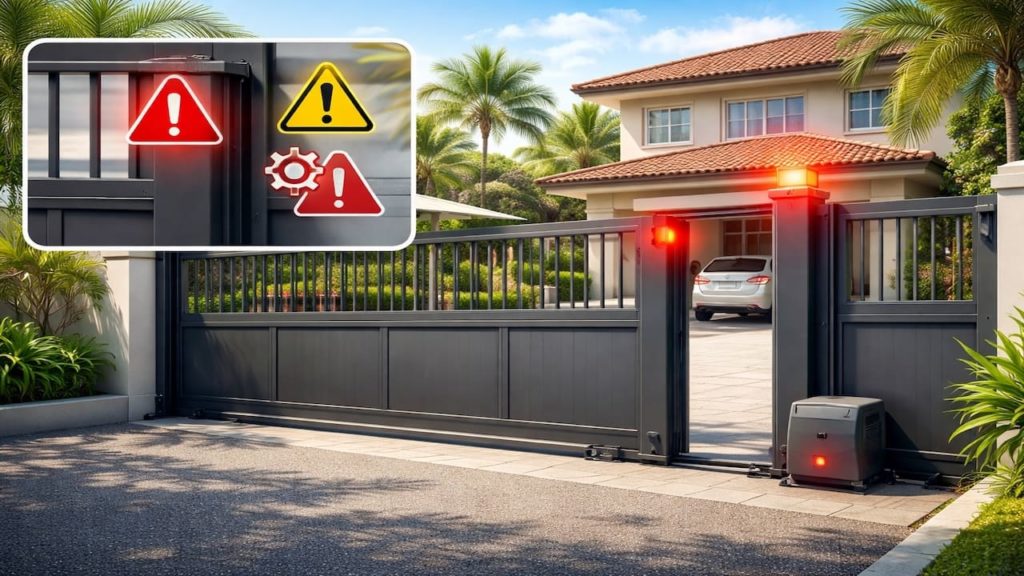
This usually comes from one side binding, a twisted gate frame, or rollers wearing unevenly. Heat, humidity, and sudden rain in Malaysia turn small friction into big load within weeks. A warning.
In this guide, you’ll learn how to find the binding point and restore smooth balanced travel by checking the gate geometry, roller condition, and the hidden spots that create uneven movement.

Hi, I’m Ken. I write practical home guides for Malaysia—no fluff, just what works.
I hold a formal building design qualification and have spent about 20 years on job sites across hundreds of projects. My goal is simple: help you avoid costly mistakes with clear, safe steps—a quick way to decide what to do next.
1. Autogate uneven movement: 5 checks
Uneven movement means the gate load is not shared evenly.
When one side drags, the motor pulls harder, brackets flex, and the gate starts to travel in a curve—Malaysia humidity adds rust film that makes the drag worse. Uneven load.
- Mark gate position and measure gap at both ends
- Switch to manual mode and push gate slowly
- Listen for scrape sounds at one track section
- Check roller height and compare left right level
- Inspect hinge pins for stiffness and rust
Some people blame the controller because the motion looks “random,” but the controller follows physics. Fix the drag first, then you can tune settings with confidence. Same conclusion.
2. One side binding, twisted gate, & roller wear
Binding usually starts from one roller or one hinge point.
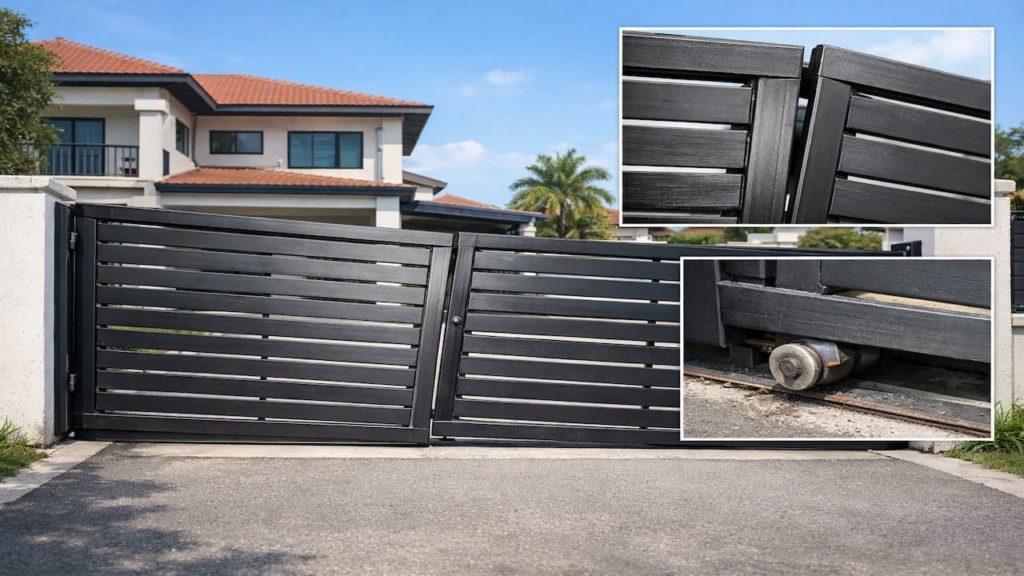
One tight roller bearing, one bent bracket, or one hinge that seized can force the gate to twist—then the opposite side lifts and drops as it moves. Classic in Malaysia rainy months. Twisted frame.
- Spin each roller by hand and feel roughness
- Check roller bracket bolts for loosened holes
- Look for flat spots on roller wheel surface
- Check gate frame for diagonal measurement mismatch
- Inspect track lip for dents and rubbing marks
You might think tightening everything will solve it, but overtight bolts can lock a misaligned bracket in place. Identify the binding corner, correct alignment, and the gate will calm down again. Same point.
3. Why uneven movement happens in Malaysia homes
Heat rain and settling make small misalignment grow fast.
Malaysia sun expands metal during the day, then cooler nights shrink it, and repeated storms move soil under posts and slabs. That cycle shifts the gate geometry over time—slowly at first. Drift.
- Check post plumb using a simple level tool
- Look for new cracks near base plate concrete
- Inspect drainage path where water flows after storms
- Check rust trails around hinge plates and fasteners
- Verify gate does not hit stopper prematurely
People say “it’s just age,” and age matters, but environment and load are the real accelerators. Reduce water impact and friction, and uneven movement slows down. Same claim.
4. How to fix uneven movement safely and keep it smooth
Fix uneven movement by leveling support points then reducing friction.
Do not increase force to overpower binding—this raises current and heat, then parts wear faster in humid Malaysia air. Work in order and test each change. Order.
- Turn off power and secure gate against rolling
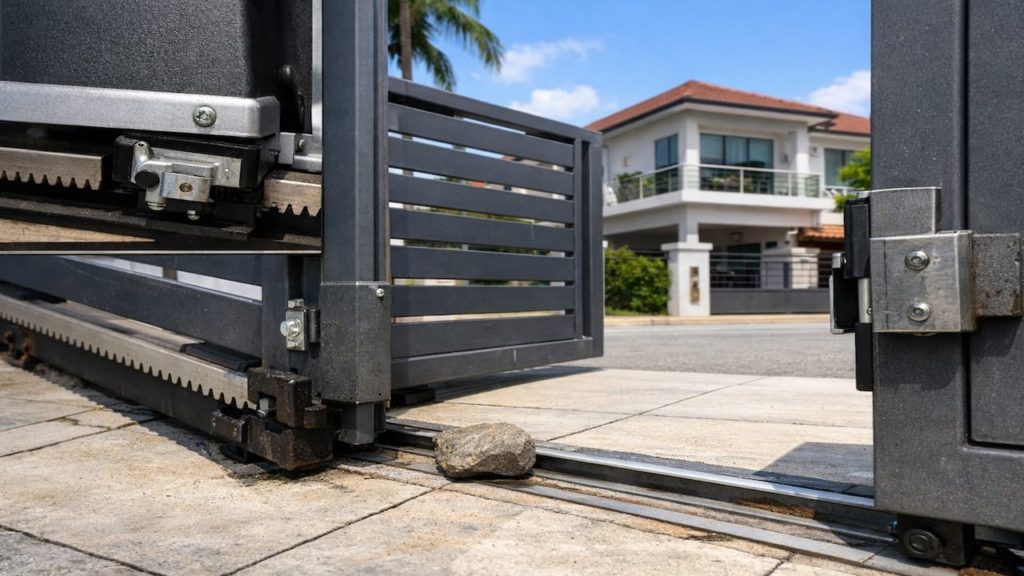
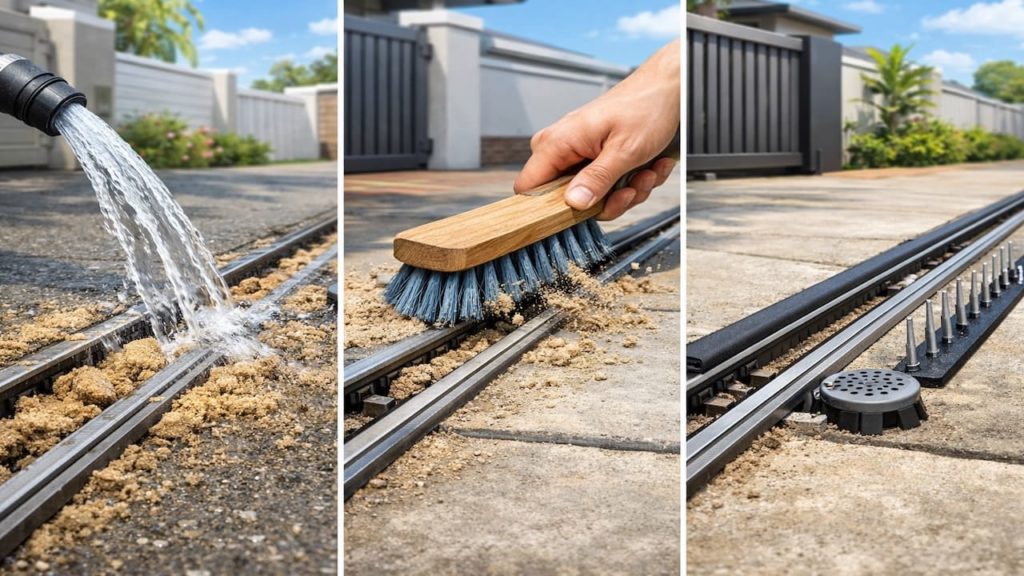
- Clean track and remove packed sand debris
- Adjust roller brackets to restore equal contact
- Lubricate hinges lightly and wipe excess residue
- Realign stopper and latch after movement smooths
You may worry DIY adjustments will make it worse, but careful small moves with measurement are safer than ignoring it. Restore smooth travel first, then fine tune speed and force. Same conclusion.
5. FAQs
Q1. How do I know if it is binding or a motor problem?
If manual mode still feels rough or jerky, it is binding or alignment, not the motor. If manual movement is smooth but powered movement is weak, then check power and motor parts.
Q2. Why does only one side move faster?
One side can be lifted by a worn roller or twisted frame, so it rides with different resistance. In Malaysia humidity, rusted hinges can also slow one side more than the other.
Q3. Can sand in the track cause uneven movement?
Yes, packed sand creates a tight spot that makes the gate jerk and tilt. Cleaning the tight spot first is the fastest way to confirm whether friction is the cause.
Q4. Should I lubricate everything to stop the jerk?
No, because excess grease attracts grit and becomes paste. Lubricate hinges and bearings only, then keep tracks clean and dry.
Q5. When should I call a technician?
If the post is leaning, the concrete is cracking, or the frame is visibly twisted, structural repair is needed. Also call if the motor overheats or breakers trip during movement.
Pro’s Tough Talk

I’ve been on site for 20+ years and handled hundreds of autogates, and uneven movement is the one that quietly breaks everything around it. In Malaysia heat and rain, that quiet problem turns loud fast.
It comes from 3 buckets: one side binding from a seized roller or hinge, a frame twisting from impact or sagging, and the ground shifting after storms so posts lean. Nobody is “stupid” for missing it, and not every installer is a villain, but the structure is cold.
Do 3 steps now: switch to manual mode and feel the tight spot, clean the track and corners, then check roller spin and hinge stiffness. If it binds, do not keep cycling the motor. Hard rule.
Fix friction and geometry before you touch force settings. Forcing it is like dragging a suitcase with one broken wheel, and like running with a pebble in your shoe. And if you keep mashing the remote like it owes you money, that’s on you.
Two relatable moments: it only jerks when guests arrive, and you pretend it is “normal.” Then you swear you will fix it this weekend, and rain shows up again. Keep ignoring it and the gate will start doing its own dance routine.
Summary
Uneven autogate movement usually comes from one side binding, a twisted frame, or roller wear that changes load sharing. Malaysia humidity and storms speed up friction and settling effects.
Use decision lines: if manual movement is rough, fix alignment and rollers first; if manual is smooth, check voltage, capacitor, and controller outputs. Stop increasing force to mask drag. No shortcuts.
Find the tight spot today and correct support points first, then maintain cleaning after heavy rain weeks so uneven movement does not return. Next, read our guide on track full of sand and roller squeaks for the most common friction sources.