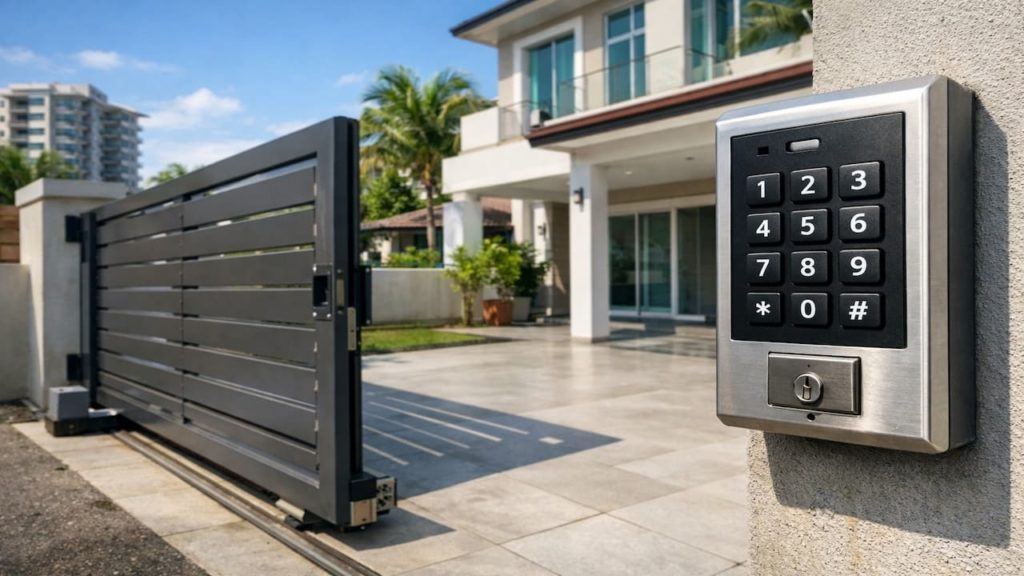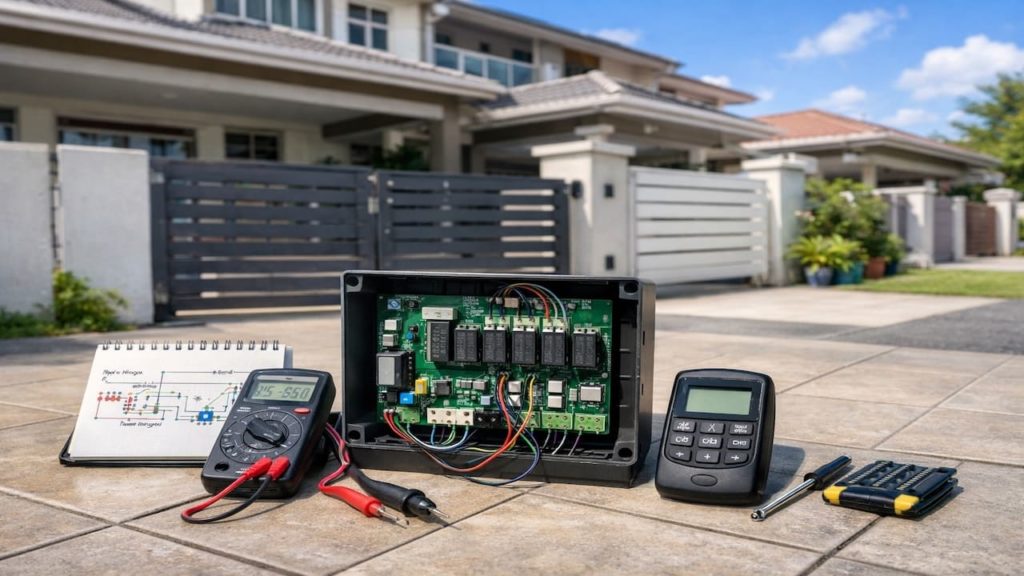
Your autogate closes, but it will not lock, so you can push it slightly and it pops open. That feels unsafe, especially at night.
In Malaysia, heat and humidity can make gates sag, swell, or shift, and wet-season grit can stop the latch from seating cleanly. A small alignment issue is enough to prevent locking. Common.
In this guide, you’ll learn the 5 checks that fix an autogate that will not lock by verifying latch alignment, stopper position, and sagging that changes the closing geometry.

Hi, I’m Ken. I write practical home guides for Malaysia—no fluff, just what works.
I hold a formal building design qualification and have spent about 20 years on job sites across hundreds of projects. My goal is simple: help you avoid costly mistakes with clear, safe steps—a quick way to decide what to do next.
1. Autogate won’t lock: 5 checks
Locking fails when the gate does not land on the exact spot and the latch cannot seat.
If the gate stops a few millimeters early or sits too high or low, the latch will miss. Malaysia humidity and sun heat shift metal and wood just enough to cause this. Small gap.
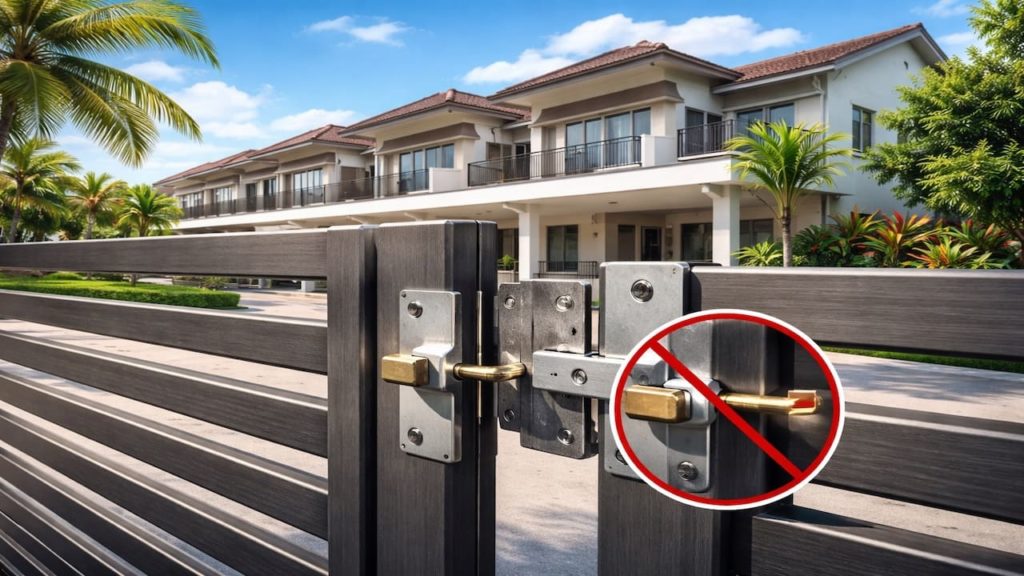
- Check if latch hits or misses strike plate
- Inspect stopper position at full close point
- Listen for latch click during closing movement
- Push gate gently to feel free play
- Test manual close to see true landing point
You might assume the motor is weak. But many “no lock” cases are simply a misaligned strike plate or stopper, and the motor closes fine but stops at the wrong place. Geometry issue.
2. Latch alignment, stopper position, & sagging
Alignment is more important than force for reliable locking because the latch needs precise contact.
Stopper blocks set the final landing point, while latch plates guide the lock engagement. If the gate sags or the hinge drops, the latch height changes and it starts scraping instead of clicking. Typical in humid air.
- Check latch and strike plate vertical height match
- Adjust stopper so gate closes one step further
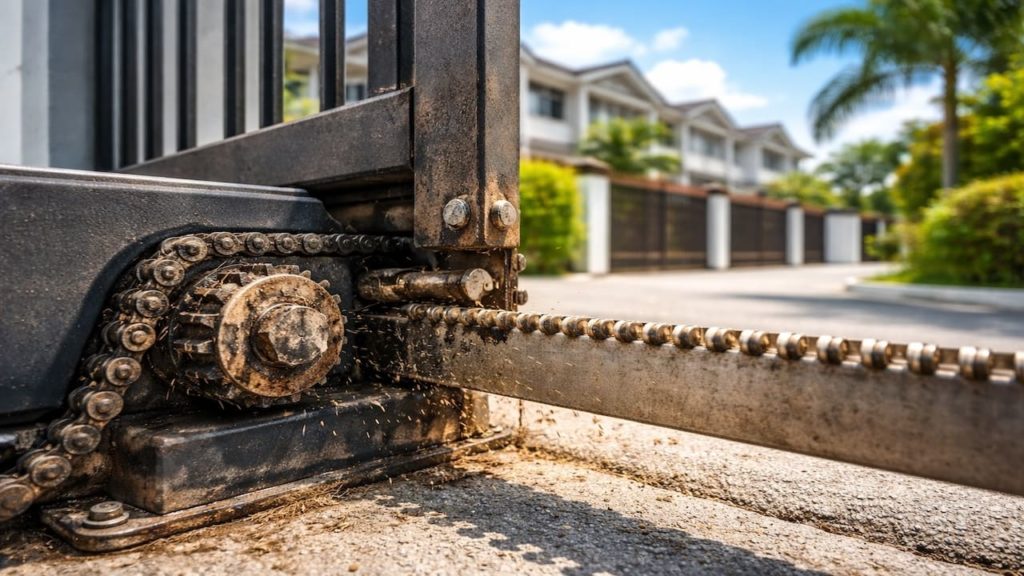
- Inspect latch for rust dirt and sticky movement
- Tighten hinge bolts and bracket mounting screws
- Check guide wheel keeps gate centered on close
Some people increase closing force to make it “lock harder.” That can bend brackets and wear gears without solving alignment. Fix where it lands, then the lock engages naturally.
3. Why locking problems happen in Malaysia homes
Humidity and heat change gate shape and hinge position so yesterday’s alignment becomes wrong today.
Metal expands in the sun, wood swells with moisture, and rust adds friction in latch mechanisms. Wet-season mud around stoppers also changes the stopping point. This is why locking can fail “randomly.” Reality.
- Gate sagging from worn hinges and heavy panels
- Strike plate shifting after vibration and slams
- Rusty latch spring moving slowly in humidity
- Stopper buried by dirt leaf sludge buildup
- Uneven ground or track causing close mislanding
You may think it is “only a small gap.” But a small gap means no lock, and no lock means the gate can be pushed open in wind or by a person. Security matters. Fix it.
4. How to restore locking and keep it consistent
Adjust landing point first then fine tune latch engagement so the lock clicks every time.
Do checks when dry, and keep fingers away from pinch points. Malaysia porches can be slippery, so work slowly and test multiple cycles. Controlled.
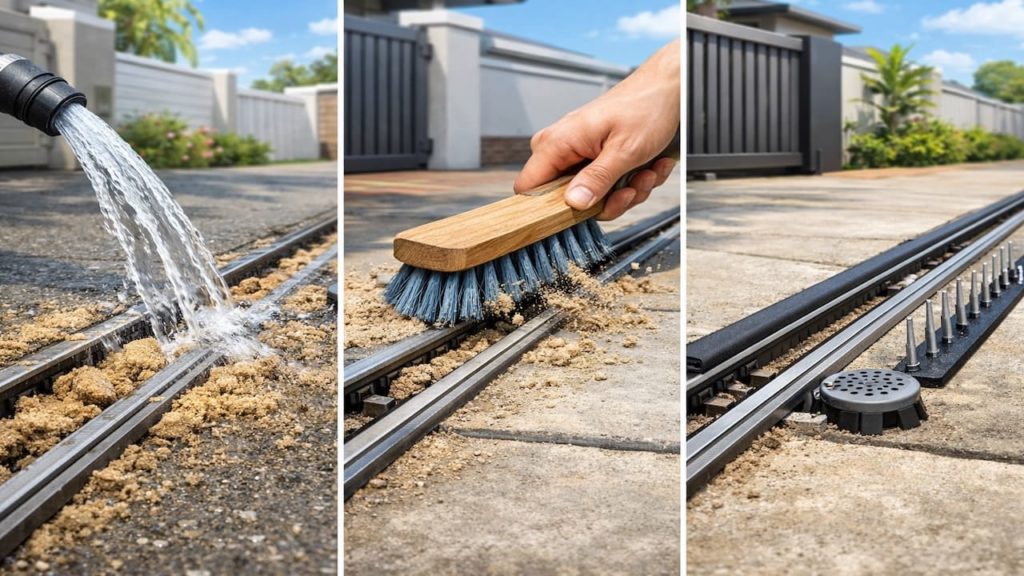
- Clean stopper area and remove packed debris
- Adjust stopper position for correct close landing
- Align strike plate to meet latch centerline
- Lubricate latch mechanism lightly after cleaning
- Test ten close cycles and confirm consistent click
You might want to recalibrate limits immediately. That helps only after the mechanical landing point is correct. If the gate is sagging, calibrating teaches the system the wrong stop. Fix sag first.
5. FAQs
Q1. The gate closes fully but still does not lock. Why?
It may look closed but the latch is not aligned with the strike plate by a few millimeters. Check latch height, stopper landing point, and guide wheels that keep the gate centered.
Q2. Can sagging really stop the latch from locking?
Yes, sagging changes the latch height and angle, so it hits the plate instead of entering it. Tighten hinges and brackets and inspect worn hinge pins.
Q3. Should I increase force settings to make it lock?
No, force can hide the symptom and cause damage. Locking is an alignment problem before it is a power problem in most Malaysia porch gates.
Q4. The latch locks sometimes and fails other times. What causes that?
Dirty stoppers, sticky latch springs, and temperature changes can shift the landing point slightly. Clean the stopper area, lubricate the latch lightly, and confirm stable close position.
Q5. When should I call a technician?
If the gate is visibly sagging, hinges are worn, or the track is uneven, a technician should realign or replace hardware. Also call if the latch mechanism is cracked or bent.
Pro’s Tough Talk

I’ve been on site for 20+ years and handled hundreds of autogates, and “won’t lock” is almost always a landing problem. Malaysia heat makes metal move, humidity makes things swell, and a few millimeters becomes a full failure. That is the game.
3 causes, simple. First, latch and strike plate misalignment, height or sideways offset. Second, stopper position is wrong or blocked by dirt, so the gate stops short. Third, sagging hinges and brackets shift the gate down and twist the angle. Do 3 steps. Clean the stopper zone and confirm the true landing point. Adjust stopper so the gate reaches the lock position. Then align the strike plate and tighten hinges and guide wheels.
Don’t blame yourself, and don’t call every installer a fraud, but the structure is brutal: heavy gates plus wet-season dirt equals alignment drift on a schedule. A misaligned latch is like trying to plug a charger in the dark, and sagging is like a door that drops and scrapes the floor. And stop slamming it shut like you are angry at the gate, that just bends more parts. Two classics: it fails only at night, and it locks perfectly when you stop watching. Bottom line Fix landing and alignment before you touch force or you will wreck gears and still not lock.
Summary
If your autogate will not lock, treat it as a landing and alignment issue first and inspect latch position, stopper placement, and sagging hardware. Small offsets matter.
If cleaning and stopper adjustment do not restore a consistent click, check hinge wear, gate sag, and guide wheel alignment and decide whether hardware repair is needed before recalibration.
Do the stopper and latch checks today while it is dry, then read the next guide on reopening on close and halfway jams—Reliable locking is geometry and maintenance in Malaysia weather.