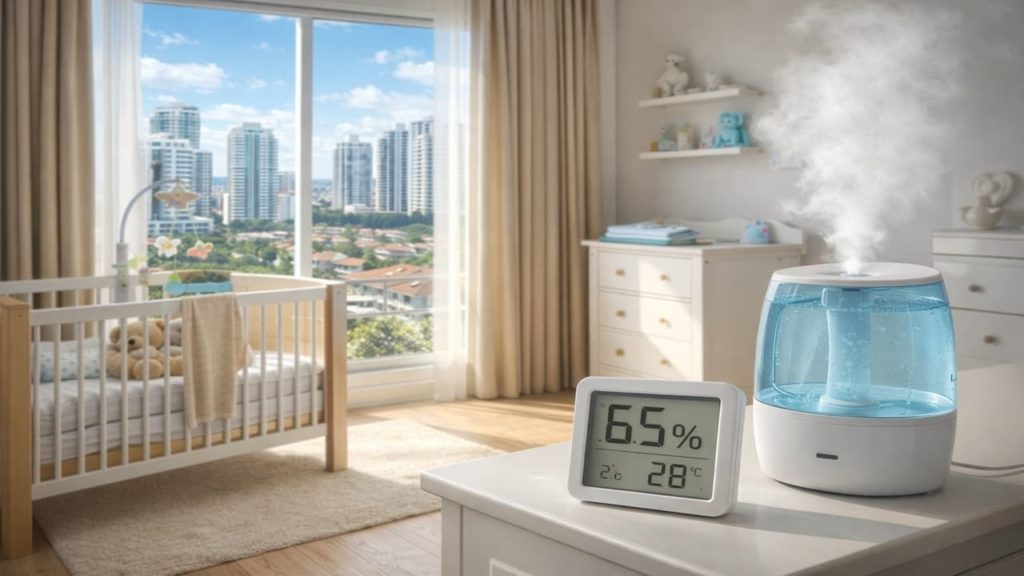
Your baby’s room feels sticky at night, but you worry that turning the aircond colder will make the room too cold.
In Malaysia, humidity stays high during wet weeks, and condo or terrace-house bedrooms can trap moist air when doors stay closed for quiet sleep.
In this guide, you’ll learn 5 steps to reduce humidity in a baby room safely so the room feels comfortable without overcooling or blasting cold air all night.

Hi, I’m Ken. I write practical home guides for Malaysia—no fluff, just what works.
I hold a formal building design qualification and have spent about 20 years on job sites across hundreds of projects. My goal is simple: help you avoid costly mistakes with clear, safe steps—a quick way to decide what to do next.
1. Humidity in baby room: 5 steps
Lower humidity first then keep temperature steady so comfort improves without going cold.
Humid air makes babies feel hotter and sweatier, but dropping temperature too far can make sleep uncomfortable, especially in small Malaysia bedrooms. Balance matters.
- Run aircond Dry mode for 30–60 minutes before bedtime, then switch to Cool or Auto.
- Set a steady 24–26°C range instead of extreme cold, and avoid frequent changes.
- Keep the door closed during the dehumidify phase so moist air does not drift in.
- Use gentle airflow and avoid direct air blowing onto the crib or sleeping area.
- Remove obvious moisture sources like indoor laundry, wet towels, and damp bathmats nearby.
Some people keep lowering the temperature when the room feels sticky—humidity is the real issue, so dehumidify first and you often need less cooling.
2. Safer comfort without overcooling
Control airflow direction and humidity instead of chasing colder settings.
In Malaysia condos and terrace houses, baby rooms can become humid because air is trapped, and strong cold drafts can be uncomfortable, so you want calm air that is drier. Calm comfort.
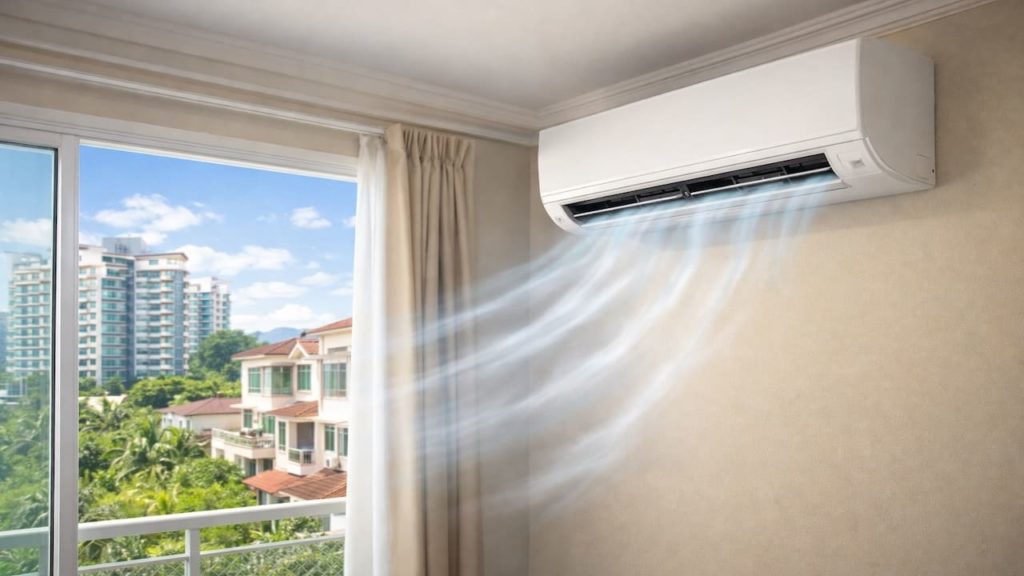
- Angle the aircond louvers upward so cooled air mixes before reaching the baby.
- Use a small fan on low across the room, not aimed at the baby, to prevent damp pockets.
- Keep curtains slightly open from the wall so air can move near windows.
- Dry bedding and sleepwear fully before use, because “almost dry” fabric adds humidity.
- Wipe window condensation in the morning so moisture does not recycle into the room.
It can feel like airflow is either “too strong” or “not enough,” but gentle circulation away from the crib keeps the room even without creating a cold blast.
3. Why baby rooms get humid in Malaysia
Closed quiet rooms trap moisture fast during humid nights.
Baby rooms are often kept closed for safety and noise control, and Malaysia’s warm humid air plus moisture from breathing can raise humidity overnight in condos and terrace houses. Trapped air.
- Humidity rises at night, especially during rainy season and cloudy evenings.
- Closed doors reduce air exchange, so moisture from breathing builds up over hours.
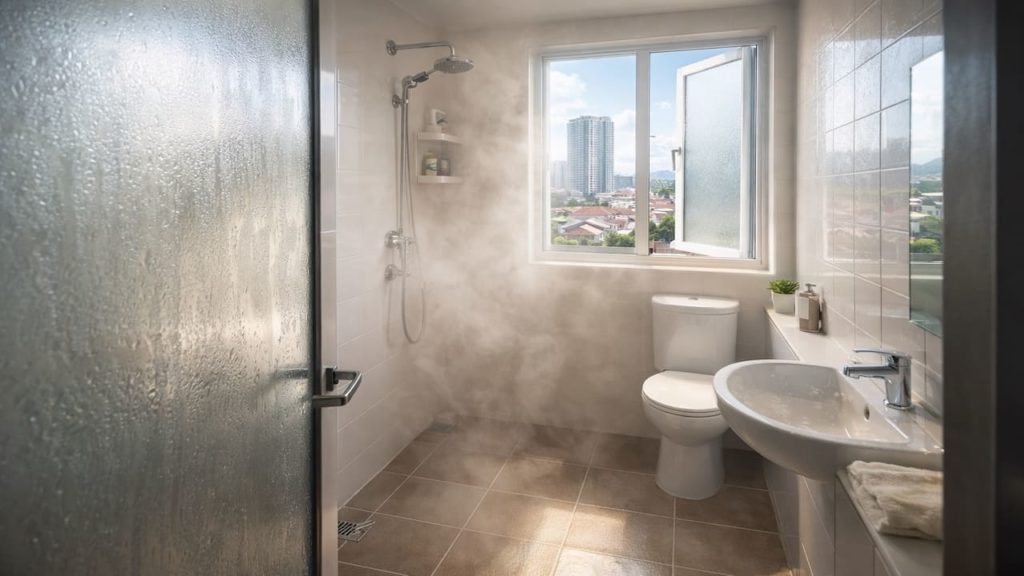
- Nearby bathrooms and laundry areas leak humidity through gaps and airflow paths.
- Thick curtains and packed furniture create still zones that stay damp.
- Overcooling can cause condensation on windows, which later evaporates back into the room.
People assume the aircond is “making it humid,” but the room is often collecting moisture while cooling, so you fix moisture entry and airflow routes.
4. How to manage humidity daily in a baby room
Use a repeatable routine that keeps humidity stable so nights feel consistent.
This matters in Malaysia because wet weeks can last, and baby comfort improves when the room is stable, not swinging between too warm and too cold. Steady routine.
- Do a short Dry-mode reset before sleep, then maintain with Cool or Auto through the night.
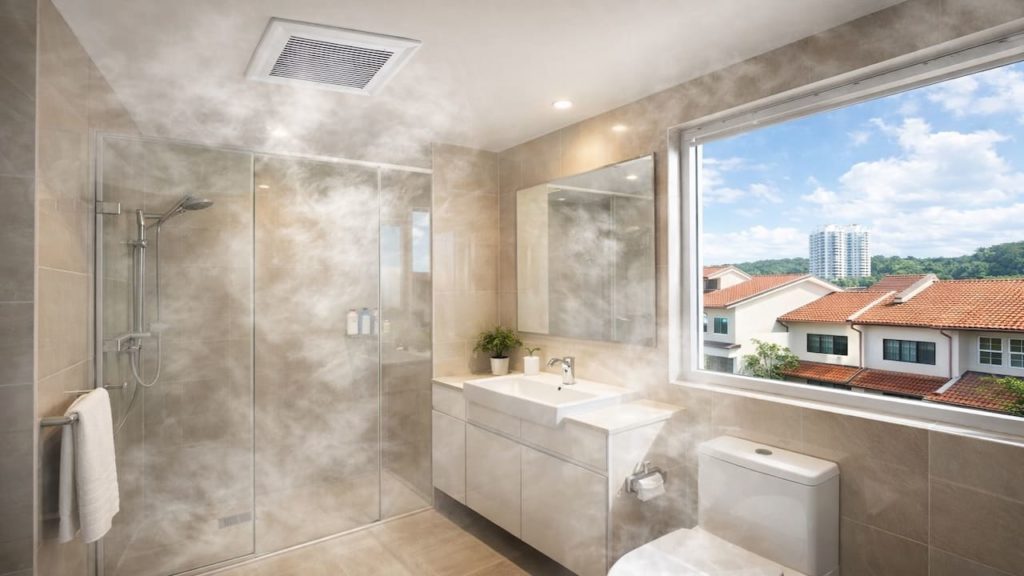
- Run the bathroom exhaust after evening baths and keep bathroom doors shut until dry.
- Keep the room uncluttered around the crib so air can circulate gently.
- Use a hygrometer to track humidity trends, because your skin can misjudge in wet weather.
- If needed, use a dehumidifier outside the baby’s immediate sleep area and keep cords safely managed.
Some parents try to solve everything with temperature, but stability is the goal—humidity control lets you keep a warmer, safer setting without the sticky feeling.
5. FAQs
Q1. What humidity level is comfortable for a baby room?
Many families aim around 50–60% if possible, but the most important thing is reducing the sticky, damp feeling. In Malaysia, focus on trends and comfort rather than chasing a perfect number.
Q2. Is Dry mode safe to use in a baby room?
Usually yes for a short reset, because it reduces humidity without extreme cold. If the room feels too dry, shorten the time and maintain with steady cooling.
Q3. How do I avoid cold drafts on the baby?
Angle louvers upward and avoid pointing fans at the crib. Air should circulate around the room not onto the baby so you get comfort without direct blasting.
Q4. Should I open the window at night?
Often no during rainy season, because outdoor air can be very humid at night. Try controlled dehumidifying and airflow first, then ventilate only when outdoor air feels drier.
Q5. When should I talk to a doctor?
If your baby shows breathing difficulty, persistent coughing, or signs of overheating, seek medical advice promptly. Humidity comfort tips help the room, but health concerns need professional care.
Pro’s Tough Talk

Listen. I’ve been on site for 20+ years and handled hundreds of jobs, and baby rooms in Malaysia get humid for the same reason every time: you close the door for quiet, then moisture gets trapped and everybody sleeps in wet air.
Cause is 3 buckets: humidity coming in from the house, no exit path, and people overcooling instead of dehumidifying. Fix it in 3 steps: do a short Dry-mode pull-down before bedtime, keep a steady temperature with gentle airflow away from the crib, and stop feeding moisture by keeping laundry and bathroom steam out—done. Chasing colder temps is like putting ice in soup and calling it “dry,” and sealing a humid room is like wrapping a wet towel in plastic and hoping it improves.
Two classics. Air blowing straight at the crib, and wet towels drying in the next room like it’s normal. Come on. Dry air plus gentle airflow beats freezing the room. Do the routine tonight, or keep wondering why the room feels heavy while the baby can’t settle.
Summary
Baby rooms feel sticky when humidity stays high in a closed, quiet space, which is common in Malaysia condos and terrace houses during wet nights. Overcooling can add discomfort without fixing moisture.
Use a simple routine: pull humidity down first, keep temperature steady, and direct airflow away from the crib while blocking moisture sources like bathroom steam and indoor drying. Track humidity so you can adjust calmly instead of guessing.
Keep it stable—short Dry-mode reset, gentle circulation, no moisture feeding—safer comfort comes from drier air not colder air.