You keep the windows closed to “block humidity,” but the room still feels damp, sticky, and a bit stale.
In Malaysia, rainy season air, condo layouts, and aircond patterns can trap moisture indoors even with closed windows. Closed does not mean dry.
In this guide, you’ll learn the most common mistakes, why they keep humidity high, and what to change today for steady comfort. Closed windows can still trap dampness inside.

Hi, I’m Ken. I write practical home guides for Malaysia—no fluff, just what works.
I hold a formal building design qualification and have spent about 20 years on job sites across hundreds of projects. My goal is simple: help you avoid costly mistakes with clear, safe steps—a quick way to decide what to do next.
1. Humidity with closed windows: 5 mistakes
In Malaysia’s humid climate these 5 mistakes keep rooms damp even with windows closed especially in condos and small bedrooms.
Humidity comes from inside sources and hidden airflow paths, so closing windows alone cannot solve it—your room still needs moisture removal. Reality.
- Drying laundry indoors which adds liters of water into the air
- Short-cycling the aircond by setting it too cold so it turns off quickly
- Keeping the bedroom door open to a muggy corridor that re-humidifies the room
- Skipping exhaust fans after showers and cooking so steam spreads into bedrooms
- Pushing furniture tight to exterior walls and creating damp dead zones
“But my windows are closed, so humidity should not come in.” It can come from your own water sources and drift through gaps and doors. Hidden sources. Fix the mistakes and the room finally dries.
2. Why the room still feels damp
In Malaysian homes a room feels damp when moisture removal is weaker than moisture input even if outside air is blocked.
Think balance: sweating, showers, cooking, and wet floors add moisture, while dehumidifying and ventilation remove it. Simple math.
- Body moisture at night raises humidity fast in small bedrooms
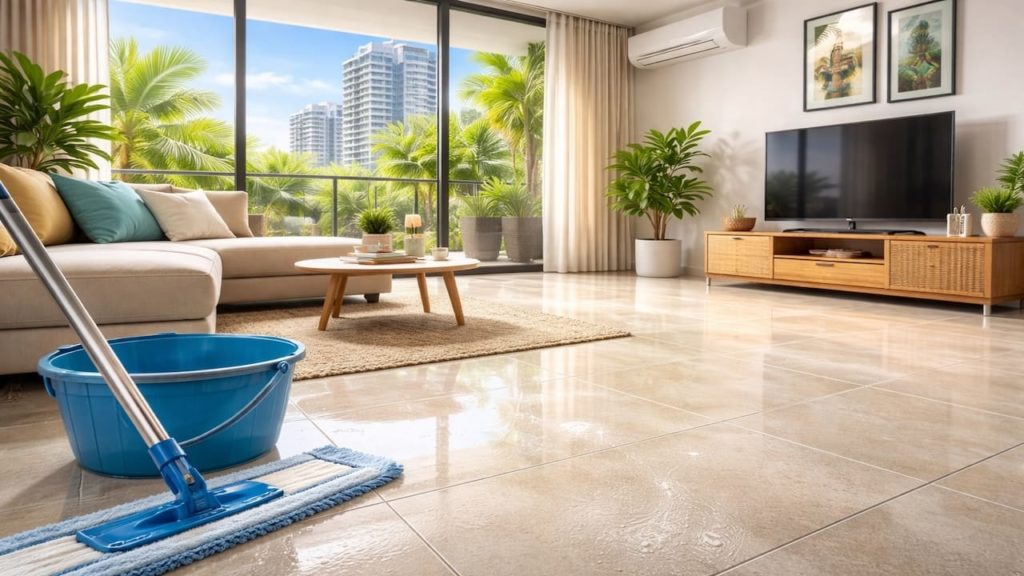
- Wet tile floors and mopping evaporate water back into the room air
- Aircond in Fan mode cools air but does not remove moisture effectively
- Bathroom doors left open let steam drift into the living areas
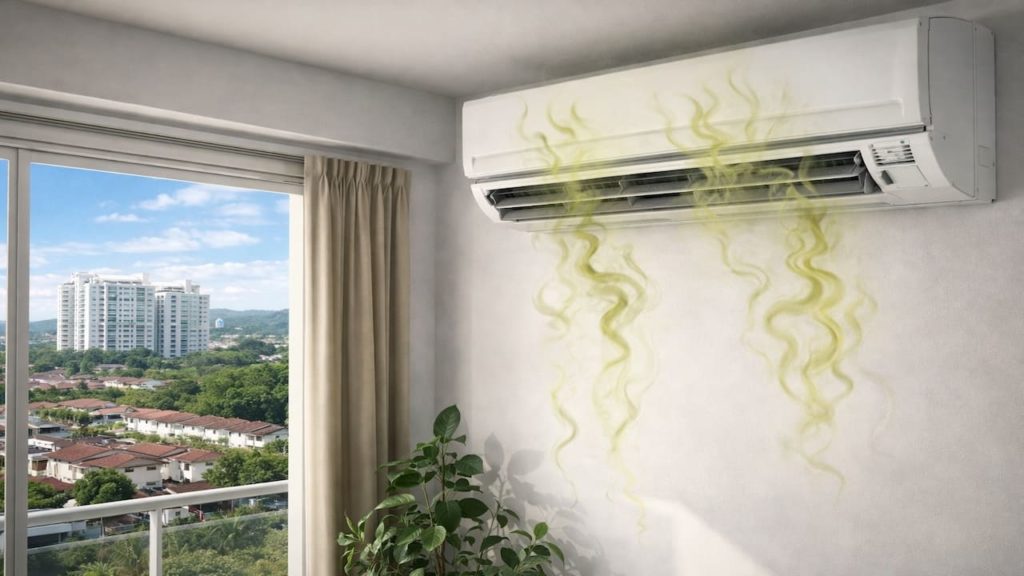
- Old filters reduce airflow and reduce how much water the coil can remove
“So I should open windows more.” Sometimes that helps, but in rainy season it can bring in even wetter air. Timing matters. Use controlled airflow and dehumidifying instead of guessing.
3. Why closed windows do not guarantee low humidity
In Malaysia’s climate humidity builds indoors because water vapor is produced inside the home and trapped by closed spaces.
Closed windows reduce outside exchange, but they also reduce the escape route for moisture unless you actively remove it. Trapped vapor.
- Showers create heavy steam that soaks walls and releases moisture for hours
- Cooking boils water and humidifies the entire unit in open-plan condos
- Wet clothes and towels keep releasing moisture even after they feel “less wet”
- Concrete walls and cool corners condense moisture and keep surfaces clammy
- Door gaps and corridor drafts can still bring humid air into the unit
“My home is small, so it should be easier to manage.” Small spaces spike humidity faster, so they can feel worse without consistent dehumidifying. Small space, big swings.
4. How to fix damp rooms without opening windows
For Malaysia condo life you fix dampness by removing moisture and controlling airflow paths while keeping windows closed.
Start with measurement and simple habits, then use AC Dry mode or a dehumidifier strategically. Efficient fix.
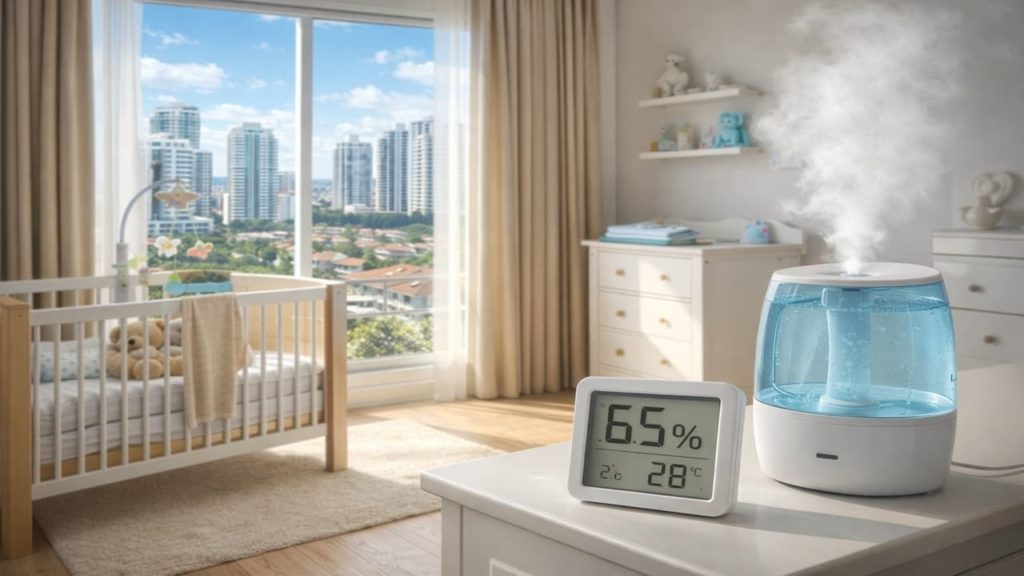
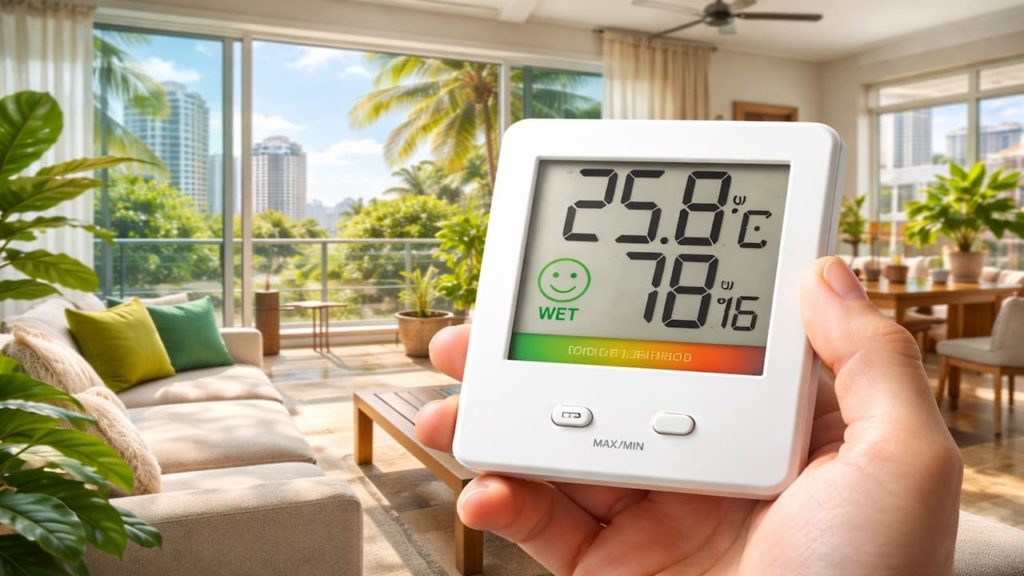
- Use a hygrometer and target under 55 percent in bedrooms and storerooms
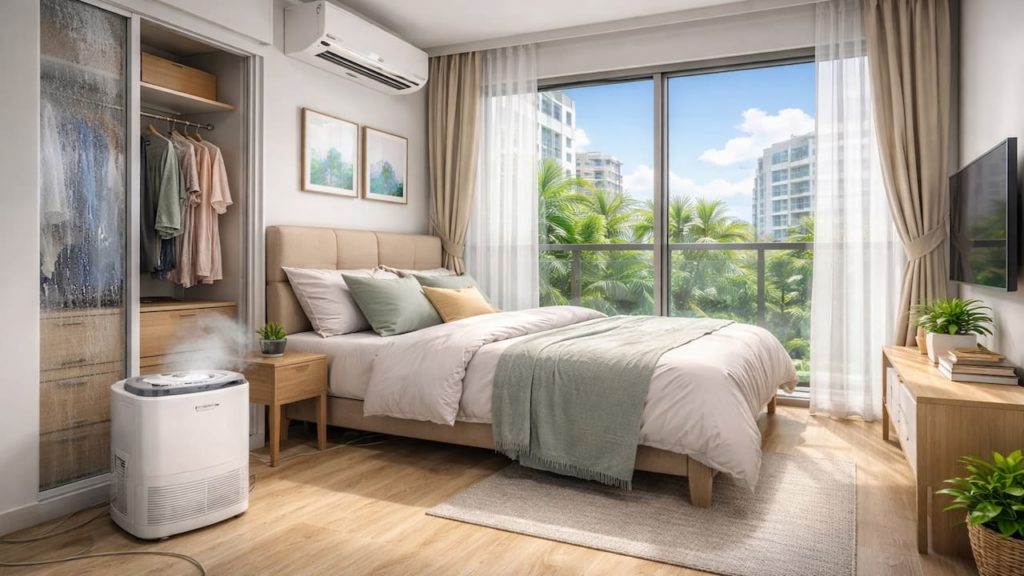
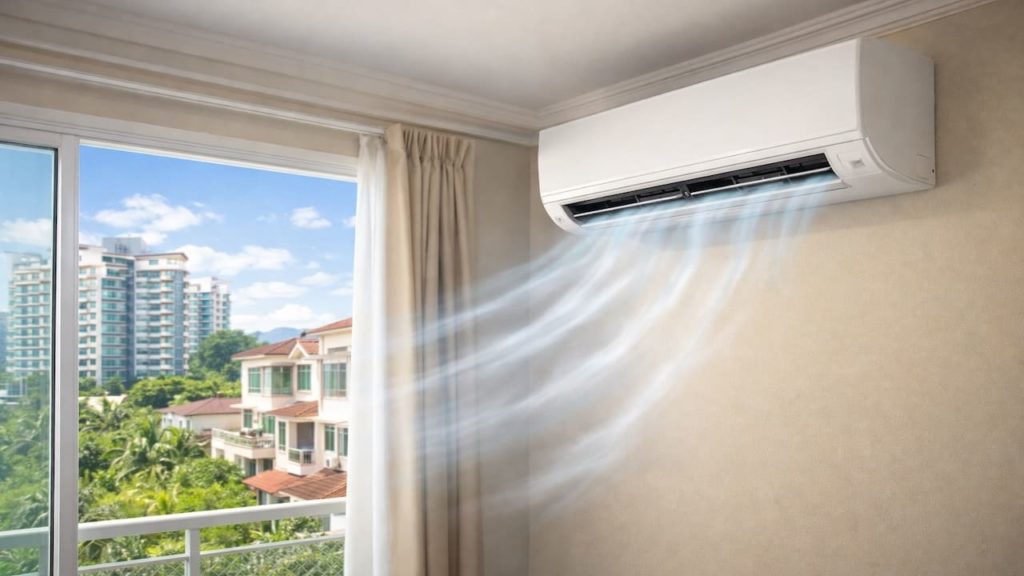
- Run AC Dry mode 30 to 90 minutes, then maintain with stable Cool settings
- Keep bathroom exhaust running 20 to 30 minutes after showers
- Close doors to muggy zones and use draft stoppers if corridor air is humid
- Use fans to mix air so corners and behind furniture do not stay damp
“This is too many steps.” Pick the top 2: Dry mode plus exhaust discipline. Small routine. It usually changes the feel within days.
5. FAQs
Q1. Is it better to keep windows closed during rainy season?
Often yes, because outdoor air can be extremely humid, but you must remove moisture inside. Closed windows work only with active dehumidifying like Dry mode and exhaust fans.
Q2. Why does my room feel damp even with aircond on?
If it short-cycles, has dirty filters, or runs Fan mode, it may not remove enough moisture. Adjust settings for longer steady run time and use Dry mode first.
Q3. Can corridor air affect my condo humidity?
Yes, corridor drafts can bring muggy air through door gaps. Door sweeps and keeping doors closed during humid hours help a lot.
Q4. What is the fastest way to lower humidity tonight?
Close the bedroom door, run Dry mode for 30 to 90 minutes, and use a small fan to mix air. Then maintain with Cool mode at a stable comfortable temperature.
Q5. When should I buy a dehumidifier?
If humidity stays high despite correct AC settings, or if you have rooms without AC, a dehumidifier can help. Use it with doors closed for best results.
Pro’s Tough Talk

Listen. I’ve been on site for 20+ years and handled hundreds of jobs, and “I keep windows closed but it is still damp” is Malaysia classic. Closing windows is like closing your fridge door while soup is boiling inside—moisture is still being made.
Three causes. You create humidity indoors, you starve your exhaust paths, and you let damp air drift in through doors and gaps anyway. Three steps. Stop indoor laundry drying, run exhaust fans after showers, and use Dry mode long enough to pull the number down. Common thing number one: setting the aircond super cold so it cycles off fast. Common thing number two: leaving the bathroom door open like it is a steam lounge.
Here’s the truth. If you do not remove moisture you just trap it. Waiting for “closed windows” to fix humidity is like putting a lid on a wet bucket, and damp creeps back like weeds after rain in every corner. And you still think the room will magically dry itself? Come on. Fix the mistakes tonight or keep living in sticky air.
Summary
Closed windows do not guarantee a dry room in Malaysia because moisture is produced indoors and can drift through doors and gaps, especially during rainy season. Balance matters.
Identify the main inputs like showers, laundry, and short-cycling AC, then improve exhaust, airflow mixing, and active dehumidifying to lower humidity consistently.
Do this today: stop indoor laundry drying, run exhaust after showers, and use Dry mode with the bedroom door closed. Remove moisture and the damp feeling disappears. Next, read the guide on best AC Dry mode settings for small bedrooms.