You run a fan all day, but the room still feels heavy, your skin stays sticky, and the air never feels truly fresh.
In Malaysia, humidity can stay high even when it is windy outside, and condos or terrace houses often trap moist air when windows and doors are not set up right.
In this guide, you’ll learn 5 common fan-only mistakes that keep humidity trapped so you understand why the air feels heavy and what to change for real relief.

Hi, I’m Ken. I write practical home guides for Malaysia—no fluff, just what works.
I hold a formal building design qualification and have spent about 20 years on job sites across hundreds of projects. My goal is simple: help you avoid costly mistakes with clear, safe steps—a quick way to decide what to do next.
1. High humidity with fan only: 5 mistakes
A fan moves air but does not remove moisture so humidity can stay high.
Fans improve comfort by helping sweat evaporate, but in Malaysia’s humid weather, evaporation can still stall, especially in closed rooms where moisture keeps building. Reality check.
- Using a fan in a closed room while humidity sources keep adding moisture.
- Pointing the fan at the bed or sofa instead of creating a path out of the room.
- Running the fan on low in corners where air stays stagnant behind furniture.
- Drying laundry indoors while relying on a fan to “take care of it.”
- Ignoring damp hotspots like bathrooms, closets, and window condensation.
Some people think “more fan speed” fixes humidity, but a fan is not a dehumidifier—if moisture has nowhere to go, the room stays wet no matter how breezy it feels.
2. Why air still feels heavy inside
Heavy air is trapped moisture plus weak airflow routes not just heat.
In Malaysia condos and terrace houses, air often circulates in loops, so humidity stays in the same space, and the fan just mixes it evenly. Same moisture, everywhere.
- Moisture from breathing and sweating builds up overnight in closed bedrooms.
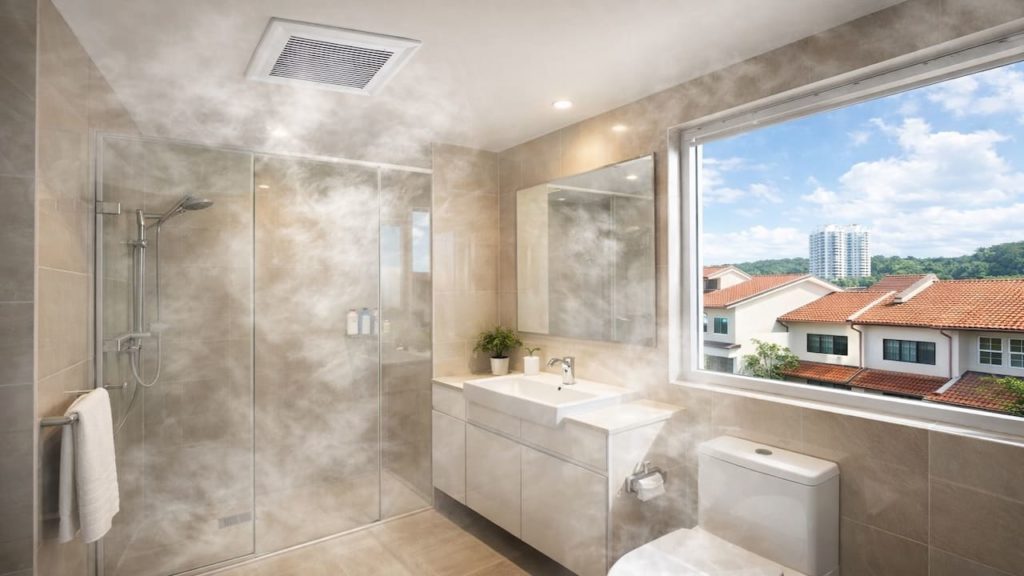
- Steam from showers leaks out and raises humidity across the home.
- Cooking adds vapor that spreads into living areas in open layouts.
- Wet towels, mats, and sponges slowly release moisture all day.
- Outdoor air can be just as humid, so “fresh air” does not always dry the room.
It feels like the fan is useless, but it is doing its job, and the real problem is the moisture load and missing exit path.
3. Why fan-only setups fail in humid climates
Humidity needs removal not circulation or it stays inside.
In Malaysia, relative humidity can stay high day and night, and fans cannot lower it, so a room with trapped moisture can feel clammy even when it is cool. Humidity wins.
- Circulating humid air can make fabrics and walls absorb moisture over time.
- Still zones behind wardrobes and curtains stay damp even with a fan running.
- Nighttime dew point stays high, so rooms do not “reset” naturally.
- Opening windows during rainy weeks can import more moisture into the room.
- Small condo rooms hit saturation quickly when wet sources are inside.
People blame the fan type, but the issue is the environment, so you fix it by removing moisture and directing airflow, not by buying a bigger fan.
4. How to make a fan setup actually work
Use the fan to push air out and reduce moisture sources so the room dries instead of swirling.
This is the best fan strategy in Malaysia because it treats airflow like a system, and it can work well when outdoor air is drier or when paired with targeted dehumidifying. Simple plan.
- Create a cross-breeze path by opening an inlet and an outlet, then aim the fan to move air toward the outlet.
- Ventilate in short daytime bursts when the air feels driest, not during heavy rain nights.
- Keep bathroom doors shut after showers and run exhaust so moisture does not spread.
- Move indoor laundry to a controlled drying room, not the main living space.
- Use a short Dry-mode or dehumidifier reset during wet weeks, then maintain with fan comfort.
Some people worry this is complicated, but it is a repeatable routine—once you set the airflow path, the fan finally feels like it is doing something useful.
5. FAQs
Q1. Can a fan reduce humidity in a room?
No, it cannot remove moisture, it only moves air around. It can feel better on your skin, but humidity stays unless you vent or dehumidify.
Q2. Why does the room feel sticky at night with a fan?
Night humidity can rise and rooms are usually closed, so moisture from breathing builds up. Fans help sweat evaporate, but when air is too humid, evaporation stalls.
Q3. Is it better to point the fan at me or at a window?
For comfort, point it at you, but for humidity relief, use it to move air out. A fan works best when air has an exit so combine comfort airflow with a vent path.
Q4. Should I open windows during rainy season in Malaysia?
Sometimes it makes things worse, because outdoor air can be wetter. Ventilate when the air feels lighter and drier, often mid-day after rain breaks.
Q5. What is the quickest fix when the room feels heavy?
Stop moisture sources, dry wet surfaces, and do a short dehumidify reset with Dry mode or a dehumidifier. Then use the fan to maintain comfort and airflow.
Pro’s Tough Talk

Alright. I’ve been on site for 20+ years and handled hundreds of jobs, and fan-only humidity complaints in Malaysia are the same every time: people think moving wet air magically makes it dry.
Cause is 3 buckets: moisture keeps getting added, air has no exit, and dead corners stay damp. Fix it in 3 steps: kill the moisture sources first, set a real in-and-out airflow route, then use the fan to push air toward the exit and do a short dehumidify reset during wet weeks—done. Running a fan in a sealed room is like stirring soup and calling it “evaporation,” and it’s like waving your hand over a wet floor and expecting it to dry in a swamp.
And the classic move is drying laundry indoors while the fan blows on your face like a hero. Congrats, you built a humidity factory. Fans are for comfort not moisture removal. Now set an exit path or add dehumidifying, unless you enjoy living in heavy air like it’s a lifestyle choice.
Summary
If you use a fan only, the air can still feel heavy because moisture stays in the room, which is common in Malaysia’s humid climate and closed condo or terrace-house spaces. Fans circulate humidity, they do not remove it.
The 5 mistakes are usually sealed rooms, wrong fan direction, dead corners, indoor drying, and ignoring damp hotspots like bathrooms and windows. Fixing airflow routes and reducing moisture sources changes the feeling faster than buying another fan.
Keep it simple—give humid air an exit, stop adding moisture, and use short dehumidify resets in wet weeks—air feels light when humidity has somewhere to go.