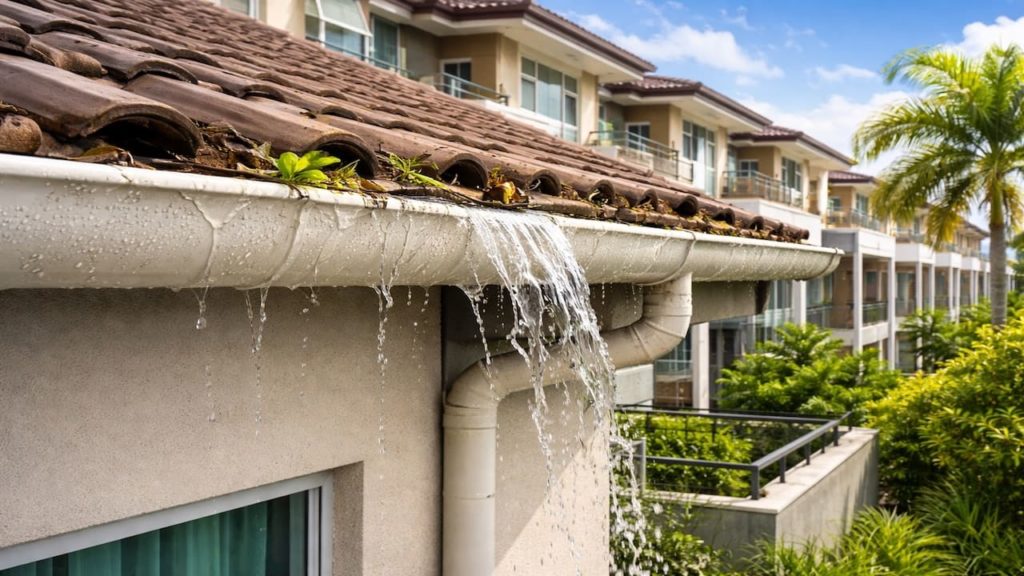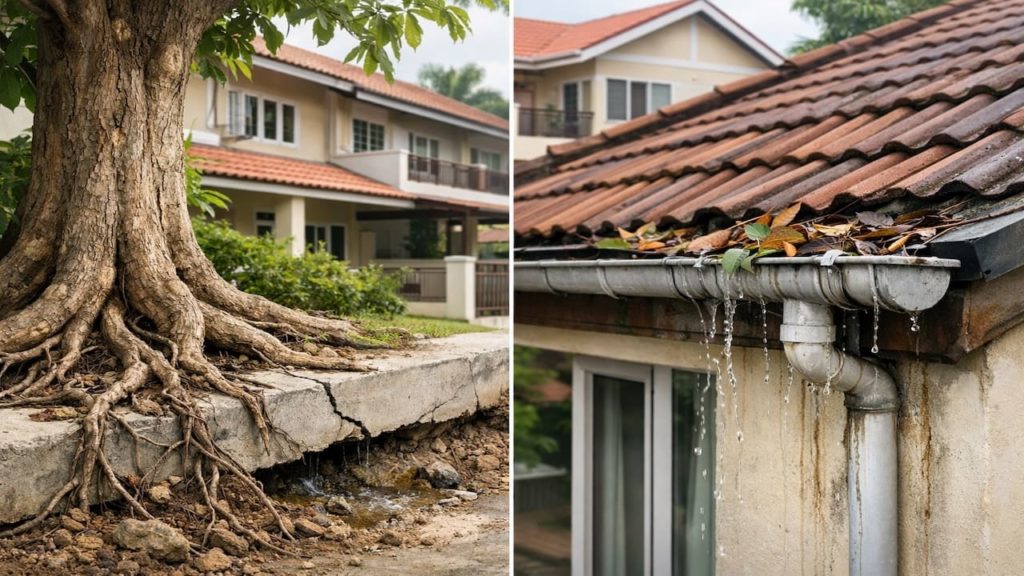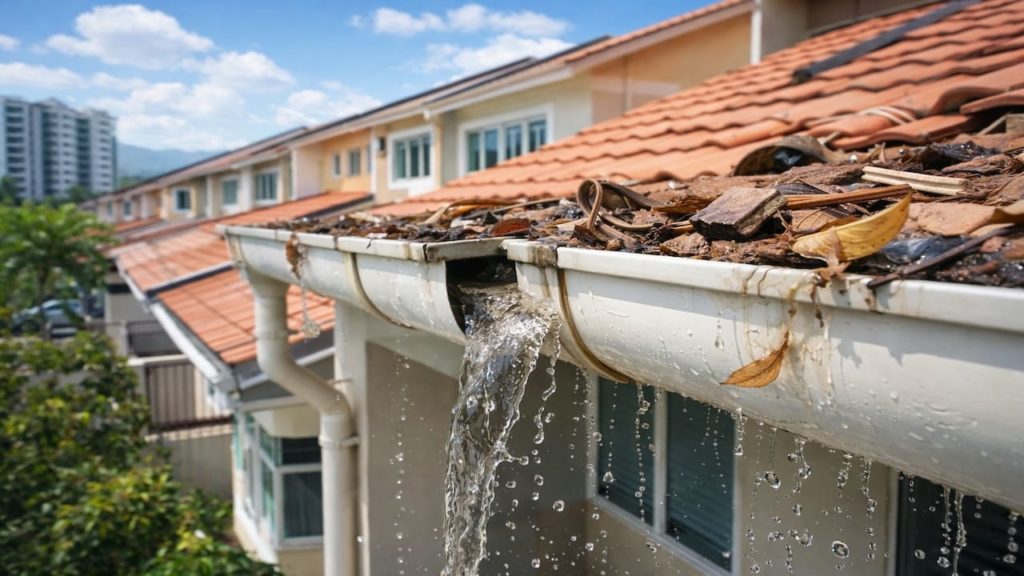
You want to clean the gutters at the right time, because Malaysia rain can turn one blocked outlet into a wall stain overnight.
In Malaysia, humid heat grows slime fast, and wet-season storms hit hard, so condos and terrace houses need a simple schedule that actually fits life.
In this guide, you’ll learn the best gutter cleaning schedule for rainy months, what to check after storms, and when a quick rinse beats a full cleanup.

Hi, I’m Ken. I write practical home guides for Malaysia—no fluff, just what works.
I hold a formal building design qualification and have spent about 20 years on job sites across hundreds of projects. My goal is simple: help you avoid costly mistakes with clear, safe steps—a quick way to decide what to do next.
1. Gutter cleaning timing: 5 tips
Clean gutters before rainy season peaks so water keeps moving and your roof edge does not become a sudden waterfall.
Malaysia weather changes fast—so timing is about staying ahead of buildup, not waiting for one perfect “free weekend.” Routine.
- Do a pre-wet-season clean when the first frequent showers start, before debris turns into wet paste in humid heat.
- After any major storm, do a 2 minute visual check for pooling near joints and downpipes on condo corridors or porch runs.
- Clean right after trees shed heavily, because leaf mats form dams faster than you expect in warm rainy weeks.
- Rinse outlets and corners during a dry break, because those trap zones feed blockages even when the long run looks fine.
- Set a simple repeat date every 4 to 6 weeks in wet months, because “once a year” fails in tropical conditions.
It can feel like overkill if you only notice problems in big storms, but small timing fixes prevent big repairs. Clean ahead, then storms stop surprising you.
2. Best schedule for rainy season homes
A rainy season schedule should be light and frequent so you maintain flow without risky climbing or long messy cleanups.
For Malaysia homes, schedule beats motivation—short checks fit condo rules and terrace house routines without turning into an all-day job.
- Week 1 of wet season: full clean and hose test to confirm strong downpipe discharge from the ground.
- Every 2 weeks: quick outlet check and remove visible leaf clumps before they slide into the pipe elbow.
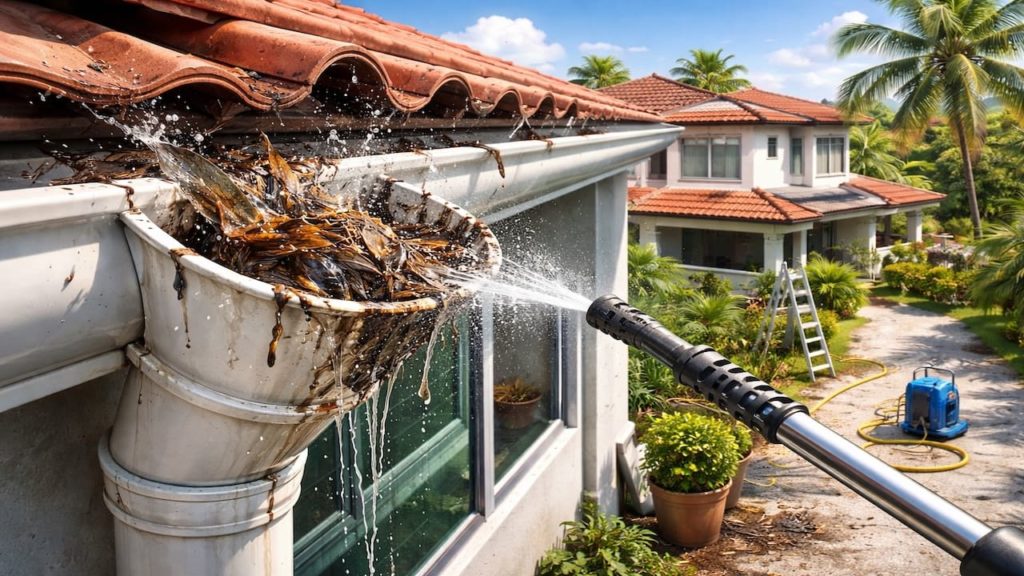
- Every 4 to 6 weeks: rinse the run and corners to remove sand grit that blankets surfaces and slows drainage.
- After any overflow event: same-day inspection of the first spill point so you fix the exact weak spot, not the whole system.
- End of wet season: cleanup and bracket check so sagging does not hold stagnant water through hot humid days.
Some people want one big cleanup and done, but rainy season does not cooperate. Keep it light, keep it frequent, keep flow strong.
3. Why timing matters in Malaysia wet season
Timing matters because debris turns into sludge fast and sludge creates standing water that leads to overflow stains and mosquitoes.
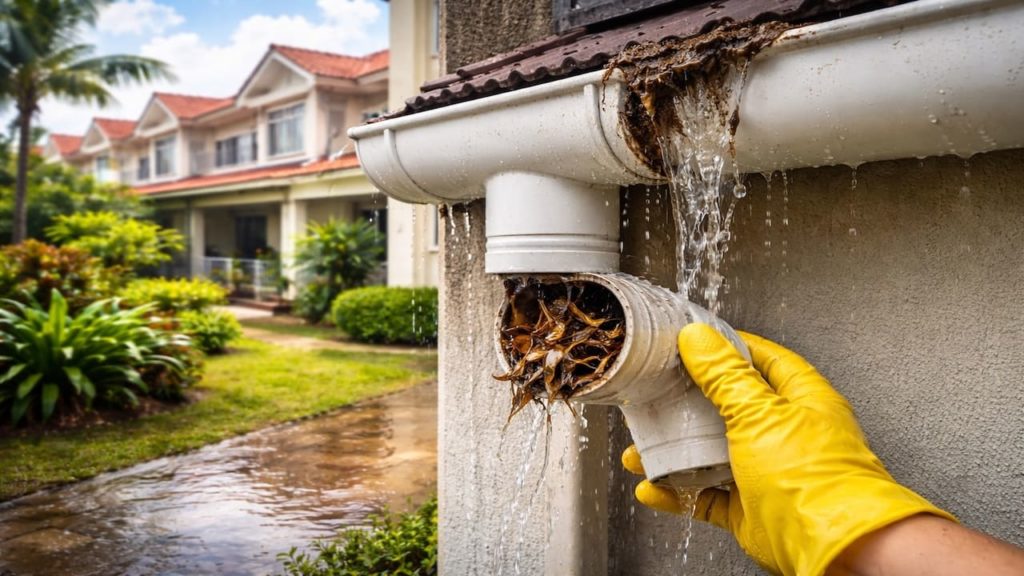
Malaysia humidity keeps gutters wet—so leaves do not dry and blow away, they rot and compact like wet paper. Bad news.
- Warm nights speed bacterial growth, so stagnant pockets smell and attract insects near windows and lights.
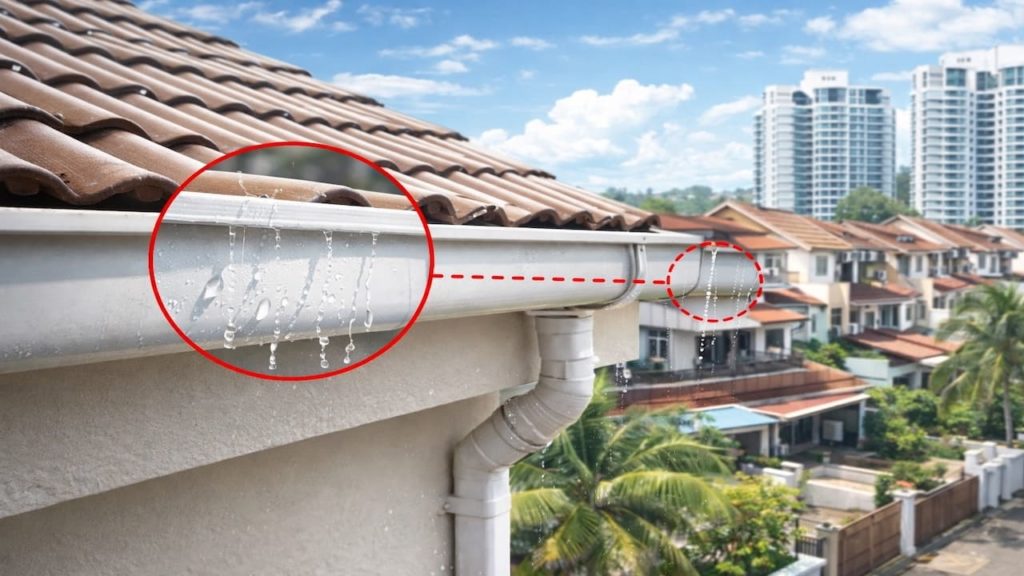
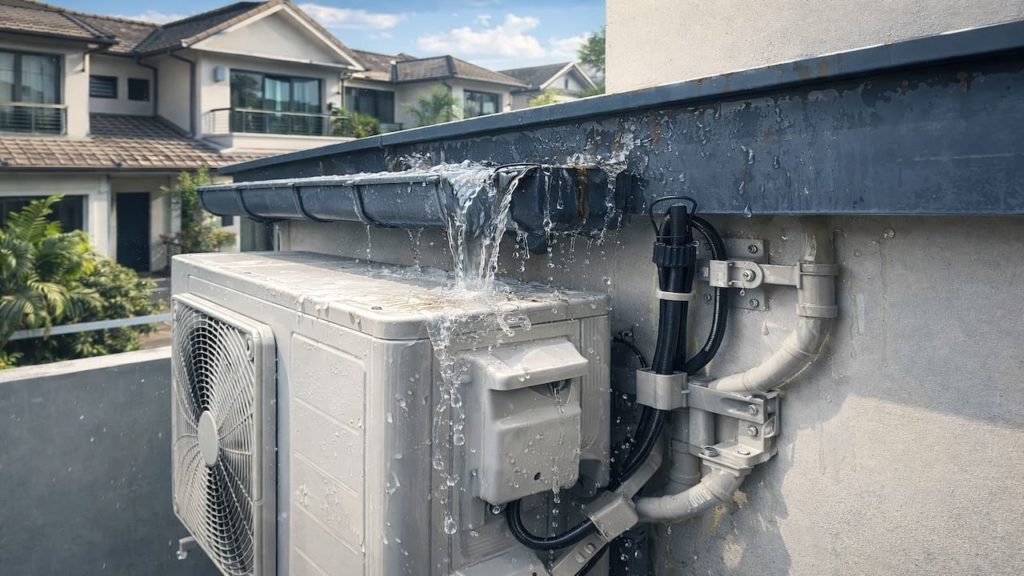
- Storm bursts raise gutter water levels quickly, so a small restriction becomes back-edge overflow onto walls.
- Sand and roof grit collect after wind, then bind with algae film and narrow outlets over time.
- Sagging runs hold water longer, and long wet contact accelerates joint leaks and rust spots.
- Condo long runs flex with heat and rain cycles, so loose brackets worsen when the gutter is repeatedly full.
You may think rain intensity is the main issue, but poor flow is the real trigger. Fix timing and you keep the system draining.
4. How to set a safe gutter routine
Build a routine around safe access and quick proof checks so you do not climb in wet heat and still keep drainage reliable.
Malaysia rain can return without warning—so do ground-level checks first, then only work higher during a dry window with stable footing. Safety.
- Pick one fixed day each month for an outlet and downpipe discharge check, and treat it like a bill you pay on time.
- After storms, mark where the first overflow appears, then inspect that seam or sag point during the next dry break.
- Keep a small hose test routine: 30 to 60 seconds of water and confirm steady downpipe exit flow at the ground.
- Prioritize corners, joints, and the outlet mouth, because those collect the worst sludge in humid tropical conditions.
- If access is high or slippery, request building maintenance or a pro instead of improvising ladders on wet tiles.
It is tempting to “just do it tonight,” but wet ladders are a bad deal. Set the routine, prove flow, and the risk stays low.
5. FAQs
Q1. How often should I clean gutters during rainy season in Malaysia?
Most homes do well with a check every 2 weeks and a deeper rinse every 4 to 6 weeks—more often if trees drop leaves. Use overflow or pooling as your trigger.
Q2. What is the fastest check I can do without climbing?
Watch the downpipe outlet during rain or a short hose test. If discharge is weak while the gutter stays full, flow is restricted.
Q3. Should I install a gutter guard to reduce cleaning?
It can help with leaves, but fine sand and algae can still block openings. Fast drainage matters more than the guard so choose what you can rinse and inspect.
Q4. I live in a condo and cannot access the roofline, what can I do?
Report weak discharge, overflow points, and wall stains to building management with clear photos after storms. Ask for outlet and downpipe cleaning first.
Q5. When is it better to call a professional?
If the gutter is sagging, joints leak repeatedly, or access is high and risky, call. Wet season is not the time for dangerous DIY.
Pro’s Tough Talk

I’ve been on site for 20+ years and handled hundreds of gutters in tropical heat and wet-season rain. If you wait until it overflows, you’re letting the storm schedule your life. Bad plan.
Three causes always show up. Leaf mush packs the outlet like a clogged sink. Sand grit builds like a traffic jam at corners. Sagging holds a pond and invites mosquitoes. Steps: check discharge from the ground, clear the outlet pocket, then fix the sag so water cannot sit.
Don’t blame yourself, and don’t pretend every contractor is trash, but some installs are held together with hope and one tired bracket. You know the two classics: you hear dripping at 2 a.m., and you promise “this weekend,” then it rains again. Clean before the storm punishes you or keep slipping at the entry tiles like it’s your hobby.
Summary
A good gutter cleaning schedule in Malaysia is frequent and light, because humidity turns debris into sludge and storms expose weak flow fast. Routine wins.
Start with pre-wet-season cleaning, then do outlet checks every 2 weeks and deeper rinses every 4 to 6 weeks. After any overflow, inspect the first spill point.
Do one hose test this week, confirm strong downpipe discharge, and set your next check date now. Clean flow prevents mold and mosquitoes and next you should read about gutter overflow in storms and wall stain checks.