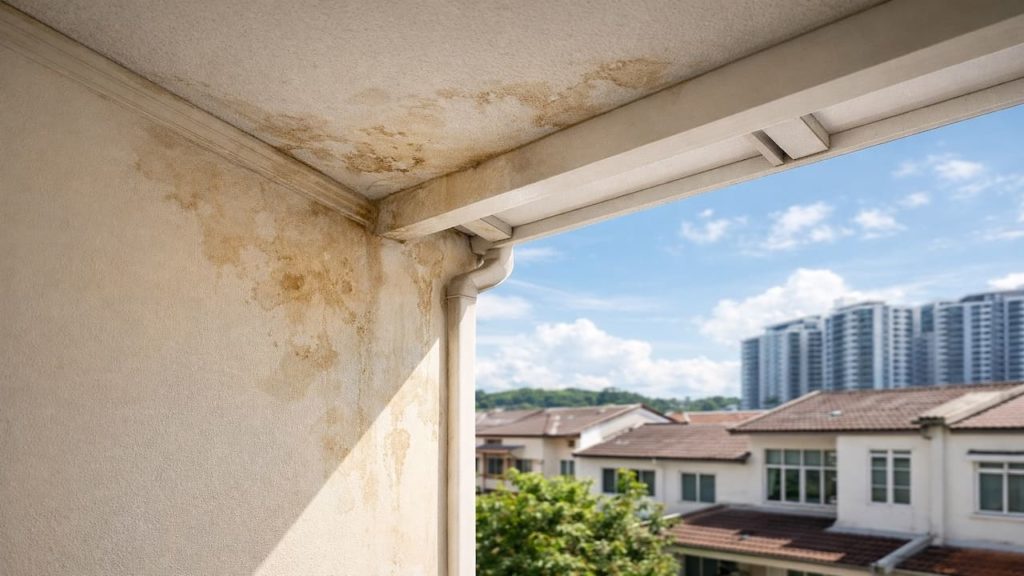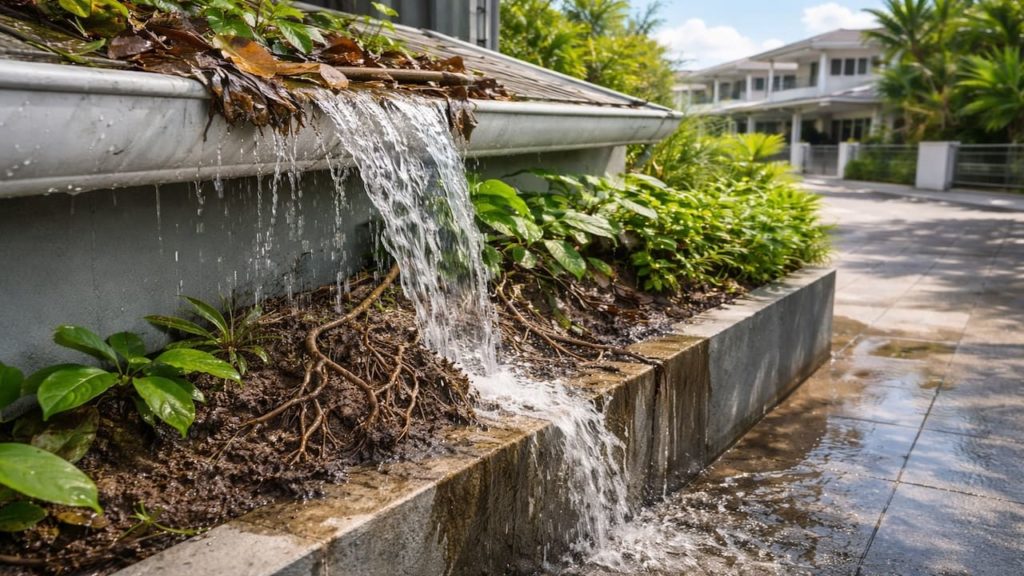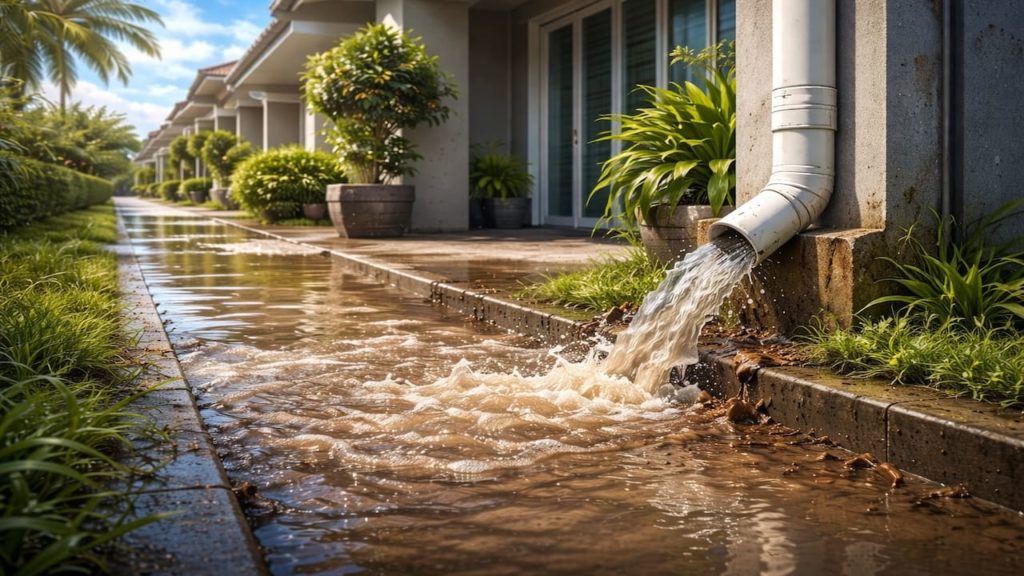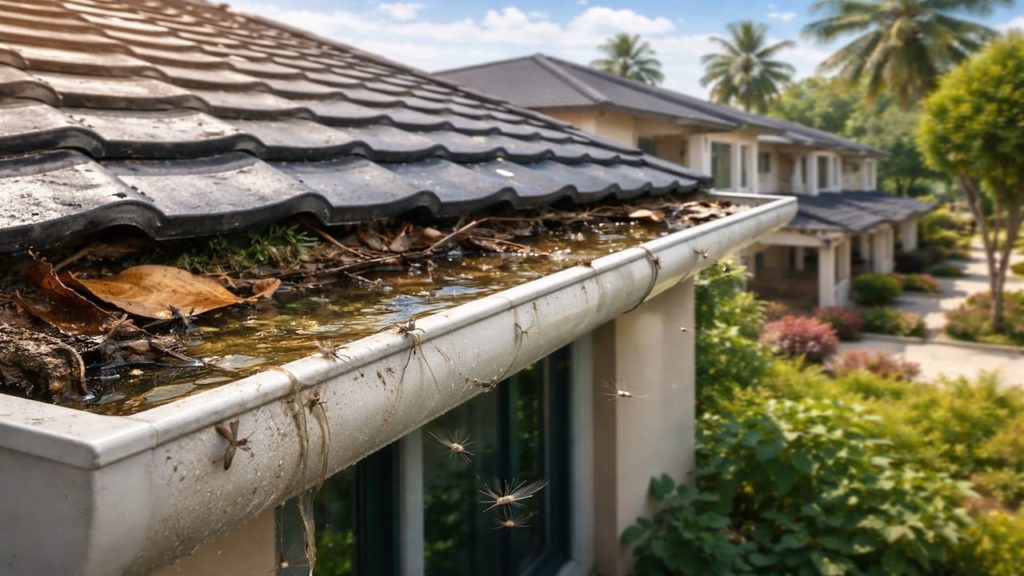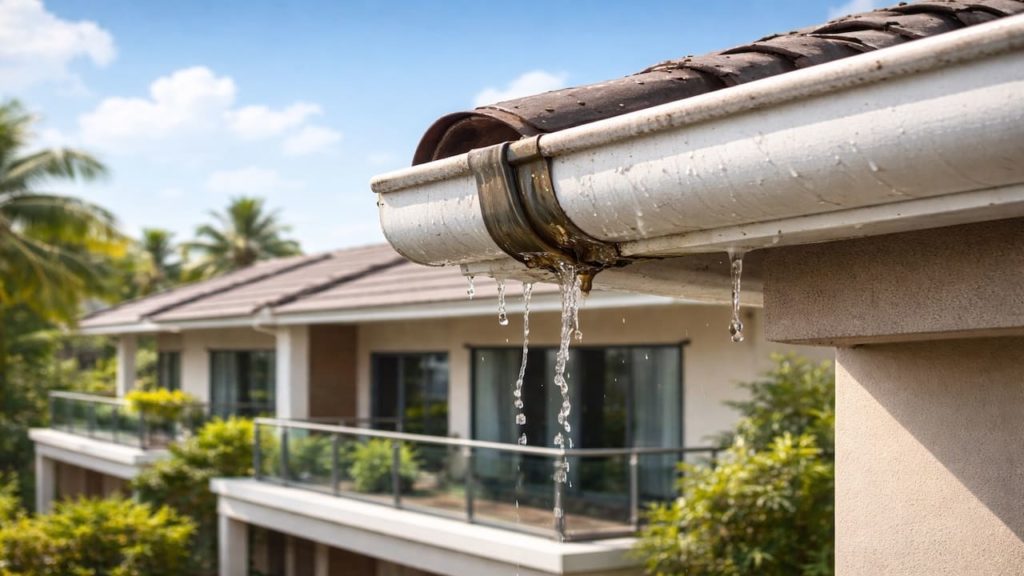
You notice water dripping from gutter corners, even when the rest of the run looks fine after rain in Malaysia.
In humid heat and sudden downpours, corners take the most stress from expansion and high flow, so end caps and joints can fail quietly first. Corner leak.
In this guide, you’ll learn the 5 corner drip causes and what to check first so you can spot failed caps and joints, stop wall stains, and avoid repeat leaks.

Hi, I’m Ken. I write practical home guides for Malaysia—no fluff, just what works.
I hold a formal building design qualification and have spent about 20 years on job sites across hundreds of projects. My goal is simple: help you avoid costly mistakes with clear, safe steps—a quick way to decide what to do next.
1. Gutter dripping from corners: 5 causes
Corner dripping usually means a seal failed at the end cap or joint because corners flex more and hold water longer during heavy rain.
Malaysia sun expands metal and PVC, then rain cools it fast, so the seal line gets pulled and pushed every day—small gaps become drips. Daily stress.
- End cap sealant shrank and opened a hairline gap at the lip
- Corner joint slipped slightly and the overlap no longer seats tight
- Old sealant cracked from UV and lost adhesion on damp surfaces
- Standing water at a low corner kept the joint wet and weakened the bond
- Fasteners loosened and the corner piece shifted during storms
You might think it is just overflow splash, but corner drips often appear even in light rain. If the drip is consistent, it is a joint issue, not a weather mystery.
2. End caps and joints often fail first
Caps and joints fail first because they are the cut and seam points and those points hate heat movement and constant wetting.
A straight gutter run can survive with minor dirt, but a corner seam is like a zipper that must stay sealed. Malaysia humidity also prevents full drying, which weakens cheap sealants faster—especially at shaded corners. Slow cure.
- Check if the end cap has a visible seal bead that is missing or peeling
- Look for water tracks under the corner piece showing the exact exit point
- Press gently on the corner and see if it flexes more than the straight run
- Inspect for rust stains or chalky residue near the seam line after rain
- Check bracket spacing near the corner so weight does not twist the joint
Some people jump straight to smearing more sealant on top. That can work short term, but if the joint is loose or dirty, new sealant will fail again.
3. Why corner leaks return even after a “quick reseal”
Corner leaks return when the surface was not dry clean and stable so sealant sticks to dirt and moisture instead of the gutter.
In Malaysia, corners stay damp longer, and dust turns into a thin muddy film. If you seal over that, it peels like tape on a wet wall—guaranteed disappointment. Bad bond.
- Sealant applied onto wet plastic or wet metal during humid weather
- Old sealant not removed so the new layer bonded to a weak layer
- Joint movement still present because brackets and fasteners stayed loose
- Low slope corner kept water pooling and softened the seal line
- Overflow from a partial blockage pushed water pressure into the corner seam
You may think you need a “better brand” of sealant, but technique and preparation matter more. Fix movement and dryness first, then the sealant has a chance.
4. How to stop corner dripping safely and make it last
Stop the drip by stabilizing the joint then resealing on a dry clean surface so the corner stays sealed through heat and storms.
Avoid working during active rain, and do not climb on wet tiles because Malaysia humidity keeps everything slick. Safety first. Use a staged approach: clear flow, tighten support, then reseal. Simple order.
- Confirm the gutter is not backing up from a clogged outlet or downpipe
- Tighten or replace loose fasteners and add support bracket near the corner
- Remove failing sealant and clean the seam with a dry cloth until residue is gone
- Let the area dry fully then apply sealant in a continuous bead along the seam
- Retest with a controlled pour and watch the seam for 2 to 3 minutes
You might worry this is overkill for a small drip, but corner leaks stain walls fast. Fixing it properly once beats repainting and patching damp spots later.
5. FAQs
Quick answers for corner drips in Malaysia, so you can choose the right fix before the next rain turns a small seam leak into wall damage.
Q1. How do I tell if the drip is from an end cap or from overflow?
End cap drips usually appear at the seam line even in moderate rain, and you can see a track under the cap. Overflow drips happen only when water rises above the lip.
Q2. Can heat alone cause a corner joint to open?
Yes, daily expansion and cooling can shift joints slightly over time. This is common in Malaysia sun and sudden storms, especially on older sealant.
Q3. Should I reseal from the outside only?
Outside sealing helps, but it must be done on a dry clean seam with stable brackets. If the joint is loose, sealing alone will fail again.
Q4. When should I replace the end cap instead of resealing?
If the cap is warped cracked or does not seat properly, replacement is smarter. Replace damaged parts before resealing or you will chase drips every rainy week.
Q5. Do corner drips mean the whole gutter system is bad?
Not usually, corners are simply the highest-stress points. If flow is good and only the seam leaks, a proper stabilize-and-reseal repair often solves it.
Pro’s Tough Talk

I’ve been on site for 20+ years and handled hundreds of jobs, and corner drips are the most predictable leak on the planet. Malaysia heat stretches everything, then rain snaps it back, and the corner seam takes the punch.
Cause is 3 things: end cap seal shrink, joint movement from loose brackets, or water pressure from a half-blocked outlet pushing into the seam. Steps are 3 too: clear flow first, tighten the corner support, then clean and reseal only when it is dry. Everybody has that “just a small drip” mindset, and everybody has that “why is my wall stained” regret.
Here’s the rule, a loose joint will laugh at your sealant. Water is like a tiny knife, it finds the smallest gap, and it spreads like soy sauce on a white tee. One jab: the guy who smears sealant on wet plastic is selling you hope, not a fix. Do it right, or keep feeding the corner drip like a pet.
Summary
Corner dripping usually starts at end caps and joints because they flex more and stay wet longer in Malaysia humidity. A consistent drip is a seam issue, not just overflow.
Fix it by confirming flow, stabilizing brackets, and resealing on a dry clean seam. If parts are warped or cracked, replace them before sealing.
Check one corner today and do a controlled pour test—one solid repair saves repeated staining and you can move on to the next home guide calmly.