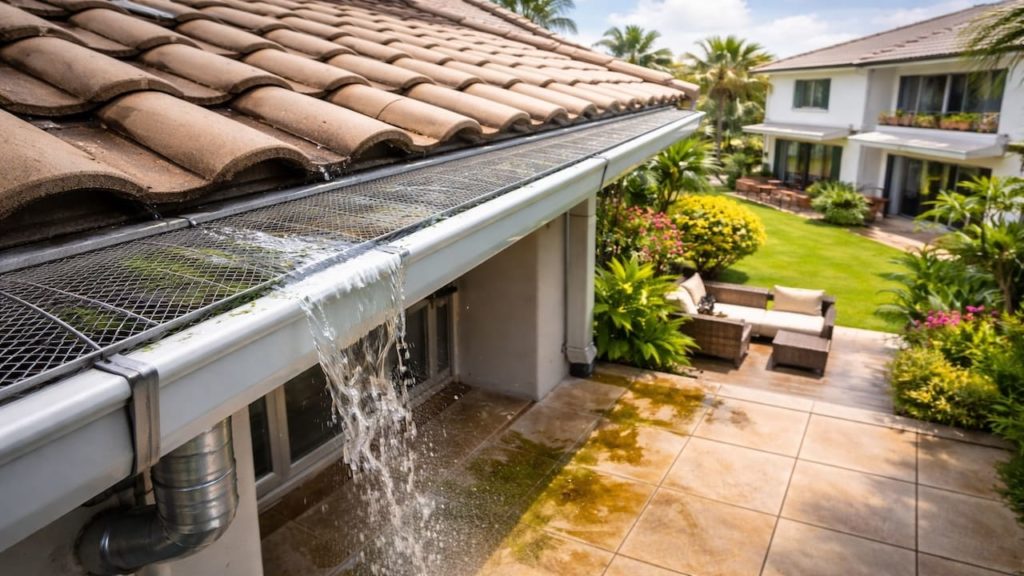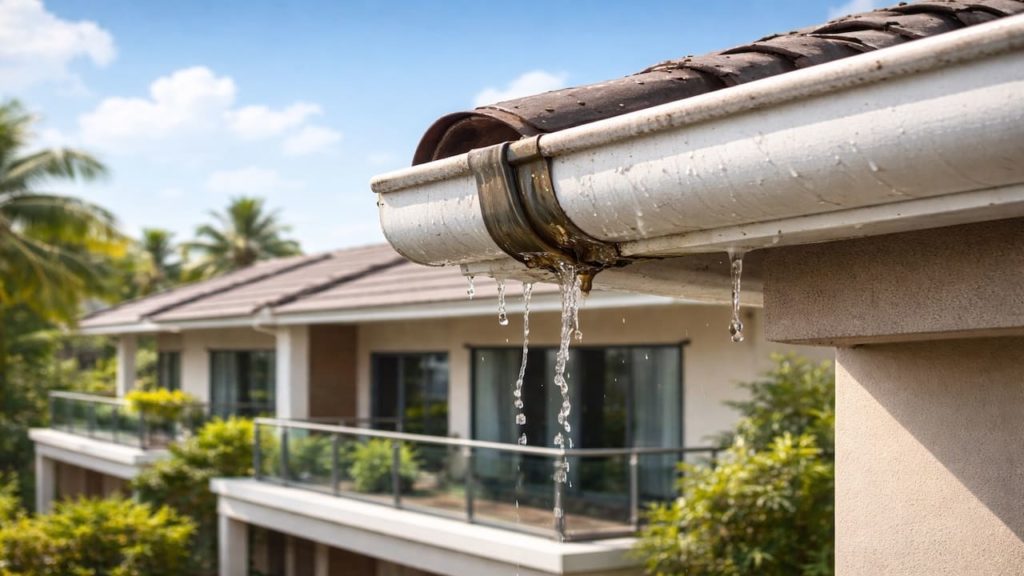
You get gutter overflow only during heavy downpours, and the gutter looks clean, yet water still spills near one corner or downpipe.
In Malaysia, short monsoon bursts push huge volume fast, and a small downpipe can bottleneck condos and terrace houses even with decent gutters. Bottleneck.
In this guide, you’ll learn how to spot an undersized downpipe and what to upgrade so storm water exits fast instead of backing up onto walls.

Hi, I’m Ken. I write practical home guides for Malaysia—no fluff, just what works.
I hold a formal building design qualification and have spent about 20 years on job sites across hundreds of projects. My goal is simple: help you avoid costly mistakes with clear, safe steps—a quick way to decide what to do next.
1. Gutter downpipe too small: 5 signs
Undersized downpipes show up as fast filling gutters even when the gutter channel is clean and the slope looks normal—capacity hits a ceiling.
Malaysia rain can jump from light to intense in minutes, so a pipe that is “fine most days” fails at peak flow and forces overflow at the weakest edge. Simple physics. Watch how quickly the gutter water level rises near the outlet.
- Downpipe outlet flow looks strong at first, then slows while the gutter level keeps rising.
- Overflow happens near the downpipe during storms, not at the far end of the run.
- The gutter stays almost full for many minutes in heavy rain, then drains slowly after rain stops.
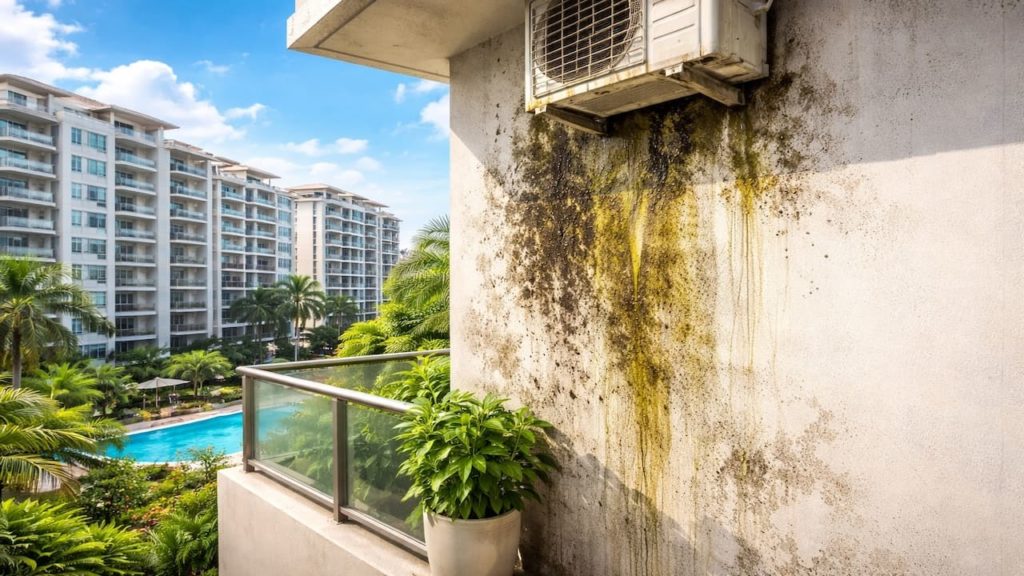
- Repeated wall stains appear below the outlet area even after you cleaned leaves and sludge.
- You hear loud rushing in the pipe, yet the gutter still backs up under peak rain bursts.
Some people assume it must be a clog, but a clean pipe can still be too small. Capacity limit. If the pattern repeats only in big storms, sizing is on the suspect list.
2. Upgrade flow for heavy downpours
Upgrading flow means reducing the bottleneck by increasing outlet capacity and giving storm water more escape paths—this is how you beat sudden Malaysian downpours.
Think of it like traffic: one narrow lane causes a jam even if the road is clean. Same with water. On condos, long runs feed one pipe, and on terrace houses roof valleys dump into one corner near the porch. High load.
- Add a second downpipe on long runs so peak water has another exit route.
- Increase outlet size at the gutter to pipe connection so the throat is not the limiter.
- Use a larger diameter downpipe where possible, especially on valley-fed sections.
- Reduce sharp elbows that slow flow and create pressure buildup during peak bursts.
- Improve gutter slope and support so water reaches the outlet quickly without pooling.
It is tempting to keep cleaning more often, but cleaning cannot create extra pipe capacity. Upgrade is the fix. Do it once and storms stop winning.
3. Why downpipes end up too small in Malaysia
Downpipes are often sized for average rain and Malaysia storms routinely exceed that, especially when roofs funnel water into one short section—peak minutes matter.
Heat and humidity add a second problem: algae film and grit narrow effective diameter over time, so a pipe that was borderline becomes insufficient. Quiet creep. Condos also share roofline drainage paths that were designed for basic compliance, not comfort.
- Roof valleys concentrate runoff and overload one downpipe even if other areas look fine.
- Small outlet throats restrict flow before water even enters the downpipe.
- Fine sand and roof grit build inside elbows and reduce internal space month by month.
- Sagging gutters raise water level, which increases backpressure and exposes small-pipe limits.
- Long gutter runs feeding one pipe create surge waves during storm bursts.
You can blame the rain, but the real issue is peak capacity planning. Not enough exit. When rain intensity spikes, the pipe becomes the gate that cannot open wider.
4. How to fix an undersized downpipe safely
Confirm the bottleneck before upgrading by proving the gutter is clear and the outlet still cannot keep up—then choose the lowest risk improvement.
Start with safe ground-level checks because Malaysia wet season surfaces are slick, and climbing during damp weather is a bad deal. Safety first. If you are in a condo with restricted access, use discharge evidence and photos to push maintenance action.
- Do a hose test in a dry window and watch if the gutter near the outlet rises faster than the downpipe can discharge.
- Clear the downpipe from the bottom and confirm steady discharge for 60 seconds to rule out partial clog.
- Mark the first overflow point after a storm and check if it is close to the outlet and not at a random seam.
- If sizing is likely, add a second downpipe or enlarge the outlet throat as the first upgrade step.
- After upgrades, retest during the next heavy rain and confirm the gutter no longer stays full for long minutes.
Some fixes look small, like adding one more downpipe, but the impact is huge. Flow relief. If you cannot access safely, call a pro and tell them the signs you observed so they do not waste time guessing.
5. FAQs
Q1. How can I tell small pipe vs clogged pipe?
If you clear the pipe and still get backup only during peak storms, sizing becomes likely. A true clog usually shows weak discharge even in moderate rain.
Q2. Does a gutter guard solve an undersized downpipe?
Guards reduce leaves but do not increase pipe capacity. They can even reduce flow if fine debris mats the surface.
Q3. Is adding a second downpipe better than replacing the whole gutter?
Often yes—especially on long runs where one outlet is overloaded. Extra exit capacity is the fastest win when gutters are otherwise in decent condition.
Q4. Can undersized downpipes cause wall mold?
Yes, repeated overflow wets fascia and wall surfaces, and Malaysia humidity slows drying. Stains can turn musty fast near windows and porch corners.
Q5. What should condo residents do if they cannot touch the roofline?
Document overflow near the outlet, take photos right after storms, and report repeated stains and pooling to management. Ask for outlet sizing review, not only cleaning.
Pro’s Tough Talk

I’ve been on site for 20+ years and handled hundreds of gutter jobs in tropical heat and wet-season rain. When the downpipe is too small, it is like trying to drain a bathtub through a coffee straw. You can scrub the tub all day, it still floods.
Three causes show up again and again. One, roof valleys dump water like a fire hose into one corner. Two, the outlet throat is tiny, so it chokes before water even enters the pipe. Three, elbows collect sand grit and algae, making the inside narrower each month. Steps: prove the pipe is clear, watch discharge vs gutter level, then add capacity with a larger outlet or a second downpipe.
Don’t blame yourself, and don’t call every installer a villain, but some designs are “good enough on paper” and useless at midnight storms. You know the two classics: you hear the waterfall sound at 2 a.m., then you tiptoe on slippery entry tiles in the morning like a cartoon. Upgrade the bottleneck and storms stop bullying you or keep mopping like it is your side hustle.
Summary
Undersized downpipes show clear signs: the gutter near the outlet stays full, overflow happens close to the pipe, and stains repeat after peak storms. Malaysia rain makes this visible.
Rule out clogs first with safe discharge checks, then treat it as a capacity problem. Adding a second downpipe or enlarging the outlet throat often beats endless cleaning.
Do one hose test in a dry window, record outlet discharge behavior, and schedule the smallest upgrade that adds capacity. More exit flow means fewer overflows and next read about storm overflow reasons and wall stain checks.