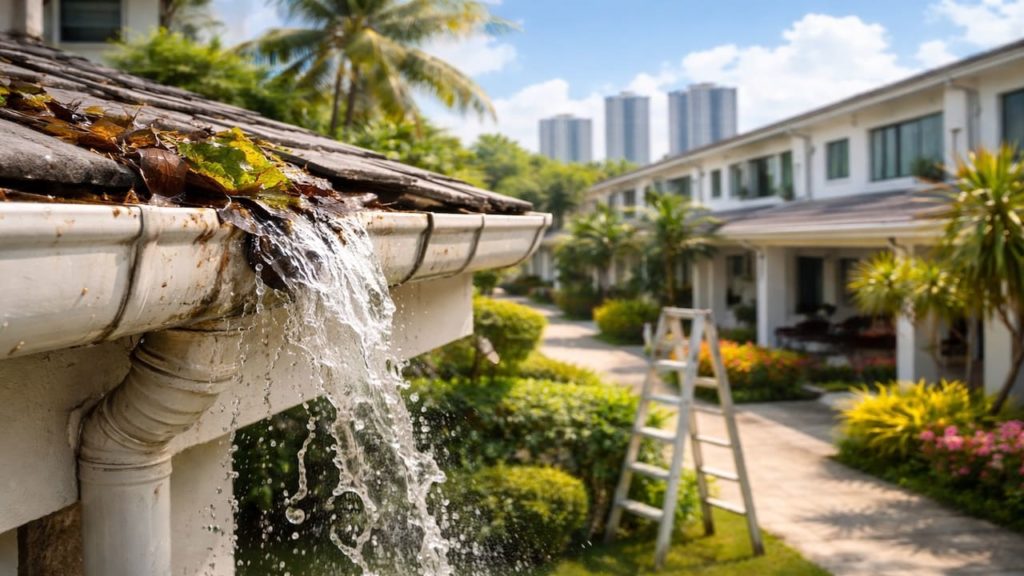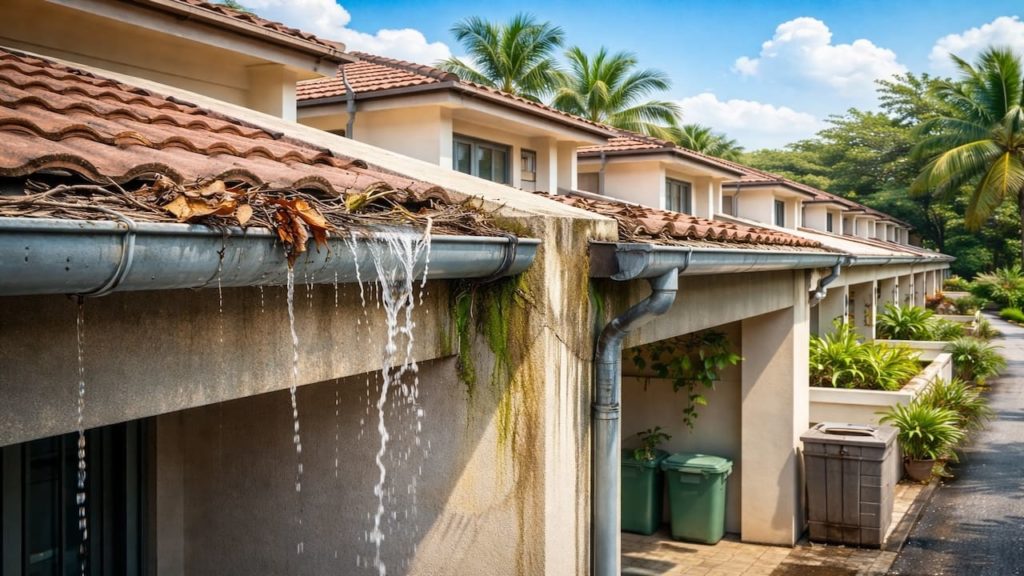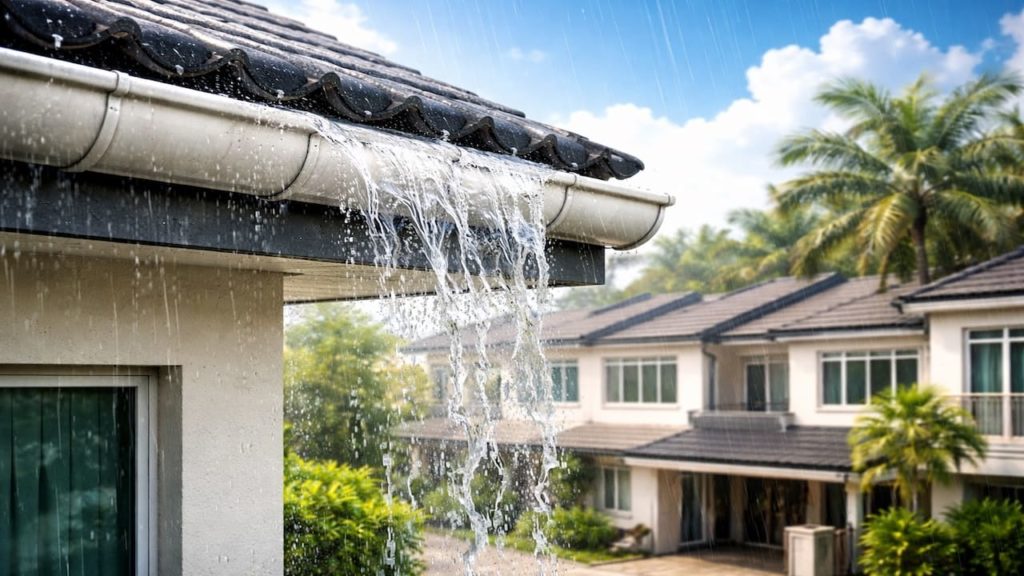
Your gutter overflows when the rain turns wild, and water sheets off the roof edge onto the porch or balcony.
In Malaysia, monsoon bursts plus heat-driven slime can overwhelm a small gutter on both condos and terrace houses. Wet-season reality.
In this guide, you’ll learn how to stop gutter overflow fast by checking the few failure points that cause heavy-rain spills.

Hi, I’m Ken. I write practical home guides for Malaysia—no fluff, just what works.
I hold a formal building design qualification and have spent about 20 years on job sites across hundreds of projects. My goal is simple: help you avoid costly mistakes with clear, safe steps—a quick way to decide what to do next.
1. Gutter overflowing: 5 checks
Most overflows come from one blocked or sagging spot and you can spot it quickly before the next downpour.
Malaysia’s rain can dump a lot in minutes—so a small clog becomes a fascia waterfall. No guessing.
- Find the exact overflow point right after rain, not “somewhere along the line.”
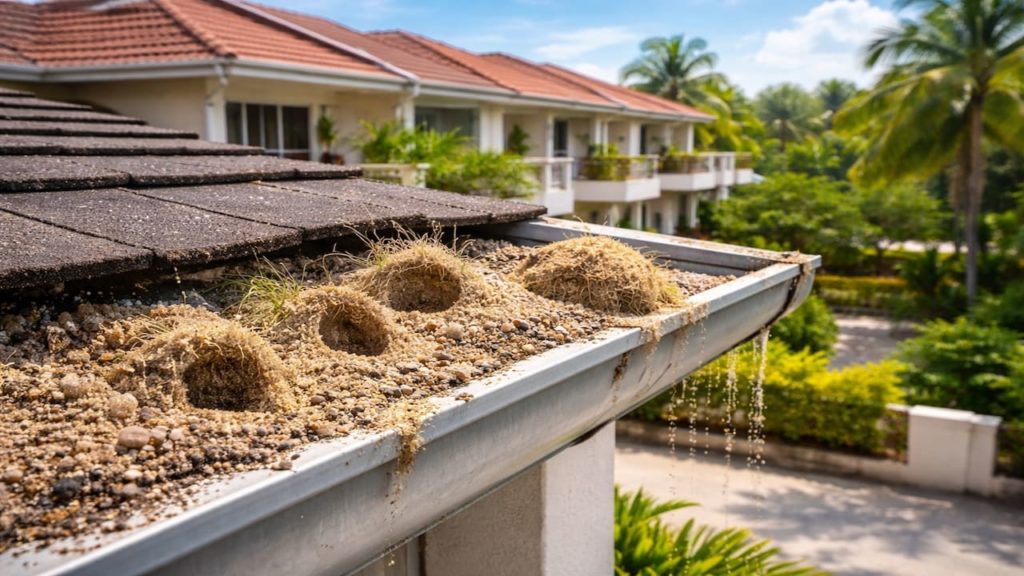
- Check the outlet mouth for sludge, leaves, or grit stuck like a plug in humid heat.
- Pour a cup of water and confirm it moves toward the outlet instead of sitting.
- Look for a sag bowl between brackets that fills first during monsoon minutes.
- Notice roof valleys dumping into one short run and overloading that section.
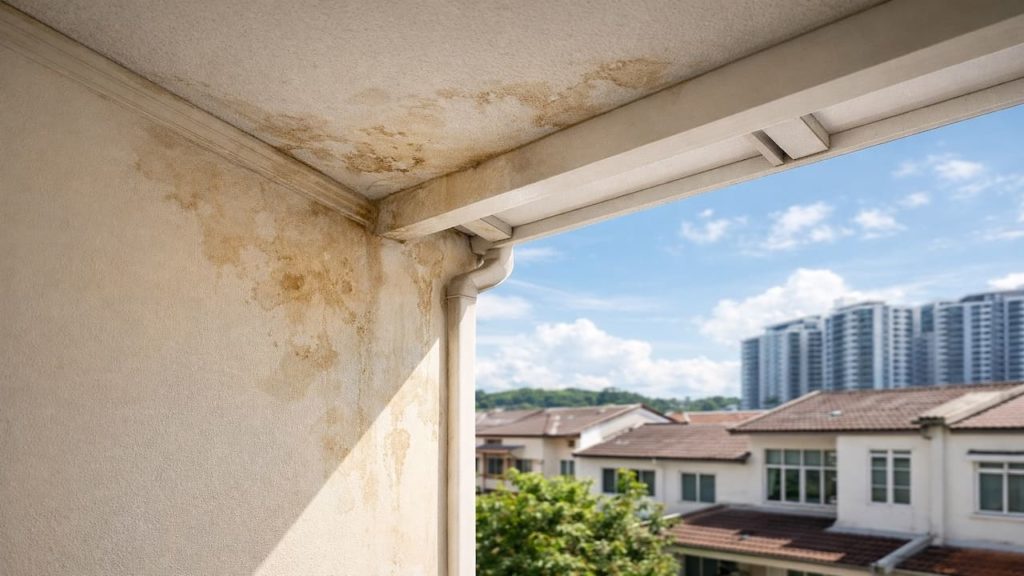
“It only overflows when it really pours” sounds normal, but it still leaves stains and mold. Fix the weak spot, then recheck flow.
2. Stop roof edge spills in heavy rain
You can cut roof edge spills the same day by restoring a basic escape path and controlling splash.
Sideways Malaysian rain turns overflow into slippery tiles and wet walls—so aim for control, not hero moves. Safety first.
- Move items away, then place a wide bin under the spill zone to reduce splash-back.
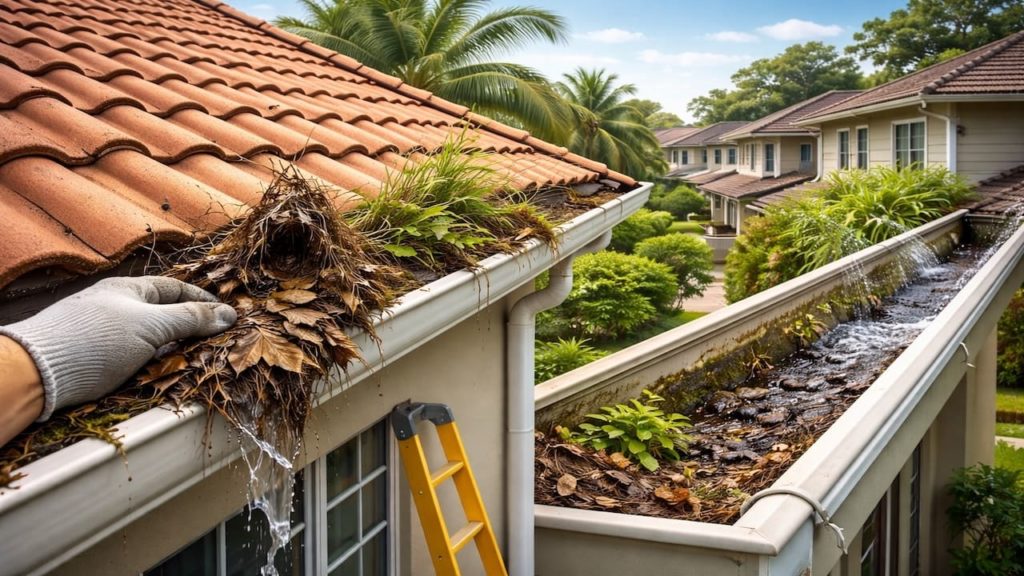
- During a lull, scoop leaf mats with gloves starting near the outlet.
- Run a gentle hose for 30 to 60 seconds and watch the downpipe outlet for discharge.
- Clear the downpipe from the bottom using a hose push and pull, not metal rods.
- Add a temporary splash guard if water is hitting lamps, wiring, or a wooden door frame.
Waiting for “service day” often means repeated overflow marks. Act now, then book repairs if the gutter is loose or cracked.
3. Why gutters overflow in Malaysia
Overflow happens when inflow beats drainage capacity and Malaysia’s tropical weather makes that mismatch common.
Heat grows algae, wind drops debris, and storms hit hard—so gutters clog faster than you expect. Simple physics.
- Algae film and roof grit turn into paste, especially on shaded edges with constant humidity.
- Small leaves and seed pods pack tight at bends, then block flow during the next burst.
- Bad slope leaves standing water, which attracts mosquitoes and carries more sediment.
- Undersized gutters can’t handle roof-valley surges on many terrace house layouts.
- Loose joints leak, then debris sticks at the leak line and forms a dam.
It’s easy to blame “crazy rain,” but drainage still follows rules. Restore capacity and the spill stops.
4. How to fix and prevent gutter overflow
Clear the restriction then correct slope and support so the same overflow does not return next week.
Work around Malaysia’s rain rhythm—checking right after storms beats waiting for a perfect dry weekend. Fast routine.
- After rain, scan for one overflow point, then trace upstream to the nearest outlet.
- Flush toward the outlet and confirm steady discharge at the downpipe exit.
- Add or re-seat brackets at sag points so water runs downhill instead of pooling.
- Fit a small outlet screen near trees, and clean it often during wet months.
- Do a wet-season check every 4 to 6 weeks, or after any huge storm burst.
Guards can help, but they don’t fix bad fall or loose joints. Keep flow strong, and overflow stays gone.
5. FAQs
Q1. Is gutter overflow dangerous or just annoying?
It can be both when water hits wiring or makes tiles slick in a wet Malaysian corridor. Treat it as a safety issue first.
Q2. How do I know if the downpipe is clogged?
Do a short hose test and watch the outlet. If little water exits while the gutter fills, the downpipe is restricted.
Q3. Can I fix overflow without climbing on the roof?
Sometimes, if the blockage is at the downpipe base or reachable from a balcony. Safety beats speed every time so avoid risky ladders in wet humidity.
Q4. Do gutter guards stop overflow in monsoon rain?
They reduce leaf buildup, but they won’t fix sagging, bad slope, or undersizing. Use them as one layer.
Q5. When should I call a pro in Malaysia?
If overflow repeats after cleaning, or you see sagging and leaks, call. Also call if access is high or slippery.
Pro’s Tough Talk

I’ve been on site for 20+ years and handled hundreds of roofs and gutters in Malaysia’s tropical heat and wet seasons. Overflow isn’t “bad luck.” It’s a blocked throat, a bent track, or a tiny pipe acting tough.
Cause 1 is a packed outlet, like a sink full of noodles. Cause 2 is bad fall, like a slide that goes uphill. Cause 3 is tiny sizing, like a highway forced into one lane. Do this: flush test, clear the downpipe from the bottom, then brace the sag.
And yeah, some guys slap brackets on like stickers and vanish, but don’t beat yourself up. You’ve heard the midnight “waterfall” and you’ve set a pail and still got splashed, right. Fix the flow and the roof edge stays dry or enjoy the indoor rain show.
Summary
Overflowing gutters usually trace back to one clog or sag that turns heavy rain into roof-edge spills. Malaysia’s storms and algae speed it up.
Run the 5 checks, flush, and confirm downpipe discharge before spending money. If it repeats, focus on slope, support, and sizing.
Do one wet-season inspection this week, clear the outlet, and retest after the next storm. Small fixes stop big stains and your next read should be gutter seam sealant failures.