You fixed a gutter once, then fixed it again, and now you are wondering if repairs are just burning money in Malaysia rain.
In hot sun and sudden downpours, gutters age faster, and small patches can fail if the system is warped, undersized, or rusted through. Cost spiral.
In this guide, you’ll learn the 5 signs that mean replacement beats endless patching so you can judge damage honestly, protect walls and doors, and spend once instead of twice.

Hi, I’m Ken. I write practical home guides for Malaysia—no fluff, just what works.
I hold a formal building design qualification and have spent about 20 years on job sites across hundreds of projects. My goal is simple: help you avoid costly mistakes with clear, safe steps—a quick way to decide what to do next.
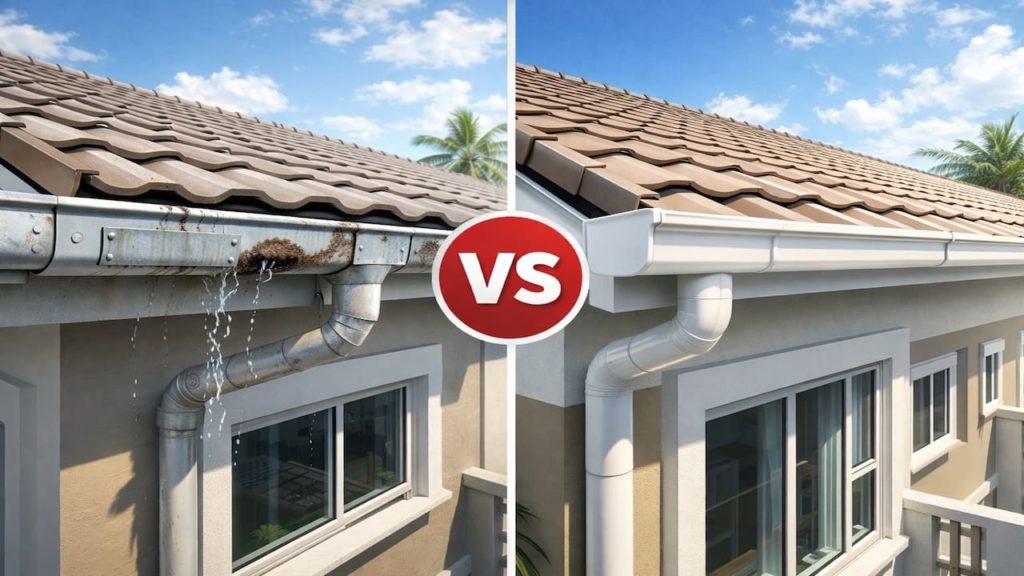
1. Gutter repair vs replace: 5 signs
Replace when damage is widespread and patches cannot restore strength because gutters must hold shape under storm load, not just stop one drip.
Malaysia storms expose weak sections fast, and heat expansion stresses every joint—if the base metal or alignment is failing, each repair becomes a new failure point. Hard truth.
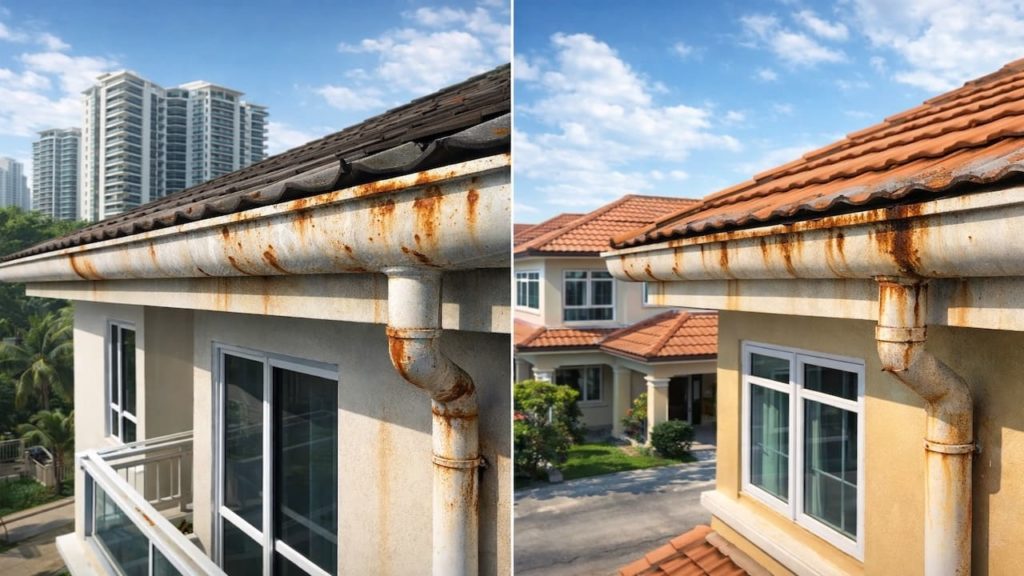
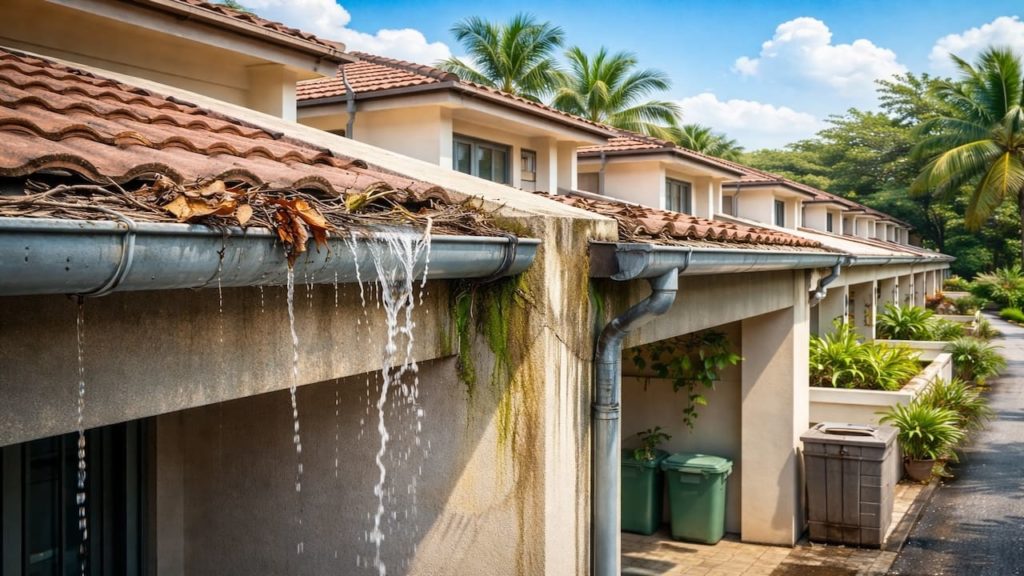
- Multiple rust holes or pinholes across different sections not just one corner
- Repeated joint leaks even after proper cleaning drying and resealing attempts
- Sagging lines that return after tightening brackets showing warped runs
- Cracked brittle PVC sections that split again near brackets or joints
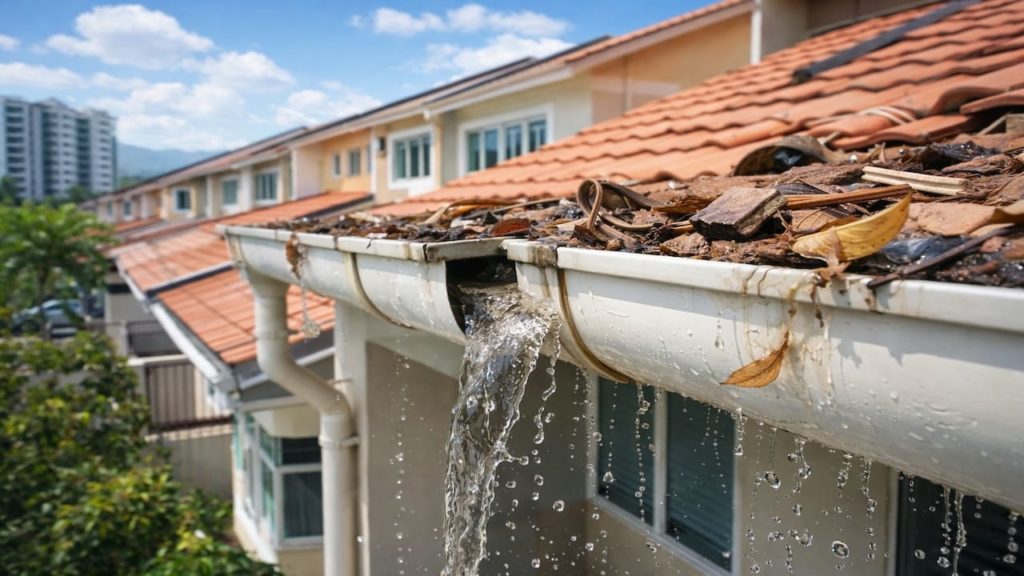
- Overflow continues in normal heavy rain even when the line is fully clear
You might say “I can patch one more time and save cash.” That works when the problem is local, but not when the gutter is failing as a system. One more patch—then another.
2. Know when patching wastes money
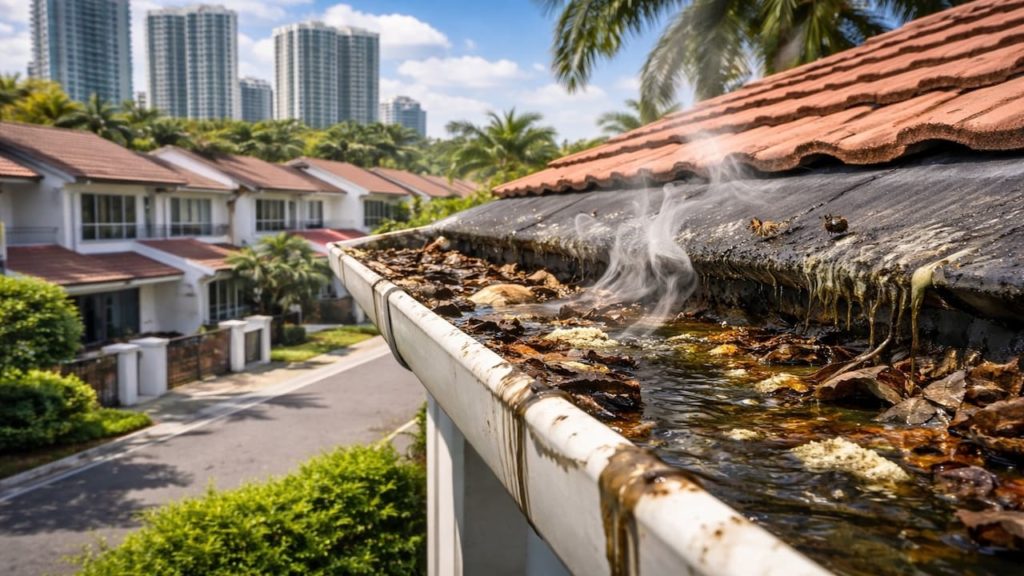
Patching wastes money when repairs cost more than restoring reliable flow and you still get wall stains, damp smells, or slippery porch tiles.
Every patch has a hidden cost: ladders, time, risk, and the next storm test. In humid weather, failed patches keep walls wet longer and indoor air feels heavier. Not worth it.
- You repaired the same joint 2 times and it still weeps after downpours
- You see new leaks appear right next to the last patch area
- You keep cleaning debris but water still backs up at the same roof corner
- Your fascia or soffit shows soft spots from repeated wetting behind the gutter
- Driveway splash and algae keep returning because discharge is uncontrolled
Some people argue “Replacement is always expensive.” True sometimes, but endless repairs can cost more through repainting and damp fixes. Stop paying the leak tax.
3. Why repairs fail faster in Malaysia weather
Repairs fail when heat movement and moisture prevent a stable seal and the gutter keeps shifting under water weight during storms.
Sealants hate damp surfaces, and tropical humidity slows drying, so rushed patches peel early. UV also breaks down plastics and softens old seal lines. Climate pressure.
- Daily expansion and cooling pulls joints apart by tiny amounts over months
- Frequent heavy rain creates backpressure that forces water through weak seams
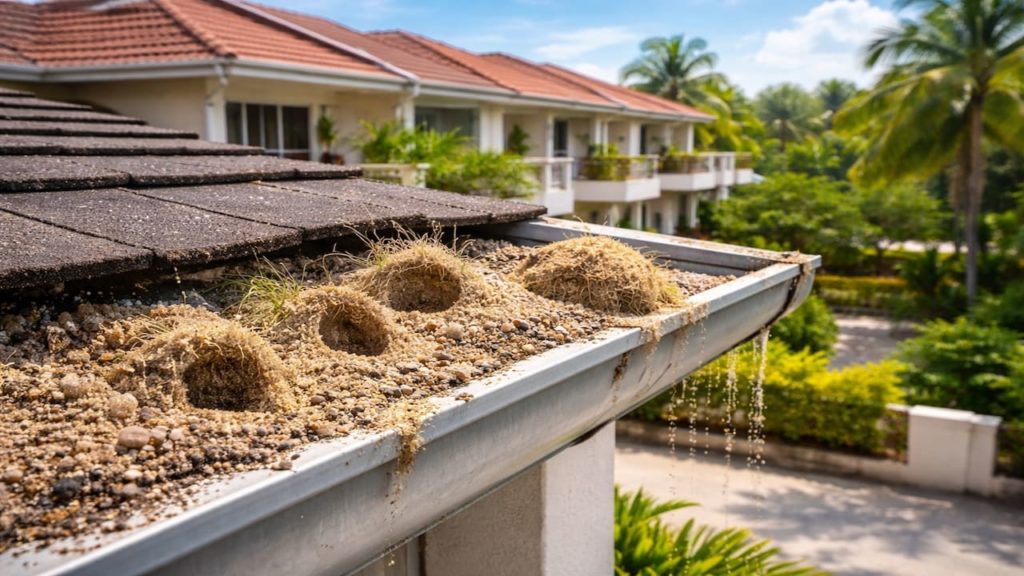
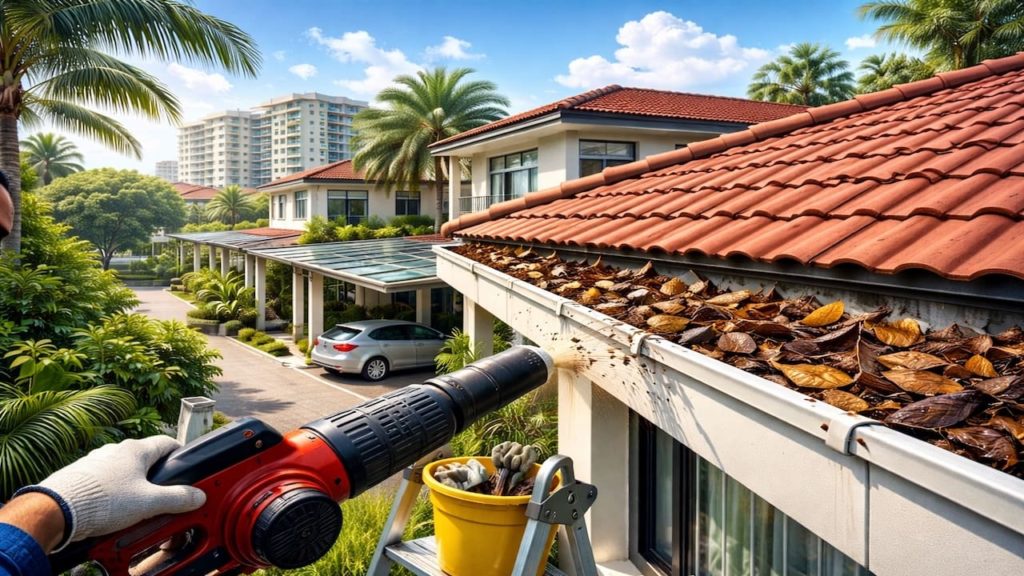
- Fine sand and roof grit pack outlets and raise water level against joints
- Loose brackets create low spots where water sits and weakens the next joint
- Downpipe or ground drain restrictions push water back up into the gutter
You may think “My patch failed because the sealant brand was bad.” Sometimes, but movement and moisture are the real culprits. Fix the system, not the tube.
4. How to decide repair vs replace with a simple test
Decide using flow shape and repeat failures not just visible holes so your choice survives the next storm and keeps walls dry.
Start with a safe inspection from the ground, then test one section at a time. In Malaysia, choose a dry window and do not climb on wet tiles. Safety first.
- Do a controlled pour near outlets and confirm fast discharge without rising water
- Check slope by looking for standing water lines after rain and mark low spots
- Count leak points across the run and note if they are spreading each season
- Estimate repair bundle cost including brackets joints and labor time not one patch
- If replacing choose adequate downpipe capacity and secure bracket spacing early
You might worry the decision is complicated, but it is a simple pattern check. If failures multiply, replacement wins. If one joint leaks, repair makes sense.
5. FAQs
Quick answers to help you choose between repairing and replacing gutters in Malaysia, especially when storms keep testing the same weak points.
Q1. How many leaks is “too many” for repairs?
If leaks appear in several separate areas and new ones show up after each fix, it is trending toward replacement. One leak is repairable, a pattern is not.
Q2. Is rust always a replacement sign?
Surface rust can be repaired, but rust holes and thin metal that dents easily usually mean the section has lost strength. Weak metal fails again.
Q3. Can I replace only one side of the house?
Yes, if the damage is isolated and the rest of the system is aligned and healthy. Matching slope and outlet capacity matters more than matching age.
Q4. What is the biggest mistake people make when patching?
They seal a joint without fixing sagging brackets or outlet restrictions, so water level rises and pushes through the seam again. Flow and support come before sealing.
Q5. What upgrade helps most during heavy storms?
Bigger or additional downpipes at high-volume roof corners and valleys can reduce overflow. Secure brackets and correct slope help the upgrade actually work.
Pro’s Tough Talk

I’ve been on site for 20+ years and handled hundreds of jobs, and this repair vs replace question shows up right after a big storm. You patch today, you mop tomorrow.
Cause is 3 buckets: the gutter is warped and holds water, the metal or PVC is tired and cracking, or the outlet path is undersized and backs up. Steps are 3 too: prove flow with a controlled pour, check slope and bracket stability, then count how many separate leak points you are chasing. Everybody has the “I fixed it last weekend” moment, and everybody has the “why is it dripping again” moment.
Here’s the blunt rule, if the system is failing patches are just decoration. Water is like a stubborn crowd at a tiny door, it jams and spills, and it spreads like kopi on a white sofa. One jab: the guy selling you endless small fixes loves repeat visits. Replace when the signs line up, or keep paying tuition to the rainy season.
Summary
Replace gutters when damage is widespread, failures repeat, and overflow happens even when the line is clear. Repairs make sense only when the problem stays local.
Use a simple test: confirm strong discharge, check slope and sag, then count separate leak points and how fast they are spreading. That pattern decides the value.
Pick 1 gutter run today and score it honestly—one clear decision saves years of wasted patching and your home stays calmer through the next storm.