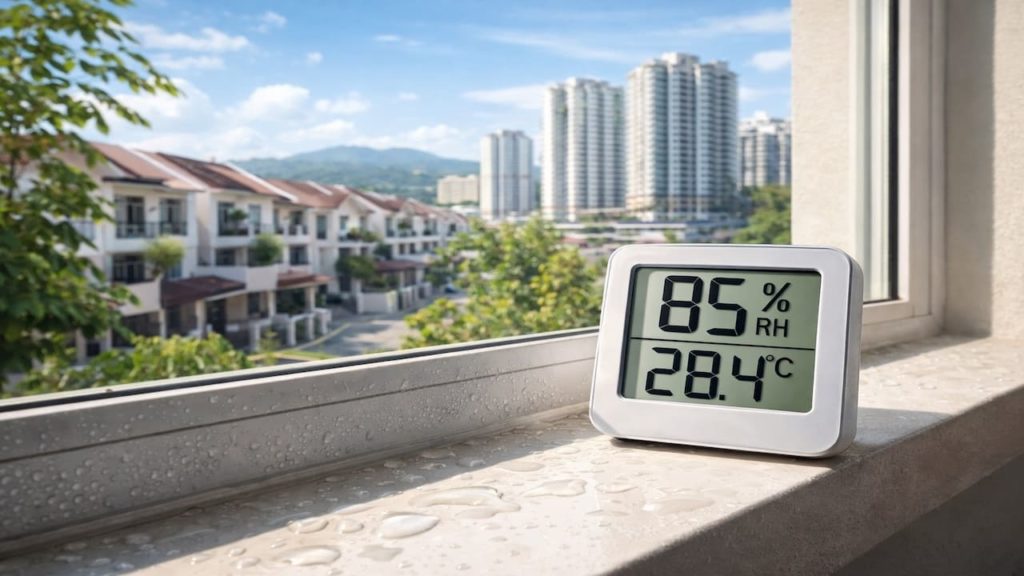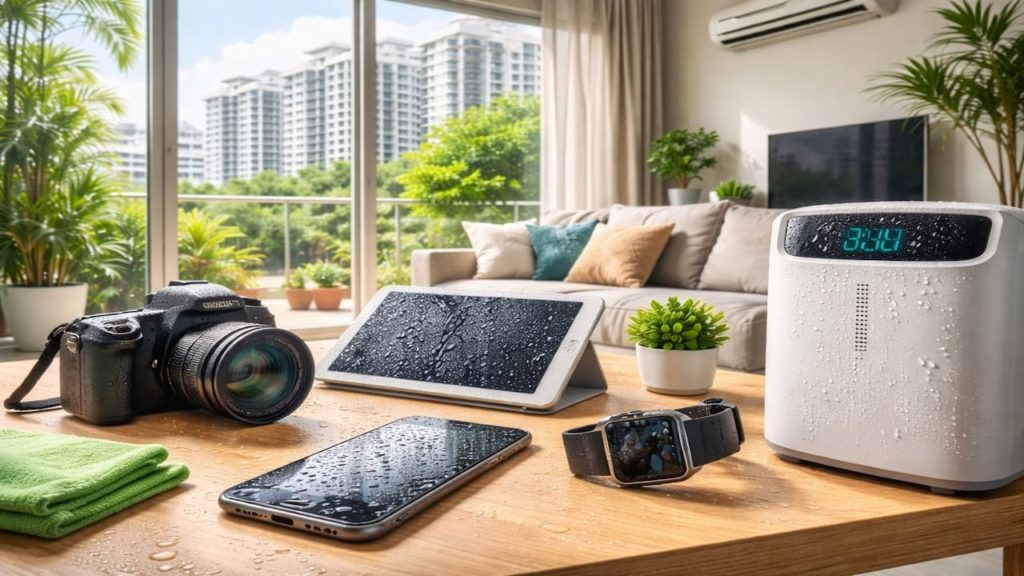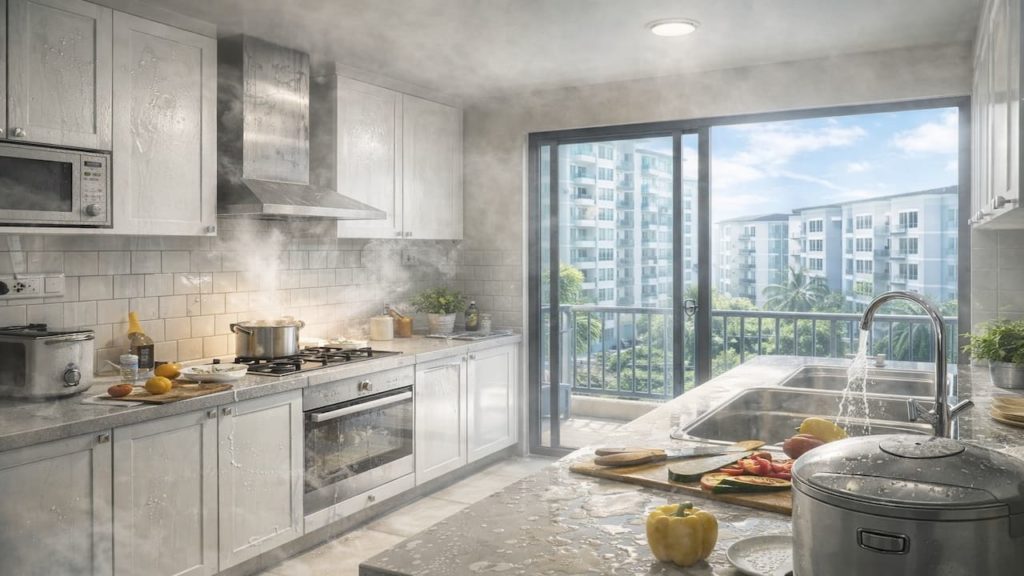
You finish cooking, but the kitchen still feels damp, the tiles stay wet, and the smell hangs around like the air is heavy.
In Malaysia, warm humid outdoor air plus boiling and frying steam can overwhelm small condo kitchens, especially when windows stay closed during wet weeks.
In this guide, you’ll learn 5 fixes to clear kitchen humidity faster so cooking steam does not spread into your living room and bedrooms.

Hi, I’m Ken. I write practical home guides for Malaysia—no fluff, just what works.
I hold a formal building design qualification and have spent about 20 years on job sites across hundreds of projects. My goal is simple: help you avoid costly mistakes with clear, safe steps—a quick way to decide what to do next.
1. Kitchen humidity won’t clear: 5 fixes
Stop steam at the source and push it outside fast or it will linger for hours.
Small condo kitchens fill up quickly because moisture hits cool surfaces and re-evaporates, and Malaysia’s humid climate makes “open a window” unreliable. Common trap.
- Turn on the hood fan before cooking and keep it running 15–30 minutes after.
- Cover boiling pots with a lid and crack it slightly to control steam release.
- Use the smallest pot size that fits, because wide surfaces release more vapor.
- Close bedroom doors while cooking so steam does not migrate into storage and beds.
- Wipe condensation on backsplash and counters right after cooking to stop re-evaporation.
Some people wait until the room feels wet to turn the fan on, but by then the steam already coated surfaces—start extraction early, then you win faster.
2. Reduce cooking steam in condos
Create a one-way airflow path so humid air leaves instead of looping through the unit.
Condo layouts often connect kitchen, dining, and living space, so steam spreads fast and gets trapped by closed windows and corridor doors in Malaysia’s rainy season. Layout matters.
- Run the hood fan and open one small outlet path only if outdoor air is drier.
- Use a standing fan to push air toward the kitchen exhaust, not into the living room.
- Keep the main door gap controlled, because corridor air can be humid and smelly.
- Open cabinet doors briefly after cooking to release trapped damp air inside storage.
- Move the drying rack away from the kitchen so extra moisture does not stack on top.
People think “more windows open is better,” but if outdoor air is wet, you invite humidity in—controlled airflow beats random ventilation.
3. Why kitchen humidity lingers after cooking
Steam becomes surface water and keeps recycling when airflow and extraction are too weak.
In Malaysia, the air is often already near saturation, so cooking pushes humidity over the edge and condensation forms on tiles, glass, and metal quickly. Then it comes back.
- Boiling, rice cookers, and soups release constant vapor for long periods.
- Frying adds moisture plus oil aerosols that make surfaces hold water longer.
- Weak or recirculating hoods do not remove moisture, they just move air around.
- Cold aircond in the living area can cause condensation when steam spreads outward.
- Wet sponges, dishcloths, and sink traps keep adding small moisture all day.
It is not that your kitchen is “bad,” it is that the moisture load is high and the exhaust path is weak, so you fix the path and the problem shrinks.
4. How to clear steam faster and keep it lower
Upgrade your routine before you buy new equipment and you will see results fast.
Most condo kitchens in Malaysia can stay comfortable if you reduce steam release, improve extraction timing, and keep surfaces dry, especially during rainy weeks. Practical wins.
- Cook in batches with lids, and simmer instead of hard boil to reduce vapor output.
- Keep the hood filter clean, because greasy filters cut airflow and trap moisture.
- Use Dry mode on aircond in the living area for a short reset after heavy cooking.
- Dry the sink area and wring cloths fully, then hang them where air moves.
- Place a small dehumidifier near the kitchen-living boundary during wet weeks if needed.
Some people jump straight to buying gadgets, but if the hood is clogged or recirculating, no gadget fixes the core issue—fix airflow first, then decide.
5. FAQs
Q1. Does a recirculating hood remove humidity?
Not really, because it filters air and pushes it back into the room. It can reduce smell, but moisture stays unless air is vented outside.
Q2. Should I run aircond while cooking to reduce humidity?
It can help if you keep kitchen steam from spreading, but cold air can also cause more condensation if steam hits cooled surfaces. Use controlled airflow and extract steam first.
Q3. Why is my kitchen still damp even after I stop cooking?
Because surface water keeps evaporating from tiles, counters, and wet cloths. Surface drying stops the recycling so wipe and dry right after cooking.
Q4. Is opening windows always good during cooking?
No, because Malaysia’s outdoor air can be humid, especially during rainy season or at night. Vent only when outdoor air feels drier, otherwise focus on exhaust and internal airflow control.
Q5. When is a dehumidifier worth it in a condo kitchen?
If wet weeks last long and your hood cannot vent outside, a dehumidifier can stabilize humidity. Use it with doors positioned to keep steam from spreading to bedrooms.
Pro’s Tough Talk

Alright. I’ve been on site for 20+ years and handled hundreds of jobs, and condo kitchens that stay damp after cooking are a predictable mess in Malaysia, especially when rain drags on and everything is closed up.
Cause is 3 buckets: too much steam output, weak exhaust, and steam spreading into cooled rooms then condensing everywhere. Fix it in 3 steps: start the hood before you cook and keep it running after, control steam with lids and simmering, then wipe surfaces and push airflow toward the exhaust so it exits—done. Letting steam roam is like opening a kettle inside a wardrobe, and expecting a weak fan to fix it is like trying to dry a floor with a whisper.
And the classic move is hanging wet cloths and laundry near the kitchen while frying something. Congrats, you just stacked humidity like pancakes. Stop steam at the source or it will stay trapped in your condo. Now turn the fan on first, or keep living in that damp soup air.
Summary
If kitchen humidity won’t clear, it is usually because cooking steam is being released faster than your condo can remove it, which is common in Malaysia’s humid weather. In open layouts, that moisture spreads and condenses on cooler surfaces.
Fix the system: extract early with a clean hood, reduce steam with lids and gentler boiling, and stop moisture from recycling by wiping wet surfaces and drying cloths properly. If the hood is recirculating or airflow is weak, humidity will linger no matter how cold the room feels.
Keep it consistent—control steam, control airflow, and dry surfaces after every cook—the condo stays dry when moisture has a clear exit.