You finished a renovation, then your yard started pooling water and the soil turned messy again after Malaysia rain. It feels backward. It looks unfinished.
Renovation traffic compacts soil, shifts levels, and leaves hidden low spots near porches and side lanes. In hot humidity, wet areas stay wet longer, so algae and mud show up fast. Real life.
In this guide, you’ll learn how to repair grading first so replanting actually lasts in Malaysia’s wet season cycles. You will stop puddles, protect edges, and rebuild the base without tearing everything up.

Hi, I’m Ken. I write practical home guides for Malaysia—no fluff, just what works.
I hold a formal building design qualification and have spent about 20 years on job sites across hundreds of projects. My goal is simple: help you avoid costly mistakes with clear, safe steps—a quick way to decide what to do next.
1. Landscape after renovation: 5 steps
Fix grading before you buy new plants because Malaysia downpours will reveal every low spot within one storm.
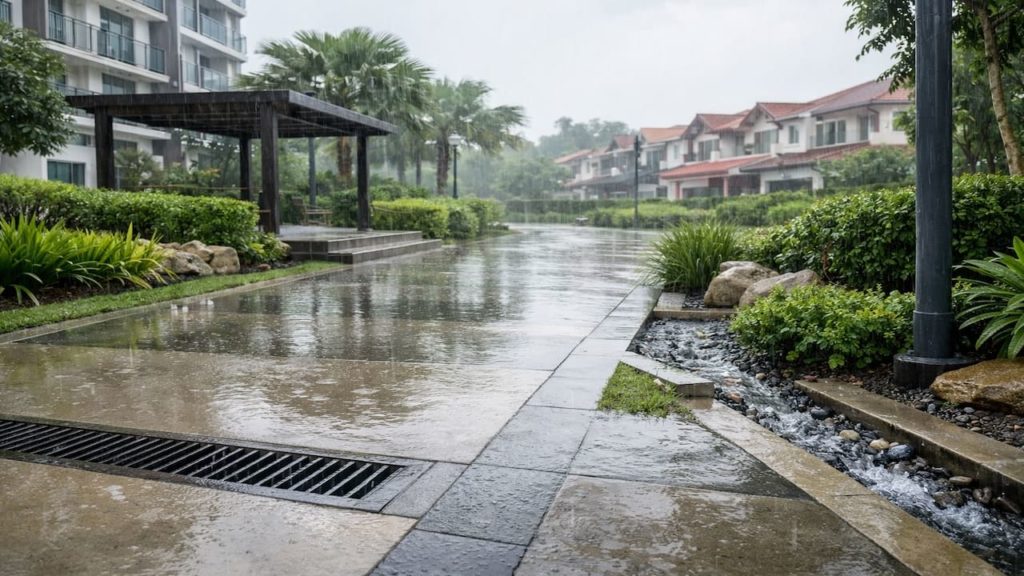
After renovation, the ground looks flat but it rarely drains right—compacted soil and leftover rubble change how water moves. Start with flow, then replant. Base work.
- Map puddle lines after a heavy rain
- Check porch edge slope using a straight board
- Mark downpipe discharge points near walkways
- Scrape off construction silt from hardscape edges
- Test drainage by pouring one bucket of water
Some people rush into landscaping to “finish the look,” but if puddles remain you will rework beds again, so confirm drainage first and you save money. No regret.
2. Repair grading before you replant
Replant only after water has a clear exit or your new soil becomes a sponge in Malaysia humidity.
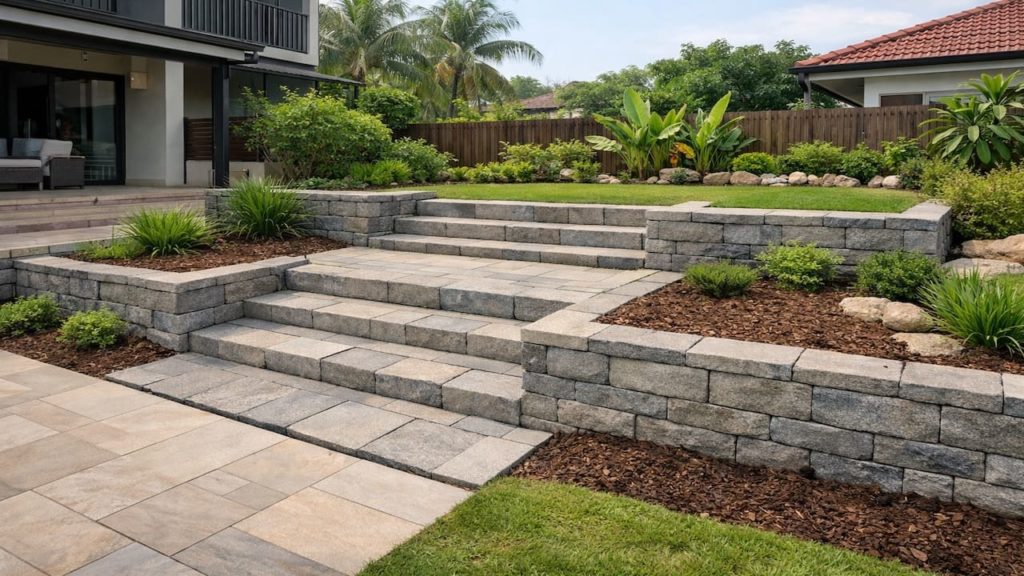
Grading is not about perfection, it is about direction—water must leave the porch and the wall base instead of sitting. Small changes matter more than big purchases. Simple.
- Build a gentle fall away from the doorway
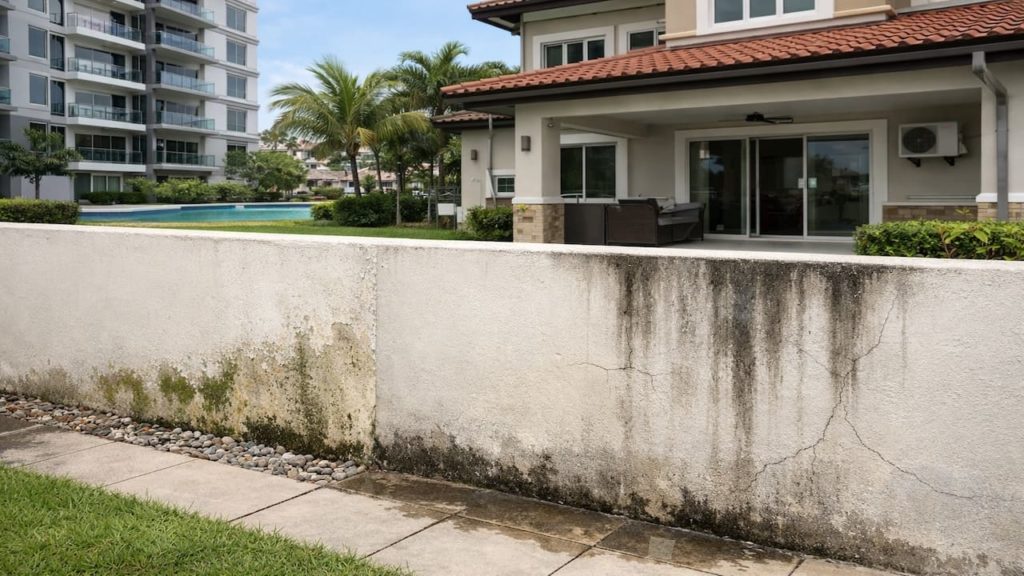
- Add gravel strip along wall base splash zone
- Create shallow swale to guide runoff outward
- Raise planting beds above surrounding paving edges
- Install drain cover basket to block leaf mats
You might think “more topsoil will fix it,” but topsoil on a bad slope just washes or stays soggy, so reshape first, then add soil, then plant. Correct order.
3. Why renovation sites trap water in Malaysia wet season
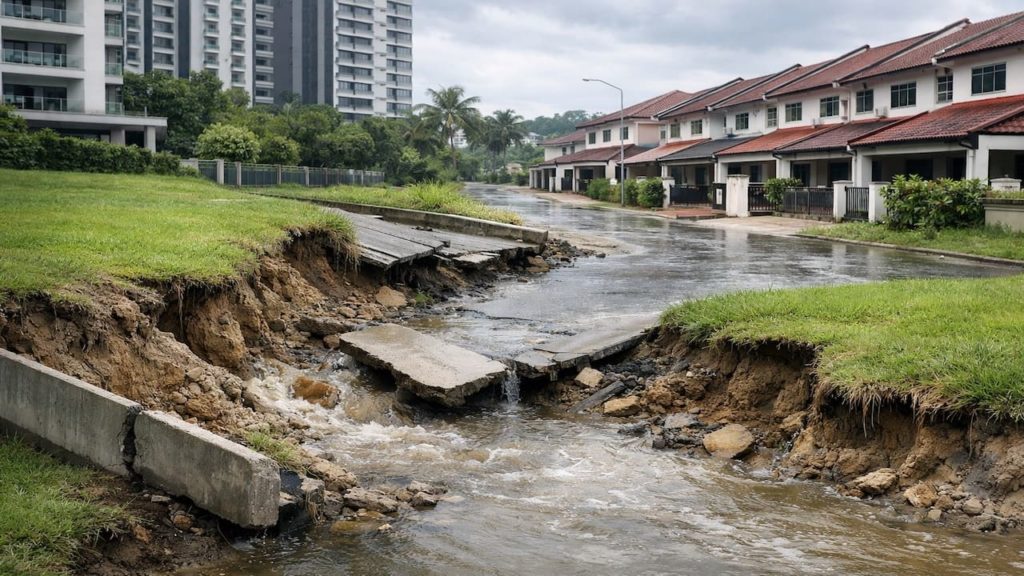
Renovation traps water because soil structure gets crushed and Malaysia rain hits hard before the ground recovers.
Heavy foot traffic and wheelbarrows compact the base, so water cannot soak in and it runs toward the lowest corner—often the porch step. Then algae arrives fast in shade. Predictable.
- Compacted subsoil blocks infiltration after rainfall events
- Leftover rubble creates uneven hidden low pockets
- New paving edges stop water from escaping outward
- Downpipe splash concentrates runoff near wall corners
- Fine silt seals the surface like a crust
Some blame only “bad drainage design,” but the bigger issue is compaction plus blocked exits, so rebuild the base and the same space behaves better. Proof follows.
4. How to repair grading and replant with less rework
Regrade in thin layers and test after each change so you stop puddles without redoing the whole yard in Malaysia.
Work from the house outward, because water should move away from walls first—then you shape beds and paths to match that flow. Keep tools simple and measure often. Control.
- Loosen compacted soil with fork and aeration holes
- Add base material and compact in thin lifts
- Set final slope using string lines and levels
- Top dress with sandy loam to improve drainage
- Plant tough species after two rain tests
Some insist full excavation is the only fix, but careful layer work solves many post-renovation puddles, so test, adjust, and replant once the flow stays consistent. Done.
5. FAQs
Q1. How soon after renovation should I replant?
Wait until you confirm water flows away from the porch and no puddles remain after rain. In Malaysia wet season, test at least twice before planting.
Q2. Do I need to replace all the soil?
Not always. If the subsoil is compacted, loosening and adding a better top layer can work, but only after you fix slope direction and exits.
Q3. What is the fastest way to spot grading problems?
Watch where water sits 30 minutes after rain. Mark those spots, then check nearby downpipes and paving edges that may be trapping runoff.
Q4. What plants handle soggy areas if I cannot fix everything?
Use plants that tolerate wet feet and heat, and keep them away from wall bases. Still, aim to improve drainage because constant damp invites fungus and mosquitoes.
Q5. When should I call a professional?
If water flows toward the house, if the slab edge is undermined, or if indoor damp appears near the same wall. Structural moisture is not a DIY gamble.
Pro’s Tough Talk

I’ve been on site for 20+ years and handled hundreds of jobs, and post-renovation yards in Malaysia almost always puddle. It is not bad luck, it is physics.
Three causes, same story: the soil gets crushed like a wet sponge under boots, the rubble creates secret dips, and the new edges block runoff like tiny dams. That combo is lethal.
Do three steps now: loosen the base, regrade away from the wall, and test with a bucket after rain. Then add soil and plant. No shortcuts.
You don’t need to blame yourself and you don’t need to call every contractor a clown, but replanting before grading is paying twice for the same yard. That is the cold structure.
Two relatable moments: you plant on Saturday and by Tuesday your shoes sink in mud, and you scrub algae off the porch edge again. Fixing looks without fixing slope is like putting new curtains on a leaking roof, like waxing a car while it is still in the storm. Nice try.
Summary
After renovation, grading usually fails because compaction and new edges trap water, and Malaysia humidity keeps wet spots wet. Fix the base first.
If puddles remain after two storms, rework slope and exits before replanting, and treat downpipe discharge as a priority. If water moves toward the house, escalate quickly.
Repair grading now so every new plant actually survives then continue with your drain cover and anti-slip porch guides to keep the entry cleaner through rainy season.