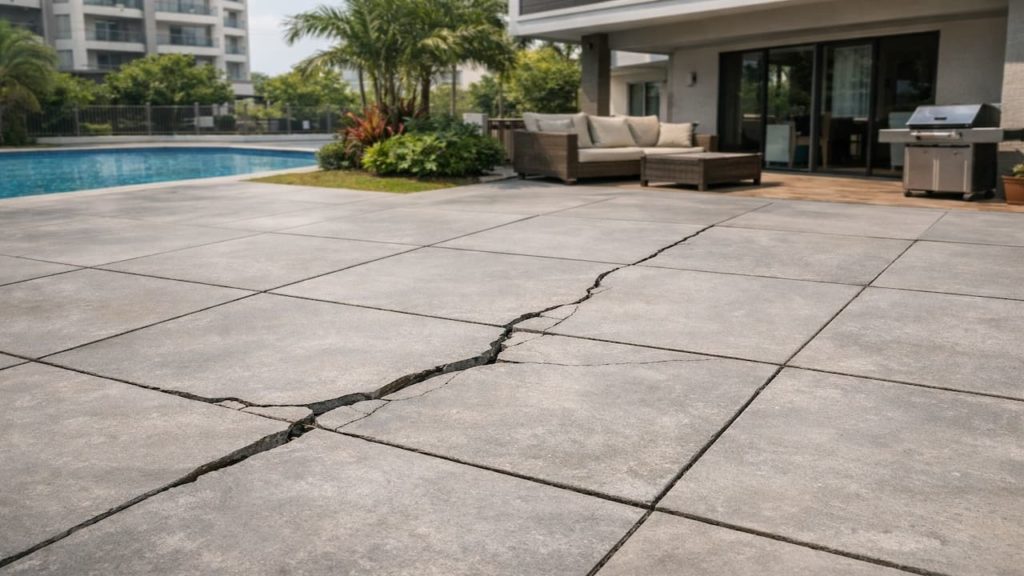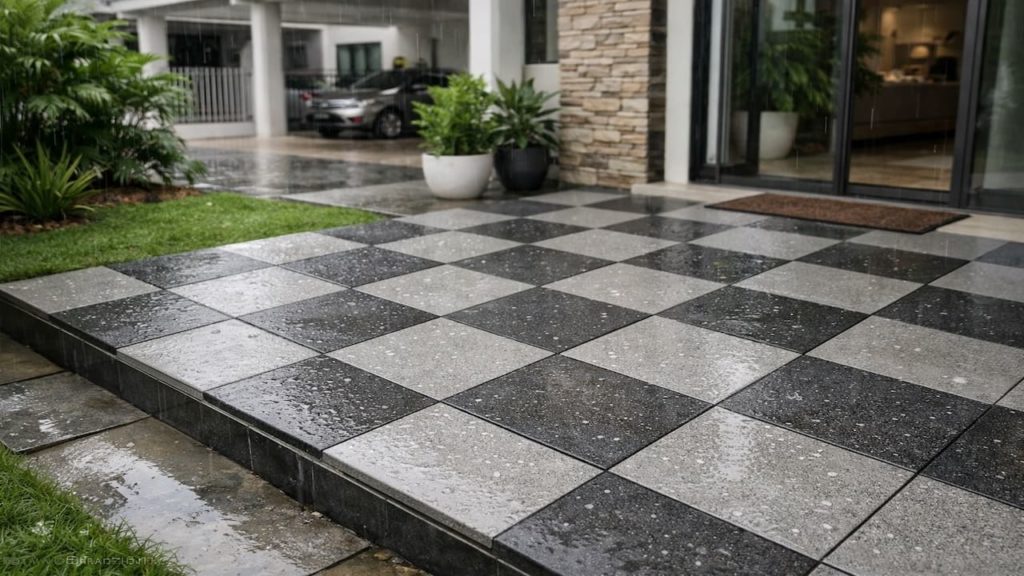
You searched because your porch gets slippery when it rains, and you want safer entry tiles for Malaysia’s wet season. You are not overthinking it. One slip hurts.
In high humidity, tiles stay damp longer, algae grows fast, and terrace house porches or condo walkways get splashed by roof runoff. The danger is usually a mix of surface texture, drainage, and grime. Wet season reality.
In this guide, you’ll learn how to make a porch entry safer without ugly hacks by checking tile grip, drainage, cleaning triggers, and smart upgrades that survive Malaysian rain.

Hi, I’m Ken. I write practical home guides for Malaysia—no fluff, just what works.
I hold a formal building design qualification and have spent about 20 years on job sites across hundreds of projects. My goal is simple: help you avoid costly mistakes with clear, safe steps—a quick way to decide what to do next.
1. Landscape anti-slip porch: 5 checks
Confirm slip risk before you buy or change anything because the wrong fix in Malaysia often fails after the next storm.
Start with what you already have and test it when wet—dry grip means nothing when humidity keeps a thin film on the surface. Safety is a system, not a product. Entry zone.
- Check tile rating for wet area slip resistance
- Rub sole on tile with running water
- Inspect grout height and edge lippage level
- Confirm drainage fall away from the door
- Spot algae film on shaded porch corners
Some people say any tile is fine if you mop often, but mopping adds water and makes it worse—do the checks first, then decide and you avoid repeat slips. No compromises.
2. Safer tiles for rainy season entries
Choose textured matte tiles that drain and clean easy because glossy surfaces in Malaysia become skating rinks when algae appears.
Rainy entries need micro texture and predictable runoff, especially at terrace house thresholds where shoes track water onto the first step. Pick options that stay grippy even when lightly dirty—this is the real test. Practical.
- Select outdoor porcelain with textured finish grade
- Avoid high gloss tiles at entry zones
- Use smaller tiles to increase grout grip lines
- Choose dark neutral tones that hide splash marks
- Plan anti slip nosing on step edges
Some worry textured tiles look rough, but modern matte textures look clean and feel safer, so choose function-first and the porch looks better and behaves better. Wet season proof.
3. Why porches get slippery fast in wet season
Slips happen when water and biofilm reduce friction and Malaysia humidity keeps that film alive all week.
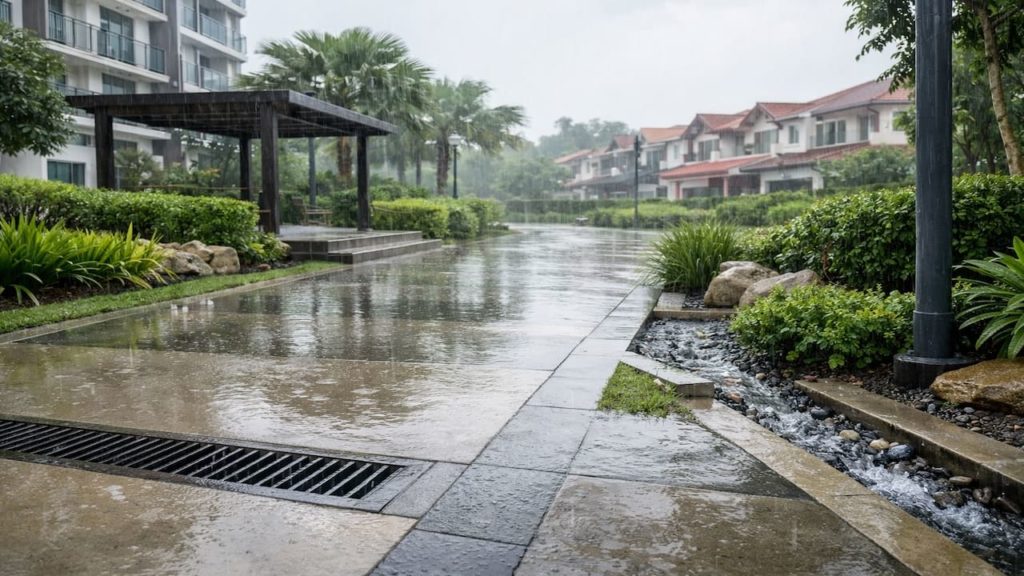
Even a thin layer of algae or soap residue changes the contact between sole and tile, and shaded porches dry slowly after afternoon storms. Add flat paving and the water sits at the door line—quiet danger. Hidden hazard.
- Algae film forms on shaded damp tile surfaces
- Flat slabs trap puddles at entry thresholds
- Downpipe splash spreads dirty water across porch
- Smooth grout lines reduce grip under wet feet
- Wrong cleaners leave slick residue on tiles
Some blame only the tile brand, but the real driver is moisture plus dirt plus flatness—fix those inputs and the same tile becomes far safer. Cause and effect.
4. How to make rainy season entries safer now
Improve grip and drainage with small targeted changes so you reduce slips without ripping up the whole Malaysia porch.
Think in layers: clean the film, create an exit for water, then add grip where feet land first. Start with the threshold and step edges, then expand to the walkway. Simple wins.
- Deep clean tiles with stiff brush and rinse
- Install linear drain or channel at porch edge
- Add anti slip tape on step leading edges
- Seal grout to reduce algae and dirt hold
- Extend downpipe discharge away from porch tiles
Some say tape and drains look messy, but neat placement and proper drainage make the entry safer and cleaner—do the basics right and the porch feels new. Safer entry.
5. FAQs
Q1. How can I test if my porch tiles are too slippery?
Wet the tile and twist your shoe gently while holding a railing. If it slides easily, the risk is real, especially in Malaysia humidity where damp film stays longer.
Q2. Are matte tiles always safer than glossy tiles?
Often yes, but not all matte tiles are equal. Look for outdoor slip ratings and feel the texture, and confirm drainage so water does not pool at the door.
Q3. What is the fastest fix for a slippery porch?
Remove algae film and add grip on step edges because most slips start at the first landing zone. Clean first, then add targeted traction, then improve drainage next.
Q4. Will a doormat solve rainy season slipping?
A mat helps reduce tracked water, but it cannot fix puddles and biofilm. Use a draining mat base and keep the surrounding tiles grippy and clean.
Q5. When should I replace the tiles instead of patching?
If the tiles are very smooth and the area stays shaded and wet, replacement may be the better long-term choice. Also replace if lippage and cracks create trip hazards.
Pro’s Tough Talk

Alright, I’ve been on site for 20+ years and handled hundreds of jobs, and Malaysia wet season turns pretty porches into injury traps. It happens fast. No joke.
3 causes show up every time: glossy tiles at the entry, flat paving that holds water, and algae film growing like a green invisible carpet. That’s the machine.
So do 3 steps now: scrub the biofilm hard, give water an exit path, and add grip on the first step and threshold. Then retest when wet.
Don’t blame yourself and don’t call every installer evil, but slip safety is friction plus drainage and the structure never lies. Fix the inputs.
Two relatable moments: you carry groceries in a downpour and your foot slides, and the kids sprint in from school and skid like cartoons. Some guys still install glossy tiles and call it premium, genius—like slick tires in a monsoon, like skating on soap.
Summary
Anti-slip porch safety in Malaysia starts with wet testing, algae control, and drainage that pulls water away from the door. Tile choice matters, but the system matters more.
If the porch stays damp and slippery after cleaning, prioritize drainage and targeted traction first. If pooling and smooth surfaces continue, plan a tile change to a textured outdoor grade option.
Make the first step and threshold grippy and dry then browse your guides on wall splashback control and wet season yard maintenance to keep the whole entry cleaner.