If you keep balcony planters in a Malaysian condo, you may worry every rainy week that water will drip to the unit below. That fear is real. Nobody wants a leak complaint.
Leaks can come from clogged balcony drains, cracked grout, overflowing saucers, or planters that trap water against the wall. Humidity slows drying, so tiny mistakes last longer. Annoying.
In this guide, you’ll learn how to check balcony planters so they do not leak below in Malaysia’s monsoon weather. You will spot drain risks, fix watering habits, and set a safer planter layout.

Hi, I’m Ken. I write practical home guides for Malaysia—no fluff, just what works.
I hold a formal building design qualification and have spent about 20 years on job sites across hundreds of projects. My goal is simple: help you avoid costly mistakes with clear, safe steps—a quick way to decide what to do next.
1. Landscape balcony planters: 5 checks
Most balcony leaks start with standing water near edges not with the plants themselves.
On high-rise balconies, puddles sit longer in humid Malaysia—then creep into grout lines, door tracks, and tiny cracks around corners. Slow drying makes small spills become big problems. No leaks.
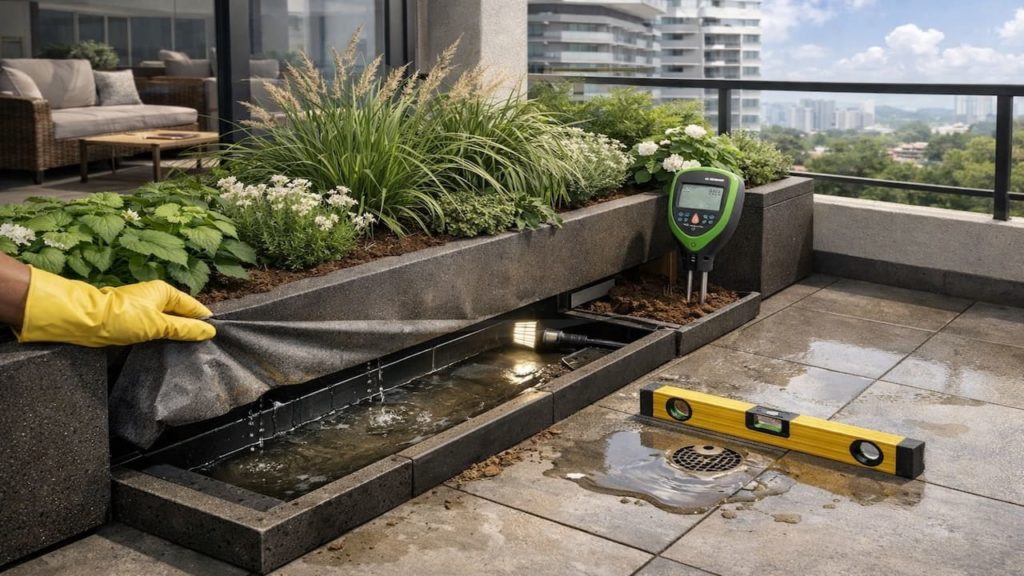
- Locate balcony drain and test water flow
- Clear leaf grit from drain grate daily
- Check tile grout for hairline cracks monthly
- Raise planters with pot feet for airflow
- Remove overflowing saucers and use gravel trays
Some people say “a little runoff is normal,” but neighbors do not care about normal when their ceiling stains. Control water paths first, then enjoy plants without stress.
2. Prevent leaks to units below
Preventing leaks means stopping overflow before it touches tiles especially during heavy rain bursts.
In Malaysia, sudden storms plus evening watering can overwhelm small balcony drains, and water finds the fastest exit through gaps. Planters can also wick moisture against walls if packed tight. Dry edges.
- Switch to self draining pots with side outlets
- Use drip saucers with overflow holes only
- Group pots on a raised rack above tiles
- Keep a clear channel to the balcony drain
- Water in morning and stop before storms
You might think racks look bulky, but neat racks reduce contact points and speed drying. Less wet tile time means fewer seep paths and fewer complaints below.
3. Why balcony planter leaks happen in condos
Leaks happen when balcony drainage is blocked or bypassed and water stays where it should not.
Condo balconies often have shallow slopes, narrow drains, and old sealant around door tracks. Add Malaysia’s humidity, and water lingers long enough to seep through grout or tiny slab cracks. Physics.
- Inspect door track sealant and corner joints
- Check balcony slope using a marble roll test
- Watch runoff during rain to find pooling spots
- Look under racks for trapped wet debris
- Track stains on tile lines after each storm
It is easy to blame “bad waterproofing” and feel helpless, but most cases involve basic maintenance and layout. Make water move, and the risk drops fast.
4. How to set a leak-safe planter setup
Set a leak safe setup by isolating water from surfaces and keeping drainage access clear.
Think of the balcony as two zones: a wet zone near the drain and a dry zone near doors and walls. In Malaysia’s wet season, this separation prevents repeated damp contact. Simple control.
- Place waterproof tray under pots on rack
- Leave 10 cm gap from walls and rails
- Add rubber mats only in the dry zone
- Squeegee tiles toward drain after heavy rain
- Re seal cracked grout with outdoor sealant
Some residents try to cover everything with rugs, but rugs trap moisture and hide leaks until damage appears. Keep surfaces visible, keep drains reachable, and your plants stay welcome.
5. FAQs
Q1. Are plant saucers safe on a condo balcony?
Saucers are risky if they overflow during storms or after heavy watering. In humid Malaysia, even a small overflow can keep tiles wet for hours and invite seepage.
Q2. What is the fastest way to test my balcony drain?
Pour a bucket of clean water near the far edge and watch the speed and direction. If water hesitates or pools, clear debris and re-check after the next rain.
Q3. Do I need waterproofing to prevent leaks below?
Not always, but maintenance matters more than people think. Most leak reports improve after drain and layout fixes before any major waterproofing work.
Q4. What should I do if my neighbor complains about dripping?
Take photos of your balcony after rain and note when you water—then reduce overflow sources first. If stains continue, involve management so they can inspect common drainage lines.
Q5. Can I use artificial grass under planters?
It can trap moisture and hide puddles, which is dangerous in Malaysia’s wet months. If you use it, keep it raised and removable so the tiles can dry and be checked.
Pro’s Tough Talk

Alright, I’ve been on site for 20+ years and handled hundreds of jobs, and balcony leaks in Malaysia are the same movie every monsoon. You think it is “just plants,” then someone downstairs shows you a brown ceiling ring.
Cause one is lazy draining: the grate gets sand and leaves, then water backs up. Cause two is overflow habits: everyone waters at night and forgets the saucer. Cause three is tight layout: pots jammed to walls like luggage, so moisture sits and creeps.
Do this in order: clear the drain, lift the pots on feet or a rack, then create one clean runoff lane you can see. Keep that lane open like a fire exit. Done.
You did not “fail,” and the building is not always evil, but Water always takes the easiest hidden path and condos are full of those paths. It is like feeding a stray cat, it comes back with friends, and now you own the problem.
And stop trusting that cute little saucer, it is a kiddie pool with a marketing job. Everyone has that one “I only watered a bit” moment and that one “why is it damp again” moment. Fix it now, or the downstairs chat group will crown you the Leak King.
Summary
Balcony planter leaks usually come from overflow and slow drying, not from plants. Control puddles, protect edges, and keep the drain working in Malaysia’s humidity.
If leaks continue after you clear drains, raise pots, and re-seal cracks, the deciding factor is hidden waterproofing or shared pipe issues that need management inspection.
Start with one dry-zone layout today and keep it consistent. A clean drain path keeps your balcony garden safe for everyone below and makes rainy season less stressful.