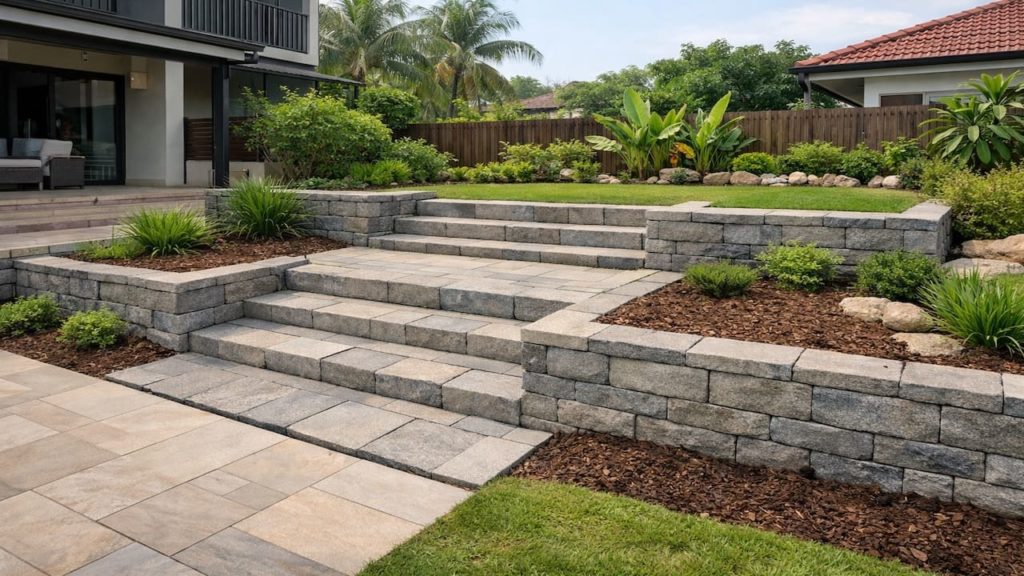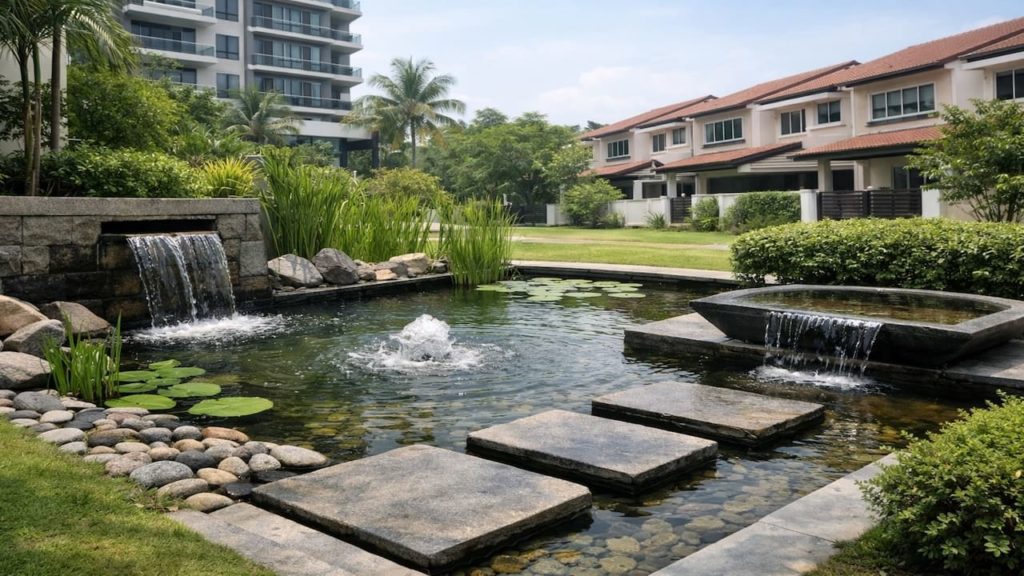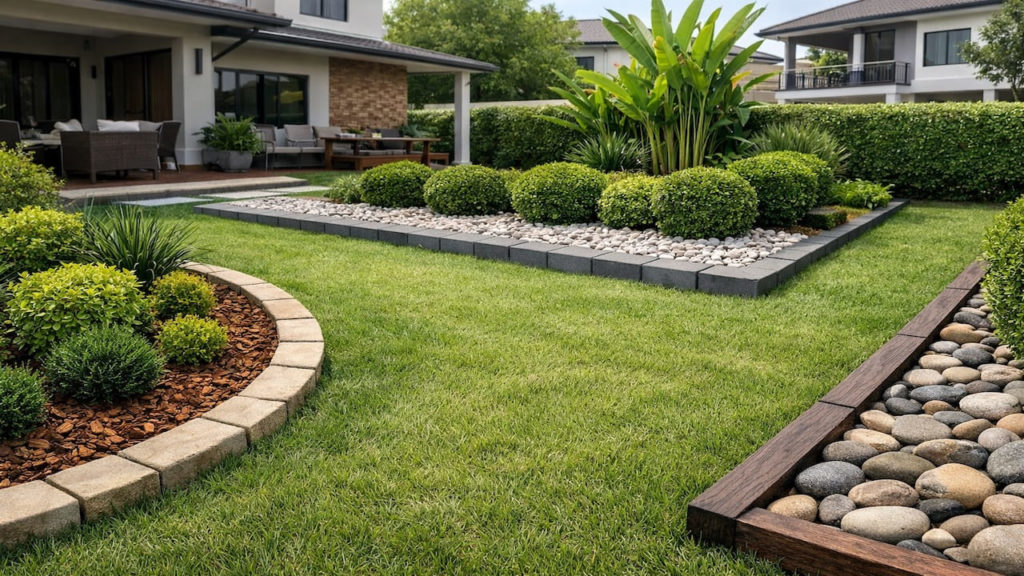
Edging looks small, but in a Malaysia terrace home it decides if your yard stays sharp or turns into a weed border after storms.
You may be searching because grass creeps into gravel, soil spills onto tiles, or trimming eats your weekends. Wet season downpours and humid nights make growth faster. Constant.
In this guide, you’ll learn how to pick edging that blocks weeds and stays clean in rain. You will also keep airflow and drainage friendly for small Malaysian yards.

Hi, I’m Ken. I write practical home guides for Malaysia—no fluff, just what works.
I hold a formal building design qualification and have spent about 20 years on job sites across hundreds of projects. My goal is simple: help you avoid costly mistakes with clear, safe steps—a quick way to decide what to do next.
1. Landscape edging ideas: 5 tips
Choose edging that creates a real physical barrier.
In hot humid weather, weeds exploit tiny gaps—so the best edging stops roots and soil movement. A hard rule.
- Set edging at least 5 cm below grade
- Overlap joints tightly to block root sneaks
- Leave small drain gaps at low points
- Use straight guides to keep lines crisp
- Match edging height to your mower path
Some people say edging is optional and plants will hide it. True for photos, but weeds ignore photos, so a real barrier keeps the line clean.
2. Stop weeds and keep lines clean
Stop weeds by controlling soil edges and light.
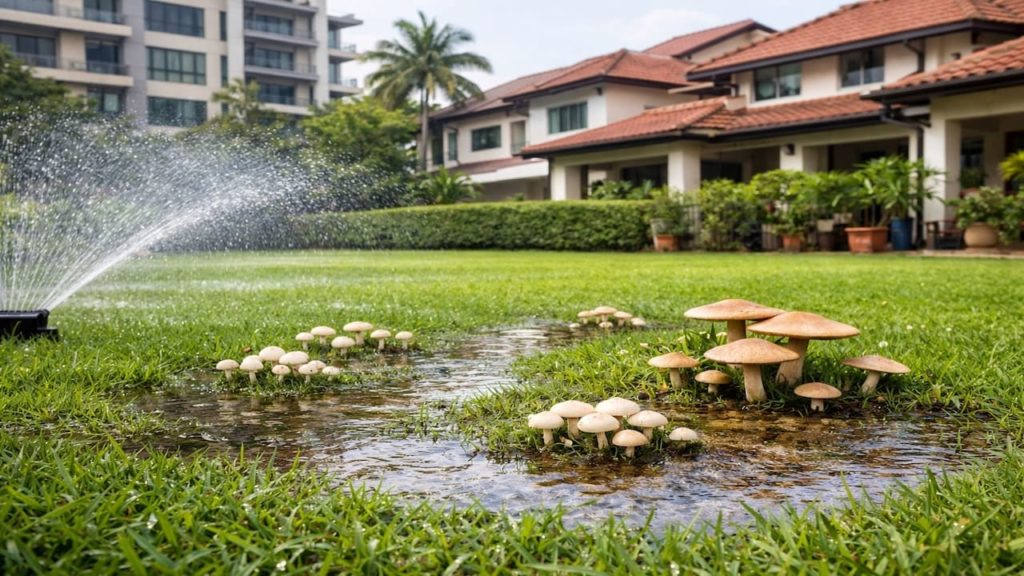
Weeds need disturbed soil, water, and light. Malaysia rain splashes soil onto borders, then sun bakes it into a seedbed—so keep edges sealed and surfaces stable. Less rework.
- Add compacted base under edging to prevent tilt
- Use fabric only under gravel not under soil
- Top up gravel depth to shade weed seeds
- Brush sand out of joints after heavy rain
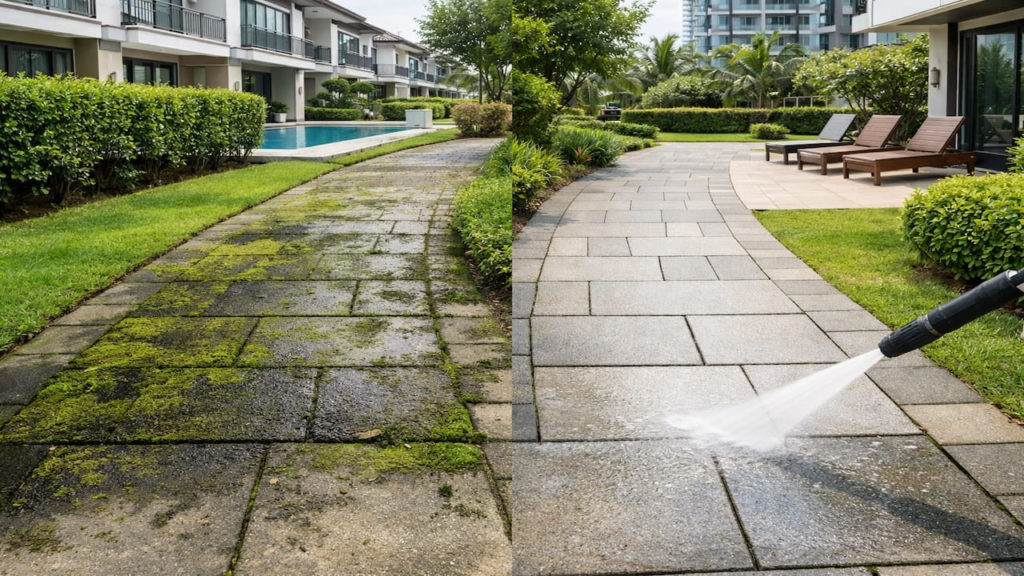
- Rinse algae from edges to restore traction
You might think stronger herbicide is the answer. It helps short term, but edging plus a stable base removes the weed highway, so maintenance drops.
3. Why edging fails in Malaysia wet heat
Edging fails when water undermines the base.
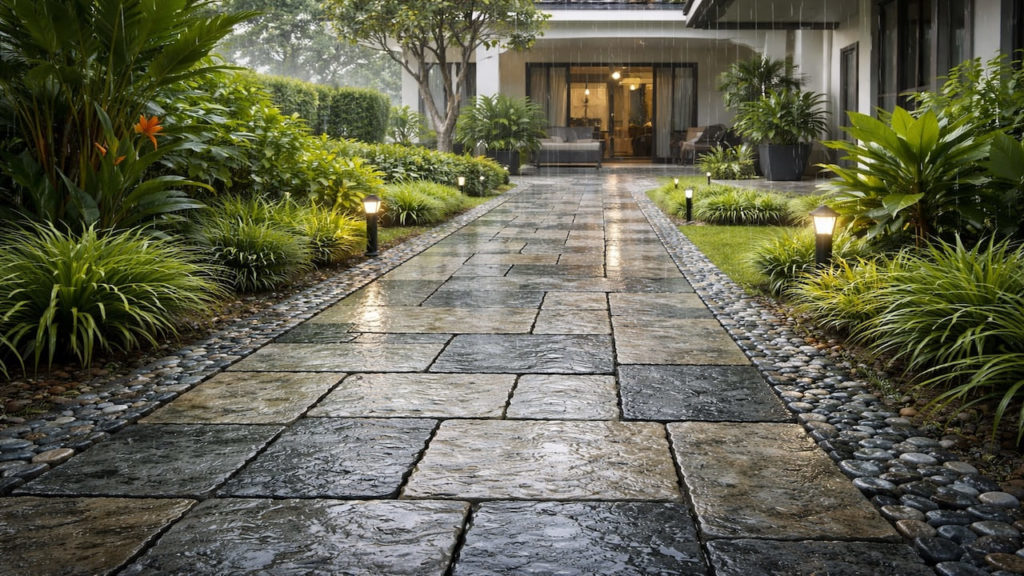
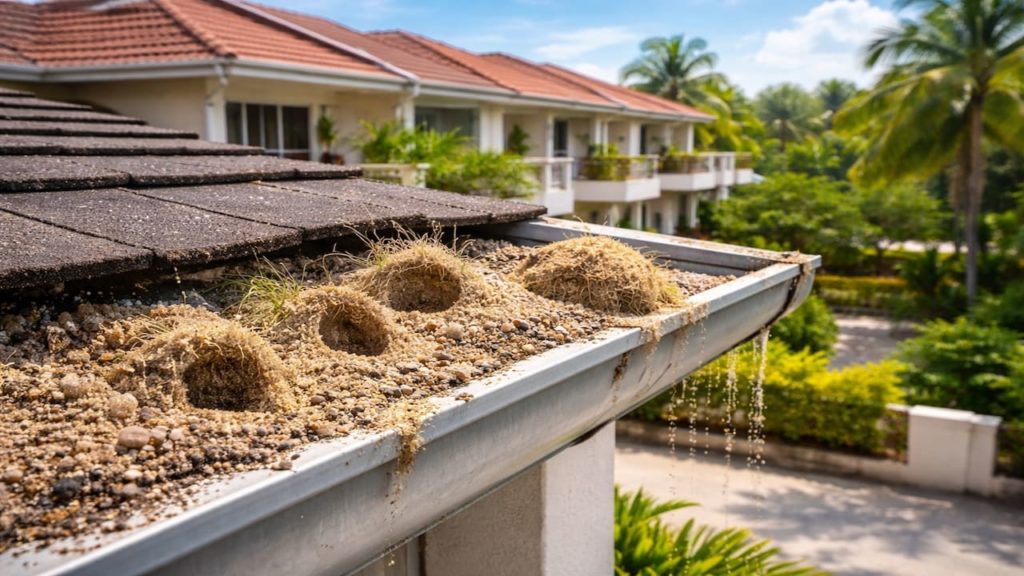
Terrace homes often have flat paving and sudden runoff. When water sheets along an edge, it washes out support—then the line waves, gaps open, and weeds move in. Water wins.
- Check low corners where puddles linger overnight
- Look for soil wash marks along edging line
- Inspect joints for daylight gaps after storms
- Test edging wobble by pressing with your shoe
- Find downpipe splash zones hitting the border
People blame cheap material and buy a new one. Material matters, but without drainage control the new edge still gets undermined, so fix water first.
4. How to install edging that lasts and looks sharp
Install edging with a solid base and clean exits.
Do it like a small construction job. Malaysia rain will test every weak spot—so set a compacted base, anchor well, and give water an exit path. Do it once.
- Dig trench and compact base with hand tamper
- Anchor edging stakes at regular spacing points
- Set slight fall toward drain not toward wall
- Seal joins with overlap or connector pieces
- Backfill and compact soil to stop future sink
Some say DIY edging never stays straight. It can, but only when you treat the base like the real job and the edging like the finish.
5. FAQs
Q1. What edging works best for a small terrace front yard?
Rigid edging with a compacted base works well because it holds a straight line. Pick a style that lets water pass at low points so puddles do not build. Good enough.
Q2. Is landscape fabric enough to stop weeds?
Fabric helps under gravel—yet weeds still grow in the dust layer on top. In humid Malaysia weather, you need a physical edge and regular cleaning.
Q3. How deep should edging go to block grass runners?
Deeper is usually better, but even a small depth can work if joints are tight. Aim for a real root barrier and avoid exposed gaps near corners.
Q4. Why do my clean lines look messy after rain?
Rain splash moves soil onto hard surfaces and feeds weeds. Use stable edging plus splash control to protect the border and rinse sediment after storms.
Q5. How do I keep edging from lifting over time?
Compacted base and proper anchoring stop most lifting. Also redirect downpipe splash away from the edge so water does not erode support.
Pro’s Tough Talk

I’ve been on site for 20+ years and handled hundreds of jobs, and I can tell you edging is not decoration. In Malaysia heat and wet season rain, edges are where chaos starts.
Three causes make edges fail. One, the base is soft and never compacted. Two, water runs along the border and eats the support. Three, joints are lazy, and weeds treat them like open doors.
Three steps fix most of it. Dig a proper trench and tamp the base. Give water a route to the drain, not the wall. Lock joints tight and stop soil from splashing over.
You do not need to blame yourself or call every installer a clown, but clean lines survive only when the base stays firm. Think of edging like a zipper, one tooth missing and it opens.
Relatable moment one, you trim on Saturday and by Wednesday the grass is back like it pays rent. Relatable moment two, you sweep mud off tiles after every storm. If you want a yard that looks sharp, stop doing paper armor and build real armor.
Summary
Edging keeps small Malaysian yards cleaner when it blocks roots, holds soil, and lets water exit. Start with barrier and base, then choose the look. Simple.
If lines keep drifting after 2 storms, assume base failure or runoff undermining, not bad luck. Fix drainage and compaction first, then redo only the weakest segment.
Fix one wobble point and one splash source today. Then read the next guide on fast drainage checks—so you protect every border.