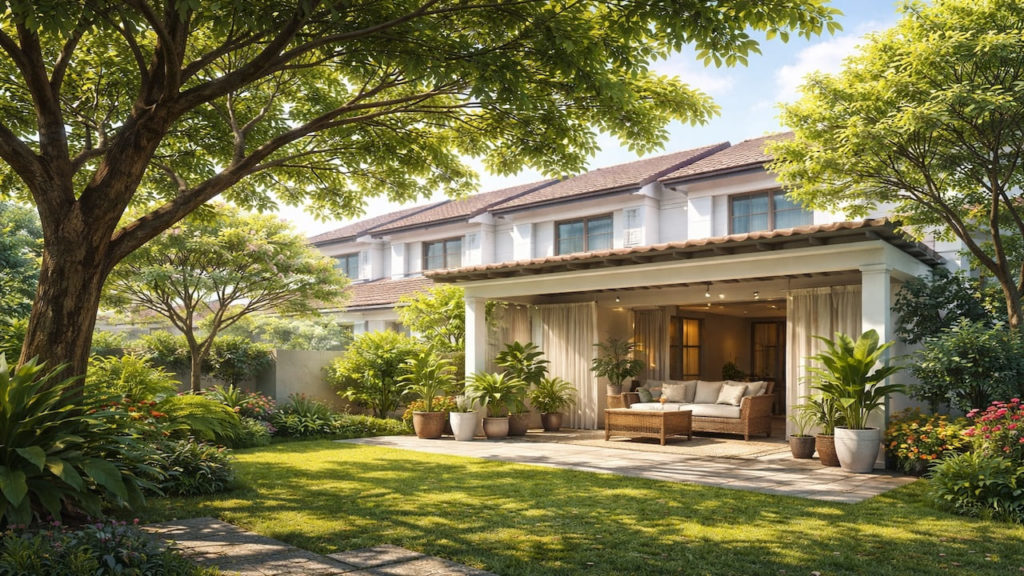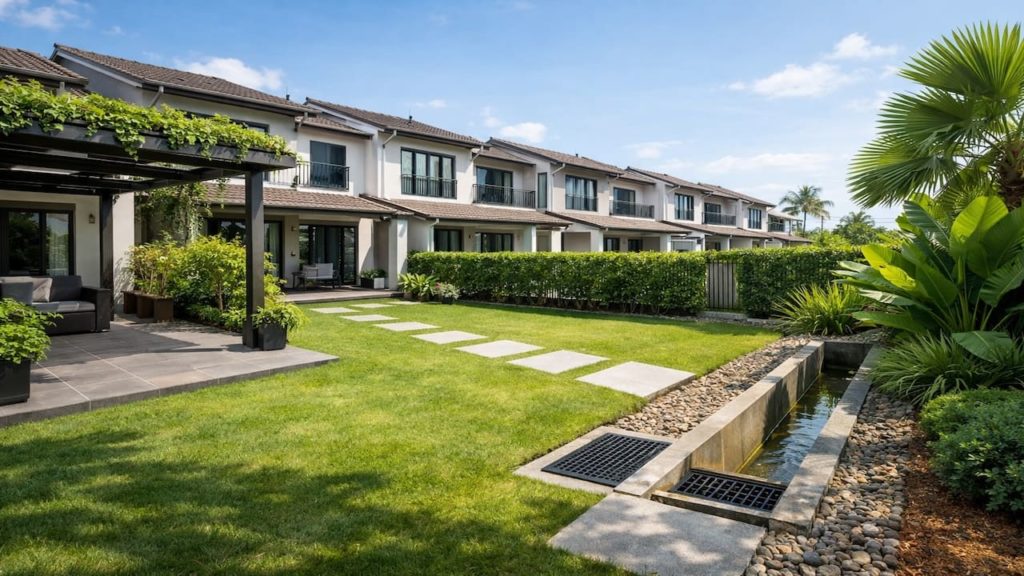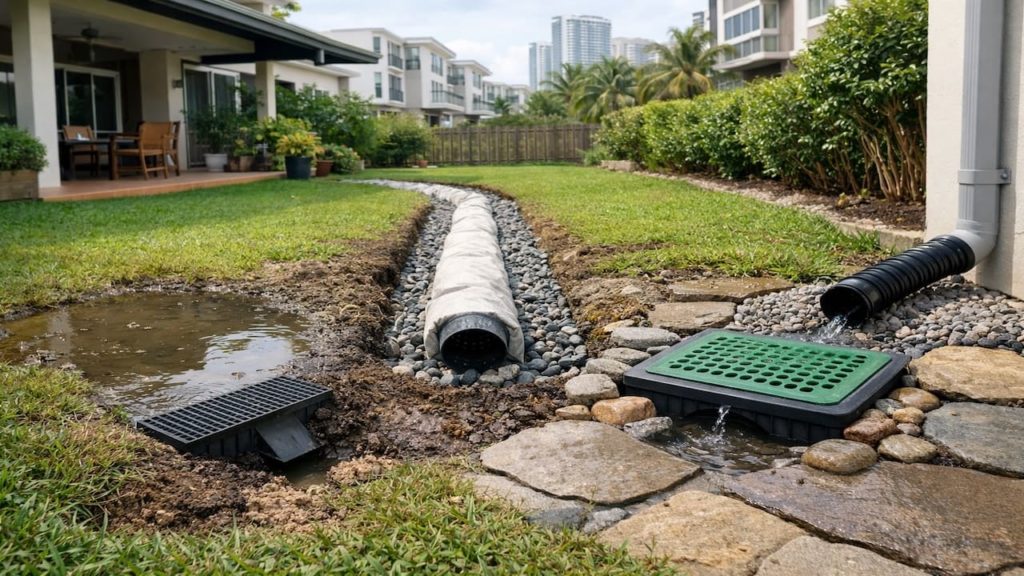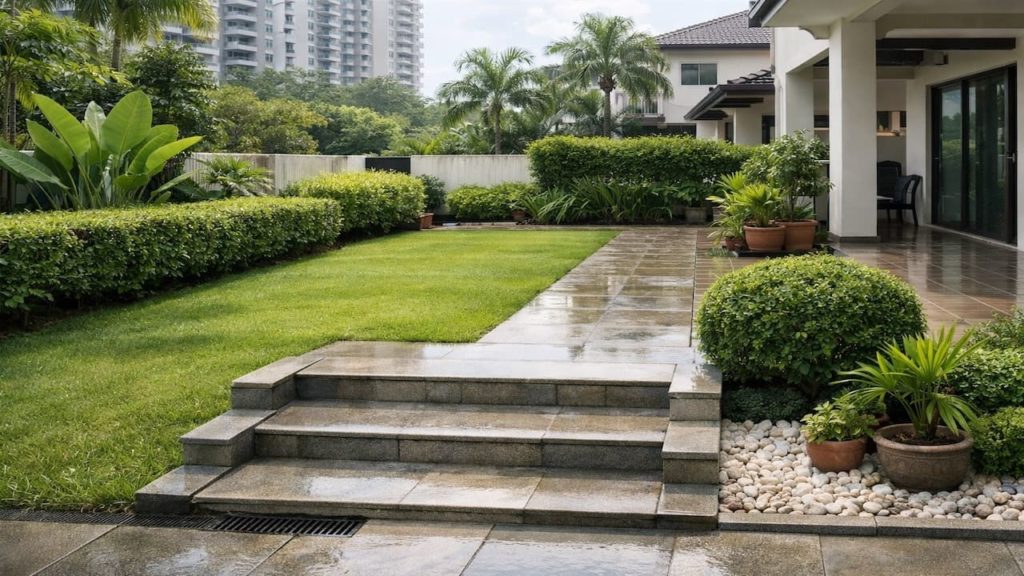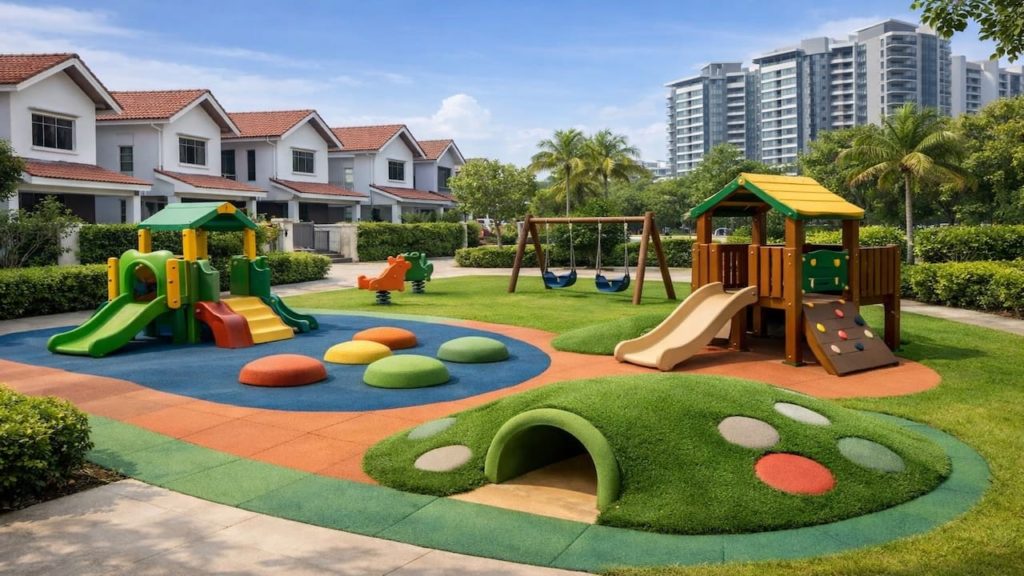
Setting up a kids play area outdoors in Malaysia is harder than it sounds. One wet season downpour can turn a “safe corner” into a slick slip zone.
You might be searching because your child slipped on tiles, the ground stays damp near the wall base, or you worry about hard falls on concrete. High humidity keeps surfaces slippery longer. Reality.
In this guide, you’ll learn how to check a kids play area for falls grip and drainage so play stays fun in terrace homes and condo ground floors during Malaysia heat and heavy rain.

Hi, I’m Ken. I write practical home guides for Malaysia—no fluff, just what works.
I hold a formal building design qualification and have spent about 20 years on job sites across hundreds of projects. My goal is simple: help you avoid costly mistakes with clear, safe steps—a quick way to decide what to do next.
1. Landscape for kids play: 5 checks
Check falls grip edges shade and drainage first—before you buy toys or pour new paving.
Malaysia weather exposes weak surfaces fast, and kids run without warning. Your job is to remove the obvious hazards and reduce hidden ones. Safety.
- Check fall height from porch step to ground
- Test surface grip using wet shoes at night
- Inspect puddles that remain after 1 hour
- Scan edges for sharp stone and metal corners
- Look for ant trails and termite mud tubes
Some parents assume a small yard is automatically safer. Tight terrace spaces can be worse because walls and hard paving are close, so run the checks and plan calmly.
2. Avoid hard falls and slick surfaces
Build the play zone on softer textured footing—and keep the main run path away from glossy tiles.
In humid Malaysia nights, thin water films and algae make smooth surfaces act like soap. A play zone should have grip even after sudden rain. Non negotiable.
- Use rubber tiles on the highest traffic area
- Add textured stepping pads to cross wet spots
- Keep play mat edges locked to prevent curling
- Place low border to stop toys rolling away
- Choose light surfaces to reduce heat build
You might worry rubber or textured pads look less stylish. Style matters, but bruises and slips matter more, so pick safety materials first and dress it up with plants later.
3. Why kids play areas get risky in Malaysia
Risk rises when water lingers and heat hardens surfaces—and that happens quickly in small terrace layouts.
Wet season rain drops silt onto paths, then sun bakes it into a smooth film. Humidity slows drying, so slickness lasts through the evening. Pattern.
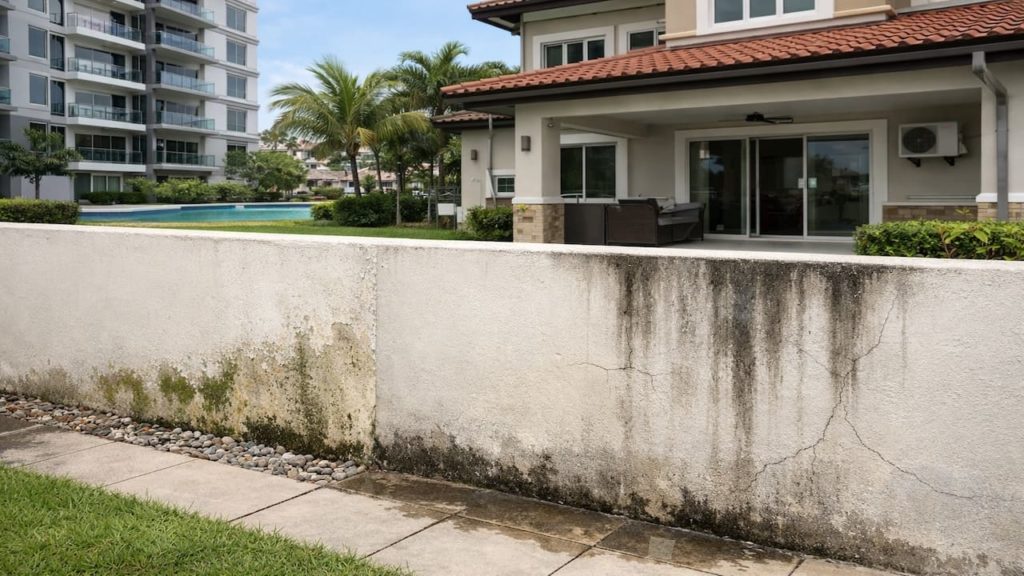
- Check shaded corners for algae film on tiles
- Inspect sand buildup that hides slippery patches
- Watch runoff from downpipes hitting play corners
- Feel surface temperature at 2 pm peak sun
- Look for loose gravel that rolls under feet
People often blame the child for running too fast. Kids will run, so change the environment and make the safe choice the easy choice.
4. How to set up a safer play zone outdoors
Create a dry shaded lane and a soft landing zone—then keep airflow so the area dries after rain.
Think in zones: one route for running, one spot for climbing, one corner for quiet play. In Malaysia, shade must not trap heat, so keep gaps for breeze. Better comfort.
- Redirect downpipe flow away from the play zone
- Add gravel strip to block mud splash lines
- Install shade sail with open edges for airflow
- Anchor edging to stop gravel drifting inward
- Rinse and brush algae early after storms
Some families rebuild everything at once and overspend. Start with the hazard line and the fall zones, test after 2 storms, then expand only if needed.
5. FAQs
Q1. What surface is safest for kids in wet season?
Rubber tiles or textured outdoor mats usually keep better grip than smooth tiles. Choose options that drain fast and can dry in humid air.
Q2. How do I reduce slips on existing porch tiles?
Clean algae early, improve drainage, and add grip strips on the main walking line. Reduce splash from downpipes near the entry.
Q3. Is artificial turf safe for a small play corner?
It can be, if the base drains and does not trap smells. Avoid placing it where water pools or where termites and ants are active.
Q4. How do I keep the play area cooler in hot afternoons?
Use breathable shade and light colored surfaces, and keep airflow paths open. Air movement is the real cooling tool for Malaysia heat.
Q5. What should I check after every big storm?
Look for new puddles, loose edges, and slippery films on paths. If anything stays wet overnight, fix the exit route before the next rain.
Pro’s Tough Talk

I’ve been on site for 20+ years and handled hundreds of jobs, and I’ve seen kids play corners built like a showroom and fail in one wet week. Malaysia humidity turns cute ideas into slippery problems.
Three causes show up again and again. Hard paving everywhere, so a stumble becomes a bruise. Water has no exit, so algae grows like it owns the place. Shade is too sealed, so the area becomes a warm damp box.
Three steps to fix it fast. Put grip on the run path and soften the landing zone. Redirect downpipe splash and clear the drain grate. Open the shade edges so heat can escape and the breeze can do its job.
Don’t blame the kid and don’t call every installer a villain, but the play area fails when you trap water and trust smooth tiles. That plan is like putting banana peels on a racetrack, and yeah, some people still act surprised.
Relatable moment one, you wipe the floor and it feels slimy again tomorrow. Relatable moment two, you tell the kids to be careful and they sprint anyway. Fix the surface, fix the water, then laugh at the old setup like it was a bad joke.
Summary
Outdoor kids play safety in Malaysia comes down to falls, grip, and water exit. Run the 5 checks, then prioritize the run path and landing zone.
If slickness returns after 2 storms, assume drainage and drying are still losing. If the surface burns feet at midday, add breathable shade and lighter finishes.
Tonight, mark one slippery spot and one fall risk, then fix them first. Make the safe route the easiest route and your yard stays fun even in wet season.