You searched because heavy rain damaged your yard, and you want to spot washouts before the problem spreads in Malaysia. You see mud lines. You feel the ground soften.
In wet season, short intense downpours can carve channels fast, especially around terrace house side lanes, downpipes, and sloped porches. Humidity then keeps everything wet, so small damage turns into bigger slip and stain issues. Early detection matters.
In this guide, you’ll learn how to find rain washouts early and stop the next storm from widening them using simple checks and fixes that suit Malaysia’s heat and heavy rain cycles.

Hi, I’m Ken. I write practical home guides for Malaysia—no fluff, just what works.
I hold a formal building design qualification and have spent about 20 years on job sites across hundreds of projects. My goal is simple: help you avoid costly mistakes with clear, safe steps—a quick way to decide what to do next.
1. Landscape rain damage: 5 checks
Check washouts right after rain while marks are fresh because Malaysia sun later hides the true flow lines.
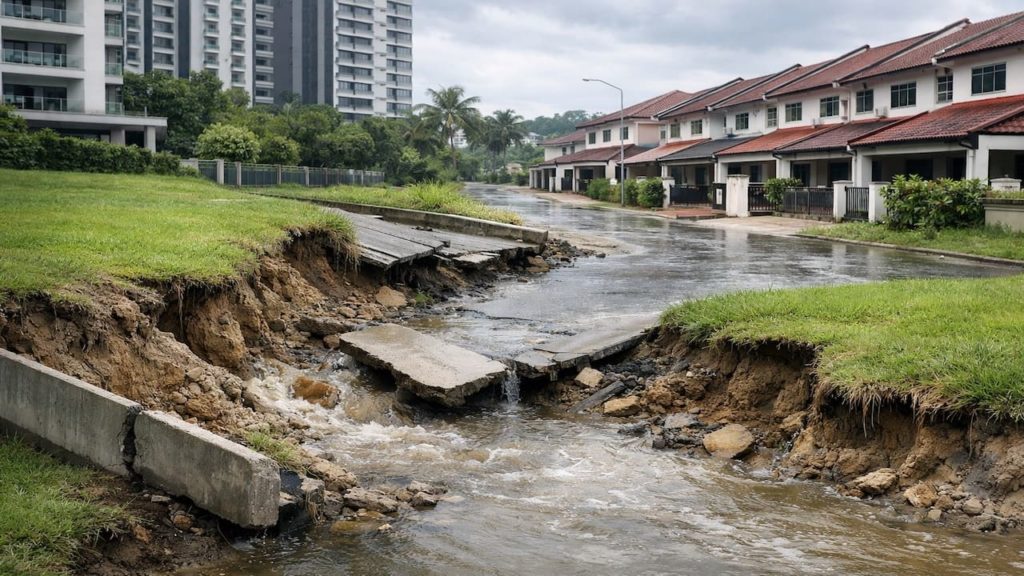
Walk the yard edge to edge and follow the water trail. Look for exposed roots, missing gravel, and new gaps near walls and steps. Evidence first. Then action.
- Trace runoff lines from downpipes to yard edges
- Inspect soil gaps under slabs and step corners
- Check gravel areas for sinking and bare patches
- Look for muddy splashes on walls near ground
- Probe soft spots with foot and note hollows
Some people wait until the ground dries, but washouts are easiest to spot when damp, so do the checks early and you prevent hidden undermining. Smart move.
2. Spot washouts before they spread
Stop fast water where it concentrates and drops silt because one strong stream can cut deeper each Malaysia storm.
Washouts spread when runoff keeps repeating the same path and soil has no protection. Your goal is to slow water, redirect it, and armor the weak points. Simple system.
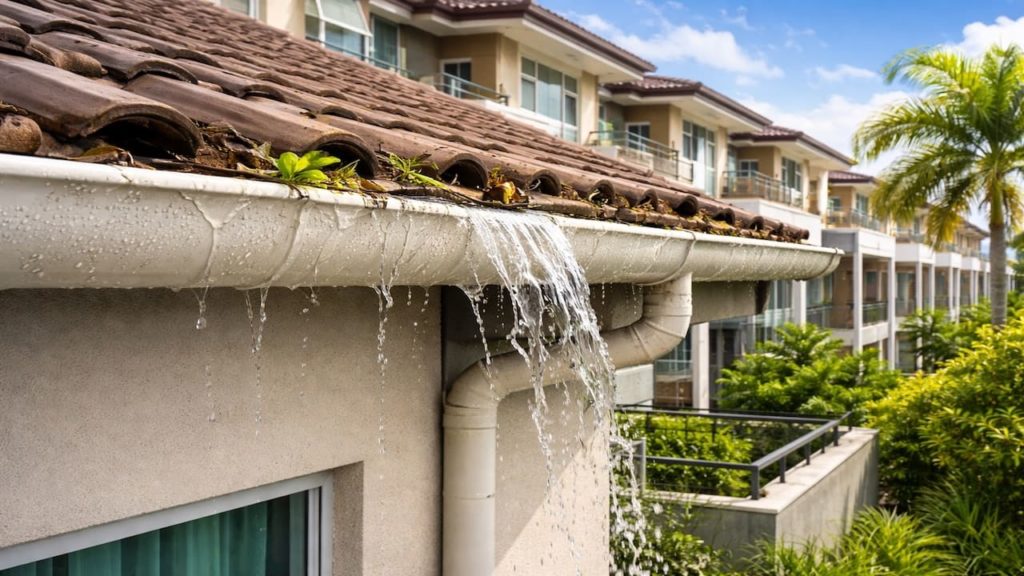
- Extend downpipe outlet away from bare soil
- Add splash block or gravel pad at discharge
- Fill rills with compacted base material layers
- Install edging to keep mulch and soil contained
- Cover exposed soil with mulch or groundcover quickly
Some think a quick topsoil fill is enough, but loose soil washes out again, so compact and protect it, then you break the repeat damage loop. Control.
3. Why rain causes rapid washouts in Malaysia
Washouts happen when intense rain hits unprotected soil and Malaysia downpours arrive with little warning.
Water accelerates on slopes, then cuts into gaps near paving edges and steps. Compacted surfaces shed water faster, while bare soil erodes faster, and humidity prevents quick recovery. The cycle repeats.
- High intensity rainfall creates strong surface runoff flow
- Compacted soil sheds water instead of absorbing
- Downpipe discharge concentrates flow in one spot
- Paving edges create channels that guide runoff
- Bare soil lacks roots to hold particles together
Some blame only “bad soil,” but the real trigger is concentrated flow plus exposed ground, so spread the flow and cover the soil. That is the fix path.
4. How to repair small washouts without rebuilding
Repair in layers and lock the surface in place so your Malaysia yard survives the next storm without rework.
Do not just pour soil into a hole. Rebuild the base, compact it, then add a top layer that resists splash and runoff. Finish with a cover. Done.
- Remove loose mud and clean the washout edges
- Backfill with gravel base then compact firmly
- Add sandy loam layer to improve surface drainage
- Install mulch blanket or erosion mat for cover
- Recheck flow path with bucket water test
Some think erosion mats are overkill, but in wet season they buy time for roots and mulch to settle, so use them on active runoff lines. Cheap insurance.
5. FAQs
Q1. What is the first sign of a washout starting?
Look for small rills, exposed roots, or a hollow sound under your foot near slabs. After Malaysia rain, fresh muddy streaks show where water is cutting.
Q2. Can I fix washouts with topsoil only?
Topsoil alone usually washes away again. Build a compacted base and protect the surface with mulch, gravel, or a mat so it holds through storms.
Q3. What is the most common washout cause at terraces?
Downpipe discharge hitting bare soil is a top cause because it concentrates flow in one spot. Add a splash pad and redirect water to a safer path.
Q4. How do I stop rain damage near the porch wall?
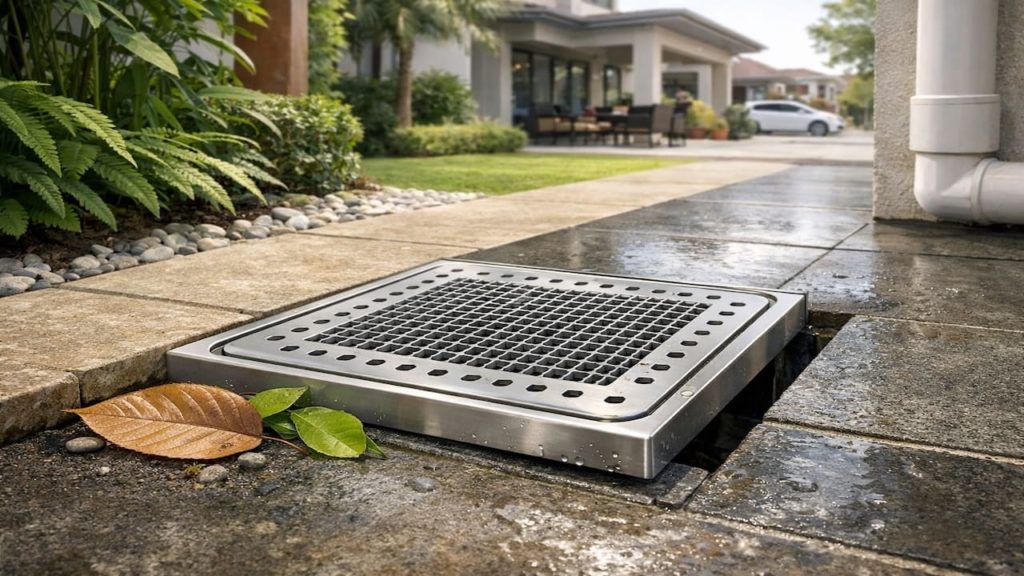
Create a gravel strip and ensure the ground falls away from the wall. Keep drains clear so water does not backflow and soak the base line.
Q5. When should I call a professional?
If you see slab undermining, large voids, or water flowing toward the house. Also call for help if indoor damp appears near the same wall after storms.
Pro’s Tough Talk

I’ve been on site for 20+ years and handled hundreds of jobs, and Malaysia rain doesn’t “damage” a yard out of nowhere. It finds your weakest spot and keeps punching it. Same fight.
3 causes I see nonstop: downpipes dumping water like a fire hose, bare soil left exposed after “cleanup,” and edges that act like little canals guiding runoff. That’s the machine.
Do 3 steps now: redirect the discharge, rebuild the hole in compacted layers, and cover the surface so water can’t pick it up again. Then test with a bucket.
Don’t blame yourself and don’t call every contractor useless, but concentrated runoff will always win against loose soil. Fix the flow and you stop the spread.
Two relatable moments: you patch it once and the next storm reopens it like a zipper, and you wonder why the gravel keeps disappearing. Like trying to hold back a flood with a towel. Like washing a driveway while the hose is still blasting. Genius.
Summary
Rain damage in Malaysia spreads when runoff concentrates and soil stays exposed, so early checks after storms help you catch washouts while they are small. Follow the water trail.
If washouts repeat, treat downpipes, paving edges, and slope direction as priorities, then rebuild in compacted layers with protective cover. If undermining threatens slabs or the wall base, escalate fast.
Spot the weak flow line now and protect it before the next storm then continue with your grading and drain cover guides to keep the entry stable in rainy season.