Landscape rocks and gravel look clean in Malaysia until the first wet season downpour. Then the surface sinks, mud rises, and the path feels soft underfoot.
You might be searching because your gravel turns into puddles, weeds pop up from nowhere, or tire tracks leave ruts near the car porch. Humid air slows drying, and terrace access makes quick fixes tempting. Risky.
In this guide, you’ll learn how to keep gravel stable by checking the base and water flow so your small yard stays firm, drains faster, and avoids muddy patches in Malaysia rain.

Hi, I’m Ken. I write practical home guides for Malaysia—no fluff, just what works.
I hold a formal building design qualification and have spent about 20 years on job sites across hundreds of projects. My goal is simple: help you avoid costly mistakes with clear, safe steps—a quick way to decide what to do next.
1. Landscape rocks and gravel: 5 checks
Check base depth and water exit before adding more gravel.
Gravel fails when water gets trapped under it—Malaysia storms turn tiny dips into soft spots that swallow stones and stain your entry tiles. This is about physics, not taste.
- Check base depth under gravel along walkway edges
- Probe soft spots using a stick near puddles
- Confirm slope leads toward drain not wall
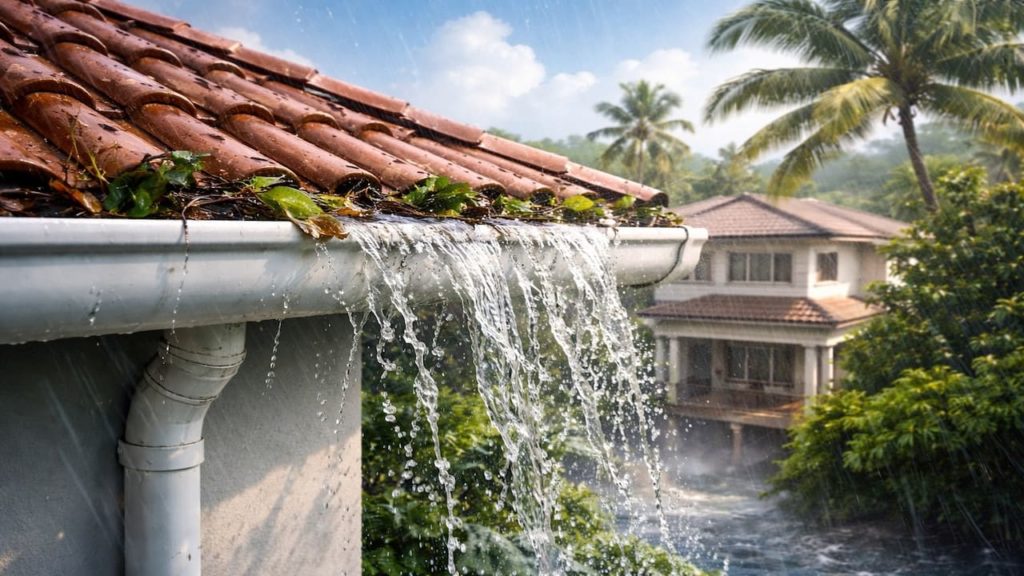
- Inspect gutter downpipe splash onto gravel zone
- Lift a corner and inspect fabric condition
Some people think the fix is simply topping up with more stones. That can hide the problem for a week, but the base stays wet, so sinking returns and mud shows again.
2. Prevent sinking and muddy patches
Stop sinking by keeping water out of the base.
Sinking happens when fines and soil mix into the gravel and the base loses strength—humid Malaysia nights keep that base damp, so it never resets. A firm base is the real floor.
- Add edge restraint to stop gravel drifting outward
- Create a dry strip along wall base line
- Redirect downpipe water into a gravel soak zone
- Compact base layer using hand tamper passes
- Top up with angular gravel not round pebbles
You might worry about adding restraints or adjusting downpipes because it feels like construction work. It is, but small construction beats endless muddy sweeping, and the surface finally feels solid.
3. Why gravel areas fail in Malaysia wet season
Gravel fails when fines build up and drainage slows.
Wet season rain carries sand, leaf bits, and soil into your stones—then terrace layouts trap water at corners and near gates. Once pores clog, the surface turns muddy even without flooding.
- Look for sand layer forming on top surface
- Check algae growth on shaded border stones
- Watch water linger longer than one hour
- Inspect tire ruts near car porch corners
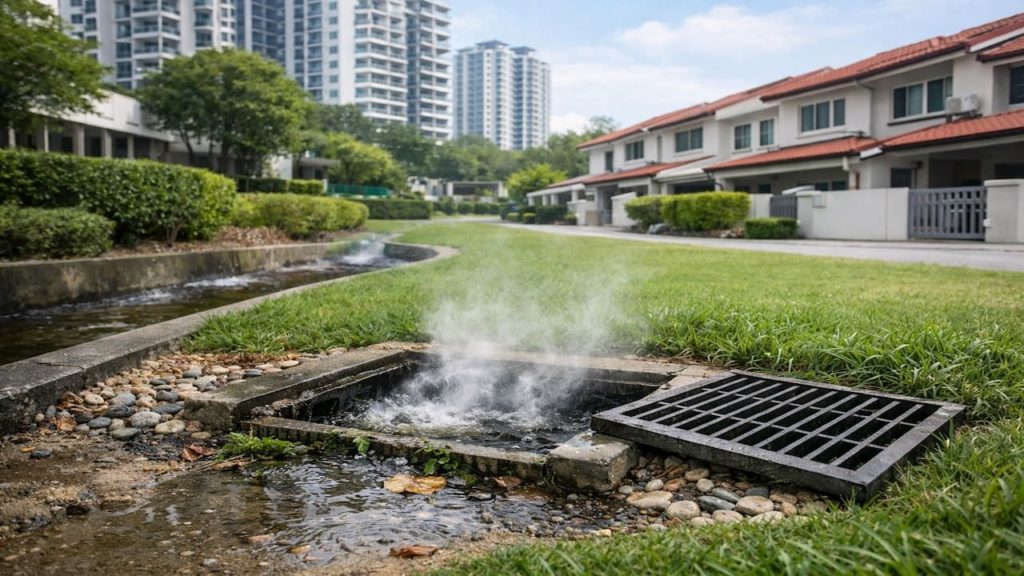
- Find leaf mats blocking nearby drain grate
People blame the gravel quality and buy a prettier stone. Pretty stones still clog, so fix the clog sources and restore flow, then the same gravel performs better.
4. How to rebuild a stable gravel base fast
Rebuild the weak section not the whole yard.
Most small Malaysia yards do not need a full redo—target the soft zones, rebuild the base, and create a clear water route to the drain. This saves money and stops repeat mud.
- Remove gravel and store it on a tarp
- Dig out soft soil until firm layer appears
- Add crushed aggregate base and compact in lifts
- Lay fabric and overlap seams by wide margin
- Return gravel and rake to even thickness
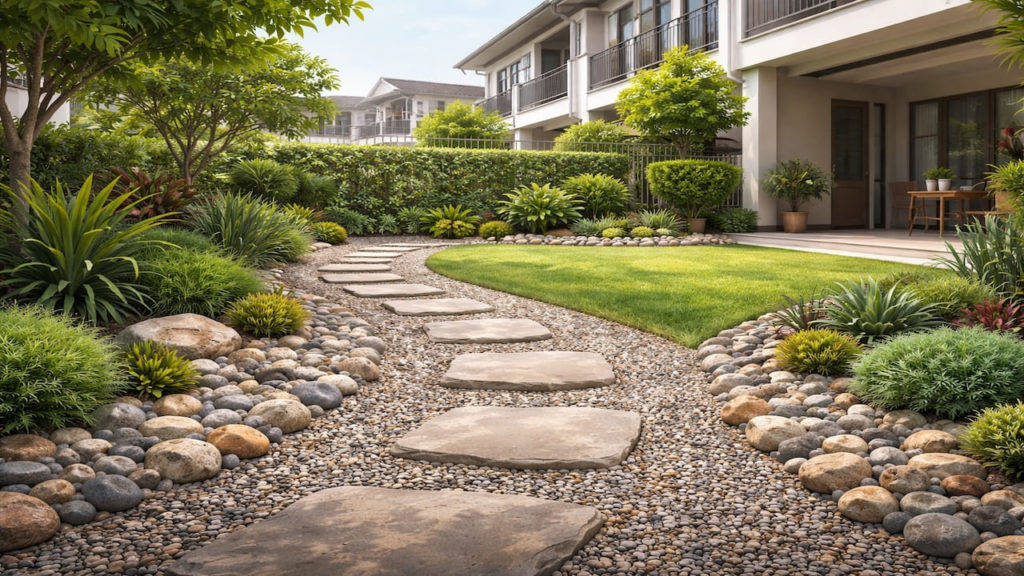
Some homeowners prefer to cover mud with decorative stepping stones. Stones help footing, but if the base stays wet and soft, the stepping stones settle too, so rebuild the weak section first.
5. FAQs
Q1. Is landscape fabric always needed under gravel?
Fabric helps separate soil from gravel, especially in Malaysia where rain splashes fine silt into gaps. It is not magic, so it still needs a good base and proper overlap.
Q2. What type of gravel is better for small yards?
Angular gravel locks together better than smooth pebbles. It resists shifting when wet season rain hits, and it feels steadier under shoes and tires.
Q3. How thick should the gravel layer be?
Enough to cover the base evenly and prevent exposed fabric, while still draining fast. A common target is consistent thickness across the whole walking line so low spots do not become mud traps.
Q4. Why do muddy patches appear even with good gravel?
Mud usually comes from clogged pores, leaf mats, or a downpipe blasting one spot. Fix the water source and clean the drain path, then the gravel can drain again.
Q5. How do I reduce weeds in gravel without heavy chemicals?
Keep fines and soil from building up on top by rinsing and sweeping after storms. Also improve edging so soil does not creep into the gravel zone over time.
Pro’s Tough Talk

I’ve been on site for 20+ years and handled hundreds of jobs, and gravel failures in Malaysia all smell the same. Wet season rain plus humidity turns a lazy base into porridge.
Three causes, easy. First, people skip compaction and the base stays soft. Second, downpipes blast one corner like a fire hose. Third, sand and leaves clog the stones until they behave like soil.
Three steps right now. Do not top up first, pull gravel off the soft spot. Dig until you hit firm ground, then rebuild in layers and compact. Redirect the water so it stops punching the same place.
You are not dumb and the installer is not always evil, but gravel collapses when the base stays wet and uncompressed. It is like putting tiles on jelly, then acting shocked when it wiggles.
Relatable moment one, you rake it nice on Saturday and by Tuesday it looks like a cat party happened. Relatable moment two, you step out after rain and your shoe sinks with that gross squish. Keep throwing stones at it if you want, the mud will keep winning.
Summary
Gravel and rocks work in Malaysia when the base is firm, the slope sends water away, and drains stay clear. Do the 5 checks before you add more material.
If sinking or mud returns after 2 storms, assume a wet base, clogged pores, or a water source like a downpipe. Fix the weak section and the exit path, then the surface stabilizes.
Tonight, lift one corner and probe one soft spot, then rebuild the worst patch first. Make the base dry and compact before you chase the look and your yard stays cleaner through wet season.