A sloped yard in Malaysia can look nice in dry weather, then turn messy after one storm. Soil slides, paths get slick, and the entry feels unsafe.
You might be searching because rain keeps washing mulch downhill, steps feel slippery at night, or a planted slope never stays neat. Humid air slows drying and algae grows fast. Annoying.
In this guide, you’ll learn how to prevent soil wash and slippery paths on a slope yard with simple checks that work in Malaysia heat, wet season downpours, and typical terrace home layouts.

Hi, I’m Ken. I write practical home guides for Malaysia—no fluff, just what works.
I hold a formal building design qualification and have spent about 20 years on job sites across hundreds of projects. My goal is simple: help you avoid costly mistakes with clear, safe steps—a quick way to decide what to do next.
1. Landscape for slope yard: 5 checks
Do these slope checks before you buy any materials.
In Malaysia, slope problems show up during the first heavy rain, not during design day—so you must check water speed, soil hold, and path grip first. Fast truth. Clear baseline.
- Walk the slope after rain and note slip
- Mark runoff lines using chalk after storms
- Check downpipe outlet aiming onto the slope
- Test soil crumble by squeezing a wet handful
- Measure path cross slope with bottle level
Some people think you can plant more greenery and everything stabilizes. Plants help, but without knowing runoff direction and grip points, you just feed washouts again.
2. Prevent soil wash and slippery paths
Control water speed then lock soil in place.
Wet season rain hits hard, and a slope turns water into a fast conveyor belt—slow it down and guide it to an exit, then your soil stops moving. This is the core. No debate.
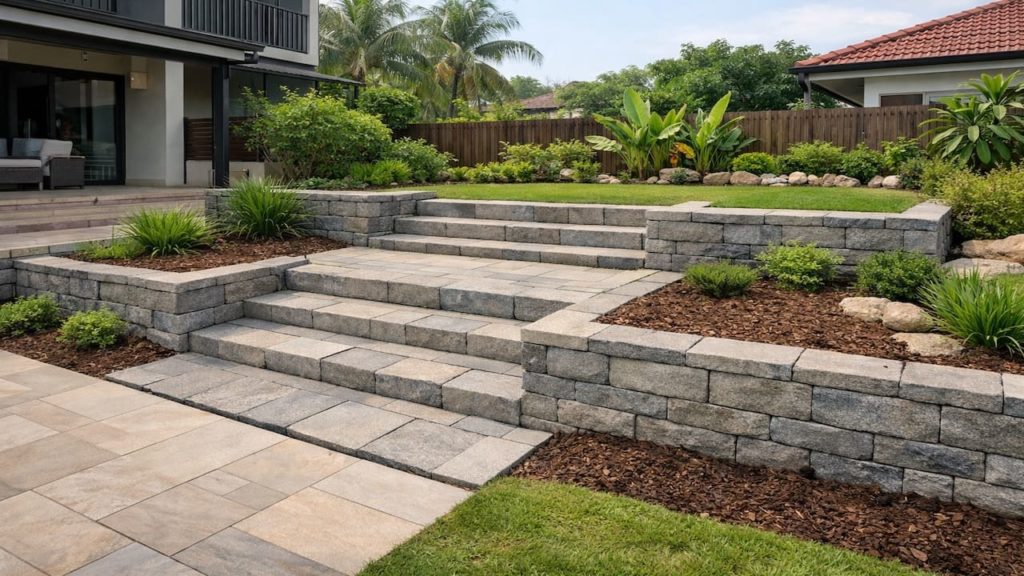
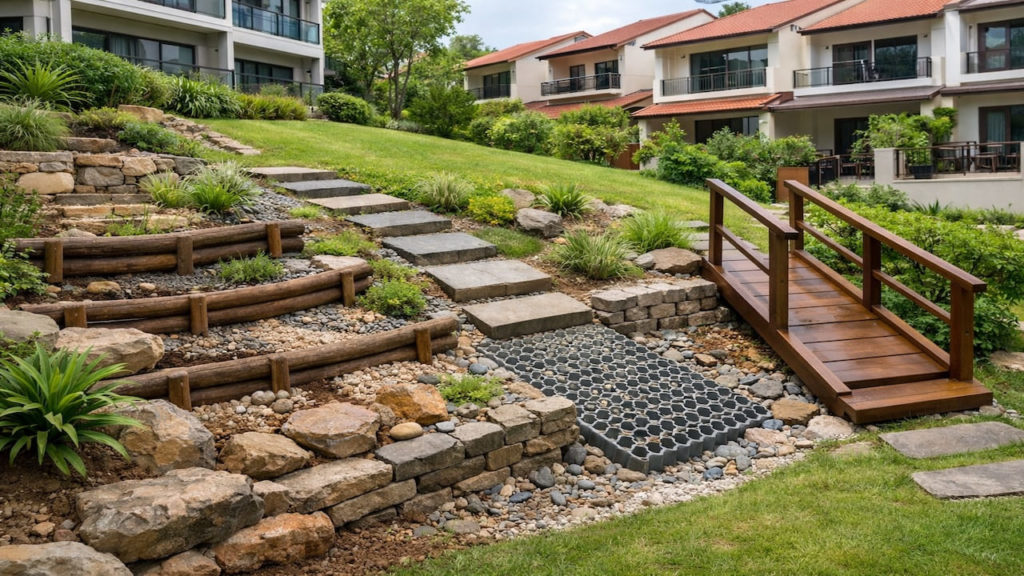
- Create small terraces using edging and compact base
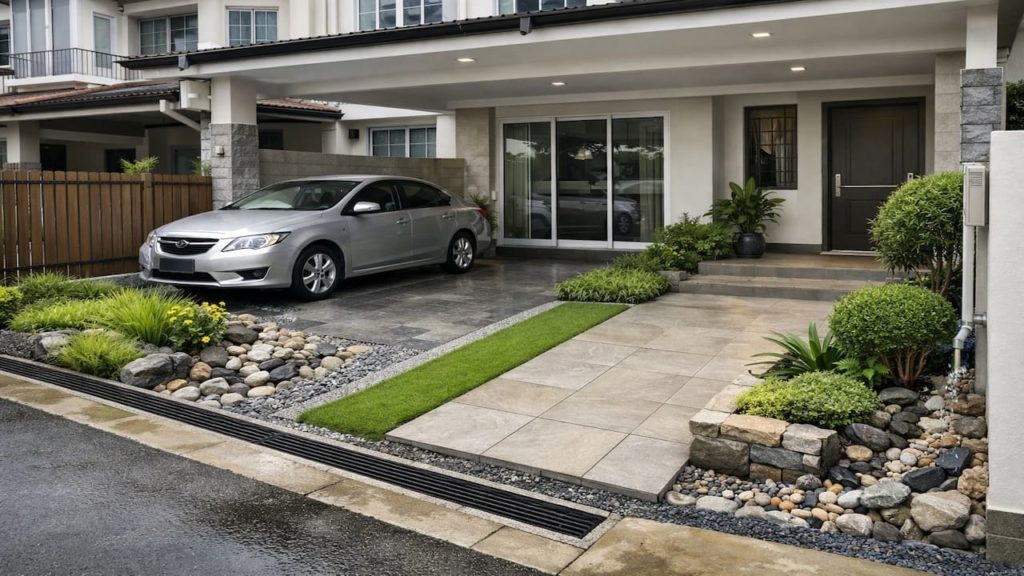
- Add gravel strip to break flowing water sheets
- Install shallow swale leading toward a drain
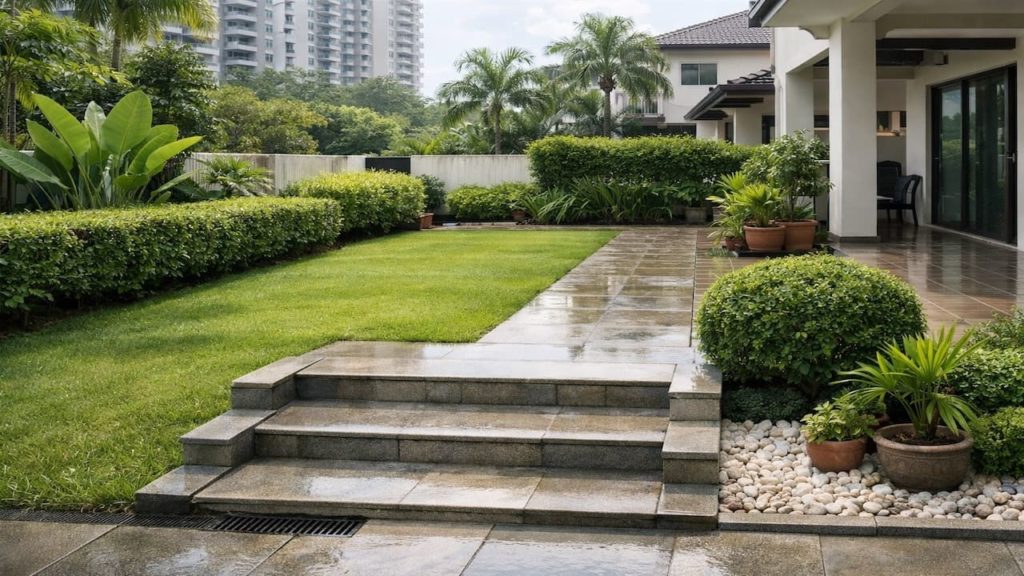
- Use anti slip finish on main walking line
- Place step stones where feet naturally travel
You might worry terraces look artificial and reduce space. They can, but they also stop the constant cleanup cycle, and they make your path safer in humid nights.
3. Why slope yards wash out in Malaysia wet season
Washout happens when water has no gentle route.
Malaysia storms often come with wind, splash, and sudden volume, and slopes magnify that force—soil loosens, fines wash away, and algae turns paths into soap. Predictable. Not luck.
- Check bare soil patches forming after each storm
- Look for rills cutting lines through the mulch
- Inspect path edges for undercutting and gaps
- Find puddle spots at the bottom landing area
- Spot algae film on shaded steps after rain
Some homeowners blame the soil quality and keep buying new topsoil. Better soil helps, but if water still rushes downhill, the new soil just becomes the next shipment downstream.
4. How to stabilize soil and improve footing
Fix the path first then reinforce the planted slope.
Start from the walking line because slips are urgent, then build soil stability behind it. Malaysia humidity makes slick growth return quickly, so you need both grip and drainage working together.
- Brush and rinse algae then dry the surface
- Apply gritty sealer to high traffic tiles
- Pin erosion matting under mulch on steep areas
- Plant deep rooted groundcover in staggered rows
- Redirect downpipe flow into a gravel soak zone
People often focus on plants first because it feels easy. It is easy, but if the path stays slick, your yard stays stressful, so secure footing first and then landscape.
5. FAQs
Q1. How steep is too steep for a simple DIY fix?
If you cannot walk it safely when damp, treat it as high risk and prioritize a stable path. Steeper slopes usually need terracing and anchored soil layers.
Q2. Why does mulch keep washing away in heavy rain?
Water is flowing as a sheet and carrying light material with it. Break the flow with terraces, edging, or gravel strips so the water slows down.
Q3. What is the fastest way to reduce slipperiness on steps?
Clean algae, improve drying airflow, and add a gritty surface or anti slip strip on the main step line. Grip matters more than brightness at night in wet season.
Q4. Do I need a drain at the bottom of the slope?
Often yes, because water needs a destination. If the bottom landing stays wet for more than a day, add an outlet path toward a gully or soak zone.
Q5. What plants help stabilize a slope in tropical weather?
Choose groundcovers with dense roots and shrubs that handle both sun and soaking. Place them in staggered rows and keep water from blasting their base.
Pro’s Tough Talk

I’ve been on site for 20+ years and handled hundreds of jobs, and slope yards are where Malaysia rain shows its true face. One storm and your “neat garden” becomes a brown river.
Cause breakdown is simple. First, water speed is too high, so soil gets ripped out like sand in a storm drain. Second, paths stay damp, so algae grows and your shoes lose grip. Third, downpipes aim at the slope and act like a pressure washer.
Immediate steps, three of them. Make one clear path line safe with grip and drainage. Slow the water using terraces or a swale. Anchor the soil with matting and deep root plants, not just loose mulch.
No, you are not careless, and no, every contractor is not a villain, but slope yards fail when water is allowed to sprint downhill. Treat it like kids running in a hallway, you put barriers and you guide the flow.
Relatable moment one, you step out after rain and do a tiny ice skating audition. Relatable moment two, you sweep soil back uphill like a doomed hero. Keep fighting gravity barehanded if you want, it loves free entertainment.
Summary
For slope yards in Malaysia, start with water speed and safe footing. Do the 5 checks, then guide runoff to an exit and lock soil in place.
If soil still washes after 2 storms, assume the flow path is wrong or the slope needs terracing support. If steps stay slick overnight, prioritize grip and faster drying.
Today, mark runoff lines after the next rain and fix one slippery spot first, then continue with the next guide on drainage checks that stop puddles and mosquitoes fast to keep the whole yard safer.