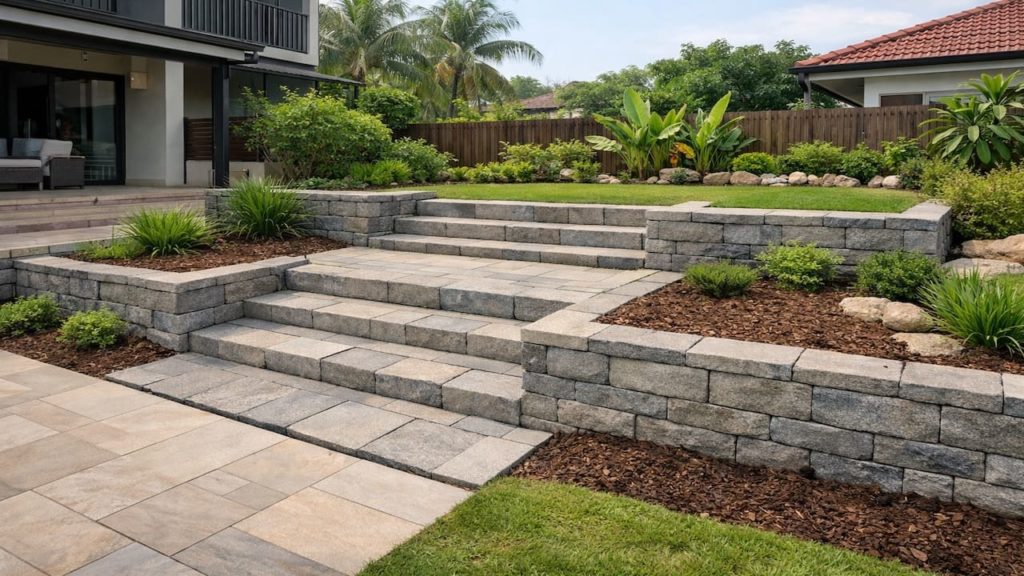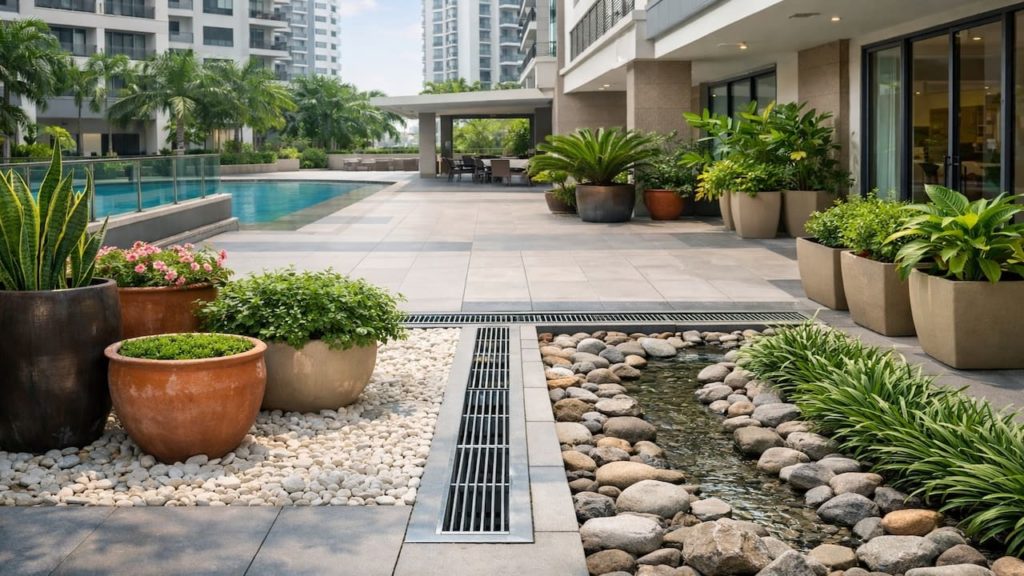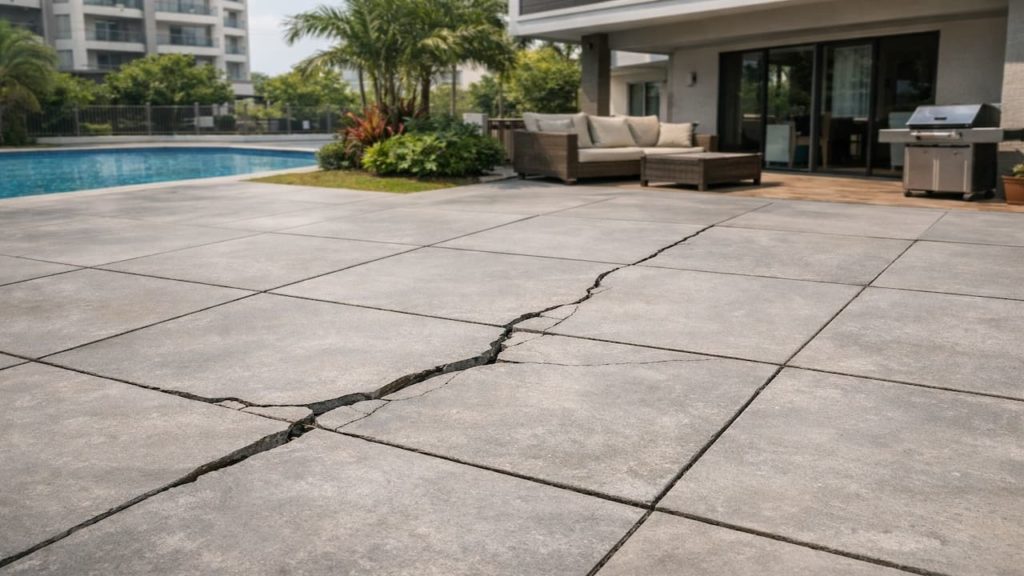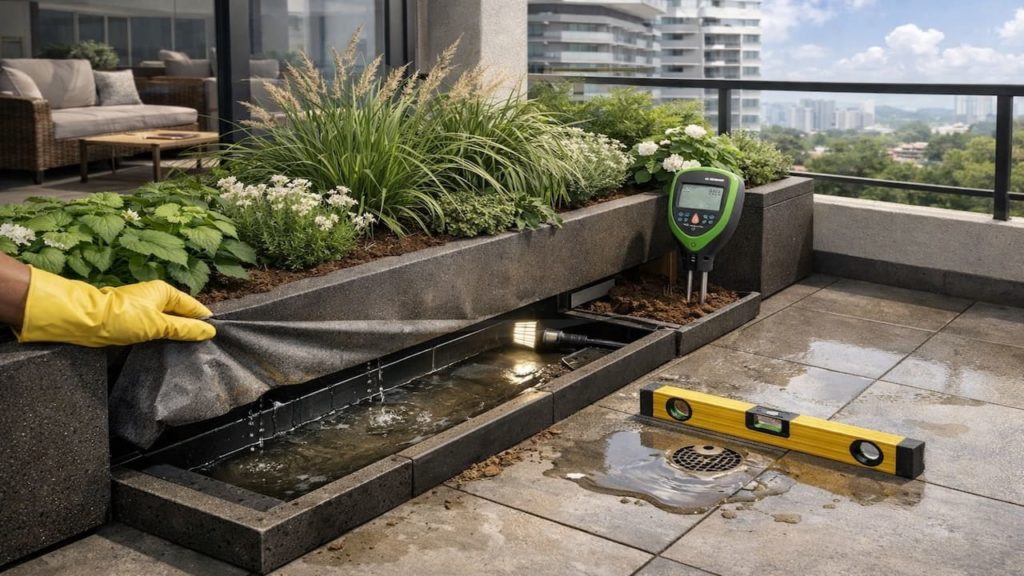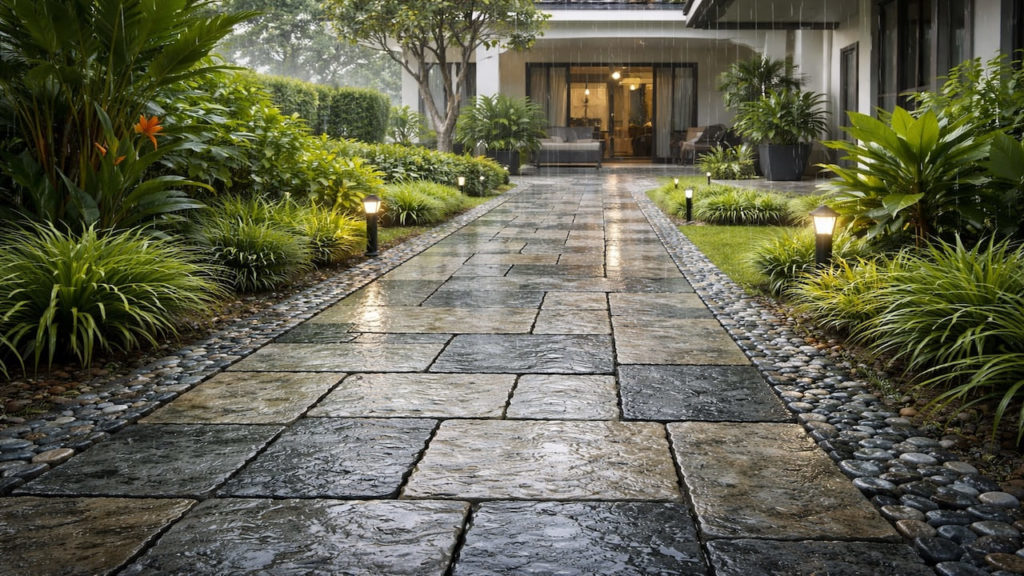
If your stone walkway looks fine in the dry season but opens up after rain, you are not alone in Malaysia. Heavy downpours and humid days punish every tiny gap.
Loose joints can come from weak base compaction, missing edge restraint, poor drainage, or the wrong joint filler. Rainwater finds a path, then the sun bakes it, then it shifts again. Stressful.
In this guide, you’ll learn how to keep stone walkway joints tight in Malaysian heavy rain with simple checks and quick fixes. You will also see what to watch before the next monsoon week.

Hi, I’m Ken. I write practical home guides for Malaysia—no fluff, just what works.
I hold a formal building design qualification and have spent about 20 years on job sites across hundreds of projects. My goal is simple: help you avoid costly mistakes with clear, safe steps—a quick way to decide what to do next.
1. Landscape stone walkway: 5 checks
Tight joints come from stable base and fast drainage not from adding more filler later.
Malaysia rain hits hard, and water pressure under stones will push sand out of joints if the base stays wet—especially near porch edges and condo ground-floor paths. No shortcuts.
- Test walkway slope with hose and stopwatch
- Brush joints clean then vacuum fine sand
- Apply polymeric sand and mist light water
- Seal edges near walls with flexible sealant
- Inspect drainage outlets after every monsoon storm
Some people say joint gaps are cosmetic, but loose joints become wobble, weeds, and slippery algae in Malaysia humidity. Fix the cause first, then the joint stays tight.
2. Keep joints tight in heavy rain
Use joint materials that resist washout in storms so your walkway does not shift.
When tropical rain blasts the surface, normal dry sand can rinse away fast—then stones start rocking and edges chip. Clean water flow matters more than thick grout. Simple rule.
- Choose joint width 3 to 5 mm outside
- Use polymeric sand rated for heavy rain
- Compact joints with rubber float and brush
- Keep joint surface 2 mm below stone top
- Add edge restraint along the walkway perimeter
You might think cement grout is tougher, but rigid grout cracks with heat and rain cycles on Malaysian patios. Flexible joint systems survive movement and stay cleaner.
3. Why joints open up in Malaysia monsoon season
Joints open because water weakens the base layer then stones move under foot.
Monsoon rain soaks the bedding, and if water cannot escape, fine particles pump out through joints—then the next sunny day dries and shrinks the layer. Repeat cycle. Wear and tear.
- Check for puddles after 10 minutes rain
- Look for sand trails near drain outlets
- Tap stones and listen for hollow sounds
- Inspect edge stones for sideways movement signs
- Watch algae lines showing constant wet zones
Some blame only “bad stone,” but the stone is rarely the real problem in Malaysia. Drainage and base decide everything, and that is the part you can control.
4. How to lock joints without cracking stones
Lock joints by drying the base and re filling properly then protect edges from washout.
Start on a dry day, and plan for sudden afternoon storms—Malaysia weather will not wait for you. Work in sections so you can finish compaction before rain returns. Clean finish.
- Lift loose stones and scrape wet bedding
- Add crusher dust and compact in thin layers
- Reset stones with consistent joint spacing guides
- Sweep polymeric sand and vibrate lightly over joints
- Redirect runoff using a shallow channel near edge
Some people worry repairs will make stones crack, but cracking usually comes from uneven support and trapped water. Build support first, then joints can lock tight without drama.
5. FAQs
Q1. Can I just top up sand in the joints after rain?
You can for a quick patch, but it will wash out again if water is moving under the stones. In Malaysia, repeated storms will expose weak base problems fast.
Q2. Is polymeric sand worth it for tropical weather?
Yes when installed correctly and the base drains well. It resists washout better than plain sand, especially on exposed terrace house walkways.
Q3. How do I know if my walkway base is failing?
If stones rock, edges spread, or puddles sit after rain, the base is likely staying wet too long. Movement means the base is losing support and joints will not stay tight until that is fixed.
Q4. Will sealing the stone surface stop joint problems?
Sealers can reduce staining, but they do not solve drainage or base softness. Focus on slope and outlets first, then seal for easier cleaning in humidity.
Q5. What is the safest surface during rainy season?
Choose textured stones and keep joints slightly recessed so water does not sheet across the top. Also remove algae early, because Malaysia damp makes surfaces slick.
Pro’s Tough Talk

I’ve been on site for 20+ years, I’ve handled hundreds of jobs, and Malaysia rain treats your walkway like a punching bag. One week it looks neat, next week the joints look like missing teeth.
Three causes, always. First, the base stays wet because runoff has nowhere to go. Second, joints are filled with cheap sand that washes out like sugar in tea. Third, edges are not restrained, so stones drift like shopping carts in a parking lot.
Three steps, do them in order. Dry the area and fix the water path, then rebuild any soft spots in thin compacted layers, then re fill joints with the right material and compact it properly. That is it.
Don’t blame yourself and don’t call every contractor trash, but Wet base plus weak joints will fail every monsoon and that structure is ruthless. It is like building on jelly and hoping it acts like concrete.
And yeah, everybody has that “I’ll fix it later” moment and that “why is there a wobble now” moment when you carry groceries home. Fix it before your walkway starts singing under your feet like a cheap floorboard.
Summary
Stone walkway joints stay tight in Malaysia when the base drains fast and the joint filler resists washout. Stable base first.
If joints keep opening after you re fill them, the deciding factor is hidden water under the stones, missing edge restraint, or low spots that hold puddles.
Do the slope and puddle check today, then repair one small section this week. One proper fix beats endless topping up after every storm and keeps your path safe in rainy season.