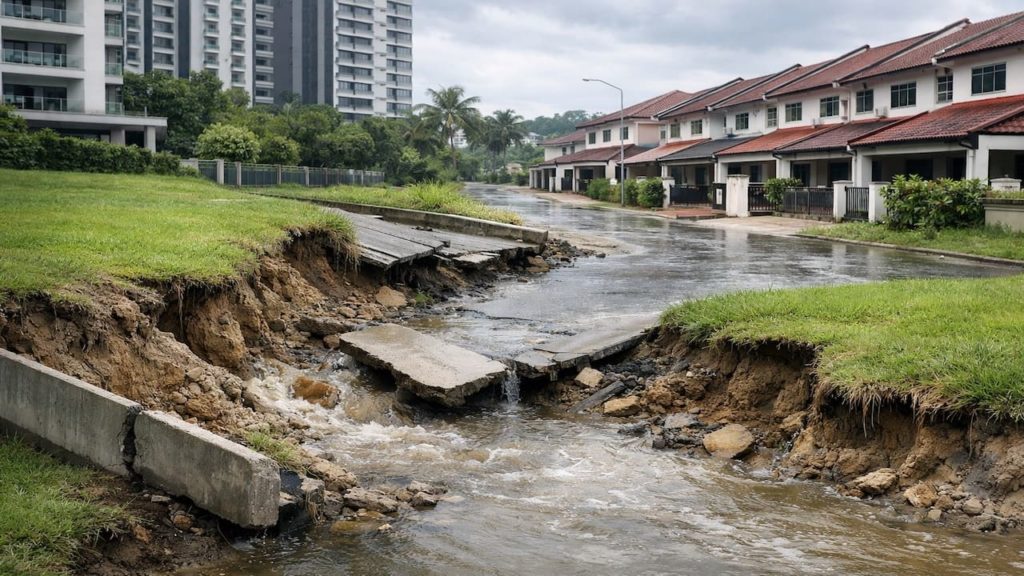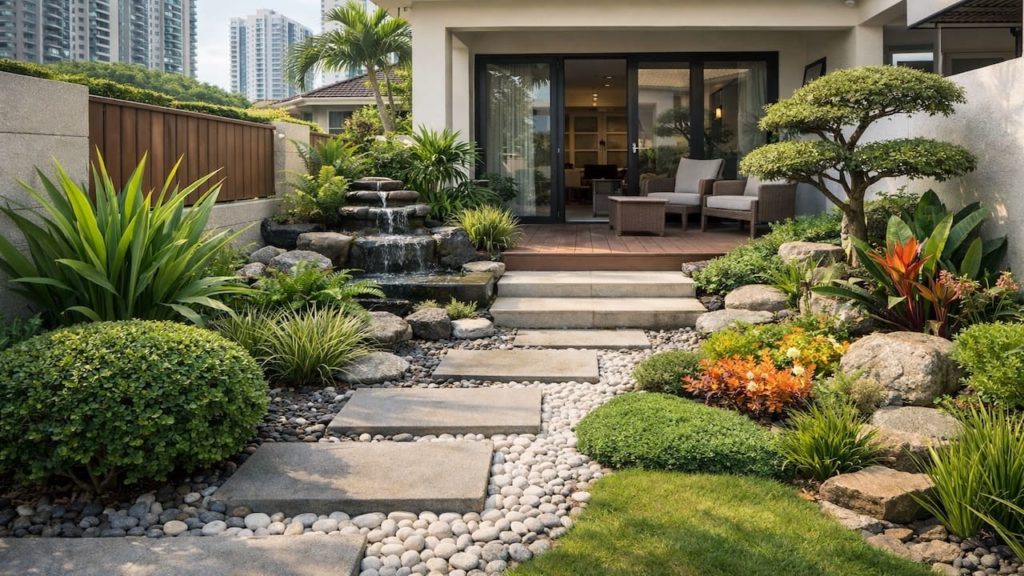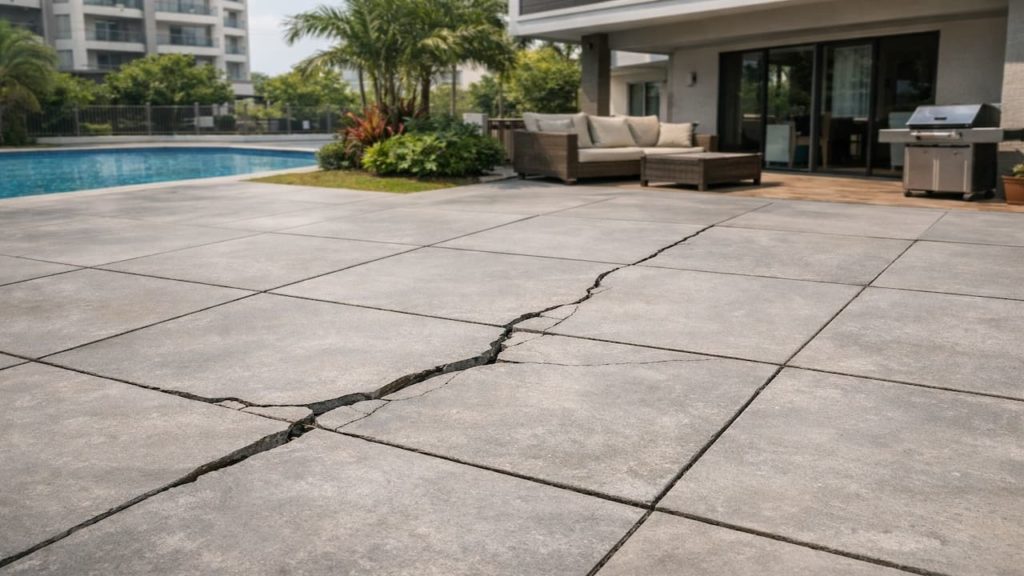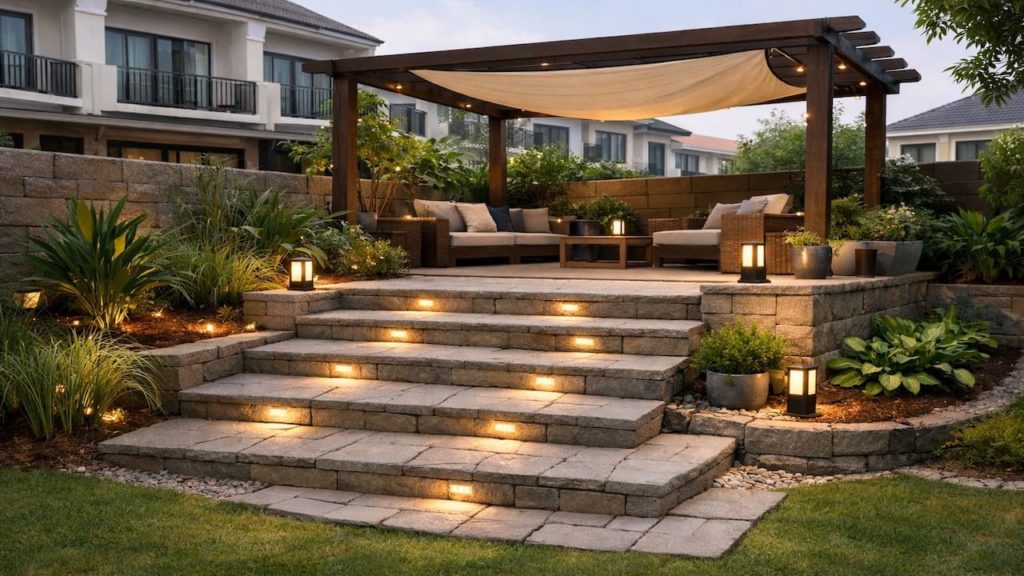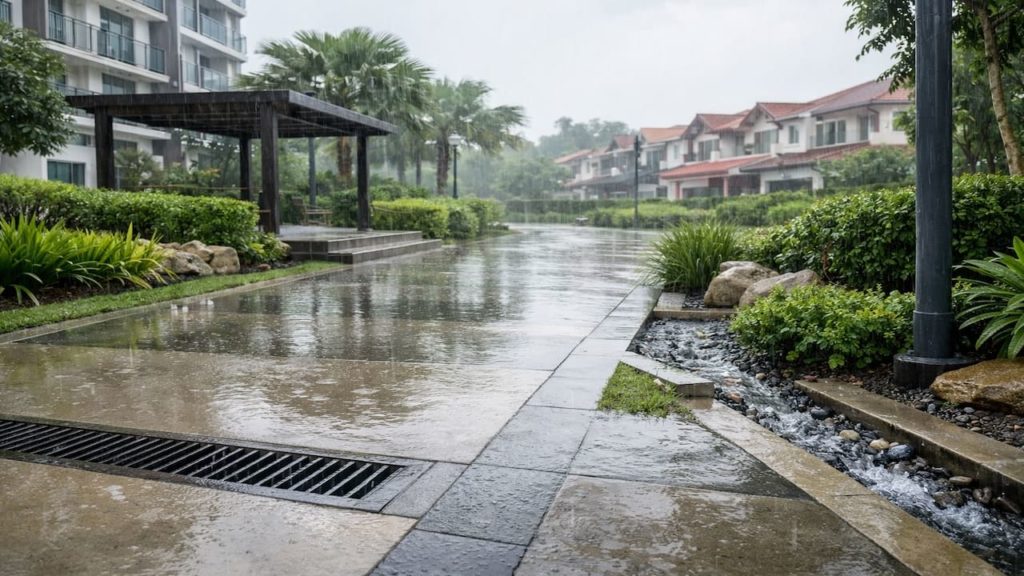
Walking outside in Malaysia during wet season can turn dangerous fast, especially when a terrace walkway becomes a shiny river after a downpour.
You may be searching because someone slipped, muddy water stains keep returning, or your path stays damp through the night. Humidity slows drying, and sudden storms punish weak layout. Common.
In this guide, you'll learn how to plan a walkway that stays safe when rain hits hard with practical checks that fit small yards, car porches, and tropical weather in Malaysia.

Hi, I’m Ken. I write practical home guides for Malaysia—no fluff, just what works.
I hold a formal building design qualification and have spent about 20 years on job sites across hundreds of projects. My goal is simple: help you avoid costly mistakes with clear, safe steps—a quick way to decide what to do next.
1. Landscape walkway planning: 5 checks
Safe walkways start with slope grip and a clear exit.
Wet season water moves fast on tiles and concrete—so check where it flows, where it pools, and where feet lose traction before you add decor. Safety first.
- Mark puddle edges after rain with chalk
- Test tile grip using wet shoes at night
- Check path slope using a bottle level
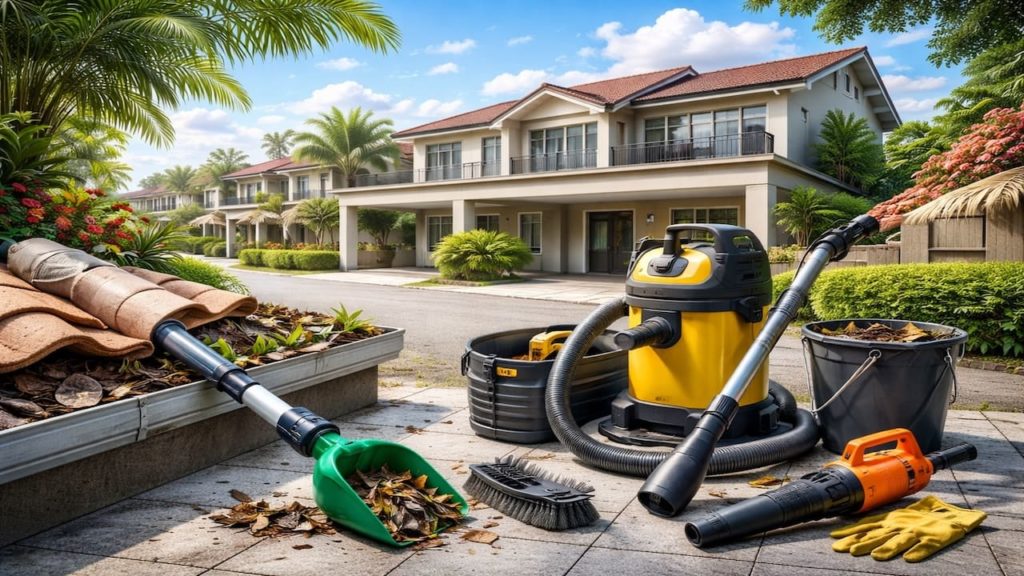
- Locate drain grates and clear leaf mats
- Trace downpipe splash zones onto the walkway
Some say a walkway is just a straight line to the door. It is, but if it becomes slippery or flooded, the line is useless, so plan flow and grip first.
2. Stay safe in wet season downpours
Design the path to stay usable during peak storms.
Malaysia rain often arrives with wind and splash—so the safest path keeps water off the walking line and drains it within hours, not days. Dry feet. Better mood.
- Keep main walking line away from downpipes
- Add textured strips on the highest traffic zone
- Raise stepping stones above known puddle dips
- Install small gravel edge to break water sheets
- Place low lights to reveal wet hazards
You might think brighter lights or new tiles solve the risk. Helpful, but without water control the slick returns, so build a dry route and then upgrade finishes.
3. Why walkways get slippery in Malaysia yards
Slippery walkways come from algae films and poor drainage.
Humidity plus shade lets algae grow on tiny moisture, and flat paving holds thin water layers—then shoes slide even when the surface looks clean. Quiet danger.
- Inspect shaded tiles for green film after rain
- Check grout lines for sunken low pockets
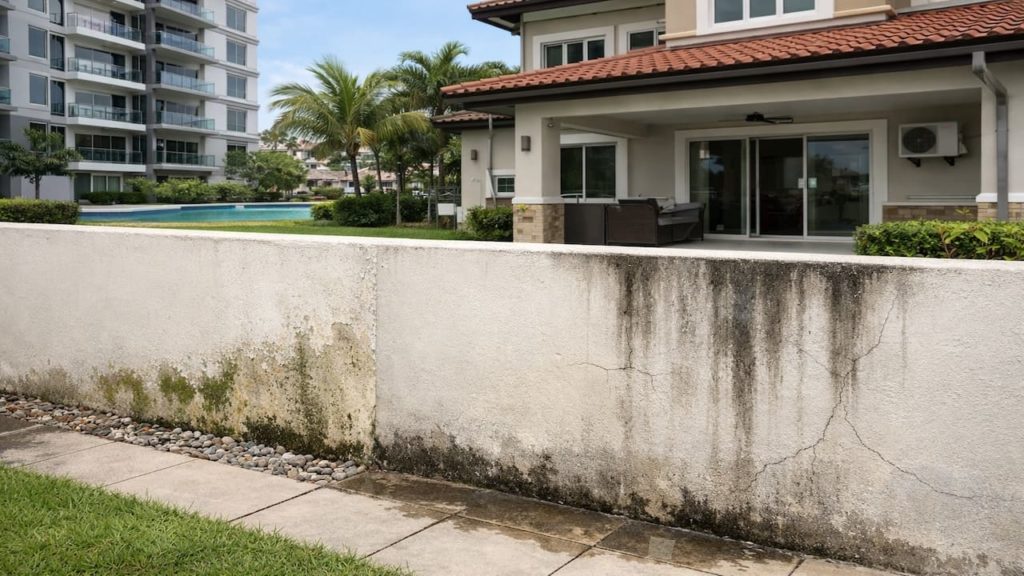
- Look for splash marks on lower wall paint
- Notice damp smell near the wall base
- Watch water linger longer than two hours
Some people blame the cleaner or the plant soil nearby. Those can contribute, but the core is moisture staying put, so fix drainage and sunlight exposure where you can.
4. How to plan a walkway that dries fast
Plan for fast drying by guiding water and letting air move.
A good Malaysia walkway dries because water has a destination and air can circulate—so think of it as a system, not a strip of tiles. Simple logic. Works.
- Create a slight fall toward a drain outlet
- Redirect downpipe flow using a short elbow
- Seal edge gaps where tiles meet wall base
- Use matte textured surfaces on the walking line
- Trim plants back to restore airflow corridor
People fear changing slope means major rebuilding. Sometimes it does, but small routing fixes often cut most puddles, and you can test after 2 storms before spending big.
5. FAQs
Q1. What is the safest surface for a wet season walkway?
Choose a matte textured surface that keeps grip when wet. Avoid glossy finishes that reflect light and hide water films after rain.
Q2. How wide should a walkway be for a terrace home?
Wide enough for two feet side by side plus a small margin, especially near steps and the gate. Narrow paths force awkward side steps.
Q3. How do I reduce algae on shaded tiles?
Improve drying by opening airflow and reducing constant dampness. Use drainage and sunlight changes before harsh chemicals so the film stops returning each week.
Q4. Should I add more drains to stop puddles?
Add drains only where water truly gathers and the slope can feed them. A drain without fall still leaves a pond in heavy rain.
Q5. What quick test tells me my walkway is unsafe?
After rain, walk slowly and see if your foot slides even slightly. If it does, treat it as urgent and fix grip and water routing.
Pro’s Tough Talk

I've been on site for 20+ years and handled hundreds of jobs, and wet season walkways are where people learn humility. One rain and your "nice entrance" becomes a slip trap.
Three causes show up nonstop. Flat tiles that trap water. Shade corners that grow algae like a pet. And downpipes blasting the path like a pressure washer.
Three steps, do them in order. Find the lowest point with a bucket test. Give water a clean exit to a drain. Then add grip on the walking line and trim plants for airflow.
Do not blame yourself, and do not call every installer a clown, but your path stays dangerous when water has no exit. A walkway is a seatbelt, not a fashion show.
Relatable moment one, you carry groceries and do a surprise skating move. Relatable moment two, you wipe the tiles and they feel slimy again tomorrow. Fix the boring stuff now, or enjoy your daily wet season audition.
Summary
Walkway safety in Malaysia starts with drainage, slope, and grip. Use the 5 checks, then keep water off the main line and get it to an outlet fast.
If puddles or algae return after 2 storms, assume the slope is wrong, the drain is clogged, or a downpipe is splashing the same spot. Correct routing before replacing finishes.
Tonight, do one bucket test and mark one hazard spot. Make one fix you can verify after the next downpour then move to the guide on drainage fixes that stop mosquito puddles fast.