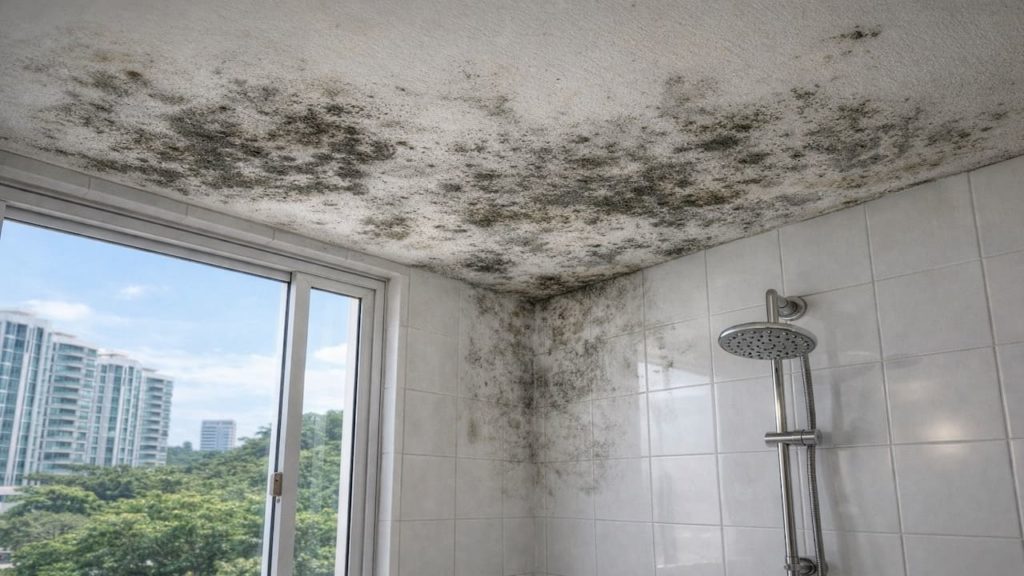
You searched because mold is spreading on your bathroom ceiling, and in Malaysia’s humid wet season it can look worse every week.
This can come from trapped steam, weak exhaust airflow, hidden leaks above the ceiling, or habits like keeping the door shut after showers in a condo or terrace house.
In this guide, you’ll learn how to spot trapped moisture fast and fix ventilation so bathroom ceiling mold stops growing in Malaysia’s warm, damp climate.

Hi, I’m Ken. I write practical home guides for Malaysia—no fluff, just what works.
I hold a formal building design qualification and have spent about 20 years on job sites across hundreds of projects. My goal is simple: help you avoid costly mistakes with clear, safe steps—a quick way to decide what to do next.
1. Mold in bathroom ceiling: 5 signs of trapped moisture
Ceiling mold is a warning that moisture is staying too long after showers.
Bathrooms collect steam quickly, and in Malaysia the air outside is already humid, so drying takes longer—especially with weak fans.
- Ceiling stays damp to the touch 30–60 minutes after a shower
- Musty smell appears even when the bathroom looks clean
- Black specks cluster near corners, lights, or fan grills
- Paint looks patchy, soft, or starts to bubble in spots
- Condensation forms on mirrors and stays for a long time
Some people think mold is just “dirty grout.” On the ceiling it is usually moisture management failing. That’s the real signal. Clear.
2. Ventilation fixes for wet season
Wet season needs faster steam removal and longer drying time because humidity outside slows evaporation.
In condos, bathrooms can be internal with no window, and terrace houses can have small vents that barely move air—so the fix is airflow discipline.
- Run the exhaust fan during showers and for 20–30 minutes after
- Keep the bathroom door slightly open after use to release steam
- Wipe the ceiling edge and top tiles if water beads up often
- Clean fan grills and filters so airflow is not choked by dust
- Use a small fan aimed at the door to push humid air out
You might think “opening the door makes the house humid.” It can, so do it briefly and use fans to direct the flow. Controlled venting. Practical.
3. Why moisture gets trapped above bathroom ceilings
Moisture gets trapped when steam has nowhere to go and cool surfaces make it condense.
Wet season rain keeps ambient humidity high, and warm showers add more, so the ceiling becomes the cold surface that collects water.
- Weak exhaust fan cannot overcome humid outdoor air pressure
- Ducting is blocked, kinked, or vents into a damp ceiling void
- Ceiling void has poor airflow so moisture lingers above panels
- Small roof leaks add water that looks like “normal humidity”
- Aircond nearby cools surfaces and increases condensation risk
Some renters assume “it’s just the climate.” Climate matters, but trapped moisture is a fixable setup and habit issue. Fixable.
4. How to stop ceiling mold from returning
Combine cleaning with airflow upgrades and leak checks so mold cannot keep restarting.
Malaysia bathrooms often stay warm even at night, so mold regrows fast if the ceiling remains damp after every shower—same cycle.
- Clean the mold spot, then dry the ceiling fully the same day
- Test the fan pull with tissue paper at the grill
- Check for water staining, yellow rings, or sagging ceiling panels
- Shorten very hot showers during wet weeks to reduce steam load
- Schedule fan or duct servicing if airflow is weak or noisy
People argue “I cleaned it, problem solved.” Cleaning removes stains but not trapped moisture, so it returns. Stop the moisture and the ceiling stays clean. Simple.
5. FAQs
Q1. Is bathroom ceiling mold common in Malaysia?
Yes, especially during wet season when humidity stays high and bathrooms dry slowly. Condos with internal bathrooms are at higher risk. Good ventilation makes a big difference.
Q2. How do I know if my exhaust fan is too weak?
If a tissue will not stick to the grill while the fan runs, airflow is likely weak. If the bathroom stays damp long after showers, that is another clue. Clean the grill and consider servicing.
Q3. Could the mold be caused by a roof leak?
Yes, especially if you see yellow stains, bubbling paint, or damp patches that grow after rain. Wet season leaks can be subtle at first. If you suspect a leak, inspect above the ceiling area.
Q4. Should I keep the bathroom door closed after showering?
Closed doors trap steam and keep the ceiling wet longer. Open it slightly and run the fan longer to push moisture out. If you worry about house humidity, vent for a short controlled period.
Q5. What is the best daily routine to prevent return?
Run the fan during and after showers, wipe condensation when it is heavy, and keep airflow paths open. Clean fan grills regularly so airflow stays strong. Small routine, big result.
Pro’s Tough Talk

Listen. I’ve been on site for 20+ years and handled hundreds of jobs, and bathroom ceiling mold in Malaysia is not “bad cleaning.” It’s trapped steam doing laps above your head, night after night in wet season. That ceiling is basically a sponge. Fact.
Cause is 3 parts. One, the fan is weak or dirty, so steam never leaves. Two, the duct is wrong—kinked, blocked, or dumping moisture into a damp ceiling void. Three, there’s extra water: tiny roof leaks or seepage that looks like humidity. Fix is 3 steps—clean the fan grill and test suction, run it 20–30 minutes after showers, and check for stains or sagging that scream leak.
Scrubbing mold while the ceiling stays wet is like drying the floor while the shower is still running. And the “wet season, nothing to do” shrug? Nah. Your mirror stays foggy forever and your ceiling corners turn black, two classics. Bottom line, if steam stays trapped mold will always return, fix the airflow or keep cleaning like it’s your second job.
Summary
Bathroom ceiling mold is a sign that moisture is trapped after showers, often from weak ventilation, blocked ducts, or hidden leaks.
If the ceiling stays damp after you improve routines, use a simple rule: verify fan suction, inspect for leak signs, then service the fan or ducting.
Do this today: run the exhaust fan longer and test its pull, then read the next guide on preventing condensation in humid Malaysian homes—airflow stops repeat mold.