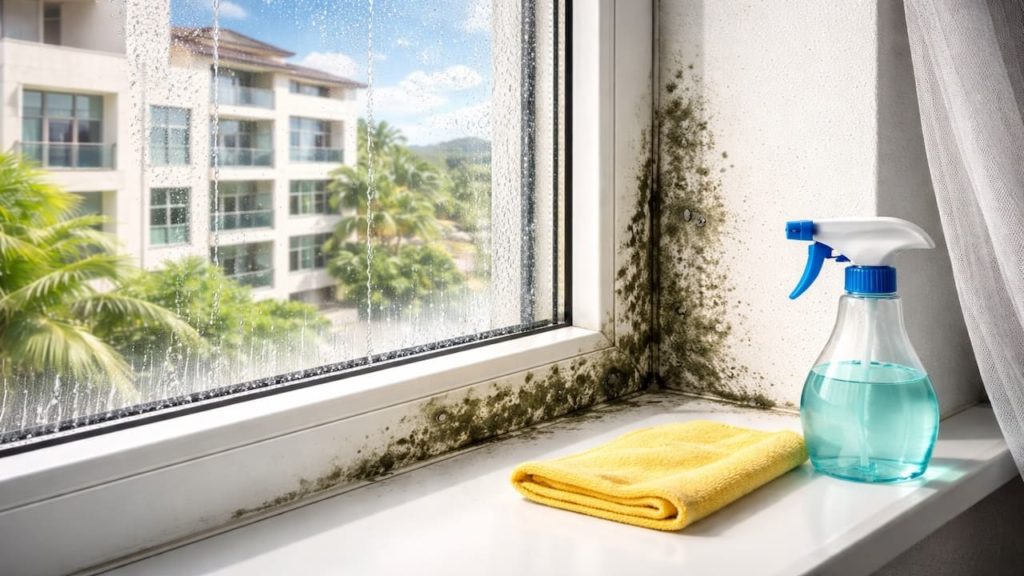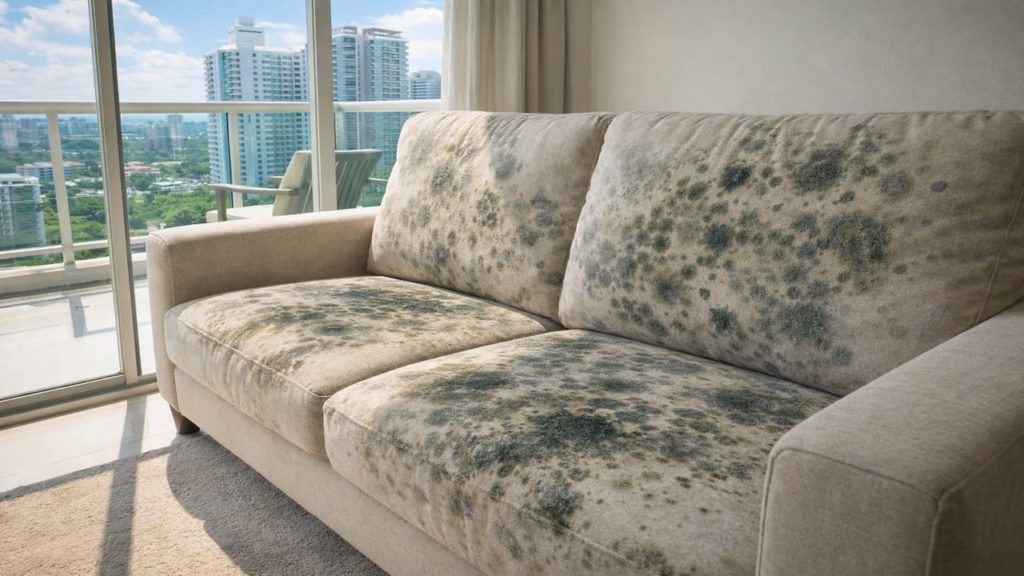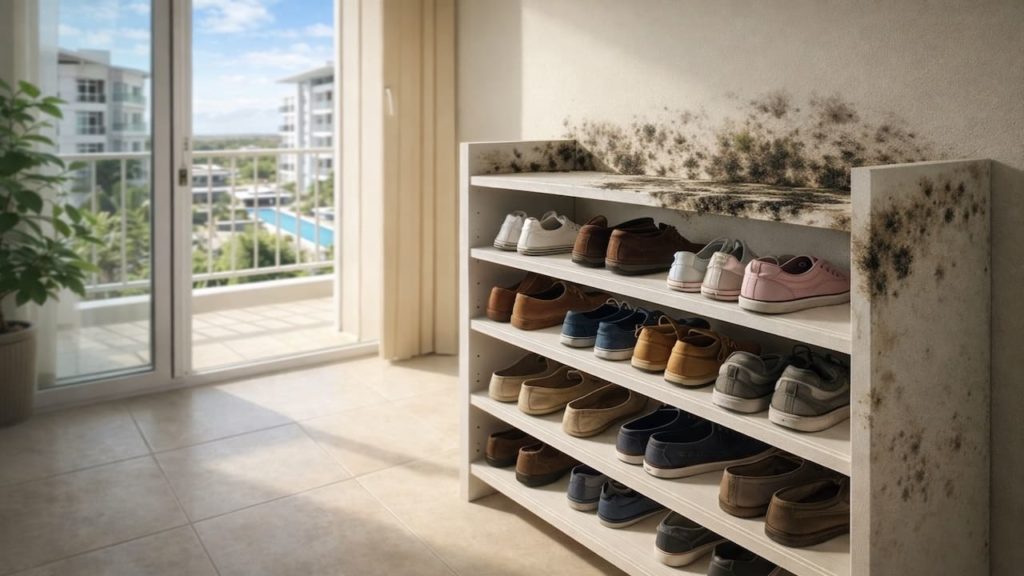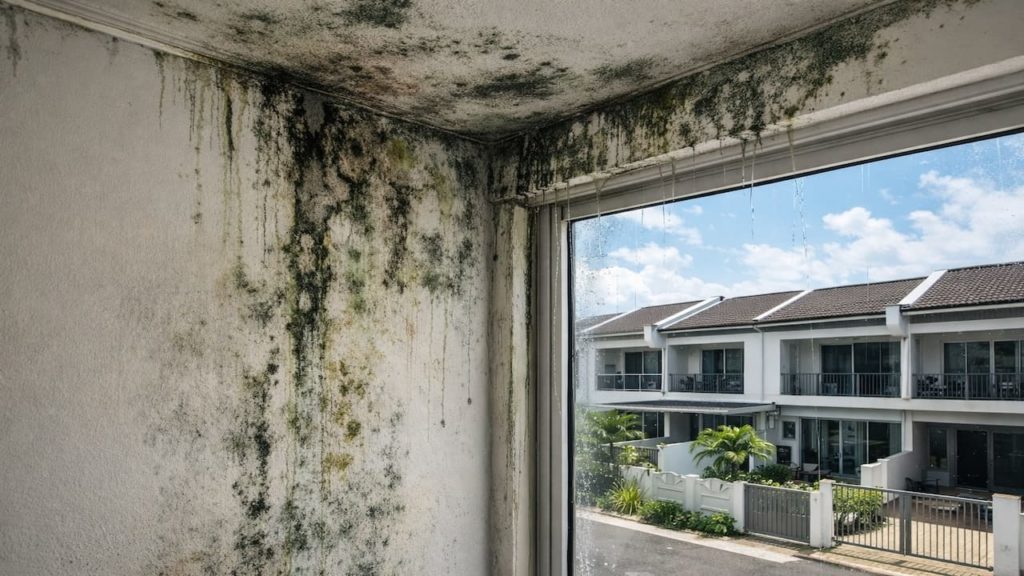
You searched because you want to clean mold safely, and in humid Malaysia it can spread indoors if you scrub the wrong way.
Safety depends on how big the area is, whether the material is porous, how much airflow you have, and if anyone in the home reacts with coughing or allergies.
In this guide, you’ll learn what to check before cleaning mold so you avoid spreading spores in condos and terrace houses during Malaysia’s wet season.

Hi, I’m Ken. I write practical home guides for Malaysia—no fluff, just what works.
I hold a formal building design qualification and have spent about 20 years on job sites across hundreds of projects. My goal is simple: help you avoid costly mistakes with clear, safe steps—a quick way to decide what to do next.
1. Mold cleanup safety: 5 checks before you start
Check risk level first so you know if DIY cleanup is appropriate before you touch the mold.
Malaysia’s warm, damp climate lets mold grow fast, but safe cleanup starts with deciding whether the job is small and controllable—critical.
- Size check: small spot vs large area that keeps expanding
- Material check: tile and metal vs porous fabric, wood, or drywall
- Moisture check: is the surface still damp or actively leaking
- Health check: anyone coughing, wheezing, or reacting in that room
- Containment check: can you isolate the room and ventilate safely
Some people rush in with a brush and bucket. That can spread spores if you do not control airflow and moisture first. Plan, then clean. Simple.
2. Avoid spreading spores indoors
Control dust and air movement so spores do not drift through the home during cleanup.
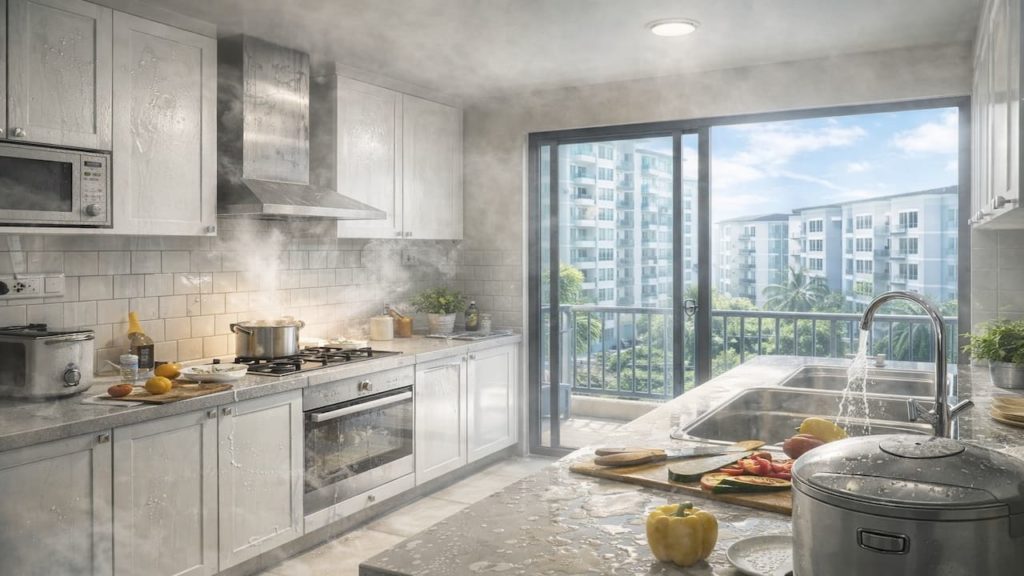
Condos often have tight layouts, so spores can travel from one room to another quickly, and wet season humidity keeps surfaces tacky—easy spread.
- Close doors to isolate the area and keep traffic out
- Ventilate outward if possible, not into the rest of the home
- Wear a mask and gloves, and tie hair back to reduce contamination
- Mist the area lightly before wiping to reduce dry spore dust
- Bag used cloths immediately and wash hands and clothes after
You might think “more airflow is always better.” Not if it blows spores into bedrooms, so keep airflow controlled and directional. Control wins.
3. Why mold cleanup can make things worse
Cleanup goes wrong when you disturb spores but do not remove moisture so mold restarts.
Scrubbing dry mold releases particles, and strong chemicals can irritate lungs in small Malaysian bathrooms and bedrooms—risk.
- Dry scrubbing sends spores into the air
- Using fans the wrong way spreads spores to clean areas
- Cleaning without drying leaves the surface damp and ready to regrow
- Mixing products creates harsh fumes in closed rooms
- Porous materials hold mold deep inside even after wiping
Some people assume “bleach solves everything.” It may whiten stains, but moisture still drives regrowth. Moisture control matters most. Fact.
4. How to clean safely and reduce regrowth
Wipe, rinse, and dry fully with safe ventilation so you remove mold without spreading it.
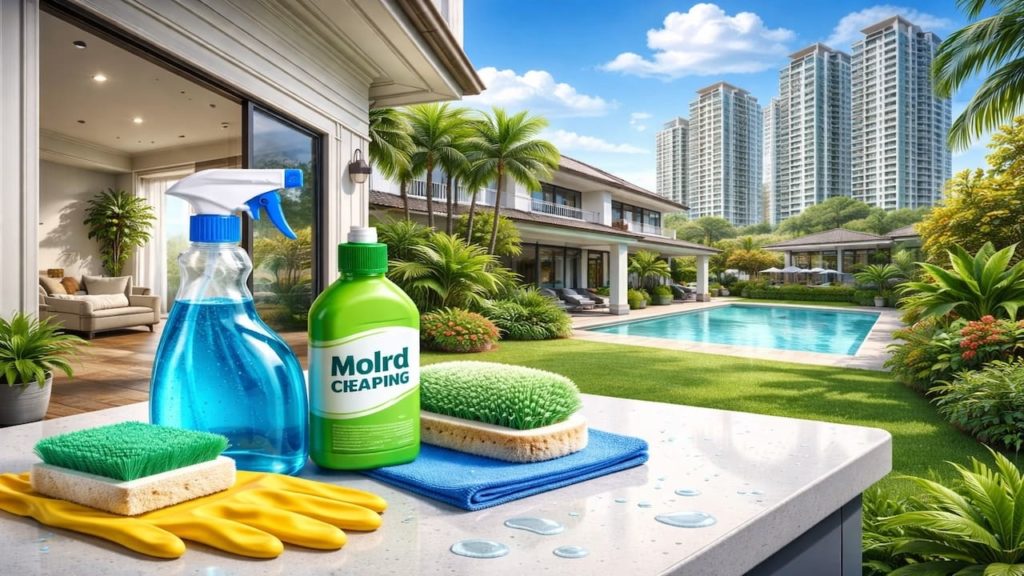
This approach works best on hard surfaces like tiles, window frames, and bathroom ceilings, and it is safer in Malaysia’s humid homes—practical.
- Wear protection and keep the room isolated while you work
- Use mild cleaner first and wipe instead of aggressive scrubbing
- Rinse and dry the area quickly so moisture does not stay
- Run exhaust fan after cleaning and keep door cracked briefly
- Fix the moisture source like leaks, condensation, or poor airflow
People argue “I cleaned once, why is it back.” If the surface stayed damp, mold returns. Drying is not optional. Finish strong. Done.
5. FAQs
Q1. When should I avoid DIY mold cleanup?
If mold covers a large area, keeps spreading, or you suspect hidden wall or ceiling moisture, get professional help. If anyone has strong asthma symptoms, be cautious. Safety first.
Q2. Should I use a fan while cleaning?
Only if it pushes air outward and does not blow spores into the home. In small condos, fans can spread spores fast. Use controlled ventilation and avoid blasting directly at the mold.
Q3. Is it safe to clean mold with bleach?
Bleach can create strong fumes in enclosed rooms, and mixing products is dangerous. If you use bleach, ventilate well and never mix cleaners. Mild cleaners plus drying often work well on surfaces.
Q4. What should I do with cloths and sponges after cleaning?
Bag them immediately and wash reusable items in hot water if possible. Do not leave damp cloths around, because they can grow mold too. Dispose safely.
Q5. How do I stop mold from returning after cleanup?
Lower humidity, improve airflow, and fix leaks or condensation sources. In Malaysia wet season, dehumidifying and drying routines matter a lot. Clean plus dry is the winning combo.
Pro’s Tough Talk

Listen. I’ve been on site for 20+ years and handled hundreds of jobs, and the biggest mold mistake in Malaysia is cleaning like it’s dirt. Mold is a living mess that throws spores when you annoy it. If you scrub dry and wave a fan around, you just spread it like confetti.
Cause is 3 parts. One, you disturb spores: dry brushing, vacuuming without proper filters, shaking moldy fabric. Two, you push air the wrong way: fans blowing into the house, doors open, people walking through. Three, you ignore moisture: leak, condensation, wet season humidity feeding regrowth. Fix is 3 steps—isolate the area, wipe damp instead of dry scrubbing, then dry hard and fix the moisture source.
Using harsh chemicals in a tiny bathroom is like fighting a cockroach with a flamethrower. And the “why does it smell again after I cleaned” face? Classic. Your room smells sour and your cough comes back at night, two classics. Bottom line, cleaning without containment spreads spores, do it right or you’ll turn your home into a spore festival.
Summary
Safe mold cleanup starts with risk checks: size, material, moisture level, health reactions, and whether you can isolate the space.
If mold returns or the surface stays damp, treat it as a moisture problem first and stop trying to scrub your way out of it.
Do this today: isolate the area, wipe with low-dust methods, then dry fully and fix the moisture source, and read the next guide on rainy season humidity control—dry air prevents repeat mold.