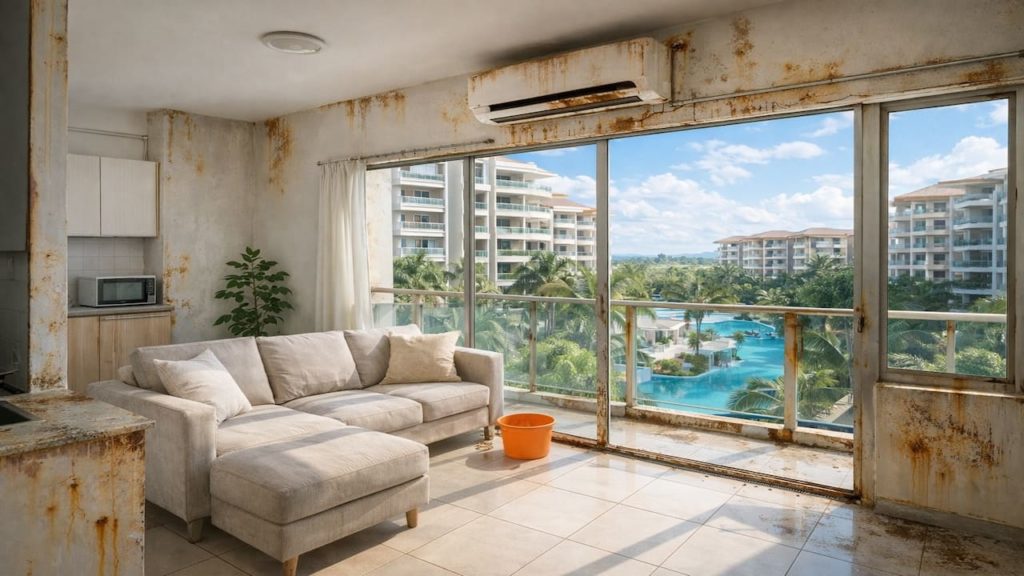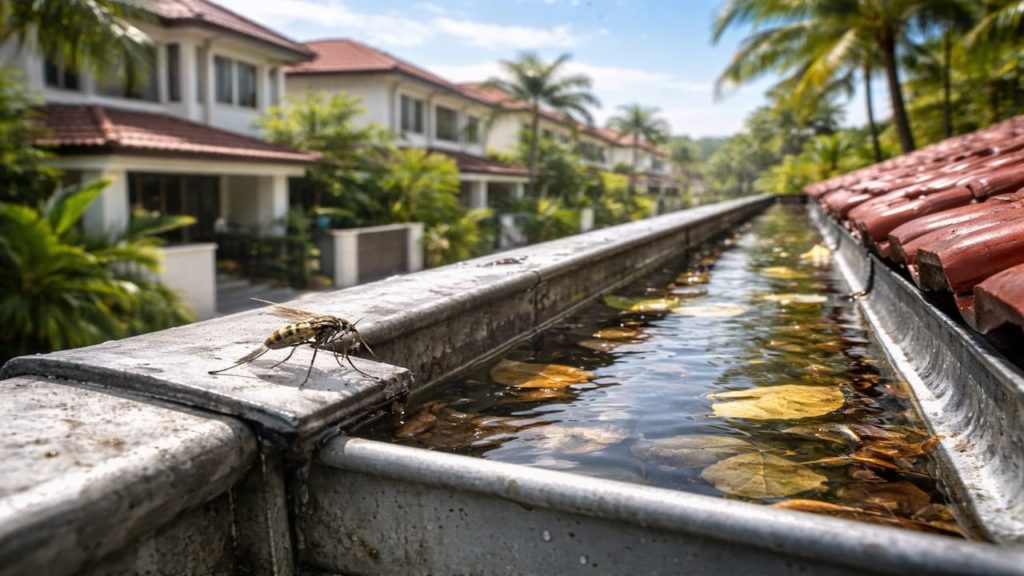
You searched because mold remover products keep disappointing you, and in humid Malaysia bleach can feel like it “works” for a day then the smell returns.
Most failures come from moisture still feeding the spot, porous materials holding mold deep inside, and cleanup steps that spread spores in small condo rooms.
In this guide, you’ll learn why bleach alone does not solve mold and the common remover myths that keep mold coming back in Malaysia’s warm, wet climate.

Hi, I’m Ken. I write practical home guides for Malaysia—no fluff, just what works.
I hold a formal building design qualification and have spent about 20 years on job sites across hundreds of projects. My goal is simple: help you avoid costly mistakes with clear, safe steps—a quick way to decide what to do next.
1. Mold remover myths: 5 mistakes people repeat
Bleach fails when you treat mold like a stain instead of a moisture problem so it returns.
In Malaysia, high humidity and wet season rain mean surfaces re-wet easily, so “kill and forget” products rarely hold—reality.
- Only whitening the surface while moisture stays behind the wall
- Cleaning porous wood or drywall as if it were tile
- Scrubbing dry mold and spreading spores into the room
- Closing the room after cleaning so it dries slowly
- Mixing products or using strong fumes in a sealed condo bathroom
Some people think stronger chemical equals better result. Often it just equals harsher fumes and the same regrowth. Moisture decides. Always.
2. Why bleach alone is not enough
Bleach alone is not enough because it does not remove the water source and may not reach deep growth in porous materials.
Tile surfaces can respond, but grout, wood backing, fabrics, and damp drywall can keep feeding mold even after the surface looks clean—common in condos.
- Bleach can fade staining while mold remains in pores
- Water from bleach can soak porous surfaces and keep them damp
- Humidity re-wets the area and restarts growth quickly
- Hidden leaks and condensation keep moisture returning daily
- Odor persists when mold is active inside cavities or behind cabinets
You might say “but it looks white now.” White is cosmetic, not proof of dryness or source control. Check dryness and smell pattern. Evidence.
3. Why mold comes back after “successful” cleaning
Mold comes back when the room never reaches a full dry state in Malaysia wet weather.
Condos with limited cross-ventilation and heavy aircond use can create condensation cycles, and the same corners re-wet every night—repeat loop.
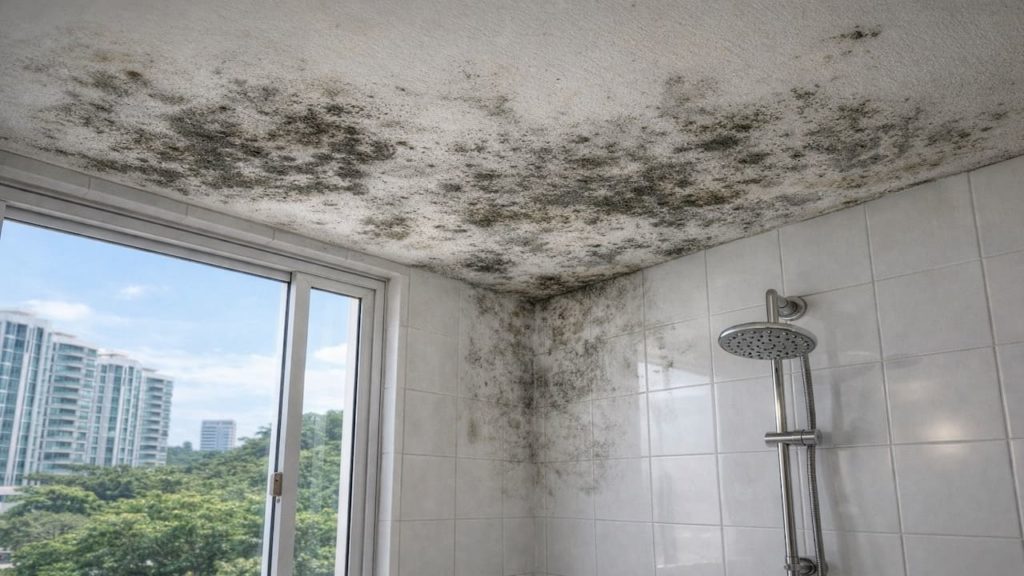
- Bathrooms stay damp because fans are weak or run too short
- Windows sweat and wet frames and curtains nightly
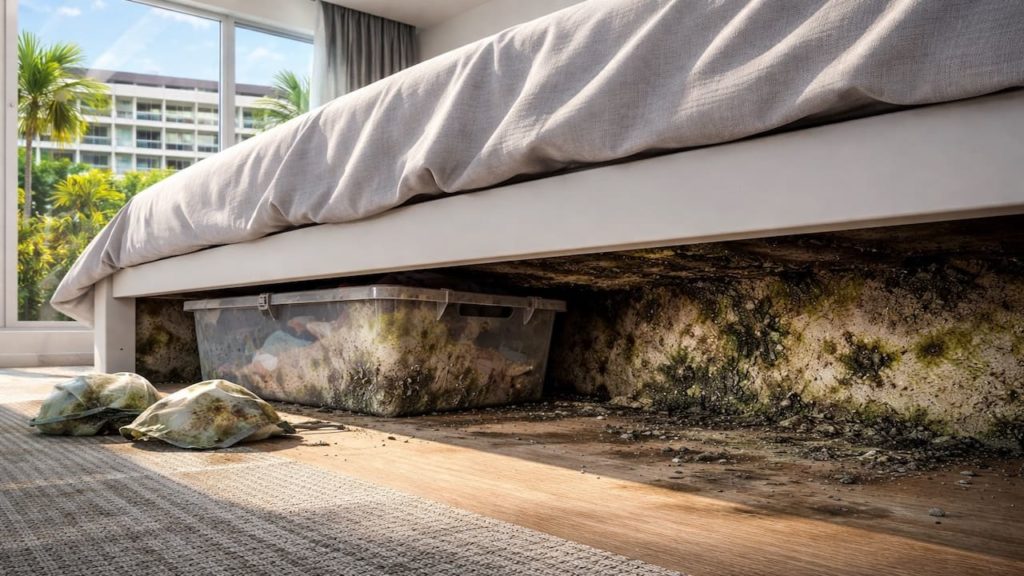
- Wardrobes and shoe racks trap stale humid air
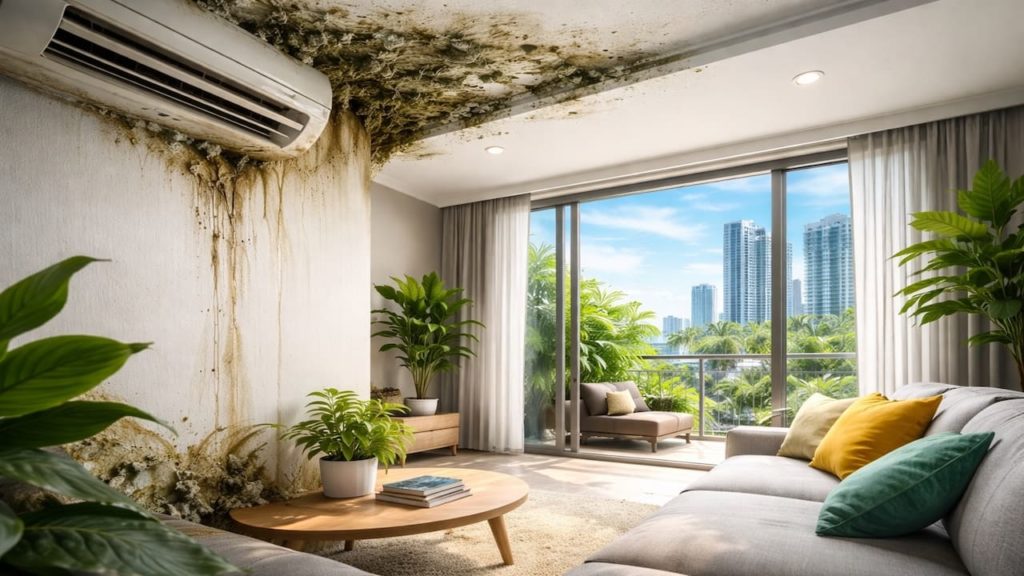
- Aircond coils and drain pans stay wet after shutdown
- Furniture pressed to walls creates dead-air damp pockets
Some renters blame the brand of remover. Products matter less than airflow and drying time. Drying wins the long game. Fact.
4. How to clean smarter and stop repeat mold
Clean with low-fume methods and finish with aggressive drying so mold cannot restart.
In Malaysia, the best results come from controlling humidity, improving airflow, and treating the source like a system—simple but strict.
- Ventilate outward and isolate the room to reduce spore spread
- Remove soap film and dirt first so cleaners can work properly
- Use targeted treatment, then rinse and wipe dry immediately
- Run exhaust fans longer and use a fan to dry corners
- Dehumidify first in wet season, then cool steady and dry coils
People argue “I do not want routine maintenance.” Mold is routine, either your routine or mold’s routine. Choose yours. Done.
5. FAQs
Q1. Is bleach ever useful for mold?
It can help on hard non-porous surfaces like tile, but it is not a complete solution by itself. Ventilation and drying still matter. Never mix it with other cleaners.
Q2. Why does mold smell remain after cleaning?
Odor often means moisture is still present or mold is inside porous materials, drains, or hidden cavities. If the smell returns when aircond runs, check coils and drain systems. Drying and source control remove odor.
Q3. What is safer than harsh chemical fumes in a small condo?
Use mild cleaners, targeted spot treatment, and strong drying with airflow. Keep doors open briefly and exhaust running to reduce fumes. The goal is low fumes plus high dryness.
Q4. How do I know if I should replace something instead of cleaning?
If the item is porous, stays damp, and odor persists after full drying, mold may be deep inside. Foam cushions, some wood panels, and damaged drywall often need replacement. Fix humidity first so replacements stay safe.
Q5. What is the fastest way to reduce mold risk in Malaysia?
Lower indoor humidity, improve airflow in dead zones, and dry wet areas quickly after showers or laundry. Wet season requires active moisture control. Consistency beats chemicals.
Pro’s Tough Talk

Listen. I’ve been on site for 20+ years and handled hundreds of jobs, and the bleach myth is the #1 repeat mistake in Malaysia. People spray, see the black fade, and declare victory. Then wet season hits and the mold comes back like it never left. That’s because you cleaned the color, not the cause.
Cause is 3 parts. One, moisture stays: leaks, condensation, sweaty rooms, wet coils, damp grout. Two, the surface lies: porous stuff holds mold deep inside while the top looks “fine.” Three, airflow is dead: sealed condo rooms, wardrobes jammed tight, bathrooms with weak fans. Fix is 3 steps—find and stop the moisture source, clean the right way for the material, then dry hard with airflow and dehumidification.
Using bleach alone is like repainting a wet wall and calling it “dry.” And the “why does it come back every month” face? Classic. Your bathroom smells sour and your window corners turn black again, two classics. Bottom line, bleach cannot beat a wet home, dry it or keep buying bottles like you’re funding the bleach industry.
Summary
Mold remover myths fail because they focus on killing stains instead of stopping moisture and improving airflow in humid Malaysian homes.
If mold keeps returning, use a clear rule: treat persistent damp as a source issue first, then clean with low-fume methods and finish with full drying.
Do this today: dehumidify, dry the problem area fully, and fix the moisture path, then read the next guide on mold cleanup safety—dryness beats chemicals long term.