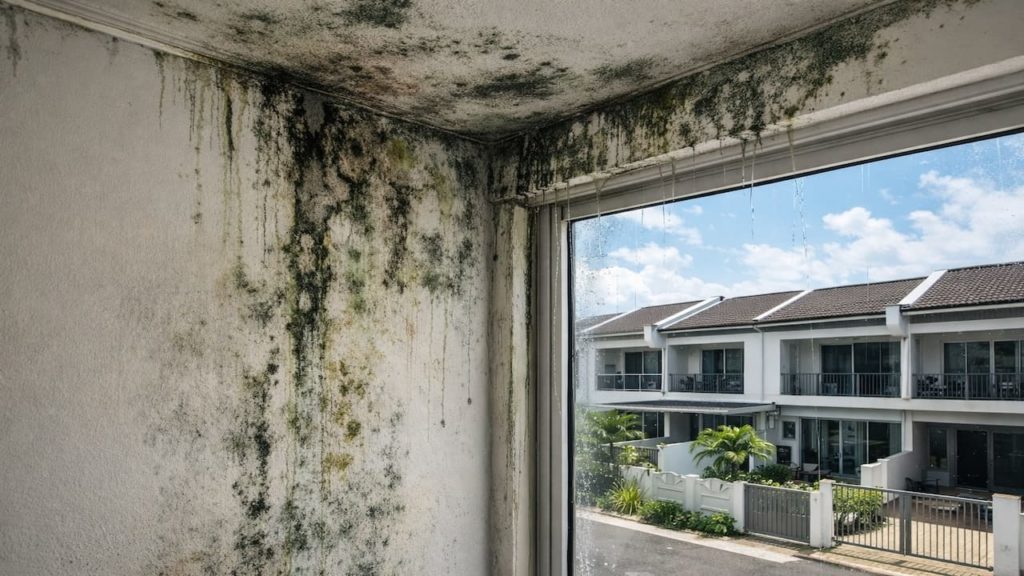
You searched because coughing starts at night, and you suspect mold spores in the air inside a warm, humid Malaysian home.
Night cough can come from dust, aircond dryness, or allergies, but mold becomes likely when damp smells and condensation keep returning. A clue.
In this guide, you’ll learn how to spot airborne mold warning signs at home and what to fix first in condos and terrace houses during Malaysia’s wet season.

Hi, I’m Ken. I write practical home guides for Malaysia—no fluff, just what works.
I hold a formal building design qualification and have spent about 20 years on job sites across hundreds of projects. My goal is simple: help you avoid costly mistakes with clear, safe steps—a quick way to decide what to do next.
1. Mold spores in the air: 5 warning signs at home
Use home warning signs to decide if mold spores are likely indoors before you keep treating it like a random cold.
In Malaysia, high humidity and frequent rain keep surfaces damp, so spores can build quietly in bedrooms and aircond rooms—especially in condos.
- Coughing or throat itch gets worse at night and improves outdoors
- Musty smell appears when aircond turns on or after rain
- Waking with stuffy nose or sneezing that clears later in the day
- Visible condensation on windows and damp corners most mornings
- Musty bedding or wardrobe smell even after washing and drying
Some people say “no visible mold means no spores.” Not true, because hidden damp can grow behind cabinets or inside aircond parts. Trust patterns, not guesses. Evidence.
2. When coughing starts at night
Night coughing often means your bedroom air is trapping irritants and mold is one possible driver in humid Malaysian rooms.
Bedrooms are usually sealed for cooling, and that reduces airflow, so humidity and particles stay in the breathing zone—right where you sleep.
- Check if symptoms begin 30–90 minutes after lights out
- Notice if coughing spikes after rainy evenings or laundry drying indoors
- Smell-test pillows and mattress edges for sour musty odor
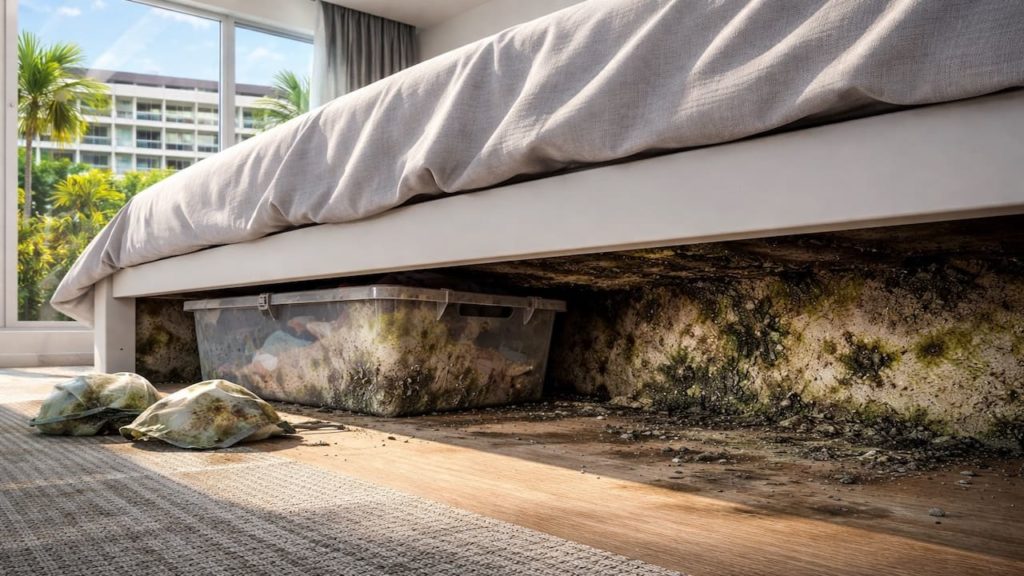
- Look behind the headboard and under the bed for damp patches
- Track humidity with a hygrometer in the bedroom at night
You might think “it is just aircond dryness.” Dry air can irritate, but musty smell and damp surfaces point to moisture as the real cause. Fix moisture first. Straight.
3. Why airborne mold gets worse at night
Mold feels worse at night because humidity rises and airflow drops in closed rooms.
In Malaysia, nights can stay sticky, and if the room cools down fast, surfaces can condense water while the air stays humid—perfect conditions.
- Humidity spikes after evening showers when ventilation is weak
- Aircond cools surfaces and can trigger condensation on walls and windows
- Fans are turned off so damp pockets never dry
- Dust and skin oils in bedding feed microbes when moisture stays
- Dead-air zones behind wardrobes and curtains trap wet air
Some renters assume “wet season means nothing can be done.” Wrong, because airflow and drying routines change the indoor cycle. You control the room. Practical.
4. How to reduce spores and sleep better
Reduce spores by drying the room and removing damp reservoirs so the air stays cleaner at night.
These steps fit condo living and terrace houses, and they matter most when rain keeps coming back and windows stay shut—common reality.
- Run bathroom exhaust longer and crack the door after showers
- After cooling, run Fan mode 15–30 minutes to dry the aircond coil
- Move bed and furniture 5–10 cm off exterior walls for airflow
- Wash and fully dry bedding then sun-dry when weather allows
- Use a dehumidifier or Dry mode on wet nights to steady humidity
People argue “just spray disinfectant and it is solved.” Sprays do not remove moisture and can irritate lungs in small rooms. Dry first, clean second, then maintain. Order.
5. FAQs
Q1. How do I tell mold spores from a normal night cough?
Look for repeat patterns with damp smells, condensation, and symptoms that improve when you leave the room. If you also see mold spots or musty bedding, mold becomes more likely. If symptoms are severe or persistent, talk to a clinician.
Q2. What humidity level is risky in a Malaysian condo bedroom?
Risk rises when humidity stays high for long periods, especially overnight in sealed rooms. A hygrometer helps you see the pattern instead of guessing. Keep the bedroom dry enough to stop condensation.
Q3. Can aircond spread mold spores?
If coils and drain areas stay damp, odor and particles can ride the airflow. Good drainage, clean filters, and a coil-drying routine reduce the risk. If the smell is strong after servicing, ask for drain pan and blower wheel cleaning.
Q4. Should I sleep in the room if I suspect airborne mold?
If coughing, wheezing, or chest tightness worsens at night, avoid the room until you dry it and remove the damp source. Ventilate and clean safely, then reassess. Health first.
Q5. When should I call building management or a professional?
If you see recurring ceiling stains, bubbling paint, or one damp patch that never dries, treat it as a hidden leak. Document photos and dates and report early. Hidden moisture can spread inside walls.
Pro’s Tough Talk

Listen. I’ve been on site for 20+ years and handled hundreds of jobs, and airborne mold in Malaysia is not some spooky mystery. Hot air, high humidity, and closed condo rooms make it easy for damp to hide. That’s the setup.
Break it into 3 causes. One, water is staying somewhere it should not, like a slow leak or a wet ceiling void. Two, airflow is dead, like wardrobes jammed to the wall and curtains blocking the window edge. Three, your routine feeds it, like shower steam trapped and aircond shut off while everything is still wet. Fix it in 3 steps: find the damp spot, force airflow through the dead zones, and lower humidity at night.
Trying to fix this with perfume spray is like putting deodorant on a wet sock. And the “why do I cough only at night” face, come on. Your pillow starts smelling sour and your wardrobe turns into a swamp, two classics. Bottom line, if the room stays wet your lungs pay the bill, dry it now or enjoy coughing like an old engine starting up.
Summary
Airborne mold is likely when night coughing pairs with musty smells, repeated condensation, and damp zones that never fully dry in Malaysia.
If your fixes do not hold, use a clear rule: control humidity and airflow first, then treat any persistent localized damp patch as a leak until proven otherwise.
Do this today: measure bedroom humidity at night and dry the aircond and bathroom routines, then read the next guide on window condensation control—dry rooms protect sleep.