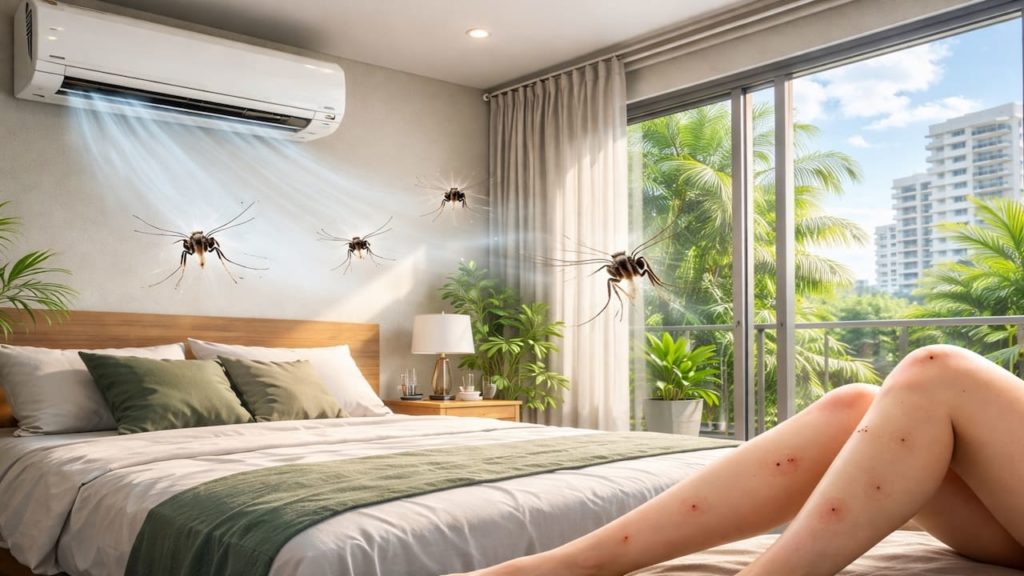
You notice mosquitoes around your aircond area, and you start to suspect the drain line might be the hidden source.
In Malaysia’s hot humid climate, aircond drains can stay wet all day, and that constant moisture can support breeding in condos and terrace houses.
In this guide, you’ll learn how to flush an aircond drain safely and stop breeding using simple steps that reduce water buildup without opening the unit.

Hi, I’m Ken. I write practical home guides for Malaysia—no fluff, just what works.
I hold a formal building design qualification and have spent about 20 years on job sites across hundreds of projects. My goal is simple: help you avoid costly mistakes with clear, safe steps—a quick way to decide what to do next.
1. Mosquito in aircond drain: 5 steps
Clear the drain line so water cannot sit long enough to breed—standing water is the real problem, not the aircond itself.
Aircond drains move condensation out of the unit, but if the line is slow, kinked, or partially clogged, water can pool in the pan or inside the pipe. In Malaysia, warm temperatures can speed up mosquito life cycles, and a damp line can become a repeat source. The goal is not aggressive chemicals. The goal is steady flow and a dry surrounding area. Simple control.
- Locate the drain outlet and confirm water is dripping steadily
- Turn off the aircond and let the line stop flowing for safety
- Flush the drain line with clean water using a small bottle
- Clear the outlet area so water does not pool on the floor
- Run the aircond again and watch for strong continuous drainage
Some people pour harsh chemicals into the line immediately. That can damage seals, create fumes, and still miss the real blockage. Start with safe flushing and flow checks first, then escalate only if needed.
2. Flush the line safely and stop breeding
Use gentle flushing and gravity to restore flow—you want water moving, not a chemical war in your home.
Most drain issues are slow buildup: slime, dust, algae, and tiny debris that forms in warm damp pipes. Malaysia’s humidity makes that buildup faster, especially during rainy weeks when drying is slow. Flushing works best when you do it at the outlet end, where you can control the water direction and avoid pushing gunk deeper. After flushing, the outlet area must dry, because pooled water outside the pipe can breed mosquitoes even if the pipe is clear. Details matter.
- Use a squeeze bottle to push water through the outlet gently
- Catch overflow with a bucket so you do not soak the wall or floor
- Wipe the outlet area dry so puddles do not remain
- Keep the drain outlet elevated so water does not backflow
- Repeat a small flush weekly during peak humid months
You might worry that flushing will cause leaks inside the unit. If you flush gently at the outlet and do not overpressurize, risk stays low. Avoid high pressure air blasts unless you know the setup.
3. Why mosquitoes breed in aircond drains
Slow drainage creates a hidden wet habitat—mosquitoes only need a small stable water source.
Mosquitoes lay eggs in water or on damp surfaces near the waterline. If the drain pan holds water, if the pipe traps water, or if the outlet area stays wet, it can support eggs and larvae. In Malaysia, aircond use is frequent, so condensation keeps the system wet many hours a day. Add warm temperatures and you can get fast development. The drain is not obvious, so people miss it while focusing on plant pots and floor drains. Blind spot.
- Biofilm slime inside the pipe slows water and holds moisture
- Pipe bends or kinks trap water instead of draining fully
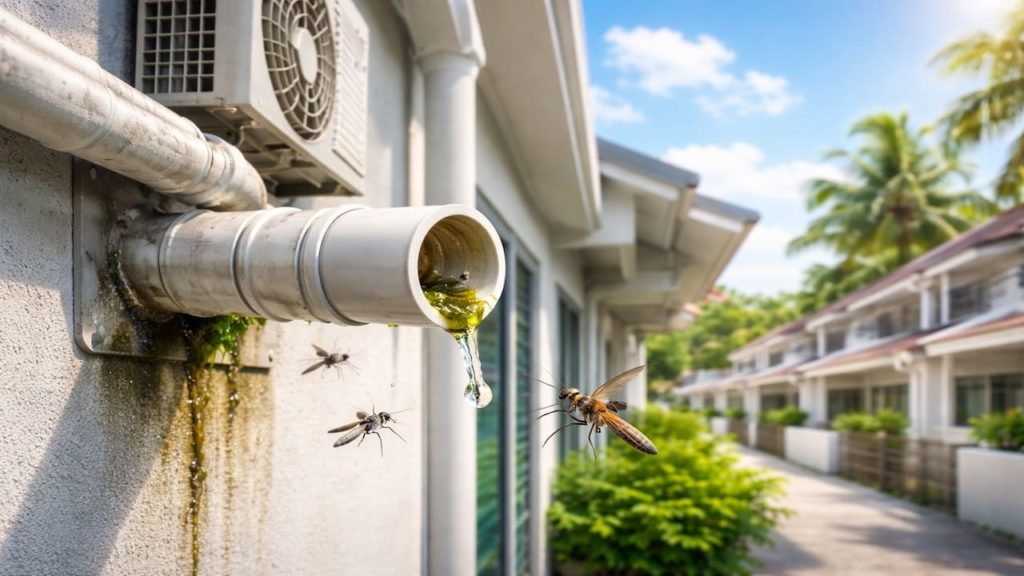
- Outdoor outlet points drip onto a flat surface and form puddles
- Blocked drip tray or pan causes overflow and damp wall stains
- Nearby lights at night increase mosquito activity around the outlet
Some people assume breeding requires a large pool. It does not. A small consistent wet spot can be enough, especially when it stays warm.
4. How to prevent aircond drain mosquitoes long term
Maintain flow and keep the outlet zone dry—that is the long term fix for Malaysian humidity.
Once you restore flow, you want to keep it that way with simple routine checks. If the drain outlet drips onto soil, trays, or a blocked gutter, water can collect and breed outside, so fix where the water lands. Inside, reduce slime buildup by periodic flushing and keeping filters clean so dust does not feed biofilm. You do not need to open the aircond unit for basic prevention. Keep it simple.
- Check drainage drip rate weekly and look for slow dripping
- Clean the air filter regularly so less dust reaches the drain pan
- Ensure the drain pipe slopes downward with no upward loops
- Redirect the outlet drip to a place that drains away fast
- Remove algae near the outlet area so it dries faster after use
Some people rely on mosquito coils near the aircond outlet. Coils can irritate lungs and still do not remove the water source. Remove the water source and mosquitoes lose the reason to stay.
5. FAQs
Q1. How do I know the aircond drain is the source?
Look for mosquitoes hovering near the outlet area and check if water is pooling or dripping slowly. If you see slime, algae, or a damp patch that never dries, it is a strong clue.
Q2. Is it safe to pour bleach into the drain line?
Bleach can create fumes and can damage materials if overused, and it may not clear physical blockages. Start with water flushing and cleaning the outlet area first.
Q3. What if the drain is blocked inside the wall?
If flushing does not improve flow, the blockage may be deeper or the pipe may be kinked. Call a technician if flow stays weak because hidden leaks can create bigger damp zones.
Q4. Can mosquitoes breed in the drain pan inside the unit?
Yes, if the pan holds water due to clogging or poor slope. A properly functioning unit should drain fully while running and not keep water sitting for long.
Q5. How often should I flush the line in Malaysia?
During humid months or rainy season, a light flush every 2 to 4 weeks can help, especially if you run the aircond daily. Adjust based on how fast slime returns.
Pro’s Tough Talk

Listen. I have been on site for 20+ years and handled hundreds of jobs, and mosquitoes in an aircond drain is not imaginary. In Malaysia humidity, that drain line can turn into a tiny wet tunnel that never rests.
Three causes, always. Slime builds inside the pipe, the pipe slope is wrong or kinked, and the outlet drips onto a flat spot that pools. Three steps fix it: flush gently from the outlet with clean water, confirm the pipe slopes down with no loops, and make sure the drip lands somewhere that drains away fast.
Two relatable moments, yeah. You ignore a slow drip because “it is just water,” and you notice mosquitoes but keep blaming the neighbor’s plants. Here is the jab: you are not unlucky, you are hosting a water source behind the scenes. Restore flow and keep the outlet dry—or keep running your aircond while breeding mosquitoes like it is a side business.
Summary
Mosquitoes can breed around aircond drains when drainage is slow and water pools in the line, pan, or outlet area, which stays wet in Malaysia’s humid climate.
Flush the line gently, confirm strong continuous drainage, and make sure the outlet drip does not create puddles near walls, floors, or planters.
Today, find the outlet, flush with clean water, and dry the landing spot—Moving water stops breeding better than chemicals then read your next article on door gap sealing and rainy season breeding checks.