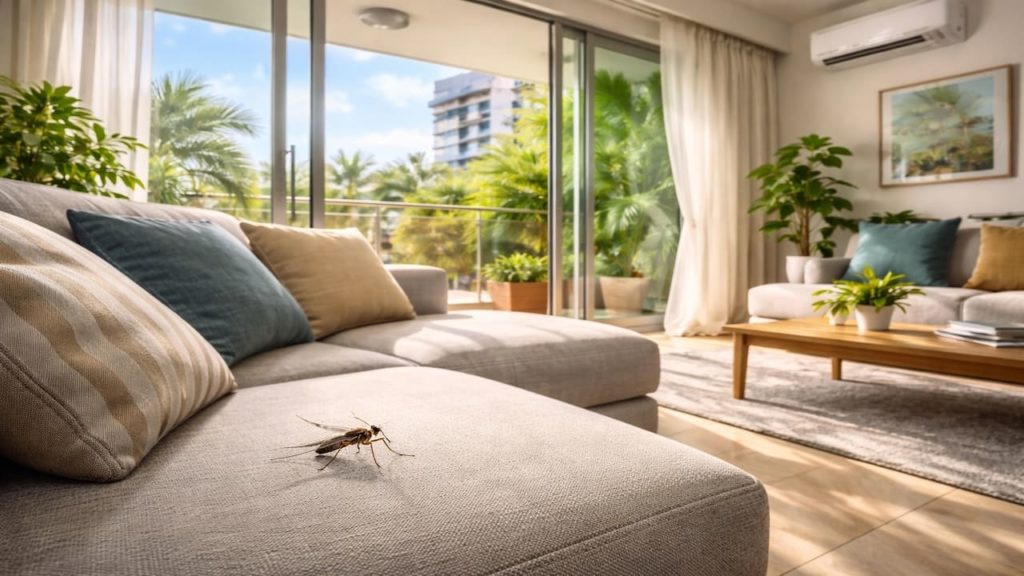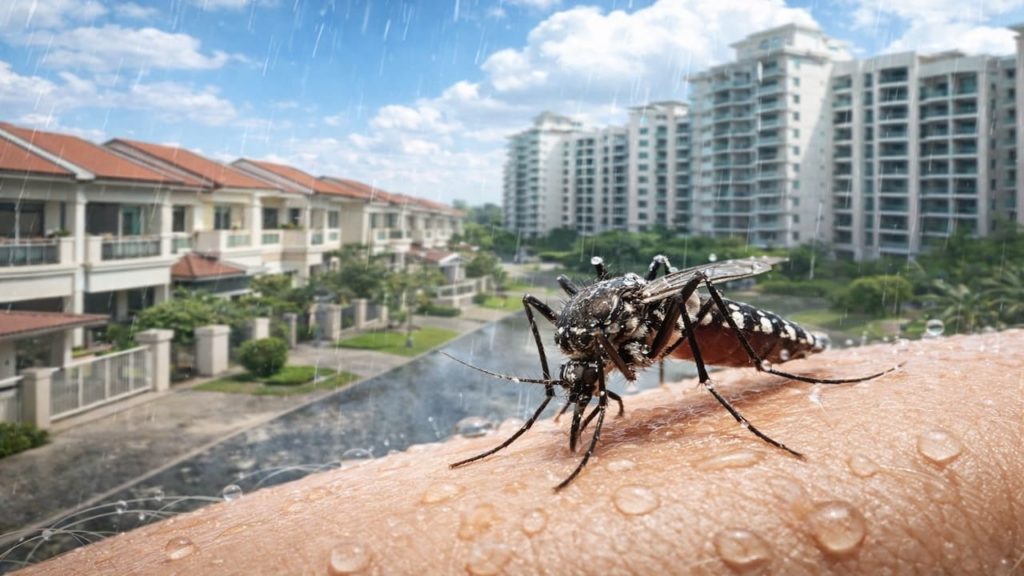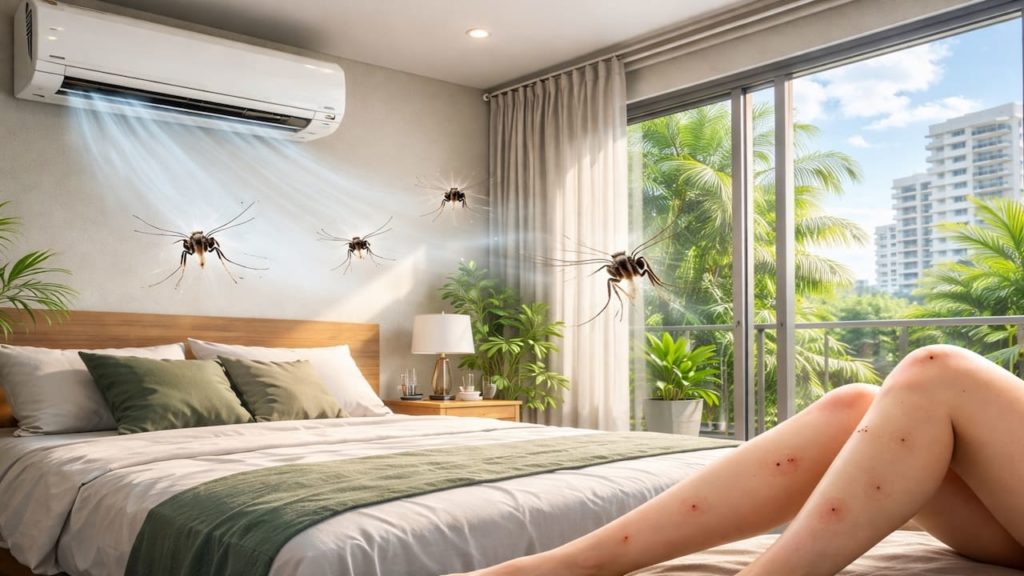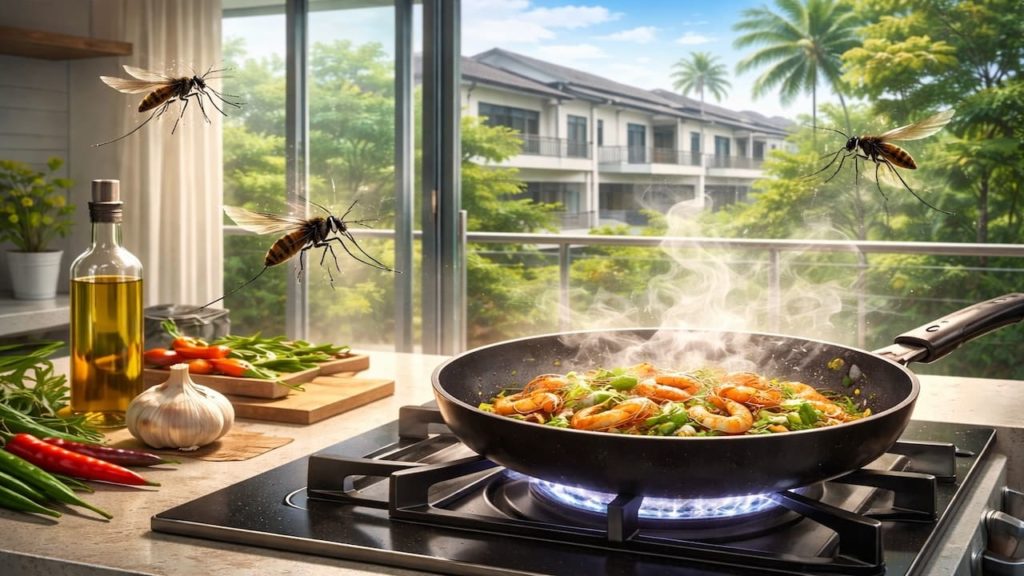
You start cooking, and suddenly mosquitoes appear in the kitchen and float around your arms and legs.
In Malaysia’s hot humid climate, cooking adds heat, steam, and food odors that travel fast through condos and terrace houses, especially when airflow is weak.
In this guide, you’ll learn why mosquitoes show up when you cook and how heat, steam, and smells quietly pull them into your cooking zone.

Hi, I’m Ken. I write practical home guides for Malaysia—no fluff, just what works.
I hold a formal building design qualification and have spent about 20 years on job sites across hundreds of projects. My goal is simple: help you avoid costly mistakes with clear, safe steps—a quick way to decide what to do next.
1. Mosquito when cooking: 5 reasons
Cooking boosts the exact cues mosquitoes track—warmth, moisture, and scent spike at the same time.
Mosquitoes mainly hunt by carbon dioxide from your breath, body heat, and skin odors, but cooking can amplify those signals. When you stand at the stove, you stay still, you get warmer, and you sweat more in Malaysia’s humidity. Steam increases moisture in the air, which can help scents spread and remain detectable. Food smells can also draw other insects to the kitchen light, and mosquitoes follow the activity. It feels sudden, but the pattern is logical.
- Stove heat raises skin temperature and increases mosquito heat tracking
- Steam adds humidity so your scent trail spreads farther
- Cooking makes you sweat and sweat cues grow stronger in warm air
- Kitchen lights keep mosquitoes active near your hands and face
- Open windows and back doors create a direct entry route at dusk
Some people think mosquitoes are attracted to food like ants. They are not chasing rice or soup, they are chasing you standing in the warm zone. Fix the cooking zone and they stop showing up so often.
2. Heat steam and odors that pull them in
Heat and steam turn the kitchen into a scent highway—odors and human cues move faster and stay longer.
When steam rises, it carries smells upward and outward, and warm air currents spread them into nearby rooms. In Malaysian homes, kitchens can be semi open with balcony doors, back doors, or window louvers, and those openings let mosquitoes follow the airflow inside. If you cook at dusk, outdoor mosquito activity is already higher, so you are combining peak mosquito time with peak human cues. That is why “mosquito when cooking” feels like a timer. Predictable timing.
- Use the hood fan or exhaust fan every time you boil or fry
- Point a standing fan so air moves across your legs and ankles
- Close doors and windows on the mosquito side before dusk cooking
- Keep wet towels and dish cloths dry to reduce musty moisture odor
- Move the brightest kitchen light away from open entry points
You might worry fans blow dust into food. Aim the fan across your body, not directly at the pan. Airflow can protect you without messing up cooking.
3. Why mosquitoes target kitchens in Malaysian homes
Kitchens combine entry points and resting zones—mosquitoes can come in and hide close.
Many kitchens have drains, sinks, wet corners, and small water traps, which keep humidity high. During rainy season, dampness lingers and small puddles can form under sinks or behind appliances. Mosquitoes do not need to breed in the kitchen to use it. They can enter from outside, rest behind the fridge or under shelves, then bite when you cook and stand still. Kitchens also have trash odors and food residue that draw other insects, which increases general insect activity. Busy zone.
- Sink cabinet leaks that keep wood and floor corners damp
- Floor drains that hold water and develop slime
- Trash bins with food odor that increase insect activity
- Dark gaps behind fridge and stove where air is still
- Back doors with under gap entry and weak door sweeps
Some people blame only wet season breeding outside. Outdoor breeding matters, but indoor resting zones make the kitchen feel worse. Remove the rest spots and they stop “appearing.”
4. How to stop mosquitoes while cooking
Control airflow and entry before you start cooking—mosquito control is easiest before heat and steam build up.
Start with a pre cook routine that takes less than a minute: close the risky openings, switch on exhaust, and turn on airflow toward your legs. Then remove moisture sources that keep the kitchen friendly, like damp cloths and slow drains. In Malaysia, quick daily habits beat occasional deep cleaning because humidity is constant. Keep the kitchen dry and windy. Simple.
- Turn on hood fan and keep it running 10 minutes after cooking
- Use a fan aimed at ankle level to stop landing and biting
- Empty trash nightly and rinse the bin to remove food odor
- Wipe sink area dry and fix slow leaks under the cabinet
- Check door sweeps and window screens to reduce entry routes
Some people want to use sprays in the kitchen. Spraying near food and plates is not ideal, and it still does not fix entry and airflow. Use physical control first, then consider safer options like screens and fans.
5. FAQs
Q1. Are mosquitoes attracted to cooking smells?
They are more attracted to human scent, heat, and carbon dioxide, but cooking smells and steam can spread those cues and increase activity in the kitchen. The smell is the messenger, not the main target.
Q2. Why does it happen most when I cook at dusk?
Dusk is peak mosquito activity for many species, and cooking adds heat and steam while you stand still. In Malaysia, warm evenings keep them active longer.
Q3. Can the sink drain be part of the problem?
Yes, slow drains and wet traps can keep the area humid and attract insect activity. Dry the sink zone and keep drains flowing to make the kitchen less mosquito friendly.
Q4. What is the safest quick fix during cooking?
Turn on exhaust and aim a fan at your legs, then close the nearest entry points. Those steps reduce bites without chemicals.
Q5. Why do they bite my hands and arms near the stove?
Your hands and arms are exposed and closer to warm rising air, and you hold them still while prepping. Use long sleeves or keep airflow moving across your body.
Pro’s Tough Talk

Listen. I have been on site for 20+ years and handled hundreds of jobs, and mosquitoes showing up when you cook is not bad luck. In Malaysia humidity, the stove turns your kitchen into a warm scented billboard.
Three causes, every time. Heat raises your skin temperature, steam keeps the air wet so scent spreads, and the door or window is open because “it is too hot.” Three steps fix it: close the entry points before you start, run the hood fan hard, and aim a fan at ankle level so they cannot land.
Two relatable moments, yeah. You cook at dusk with the porch light on, and you leave a damp dish cloth in a pile like it will dry by magic. Here is the jab: you are not making dinner, you are sending invitations. Make the kitchen windy and dry while you cook—or keep seasoning yourself like a side dish and complain about bites.
Summary
Mosquitoes appear when you cook because heat, steam, and stronger human scent cues combine, especially in Malaysia’s humid evenings and rainy season airflow patterns.
Use a simple pre cook routine: close entry points, run exhaust, add fan airflow at leg level, and remove damp cloth and slow drain moisture.
Today, switch on the hood, aim a fan at your ankles, and keep the door zone darker—Airflow plus entry control beats kitchen spraying then read your next article on light attraction and door gap sealing.