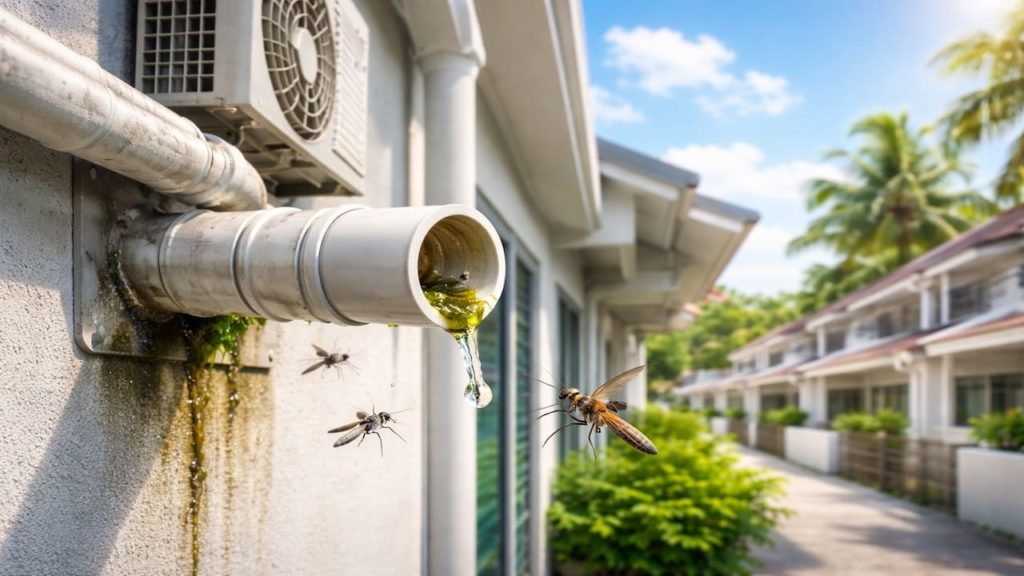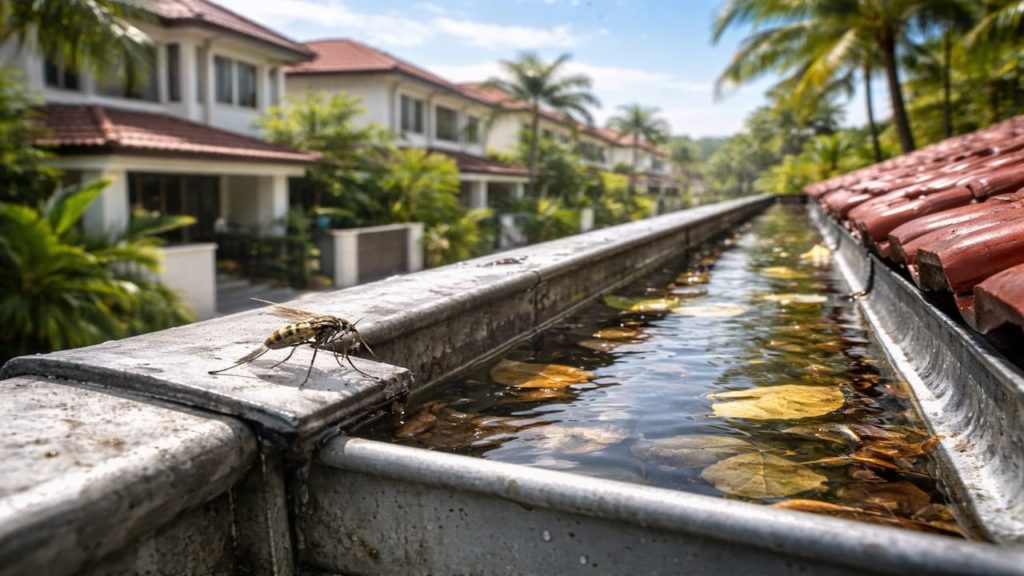
You keep getting mosquitoes even after cleaning your home, and you start to suspect the gutter outside is the real source.
In Malaysia, heavy rain hits fast, gutters overflow, and small hidden pools can sit for days in warm humid air around condos and terrace houses.
In this guide, you’ll learn how to find and fix gutter breeding spots by checking hidden water pools that return after every storm.

Hi, I’m Ken. I write practical home guides for Malaysia—no fluff, just what works.
I hold a formal building design qualification and have spent about 20 years on job sites across hundreds of projects. My goal is simple: help you avoid costly mistakes with clear, safe steps—a quick way to decide what to do next.
1. Mosquito from gutter: 5 checks
Check gutters for trapped water because one small pool can breed fast—Malaysia heat turns puddles into mosquito factories.
Gutters are supposed to move rainwater away, but leaves, roof grit, and sagging sections can trap water in shallow pockets. After a heavy rain, you may see water flowing for a while, then assume the gutter is fine. The problem is what stays behind after the flow stops. In warm humid conditions, mosquitoes only need a stable wet spot near shade. A gutter can provide that quietly above your head.
- Check for sagging gutter sections that hold water after rain
- Check for leaf clumps and roof grit that block flow at bends
- Check downspout outlets where water backs up and sits
- Check joints and corners where sludge forms a small dam
- Check overflow stains that show repeated pooling and slow drainage
Some people think a gutter cannot breed mosquitoes because water moves. Moving water is not the issue, trapped water is. Find the trapped pockets and you find the source.
2. Hidden water pools after every heavy rain
Hidden pools form where gutters look normal from the ground—you need simple clues to spot them safely.
In Malaysia, storms can dump water in minutes, and gutters fill with organic debris quickly. When the rain stops, the debris settles and creates small dams that hold a thin layer of water. From the ground, you may not see it, but mosquitoes will. Look for signs that repeat after each heavy rain: stains, algae lines, and overflow marks on the wall. These are the fingerprints of pooling water. Evidence.
- Look for green algae lines showing a standing water level
- Look for water marks on walls below the gutter edge
- Listen for slow dripping long after rain has ended
- Check if water pours from one spot instead of downspouts
- Inspect shaded gutter runs near trees where debris collects
You might think you need special tools to inspect gutters. You do not always. You can start with visual clues and ground level signs, then choose safe cleaning methods. Safety first.
3. Why gutters become mosquito breeding sites
Gutters breed mosquitoes when debris creates a permanent wet pocket—the structure makes a small reservoir.
Leaves, seed pods, and roof grit settle into corners and joints, and warm humidity speeds up slime growth. That slime holds water like a sponge and slows drainage even more. If a gutter slope is wrong, water sits even without debris. In Malaysia, frequent rain means the gutter refills often, keeping the pocket wet for long periods. Mosquitoes can lay eggs on the water surface or near the waterline, then hatch when water stays stable. Simple biology.
- Debris dams at corners and bends that block normal flow
- Slime and algae that reduce drainage and hold moisture
- Sagging sections from loose brackets that create low spots
- Downspout blockages that back up water into the gutter
- Shaded rooflines that dry slowly after storms and stay wet longer
Some people blame only plant pots and drains. Those matter too, but gutters are a high impact source because they sit above you and refill every storm. Overlooked.
4. How to stop mosquitoes breeding in gutters
Restore fast flow and remove the water holding points—that is the long term fix, not constant spraying.
Once you identify the pooling section, focus on removing debris, improving slope, and keeping downspouts clear. In Malaysia, the best routine is seasonal checks before and during rainy season, because storms will keep refilling the system. If you cannot safely access the gutter, hire someone to clean and adjust brackets rather than taking risky ladder chances. Safety matters. The goal is simple: no standing water after rain.
- Clear leaves and roof grit from bends and joints regularly
- Flush gutters with water and watch for slow sections
- Clean and clear downspouts so water exits quickly
- Re secure loose brackets to remove sagging low spots
- Add gutter guards if debris drops often from nearby trees
Some people try to treat gutters with chemicals or oils. That can cause environmental issues and is not necessary when you fix the drainage structure. Fix the system once and the breeding stops.
5. FAQs
Q1. How long does water need to sit to breed mosquitoes?
It depends on temperature, but in warm Malaysian weather, breeding can happen quickly if water stays stable. The safest assumption is that any standing water after rain is a risk.
Q2. Can mosquitoes breed in a gutter even if it is shallow?
Yes, they can use very small pools, especially in shaded sections. Thin water layers held by debris can be enough when they stay wet.
Q3. What is the safest way to check gutters in a condo or terrace house?
Start with ground clues like overflow stains and slow dripping, then use a safe viewing angle if possible. Do not risk ladders in wet weather and hire help if access is unsafe.
Q4. Will gutter guards solve the problem completely?
Guards can reduce leaf buildup, but they still need occasional checks because fine grit and slime can accumulate. They work best as part of a cleaning routine.
Q5. Why are mosquitoes worse after heavy rain?
Heavy rain refills every small container and gutter pocket, and warm conditions support rapid development. If your gutter holds water, storms reset the breeding cycle every time.
Pro’s Tough Talk

Listen. I have been on site for 20+ years and handled hundreds of jobs, and gutter mosquitoes are not a rumor. In Malaysia rain and humidity, a clogged gutter is a hidden swimming pool for larvae.
Three causes, always. Debris dams make mini ponds, brackets loosen so the gutter sags, and downspouts clog so water backs up. Three steps fix it: clear the bends and joints, flush and watch where water slows, and fix the slope by tightening or replacing brackets.
Two relatable moments, yeah. You think one big rain “washed it clean,” and you ignore the slow drip that keeps going long after the sky clears. Here is the jab: that gutter is not a pipe, it is a bathtub with leaves in it. No standing water after rain is the only rule—or keep feeding mosquitoes from your roof like it is a rooftop farm.
Summary
Mosquitoes from gutters usually come from trapped water after heavy rain caused by debris, slime, sagging sections, or blocked downspouts.
Use ground clues to find repeat pooling spots, then restore fast flow by clearing debris, flushing the line, and removing low spots that hold water in Malaysia’s humid weather.
Today, check for overflow stains and slow dripping, clear obvious debris, and schedule a safe gutter clean—Fast drainage stops the breeding cycle then read your next article on door gap entry or planter egg cleanup.