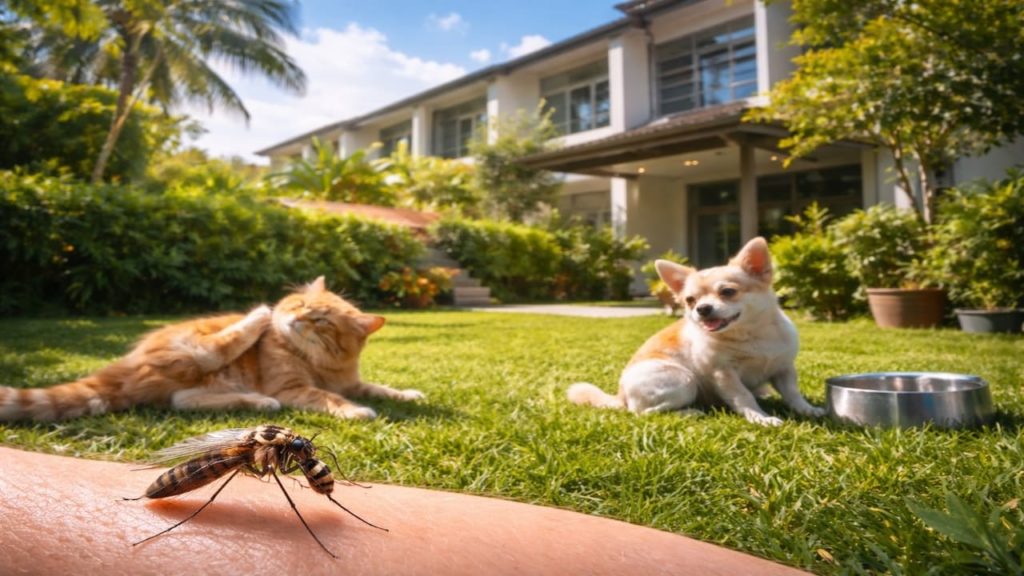
Your indoor cat or dog keeps scratching at night, and you notice small red bumps on ears, belly, or legs.
In Malaysia’s warm humid weather, mosquitoes can enter through tiny gaps, then rest in calm corners near sofas, curtains, and pet beds.
In this guide, you’ll learn how to protect pets from indoor mosquito bites at night with simple home checks that reduce bites without turning your house into a chemical zone.

Hi, I’m Ken. I write practical home guides for Malaysia—no fluff, just what works.
I hold a formal building design qualification and have spent about 20 years on job sites across hundreds of projects. My goal is simple: help you avoid costly mistakes with clear, safe steps—a quick way to decide what to do next.
1. Mosquito bites on pets: 5 tips
Protect pets by making their sleep zone hard for mosquitoes to reach—they get bitten most when they stay still for hours.
Pets cannot swat mosquitoes off like you can, and fur is not a full shield on ears, noses, bellies, and thin hair areas. In Malaysian condos and terrace houses, indoor mosquitoes often hide low near walls, then bite when lights go on and everyone settles down. Quiet rooms help them. Simple.
- Check where your pet sleeps and move the bed away from curtains and wall corners
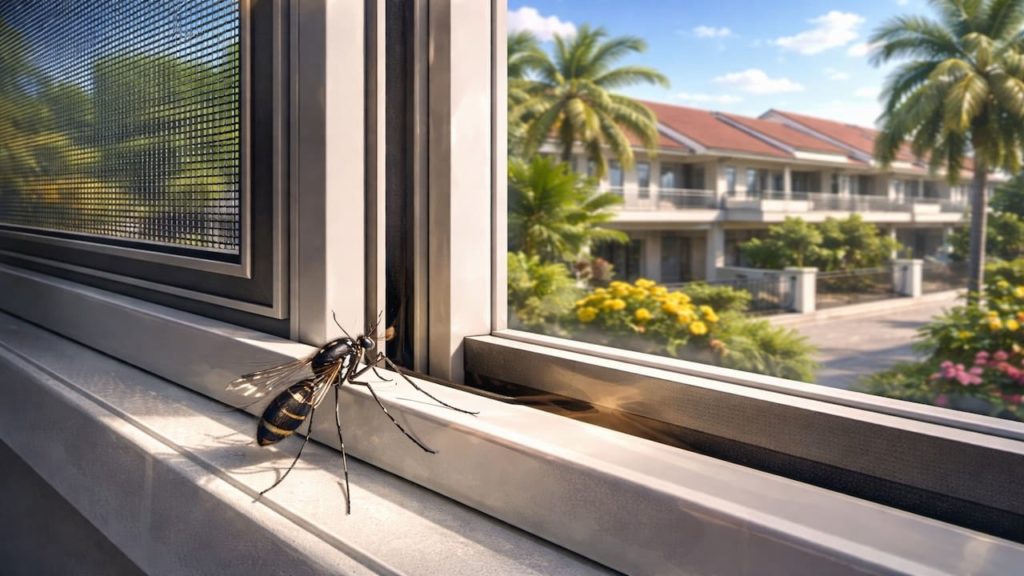
- Check balcony doors and window tracks for gaps that leak air and insects
- Check under door gaps near the pet area and add a smooth door sweep
- Check plant saucers and floor drains near the living room for standing water
- Check evening routines and keep doors closed before dusk when mosquito activity climbs
You might think one mosquito cannot matter, but one can bite a pet many times in one night. Reduce entry and resting spots and the problem collapses.
2. Protect indoor cats and dogs at night
Set up a night routine that blocks entry and improves airflow around the pet bed—this is the cleanest protection.
Night is when pets are least protected because they nap deeply and stay in the same spot. In Malaysia’s humid evenings, mosquitoes stay active longer, especially if outdoor lights are on near porches or corridors. If the brightest light is near a door or balcony, you create a path that guides insects toward the room. A small layout change can cut bites fast. No drama.
- Place the pet bed in a brighter open area not tucked behind a sofa
- Run a fan so air moves across the pet sleeping area without blasting the face
- Close curtains and secure window screens before turning on bright indoor lights
- Keep outdoor entry lights shielded and pointed down so insects gather less near doors
- Do a quick water reset at night and empty any trays that refilled after rain
You may worry a fan will chill your pet with aircond on. Use low speed and aim across the space, not directly at the body, and most pets settle fine.
3. Why mosquitoes bite pets indoors
Mosquitoes bite pets indoors because they follow heat scent and still targets—pets are warm and predictable.
Mosquitoes track carbon dioxide and body odors, and pets give off strong cues even indoors. They also prefer easy skin like ear edges and belly areas where fur is thin. Malaysia humidity keeps indoor air moist, so mosquitoes do not dry out quickly and can rest longer behind furniture. If you have any nearby breeding like gutters, drains, or aircond lines, indoor pressure stays high. That is the loop.
- Pets sleep low to the floor where mosquitoes cruise and rest
- Fur does not protect thin skin areas like ears and belly
- Still air behind sofas and curtains gives mosquitoes safe hiding spots
- Indoor humidity stays high even with aircond if airflow is weak
- Outdoor breeding after heavy rain increases mosquito traffic at doors and windows
Some people assume only outdoor pets get bitten. Indoor pets can be bitten often if entry points and breeding sources are close.
4. How to reduce mosquito bites on pets safely
Use barriers airflow and vet safe prevention instead of human sprays on pets—safety comes first.
Avoid applying human repellent directly onto pets unless a veterinarian says it is suitable for your animal and age. Many human products are not designed for pet skin or licking behavior. Your best baseline in Malaysia is physical control: stop entry, remove breeding water, and make the pet zone windy so mosquitoes cannot land. Then add pet specific prevention only when appropriate. Practical.
- Seal door gaps and tighten screens so new mosquitoes cannot enter at night
- Remove standing water weekly from drains saucers gutters and aircond outlets
- Use a fan near the pet bed to disrupt landing and reduce buzzing stress
- Keep pet bedding clean and dry so odors and dampness do not build up
- Ask your vet about pet safe mosquito prevention if bites are frequent or severe
You might want a quick spray solution, but pets lick fur and breathe low to the floor. Use the home setup first, and you reduce the need for anything sticky.
5. FAQs
Q1. Can mosquitoes harm cats and dogs or is it only itchy bumps?
Many bites are just itchy, but mosquitoes can also carry disease risks in some areas. If your pet seems unwell, call a veterinarian and do not guess.
Q2. Where do pets get bitten most?
Ears, nose edges, belly, and inner legs are common because fur is thin there. Cats that sit by windows and dogs that sleep near doors often get hit more.
Q3. Is it safe to use human mosquito repellent on pets?
Do not use human repellent on pets without vet guidance because pets can lick it and some ingredients can be unsafe. Choose airflow and barriers first, then use pet specific products only when recommended.
Q4. My pet keeps scratching at night, how do I confirm it is mosquitoes?
Check for small red bumps and watch for mosquitoes near lights or couch corners at dusk—then inspect door gaps and window tracks. Also check for fleas, and ask a vet if you are unsure.
Q5. What is the fastest fix tonight?
Move the pet bed away from corners, close entry points before dusk, and run a fan across the sleeping area. Then remove any standing water near the room.
Pro’s Tough Talk

Listen. I have been on site for 20+ years and handled hundreds of jobs, and indoor pet bites are not “mystery bugs.” In Malaysia humidity, one weak gap plus one wet spot is enough to keep mosquitoes clocking in nightly.
Three causes show up every time: door or window gaps let them in, still air behind sofas gives them a hideout, and water sources like drains or gutters keep the supply alive. Three steps fix it: seal the gap, make the pet bed zone windy with a fan, and kill standing water after every heavy rain.
Two relatable moments, yeah. Your dog scratches at 2 a.m. like it is digging to China, and your cat camps by the balcony door like it owns the place. If you think fur is armor, you are dreaming, because this is like leaving a buffet open and wondering why guests arrive, like parking under a streetlamp and complaining about bugs. Make the room boring for mosquitoes and stop treating it like bad luck, or enjoy being the manager of a tiny vampire hotel.
Summary
Indoor pets get bitten when mosquitoes enter through small gaps, rest in still corners, and find easy thin skin areas during long sleep periods.
In Malaysia’s warm humid nights, the fastest improvement comes from sealing entry points, removing standing water, and adding gentle airflow near the pet bed.
Do this today—Seal gaps remove water add airflow then read your guides on door gap fixes and gutter checks to cut bites at the source.