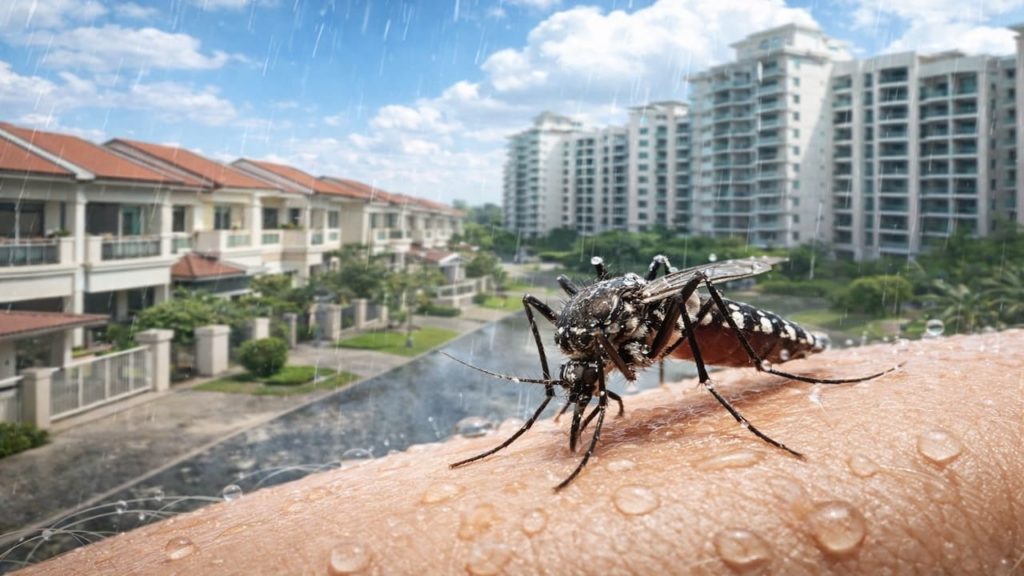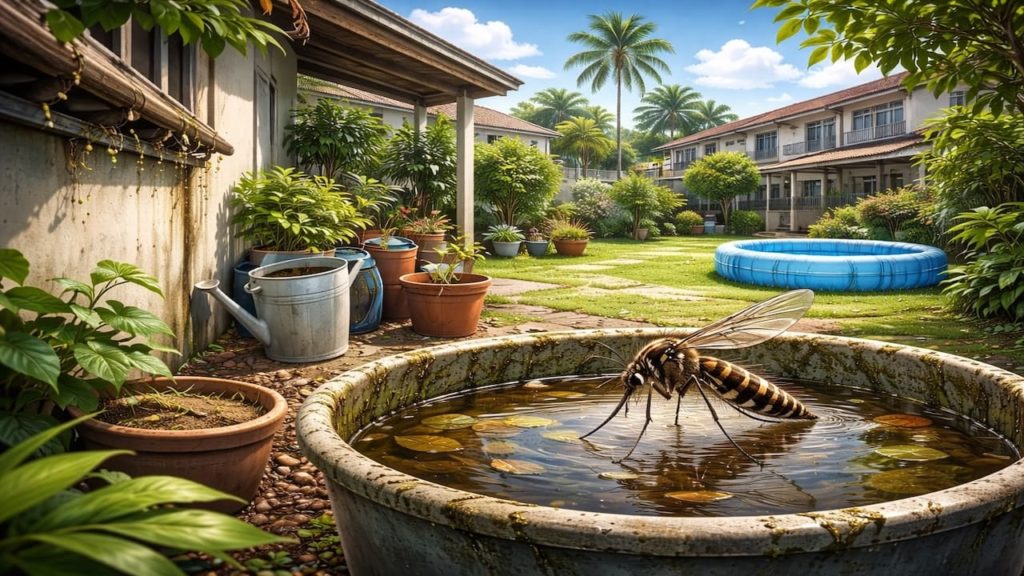
You step into your yard and mosquitoes appear fast, even when the house feels mostly fine indoors.
In Malaysia’s warm humid climate, small outdoor water sources refill after rain, and terrace house yards or shared condo ground areas can hide breeding spots in plain sight.
In this guide, you’ll learn the yard checks that stop weekly mosquito breeding by finding the spots people forget and removing water before it resets.

Hi, I’m Ken. I write practical home guides for Malaysia—no fluff, just what works.
I hold a formal building design qualification and have spent about 20 years on job sites across hundreds of projects. My goal is simple: help you avoid costly mistakes with clear, safe steps—a quick way to decide what to do next.
1. Mosquito in yard: 5 checks
Do a weekly yard scan for hidden water because mosquitoes breed in the small stuff—one forgotten container can undo everything.
Most yard mosquitoes come from breeding nearby, not from far away. Malaysia rain creates repeat puddles, and warm temperatures help mosquitoes develop quickly if water sits. The tricky part is that the worst breeding spots are not big obvious ponds, they are shallow containers and clogged corners that hold water just long enough. Yard control is routine, not one time cleaning. Discipline.
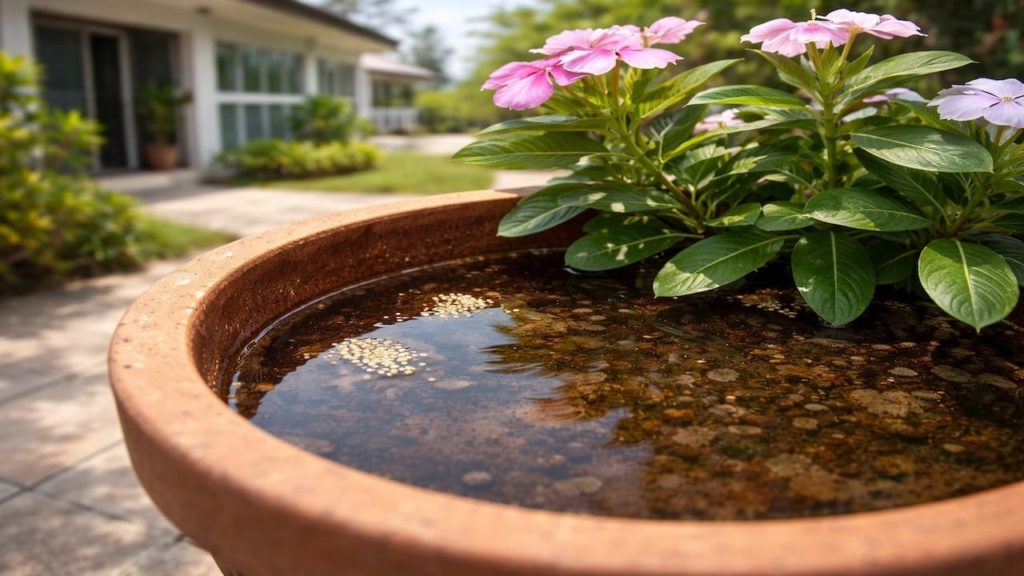
- Check plant pot saucers and trays and empty them after watering
- Check buckets toys and tools that collect rainwater overnight
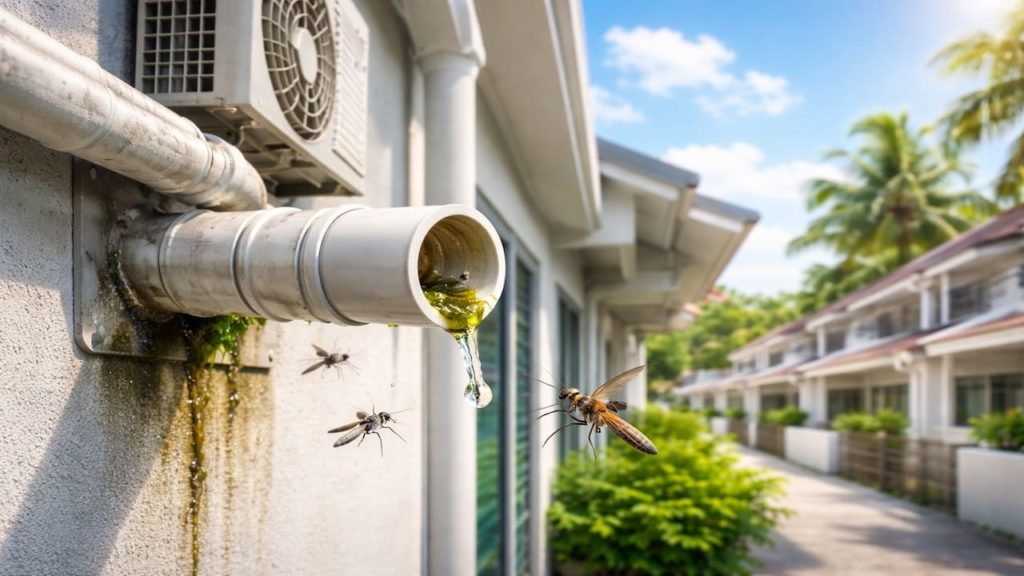
- Check gutters downspouts and splash zones for standing water
- Check yard drains and grated covers for slow flow and slime
- Check shaded corners where leaves block drainage and puddles linger
Some people only spray the yard and hope for results. Sprays fade fast in rain and do not remove breeding. Remove water and the mosquito population drops for real.
2. Remove breeding spots you forget weekly
The forgotten breeding spots are the ones that refill quietly—they look harmless until they repeat every week.
In Malaysia, rain can hit daily in wet season, and even dry weeks can still have short storms that refill containers. Items left outside become water collectors. Small drains clog with leaves and create shallow pools you do not notice from standing height. If you have a terrace house yard, the porch edge and plant corners are common. If you are near a condo ground floor garden, shared drains and planters can keep mosquitoes active. Shared environment.
- Flip unused pots upside down so they cannot hold water
- Store buckets and watering cans under cover or on their side
- Clear leaf litter from corners where water sits after rain
- Replace broken pot trays with ones that drain or dry fast
- Check tarps and folded plastic sheets that trap water in creases
You might think weekly checks are overkill. In a tropical climate, weekly is the minimum rhythm because rain resets the yard fast. Make it a habit and the yard becomes calmer.
3. Why yards breed mosquitoes so easily in Malaysia
Warmth plus frequent rain creates a constant refill cycle—breeding spots return even when you clean once.
Mosquitoes lay eggs in standing water and some species can leave eggs on damp surfaces that hatch when water returns. That means a container can be dry today and still become a problem next rain. Malaysia humidity also slows drying in shaded areas, so puddles remain longer. If your yard has poor slope or blocked drains, water lingers and gives mosquitoes time to develop. Structure.
- Eggs can survive on damp surfaces and hatch after rain returns
- Shaded areas dry slowly and hold water longer than sunny spots
- Leaf litter acts like a sponge and blocks water flow
- Gutters and downspouts can trap water and refill every storm
- Uneven ground creates micro puddles that stay hidden under plants
Some people blame only neighbors or nearby nature. Neighbors matter, but your yard can still be the main factory if water sits. Fix your zone first and you reduce bites immediately.
4. How to keep your yard mosquito low
Make a simple weekly routine and remove water in minutes—consistency is what works in tropical weather.
You do not need expensive fogging. You need a repeatable loop: after rain, empty water, clear drains, and reduce shaded damp clutter. In Malaysia, doing this once a week keeps breeding from building momentum. If you have kids or pets, focusing on safe physical control is better than heavy chemical use. Control the habitat.
- Walk the yard after heavy rain and dump water from containers
- Brush slime from drains and grates so water flows faster
- Clean gutters and downspouts so water does not pool on edges
- Trim plants to increase airflow and sunlight for faster drying
- Set a weekly reminder so forgotten items do not accumulate again
Some people want instant results without routine. You can get quick relief, but long term control needs weekly discipline. That is the trade.
5. FAQs
Q1. How often should I check the yard for breeding spots?
At least weekly, and always after heavy rain. Malaysia weather can refill containers fast, so a short routine works better than rare deep cleaning.
Q2. What is the most common forgotten breeding spot?
Plant pot saucers and trays are very common, because they hold shallow water and sit in shade. Buckets and folded tarps are also frequent.
Q3. Do mosquitoes breed in wet soil or only standing water?
Most need standing water, but damp surfaces can hold eggs that hatch when water returns. No standing water after rain is the key rule for practical yard control.
Q4. I live near a shared condo garden, what can I do?
Control your balcony and entry zone, remove standing water in your area, and report blocked drains or pooling to building management. Airflow near doors and sealing gaps also reduces indoor bites.
Q5. Should I use outdoor fogging sprays?
Fogging can reduce adults temporarily, but rain and new breeding bring them back fast. Remove breeding water first, then use sprays only as a short term backup.
Pro’s Tough Talk

Listen. I have been on site for 20+ years and handled hundreds of jobs, and yard mosquitoes are not “just nature.” In Malaysia rain, your yard can become a baby mosquito factory in a week.
Three causes, always. You forget the small containers, drains clog with leaves and turn into tiny ponds, and gutters or downspouts hold water after every storm. Three steps fix it: dump water after rain, clear drains and grates, and remove anything that can collect water like trays and buckets.
Two relatable moments, yeah. You water plants and leave the saucer full because you are busy, and you keep a bucket outside “for later” that becomes a mosquito daycare. Here is the jab: you are not being attacked, you are raising them. Like leaving snacks on the table and blaming ants, like mopping the floor but never fixing the leak. Kill the water every week—or keep breeding mosquitoes and act shocked when they show up to bite you.
Summary
Yard mosquitoes usually come from small forgotten water sources that refill after rain, like plant trays, buckets, gutters, drains, and shaded puddle corners.
In Malaysia’s warm humid climate, weekly checks and fast water removal work better than occasional spraying because breeding resets after every storm.
Today, do a 5 minute post rain scan, dump every container, and clear drains—Weekly water removal is the real mosquito control then read your gutter pooling guide and door gap entry fixes to reduce indoor bites too.