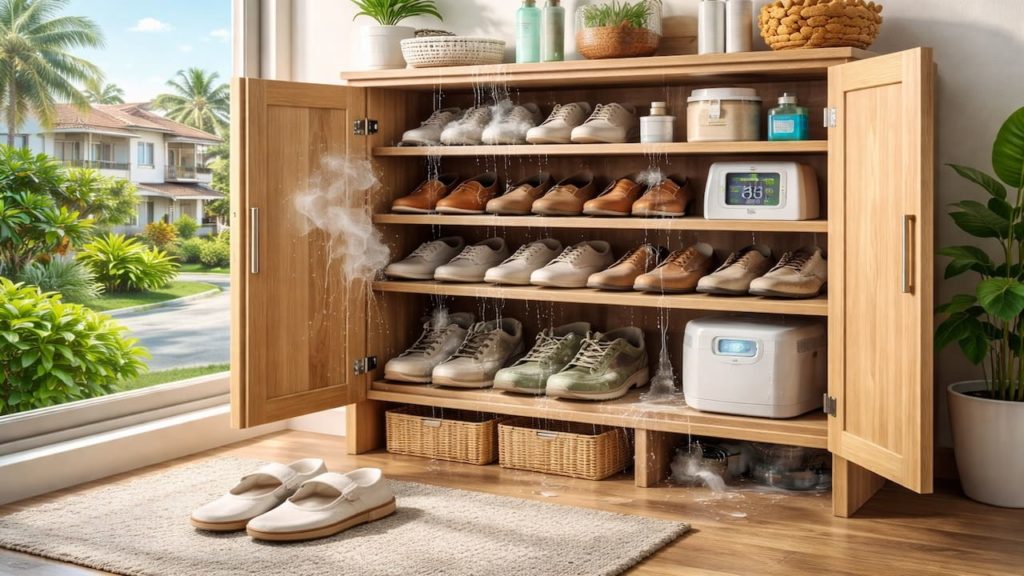
You open the shoe cabinet and a damp smell hits you, or your leather shoes feel slightly sticky even after a full day.
In Malaysia, hot humid air, rainy season wet footwear, and closed cabinets in condos or terrace houses trap moisture fast. It builds quietly.
In this guide, you’ll learn what to check inside the cabinet, why odor starts, and how to keep leather dry without overdoing chemicals. Keep shoe cabinets dry so leather stays clean.

Hi, I’m Ken. I write practical home guides for Malaysia—no fluff, just what works.
I hold a formal building design qualification and have spent about 20 years on job sites across hundreds of projects. My goal is simple: help you avoid costly mistakes with clear, safe steps—a quick way to decide what to do next.
1. Humidity in shoes cabinet: 5 checks
In Malaysia’s humid homes these 5 checks reveal why your shoe cabinet stays damp and why odor keeps coming back.
Shoe cabinets are tiny boxes with poor airflow—one wet pair can raise humidity for days. Closed space.
- Touch the back panel and corners for cool clammy spots that signal trapped moisture
- Look for white powdery marks or fuzzy specks on leather seams and cabinet edges
- Smell each shelf level because odor often sits low where air barely moves
- Check if wet umbrellas or floor mats are stored nearby adding moisture into the cabinet zone
- Track rainy season habits like putting shoes away while still damp from sweat or rain
“I clean the cabinet so it should not smell.” Cleaning helps, but moisture keeps feeding mildew. Root cause. Fix humidity first and the smell stops restarting.
2. Stop odor and mildew on leather
In Malaysia’s warm humid weather leather stays safe when you dry shoes before storage and keep cabinet air moving.
Leather absorbs moisture, then mildew eats the surface and leaves that sour odor. Slow damage. Prevention beats repair.
- Air-dry shoes outside the cabinet for 6 to 12 hours after use in rainy season
- Use cedar shoe trees or dry paper stuffing to pull moisture from leather overnight
- Place reusable silica gel packs on each shelf and recharge them weekly if possible
- Leave the cabinet door open for 15 minutes daily to flush humid air in condos
- Wipe leather lightly and dry fully before conditioning so you do not seal in moisture
“But I need the cabinet closed to keep the entry neat.” Fair. You can still ventilate on a schedule. Small habit. Ten minutes of airing beats weeks of mildew.
3. Why shoe cabinets get humid in Malaysia
In Malaysian homes shoe cabinets trap humidity because footwear brings moisture inside and the cabinet has almost no ventilation.
Sweat and rainwater evaporate into the cabinet air, then condense on cooler panels and shoes. Moisture loop.
- Rainy season shoes carry water into the cabinet even when they look dry on top
- Closed condo entryways often have weak airflow so humidity lingers near the floor
- Tile floors and shaded corners can stay cool and trigger condensation inside cabinets
- Leather and fabric absorb moisture and release it slowly, keeping humidity high overnight
- Cabinets pushed tight to the wall reduce airflow and create damp dead zones
“My cabinet is new so it cannot be the problem.” New cabinets can trap moisture even worse because they are sealed tighter. Same physics. Ventilation matters more than age.
4. How to keep the cabinet dry long term
For Malaysia condo life combine drying routine plus moisture control tools so odor does not return every week.
Start with behavior, then add simple gear, then escalate only if humidity stays high. Cheap first.
- Set a rule that no damp shoes go into the cabinet, especially after rain or workouts
- Add a slim vent gap or use a cabinet with vents if your entry stays humid
- Use moisture absorbers or silica gel packs and replace or recharge them regularly
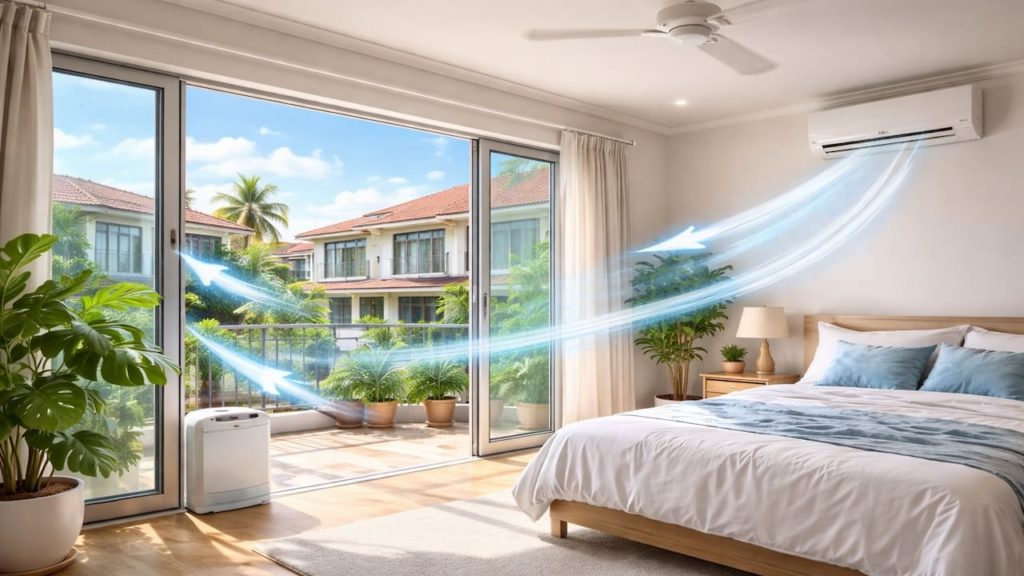
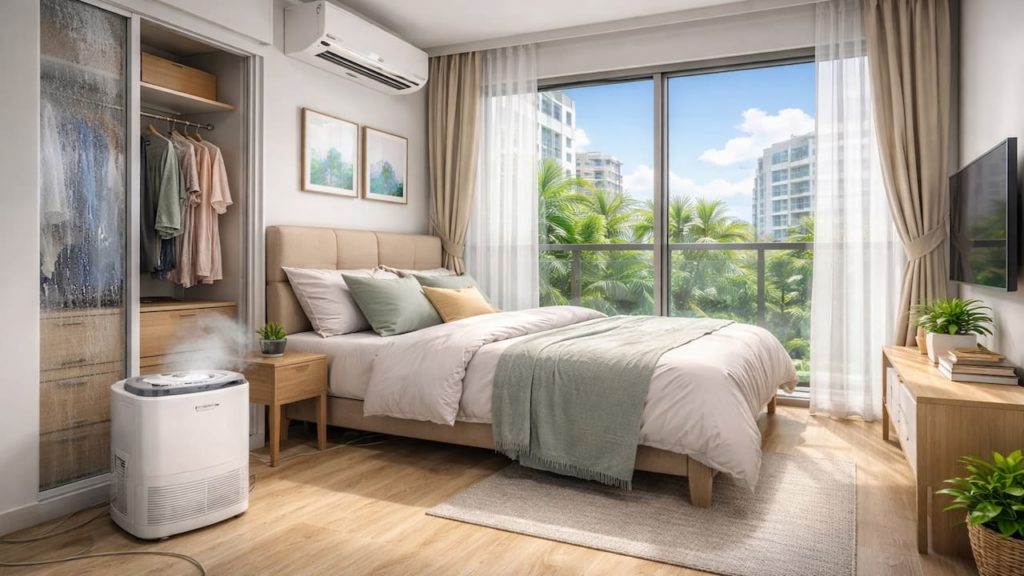
- Run AC Dry mode in the entry area for 30 to 60 minutes on wet days
- Separate leather from wet sports shoes so one does not infect the whole cabinet
“I tried deodorizers and it still smells.” Deodorizers mask odor but do not remove moisture. No magic. Remove water, then odor disappears.
5. FAQs
Q1. How do I know if my leather shoes already have mildew?
Look for white fuzzy spots, surface dullness, and a sour damp smell that returns after wiping. Drying first prevents permanent leather damage in Malaysia’s humidity.
Q2. Are silica gel packs enough for a shoe cabinet?
They help a lot in small cabinets, but they must be recharged or replaced regularly. If shoes go in damp, no pack will keep up.
Q3. Can I use baking soda for shoe odor?
It can absorb some odor, but it is not a humidity solution by itself. Focus on drying shoes and ventilating the cabinet, then use baking soda as a backup.
Q4. Should I condition leather more often in humid weather?
Conditioning protects leather, but do it only after the shoe is fully dry. Conditioning damp leather can trap moisture and make mildew more likely.
Q5. What is the fastest daily routine for prevention?
Air-dry shoes outside the cabinet and open the cabinet door briefly each day. Add silica packs and you get a simple system that works.
Pro’s Tough Talk

Listen. I’ve been on site for 20+ years and handled hundreds of jobs, and shoe cabinets in Malaysia are humidity traps by design. Rainy season shoes go in “a bit damp,” the door shuts, and you just built a tiny sauna for mildew.
Three causes. Damp shoes, zero airflow, and humidity pooling low near the condo entry floor. Three steps. Dry shoes outside the cabinet, stuff them with paper or use shoe trees, then control the cabinet humidity with silica packs and daily airing. Common thing number one: people spray perfume and think it solved it. Common thing number two: they store wet sports shoes next to leather and act surprised when everything stinks.
Here’s the rule. No damp shoes go into the cabinet period. Otherwise you are boxing up a wet towel, and mildew spreads like weeds after rain. And you expect leather to stay “luxury” in a tropical swamp with no airflow? Come on. Fix it today or keep paying for ruined shoes.
Summary
Shoe cabinets get humid in Malaysia because damp shoes bring water in and closed cabinets trap it, leading to odor and mildew on leather. Quiet damage.
Check for clammy corners and recurring smell, then focus on drying shoes fully before storage and adding simple moisture control like silica packs.
Do this today: dry shoes outside the cabinet, air the cabinet briefly, and add moisture absorbers. Dry storage is the real deodorizer. Next, read the guide on rainy season drying routines for small condo spaces.