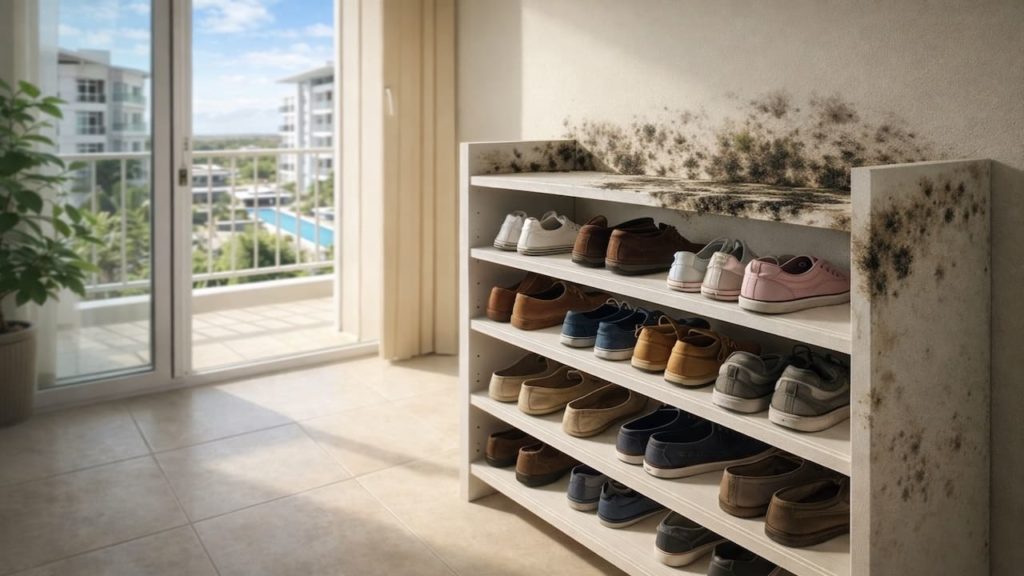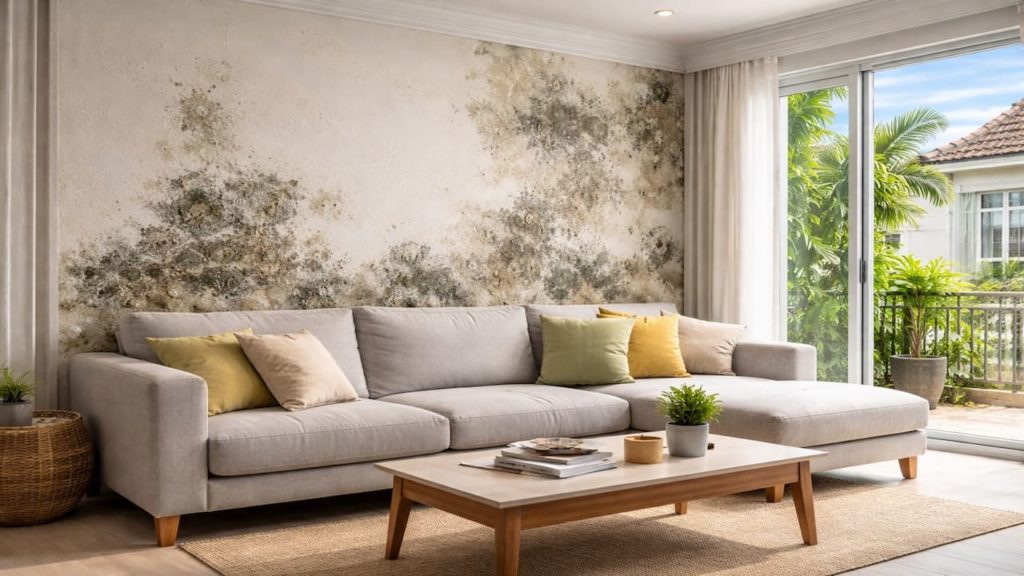
You notice a weird musty smell near the sofa, or you spot a faint dark patch that was not there last week.
In Malaysia, heat and humidity, rainy season storms, and condo or terrace house walls that stay warm can hide moisture in quiet corners. Sneaky problem.
In this guide, you’ll learn what signs to check, why the wall gets damp, and how to dry it before mold spreads. Catch damp behind the sofa before mold blooms in humid Malaysian homes.

Hi, I’m Ken. I write practical home guides for Malaysia—no fluff, just what works.
I hold a formal building design qualification and have spent about 20 years on job sites across hundreds of projects. My goal is simple: help you avoid costly mistakes with clear, safe steps—a quick way to decide what to do next.
1. Humidity behind sofa wall: 5 signs
In humid Malaysia condos and terrace houses these 5 signs tell you moisture is building behind the sofa even when the room looks clean.
That spot gets low airflow and trapped warmth—perfect for condensation and slow leaks to show up late. Blind corner.
- Musty smell that is strongest right behind the sofa backrest
- Wall paint looks slightly darker or patchy after rainy season evenings
- Wallpaper edges lifting or bubbling near the skirting line
- Wall feels cool and clammy to the back of your hand compared to nearby areas
- Fine powdery marks on plaster or skirting that return after you wipe
“It is just old paint and tropical air.” Maybe, but recurring patches usually mean the wall stays damp for hours. Easy miss. Check now and you avoid a bigger cleanup later.
2. Spot damp patches before mold blooms
In Malaysia’s warm wet weather simple checks can confirm damp behind the sofa in under 5 minutes without tools or drilling.
You are not hunting perfection—just proof of moisture so you can act before mold takes over the fabric and wall. Quick proof.
- Pull the sofa out 10 to 15 cm and shine a phone flashlight along the wall surface
- Press a dry tissue to the darkest area for 10 seconds and see if it picks up moisture
- Tape a small plastic sheet to the wall for 2 hours and check for droplets underneath
- Check skirting corners and the floor line where damp often starts in terrace houses
- Smell the wall and sofa backing separately to see if the odor is from fabric or plaster
“I do not see mold so it must be fine.” Mold is the late stage, and damp is the early stage. Small patch. Confirm moisture first and you can stop it cheaply.
3. Why damp collects behind the sofa wall
In Malaysia homes damp builds behind sofas because airflow stops and moisture has nowhere to escape near exterior walls and shaded corners.
Humidity becomes liquid when warm air hits a cooler wall surface—condensation shows up where circulation is weakest. Basic physics.
- Exterior walls cool faster at night especially in air-conditioned bedrooms or living rooms
- Sofas pushed tight against the wall block airflow and trap sweat moisture from the room
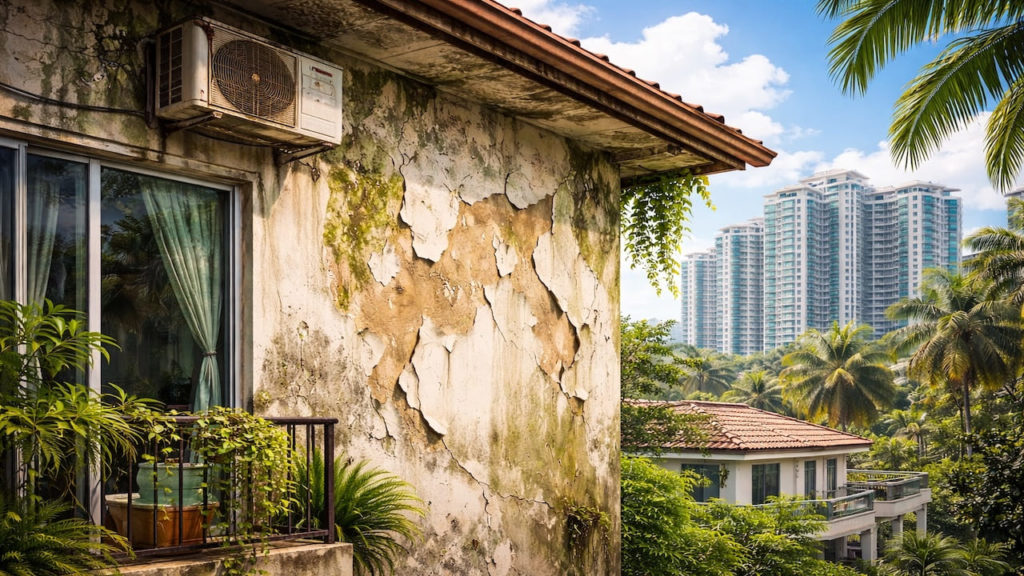
- Rainy season wind-driven rain can seep through tiny cracks around windows or joints
- AC cold air aimed at the wall can create a cold strip that condenses moisture
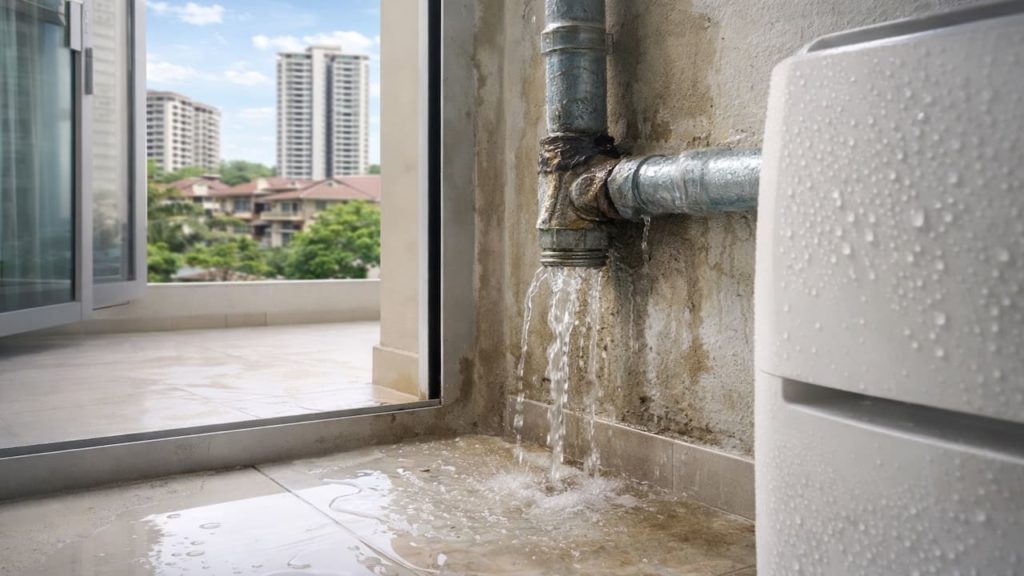
- Small plumbing leaks from nearby bathrooms or kitchens can wick into plaster slowly
“But my AC runs so the room is dry.” AC can dry air while still creating cold surfaces that condense moisture. Different problem. Fix airflow and the moisture source together.
4. How to dry it and prevent mold returning
In Malaysian humidity your fastest win is space plus drying plus stopping the moisture source so the wall stays dry all week.
Do this in order—first create airflow then remove damp then control humidity so the patch cannot restart. Simple sequence.
- Move the sofa 10 to 20 cm off the wall and keep a small air gap permanently
- Run AC Dry mode or a dehumidifier with the door closed for 2 to 4 hours
- Wipe the wall dry and use a fan aimed into the gap to push air behind the sofa
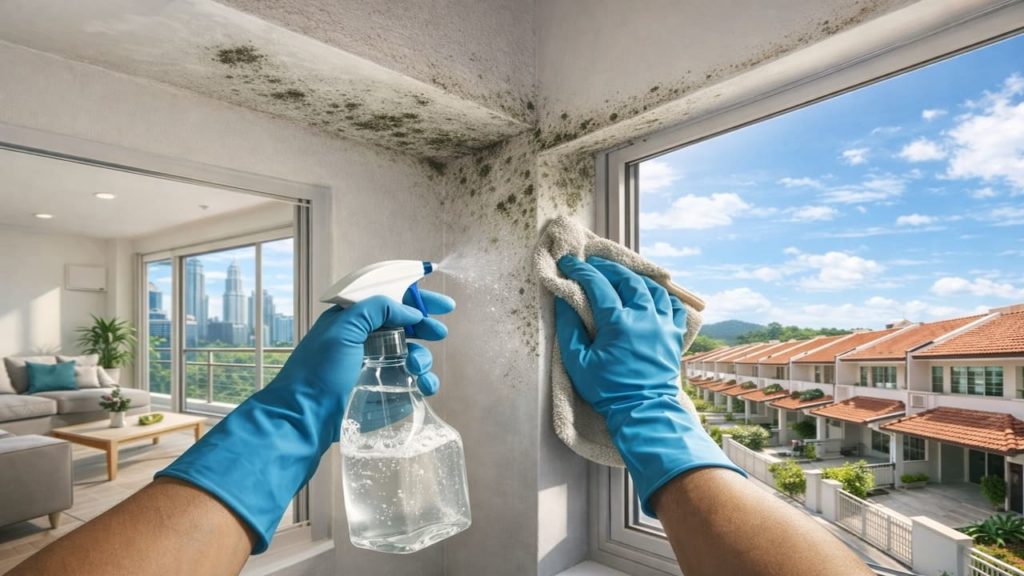
- Clean early spots with mild detergent then dry fully before placing furniture back
- If the patch grows after rain report it to building management or check window seals
“I can just spray mold killer and forget it.” Sprays help symptoms, not the cause, and damp will bring it back. No shortcut. Make the gap and control moisture and the wall stays clean.
5. FAQs
Q1. How far should I move the sofa away from the wall?
Start with 10 to 15 cm so air can circulate in Malaysia’s humid rooms. An air gap is the cheapest mold prevention and it also helps fabrics smell fresher.
Q2. How do I tell condensation from a leak?
Condensation appears after cool nights and improves with airflow—leaks tend to worsen after rain or stay wet in one exact spot. The plastic sheet test helps because droplets behind the sheet point to wall moisture.
Q3. Is it safe to clean early mold spots myself?
If it is a small area, wear a mask, ventilate, and clean gently without scrubbing dust into the air. Drying is the key step, especially during rainy season when walls re-wet fast.
Q4. I rent a condo and cannot modify anything, what can I do?
Keep the sofa off the wall, run Dry mode regularly, and avoid drying laundry in the same room. If the patch grows, document it with photos and inform the landlord early.
Q5. When should I call a professional?
If the patch spreads quickly, the wall feels wet daily, or you see bubbling paint returning within days, you likely have a leak or water ingress. That is building-side work, not just cleaning.
Pro’s Tough Talk

Listen. I’ve been on site for 20+ years and handled hundreds of jobs, and damp behind a sofa is a trap people fall into all the time. In Malaysia, rainy season humidity plus weak condo airflow turns that wall into a sponge in a plastic bag.
Three causes. Air can’t move, the wall surface gets cold, and water sneaks in from rain or tiny leaks. Three steps back. Pull the sofa off the wall, blast Dry mode or a dehumidifier, then hunt the source like you mean it. Common thing number one: nobody checks behind the sofa until it smells. Common thing number two: indoor laundry drying in the living room and then acting surprised.
Here’s the deal. Move the sofa and dry the gap or mold will move in. Trying to “clean harder” is like mopping a flooded floor while the tap is still open, and mold blooms like weeds after rain. And you really think moisture cares about your interior design plan? Come on. Fix it today or enjoy your new mold roommate.
Summary
Humidity behind the sofa wall often shows up first as smell, cool clammy spots, and faint dark patches in Malaysia’s warm humid homes. Quiet warning.
Confirm damp fast with light and tissue checks, then separate condensation from leaks—rainy season patterns make the difference clearer.
Do this today: pull the sofa off the wall, dry the gap, and keep humidity down. Stop damp early and mold never gets momentum. If this helped, read the next guide on room airflow and AC Dry mode setup.