You searched this because your door suddenly sticks, rubs, or won’t latch, and it feels worse after rain or a humid night.
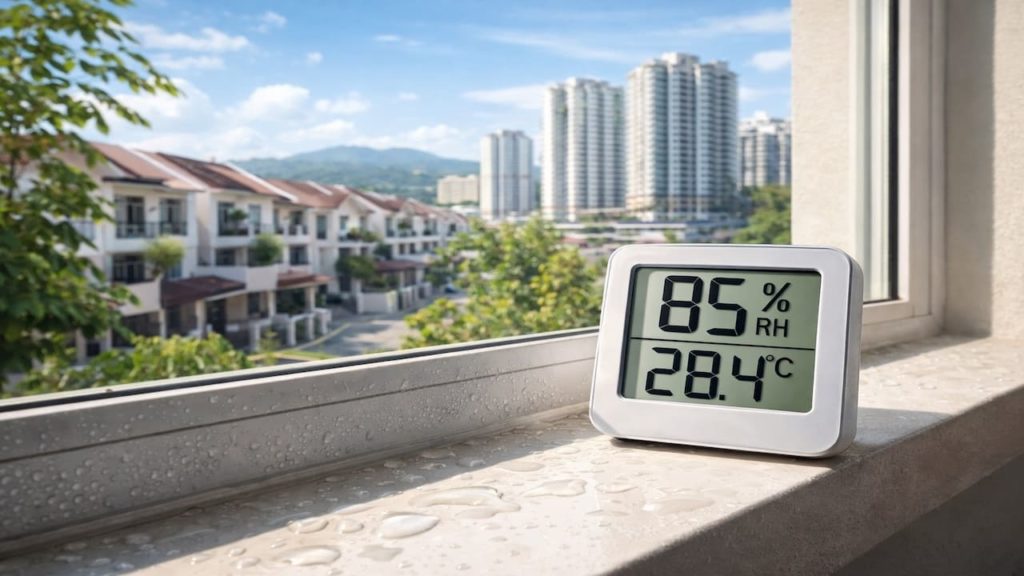
In Malaysia, warm humid air and wet-season swings make wood and some composite doors absorb moisture, especially in condos with limited airflow or terrace houses with damp entry areas.
In this guide, you’ll learn how to spot humidity swelling early and stop doors from sticking before frames get damaged and the problem becomes permanent.

Hi, I’m Ken. I write practical home guides for Malaysia—no fluff, just what works.
I hold a formal building design qualification and have spent about 20 years on job sites across hundreds of projects. My goal is simple: help you avoid costly mistakes with clear, safe steps—a quick way to decide what to do next.
1. Humidity causes swollen doors: 5 signs
Sticking doors are often a moisture problem not a hinge problem
Humidity makes door slabs and frames expand, and the wet season keeps them swollen longer—so the contact points change day by day.
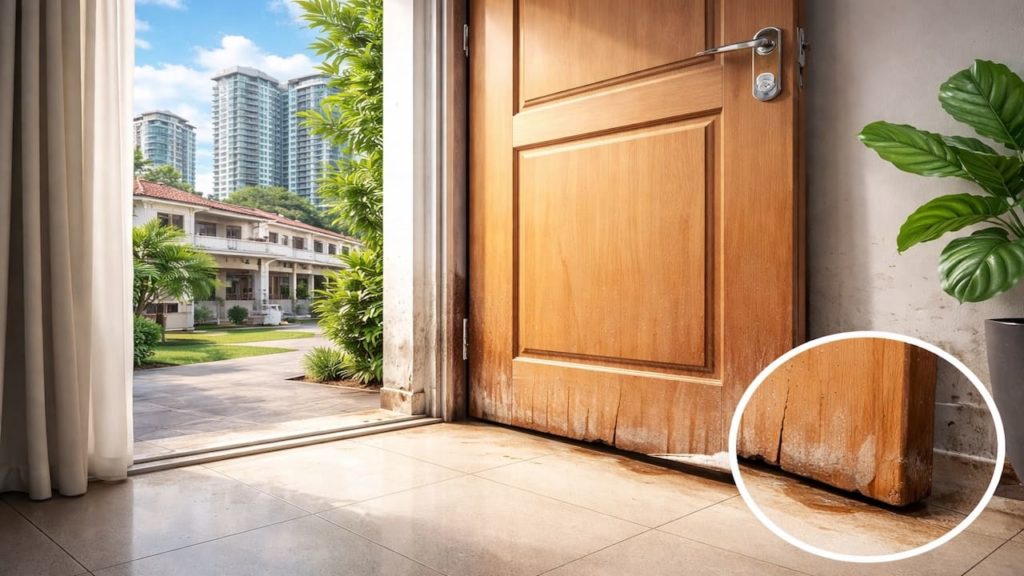
- The door scrapes the floor or threshold and leaves fresh dust lines near the bottom edge
- The latch misses the strike plate unless you lift or pull the door harder than usual
- The door closes fine in the afternoon but sticks at night after rain and cooler indoor air
- You see shiny rub marks on the frame where paint has polished from repeated friction
- The door feels heavier to move and the handle turns but the slab resists at the frame
You might assume the hinges are failing, but swelling can mimic hinge sag. Check for moisture patterns first, then adjust hardware. Faster wins.
2. Fix sticking doors and frames fast
Dry the air and relieve pressure before you sand anything
Quick fixes work best when you reduce humidity first, because sanding a wet swollen door can create a permanent gap once it dries.
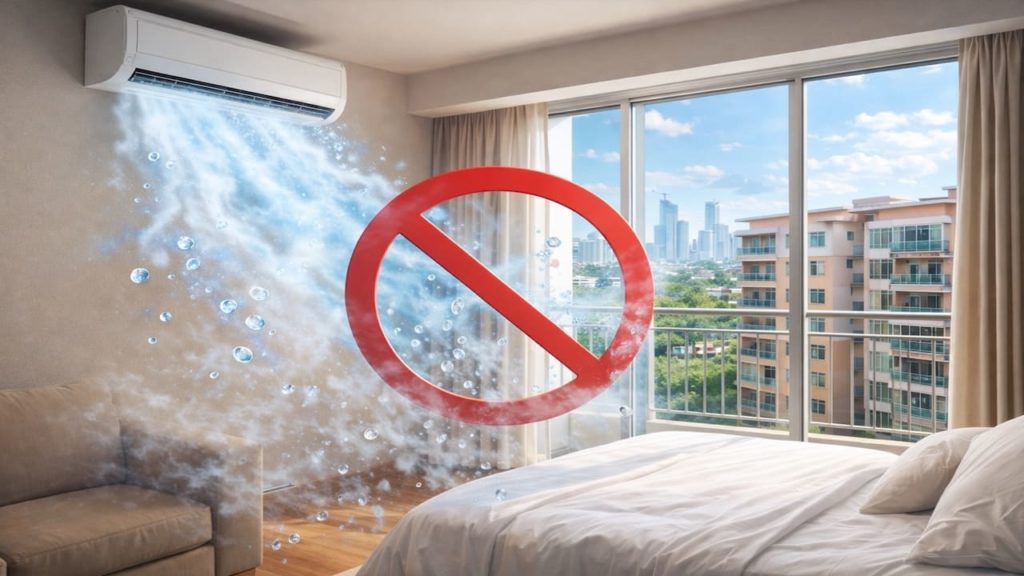
- Run aircond Dry mode in the problem area for 2 to 4 hours with the door open to dry the slab and frame evenly
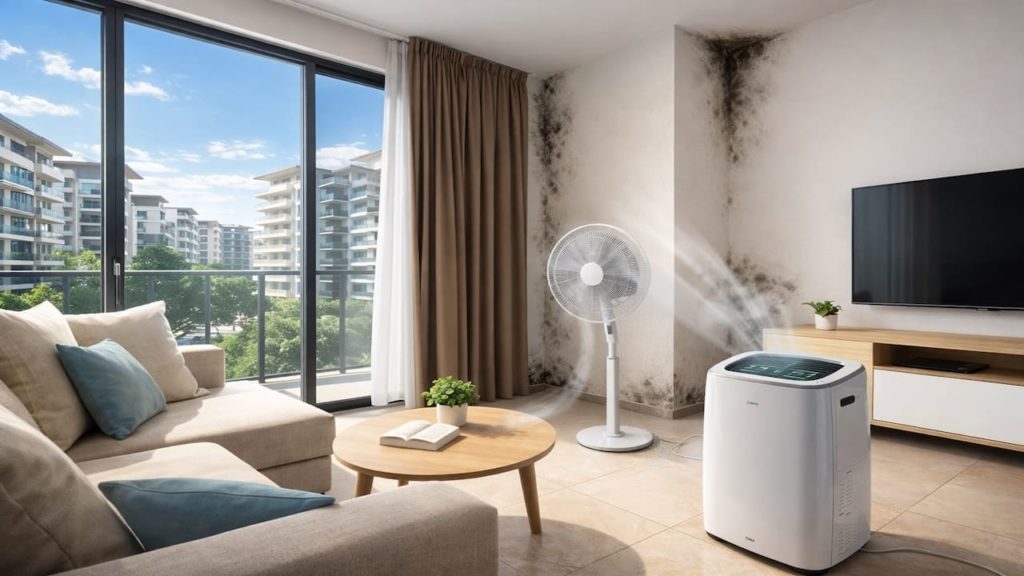
- Wipe the frame and door edges dry then place a fan to move air across the jamb for 30 minutes
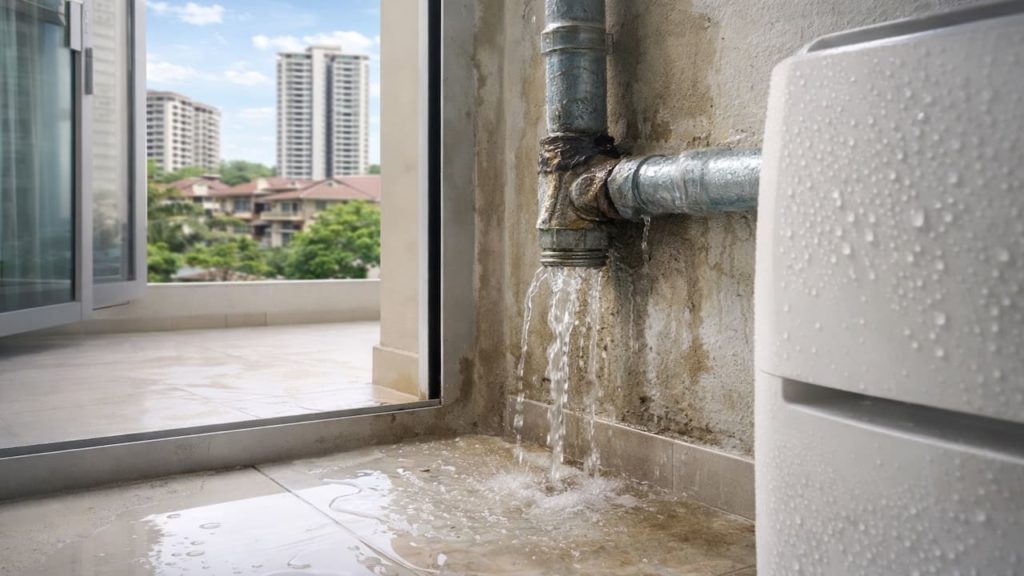
- Check the threshold and door sweep for trapped water near entrances during wet season splash
- Tighten hinge screws and test again because swelling plus loose screws doubles the rubbing
- Use a candle or dry soap on the rub point for a temporary glide while the wood dries
Some people rush to plane the edge, but moisture changes the size again next week. Dry-first strategy. Simple rule.
3. Why humidity swells doors in Malaysia
Wood and frames absorb moisture until they expand and bind
Malaysia’s high humidity and frequent rain raise indoor moisture, and doors near bathrooms, kitchens, and balconies absorb it through edges and unsealed cuts.
- Bathroom doors swell because steam hits the bottom edge and sits in the frame groove
- Kitchen doors swell because cooking adds warm vapor and cabinets block airflow around frames
- Balcony side doors swell because rain humidity enters when you open for laundry or plants
- Entry doors swell when wet shoes mats and umbrellas keep the porch area damp
- New paint traps moisture if edges were not sealed properly so the slab moves unevenly
You may think concrete walls do not affect doors, but damp walls raise room humidity and keep frames wet. The door is just the victim. Typical.
4. How to prevent swollen doors from coming back
Seal edges improve airflow and manage humidity in key rooms
Once the door is moving normally, lock in the fix by reducing moisture exposure and keeping the frame stable through the wet season.
- Seal the top and bottom edges with a clear sealer or paint because raw edges drink humidity fast
- Use a door closer or soft-close habit to avoid slamming which loosens screws and worsens rubbing
- Keep bathroom doors ajar after showers and run the exhaust fan to clear steam quickly
- Use a small dehumidifier in a closed bedroom or hallway if indoor humidity stays high for days
- Add a thin weather strip and door sweep to block moist outdoor air near entrances during heavy rain
People blame “cheap doors” in Malaysia, but many doors last if edges are sealed and airflow is steady. Maintenance works. Calm fix.
5. FAQs
Q1. Should I sand the door edge right away?
Not first. Dry the area and confirm the door still sticks when humidity is lower, because sanding a swollen door can leave a permanent gap later.
Q2. How long does a swollen door take to return to normal?
It can improve within a day if you dry the air, but during Malaysia’s wet season it may take several days. If it never improves, check for constant moisture sources.
Q3. Why is only one door swelling in my home?
That door likely sits near steam, leaks, or poor airflow, like a bathroom or balcony route. Local humidity zones are real, even inside condos.
Q4. What if the frame is swelling not the door?
Frames can absorb moisture too, especially if the wall side stays damp. Dry the jamb area and look for wall dampness or paint blistering nearby.
Q5. When is it a sign of structural movement instead of humidity?
If multiple doors suddenly misalign, cracks appear near corners, or the issue worsens steadily even in dry weeks, it may be settling. Get a professional inspection then.
Pro’s Tough Talk

Listen. I’ve been on site for 20+ years and handled hundreds of jobs, and a “sticking door” in wet season is usually a moisture story, not a mystery. Malaysia humidity loves wood like a sponge loves water.
Cause is 3 parts. Damp air stays trapped, door edges are unsealed, and hardware gets loose at the same time. Do 3 steps now: dry the room hard, tighten every hinge screw, then check the bottom edge and jamb for wet spots.
Planing a swollen door is like cutting your pants because you ate too much—yeah it closes today, then it looks stupid later. Everyone has the “bathroom door won’t close after a shower” moment, and everyone ignores the wet mat by the entrance. Dry first then adjust and seal or enjoy wrestling your door like it’s a gym session.
Summary
Humidity swelling shows up as scraping, latch misalignment, and rub marks, and it gets worse in Malaysia’s wet season when indoor air stays damp.
Dry the air and stabilize the door first, then decide if hardware adjustment is enough—if the problem persists across drier days, inspect for leaks or frame dampness.
Do one dry-down session today and seal the door edges this week, then browse your other humidity fixes for bathrooms, porches, and laundry zones. Fast relief comes from moisture control not brute force