Your terrace house feels damp even when it is not raining, and rooms smell “closed” after a night with doors and windows shut.
In Malaysia, warm humid air, rainy weeks, and heat stored in walls can trap moisture inside terrace houses where airflow depends on the right openings, not random windows.
In this guide, you’ll learn 5 checks to fix terrace-house humidity with simple ventilation so air moves the right way and your rooms dry out without turning into a hot, wet tunnel.

Hi, I’m Ken. I write practical home guides for Malaysia—no fluff, just what works.
I hold a formal building design qualification and have spent about 20 years on job sites across hundreds of projects. My goal is simple: help you avoid costly mistakes with clear, safe steps—a quick way to decide what to do next.
1. Terrace house humidity issue: 5 checks
Ventilation works only when air has a clear path in and out not when you open things at random.
Terrace houses often have long layouts with a front-to-back flow, and Malaysia humidity exposes every weak spot in that airflow route. Layout reality.
- Check if you have a true cross-breeze path from front to back, not just one window open.
- Check which rooms stay damp, because humidity hotspots reveal blocked airflow zones.
- Check door under-gaps and stairwell areas that trap still air in the middle of the house.
- Check if bathroom humidity leaks into hallways after showers, especially at night.
- Check if indoor laundry drying is adding moisture to the same air you are trying to ventilate.
Some people open every window and still feel damp, but without a real airflow path, you only trade one pocket of humid air for another—route first, then volume.
2. Simple ventilation that actually works
Use a controlled airflow setup you can repeat daily so the house dries even during wet weeks.
Malaysia’s outdoor air can be humid too, so “more open” is not always better, and terrace houses need timed ventilation plus airflow help to avoid muggy rooms. Practical method.
- Ventilate in short bursts when outdoor air feels driest, often late morning to mid-afternoon.
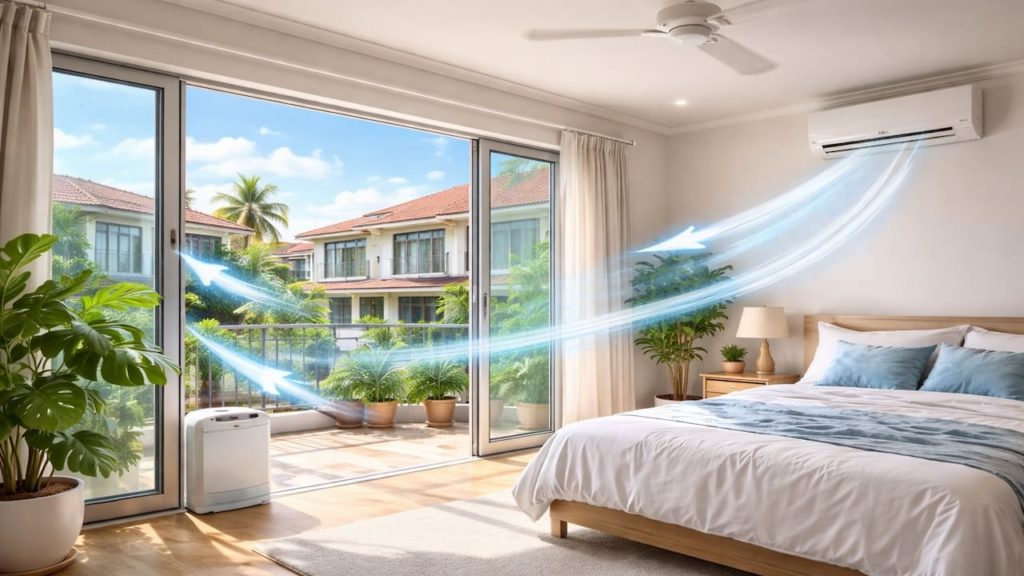
- Open front and back points, then open only key interior doors to guide airflow through damp zones.
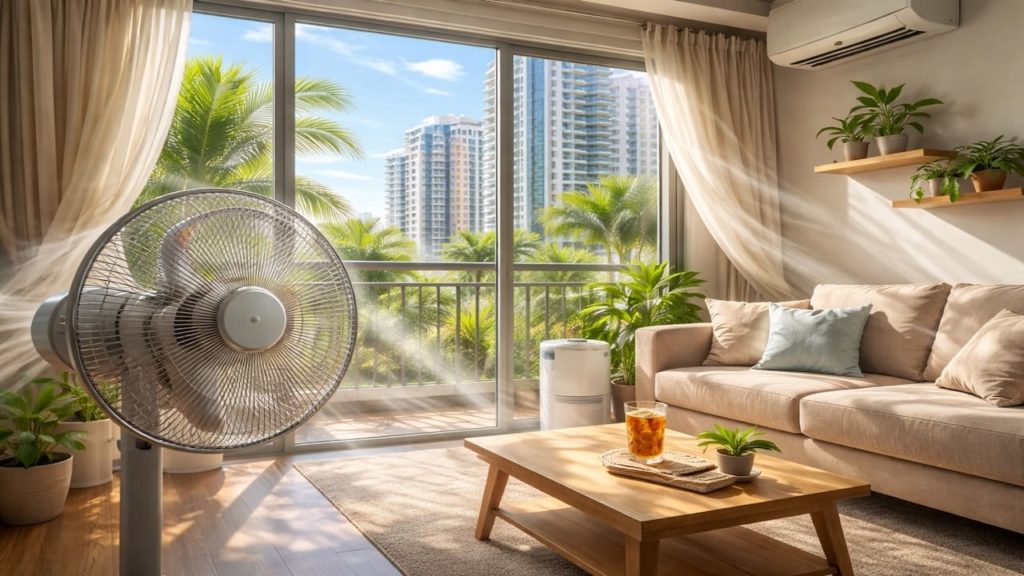
- Use fans to push air along the corridor direction, not sideways into closed rooms.
- After showers, run exhaust and keep bathroom door shut until the air inside clears.
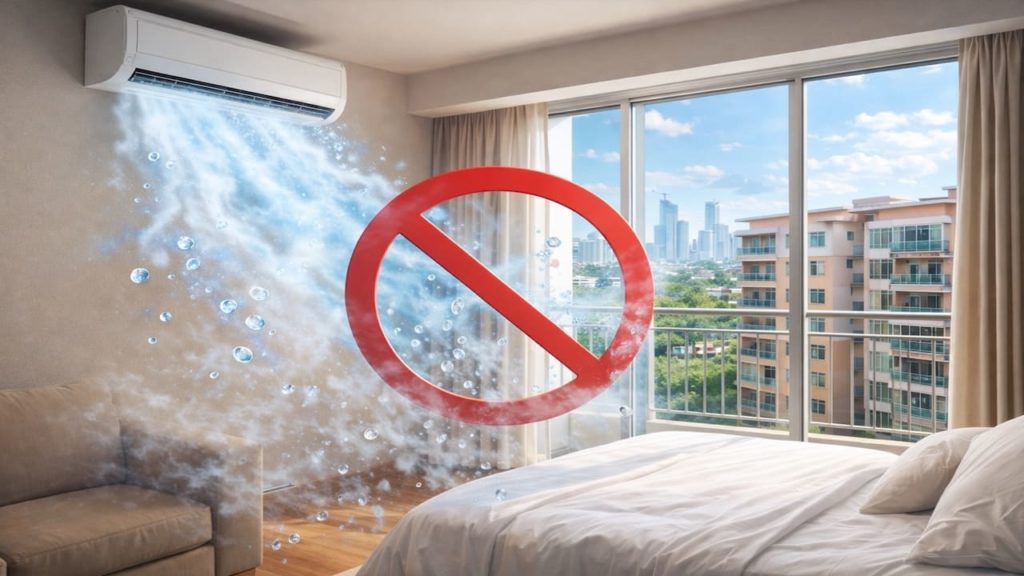
- Close up during heavy rain, then run aircond Dry mode for a short reset in the worst room.
It feels counterintuitive to close windows sometimes, but if outdoor air is wetter than indoor, you are importing humidity—control timing and the house feels drier.
3. Why terrace houses trap humidity
Long layouts create dead zones where moist air stalls especially in the middle rooms.
Many terrace houses have limited side openings, so airflow relies on front-back movement, and Malaysia’s hot, humid nights keep moisture from clearing naturally. Still air problem.
- Central rooms and stair areas can have weak airflow and stay damp longer.
- Warm walls and ceilings hold moisture and release it back when the air cools at night.
- Bathrooms add humidity that spreads fast through corridors when doors are left open.
- Closets and storage rooms trap air and become moisture reservoirs during wet spells.
- Rainy-season outdoor humidity stays high, so passive ventilation may not reduce moisture.
People think terrace houses “should breathe,” but if the airflow route is broken, the house becomes a humid tunnel, so fixing routes beats blaming the weather.
4. How to reduce humidity without major renovation
Combine targeted dehumidifying with smarter ventilation so humidity drops and stays down.
This approach works in Malaysia because you cannot change the weather, but you can stop moisture sources, improve airflow direction, and stabilize indoor humidity in the worst zones. Control approach.
- Pick one or two humid rooms and dehumidify them with doors closed to pull moisture down fast.
- Keep wardrobes off walls and open them briefly during dehumidifying to clear trapped damp air.
- Move indoor drying to a controlled area with fan plus Dry mode, not scattered racks.
- Use door sweeps or seals to stop bathroom humidity drifting into bedrooms at night.
- Clean aircond filters and ensure drains flow, because weak moisture removal can mimic “bad ventilation.”
Some think only renovations solve humidity, but most terrace-house damp problems are routine and airflow direction issues—small changes can shift the whole feel.
5. FAQs
Q1. When is the best time to ventilate a terrace house in Malaysia?
Often late morning to mid-afternoon, when surfaces are warmer and air movement is easier. During rainy season nights, outdoor air can be very humid, so short daytime ventilation works better.
Q2. Should I keep windows open all day to reduce humidity?
Not always, because outdoor air can be humid too, especially during wet weeks. Use timed ventilation and close up during heavy rain, then dehumidify the worst room.
Q3. Why does the middle of the house feel the dampest?
Because airflow stalls in the central corridor and stair zones, and moisture sources spread there. Dead zones need guided airflow so use fans and open a clear front-to-back route.
Q4. Is a dehumidifier necessary for terrace houses?
Not always, but it helps during long wet spells or in homes with limited cross-breeze. Many people use it only in one problem room to avoid running it everywhere.
Q5. How fast can I feel a difference?
You can feel improvement within 24–48 hours if you fix airflow routes and reduce moisture sources. Persistent musty smell usually means closets, bathrooms, or hidden damp corners need attention.
Pro’s Tough Talk

Alright. I’ve been on site for 20+ years and handled hundreds of jobs, and terrace-house humidity in Malaysia is a predictable beast: long layout, dead zones, and people opening the wrong things at the wrong time.
Cause is 3 buckets: no clear front-to-back route, moisture leaking out of bathrooms and laundry, and still air in the middle of the house. Fix it in 3 steps: create a real in-and-out path, guide airflow with fans through the corridor, then dehumidify the worst room as a daily reset during wet weeks—done. Randomly opening windows is like stirring a pot without turning off the stove, and hoping damp clears itself is like hanging wet clothes in a closet and praying.
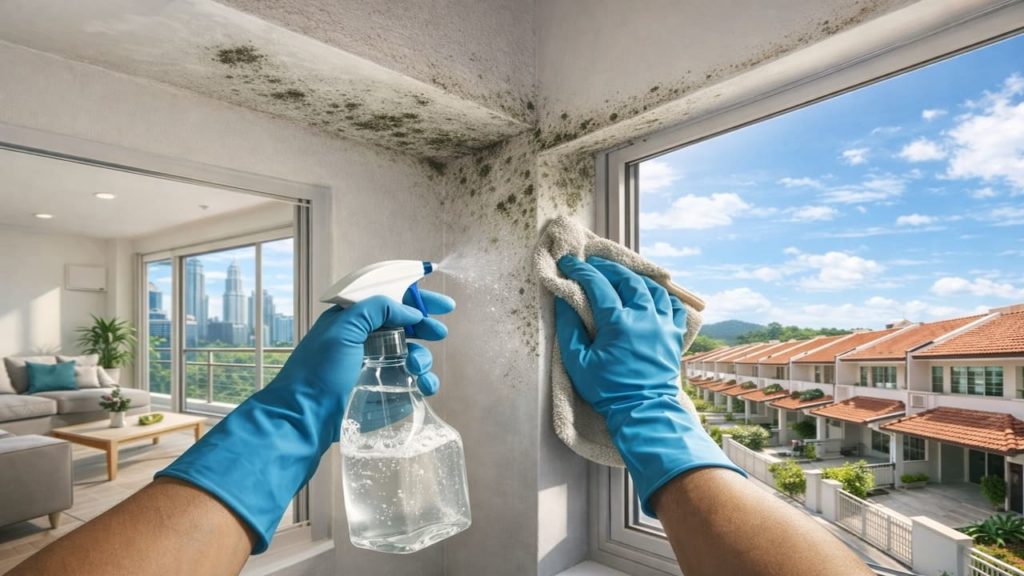
And the classic move is leaving bathroom doors open after a hot shower because “it needs to breathe.” Yeah, now the whole house breathes steam. Closet gets musty, bedding feels clammy, and you act surprised. Fix airflow direction or humidity will camp in your terrace house. Now go set the route, or keep living in that damp hallway like it’s your new hobby.
Summary
Terrace houses trap humidity when airflow stalls in the middle rooms and moisture from bathrooms or indoor drying spreads through the corridor, which is common in Malaysia’s wet weeks. The problem is usually airflow direction, not a mystery.
Use the 5 checks to find your weak link: missing front-to-back path, damp hotspots, dead zones around stairs, bathroom leakage, and laundry moisture load. Then use timed ventilation plus guided fan airflow, and add short Dry-mode resets when outdoor air is too humid to help.
Keep it repeatable—route the air, block moisture spread, and reset humidity daily—ventilation works when the air has a clear exit.