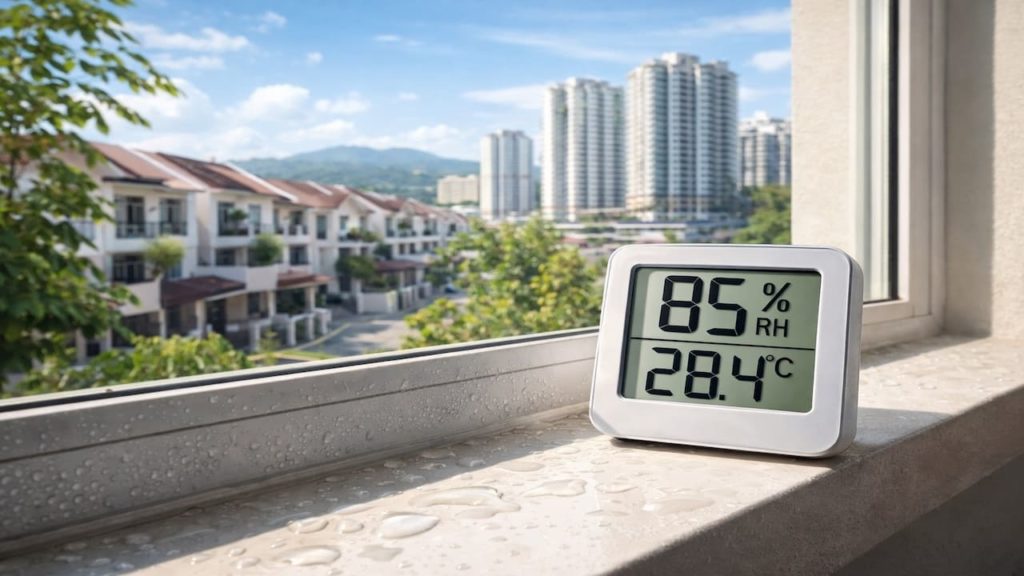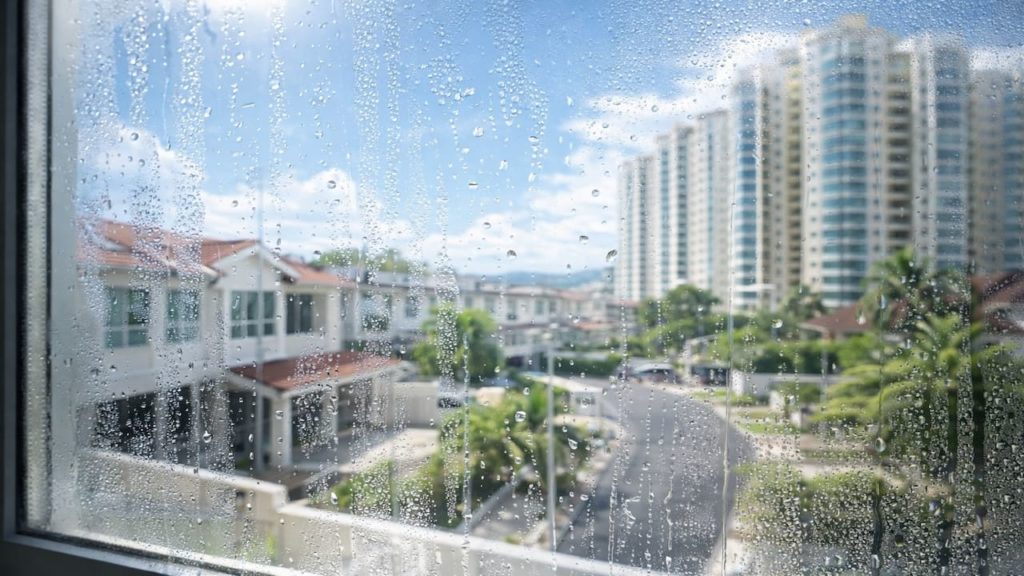
You wake up and the window looks like it is sweating, with water streaks on the glass and damp patches on the frame.
In Malaysia, warm humid air meets cooler surfaces at night, and condos or terrace houses can trap moisture when airflow is limited during rainy weeks.
In this guide, you’ll learn 5 checks to stop window condensation fast so glass and frames dry out and you avoid mold, paint damage, and musty smells.

Hi, I’m Ken. I write practical home guides for Malaysia—no fluff, just what works.
I hold a formal building design qualification and have spent about 20 years on job sites across hundreds of projects. My goal is simple: help you avoid costly mistakes with clear, safe steps—a quick way to decide what to do next.
1. Window condensation humidity: 5 checks
Condensation means humid air is hitting a cooler surface and the water has nowhere to go.
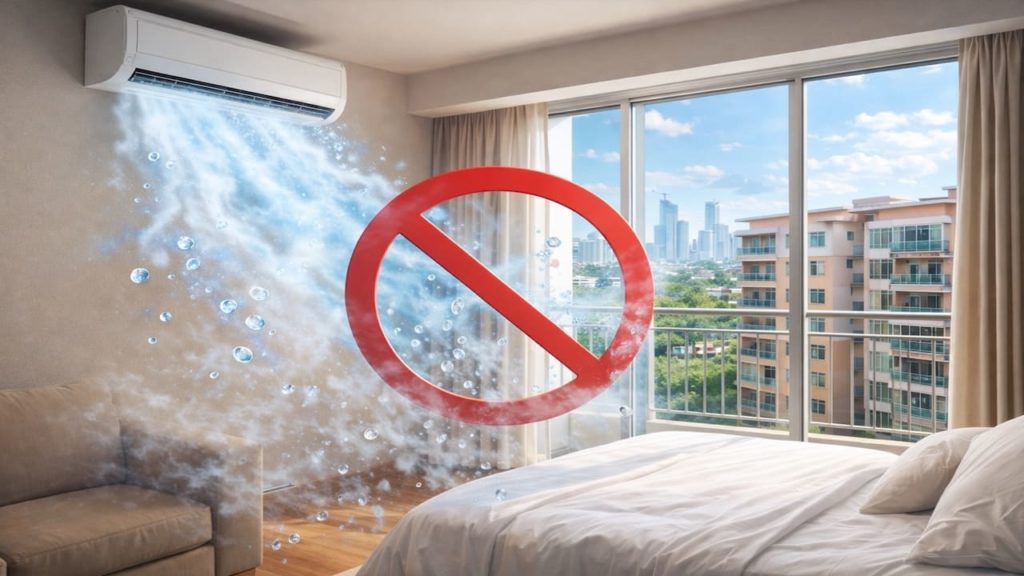
In Malaysia, this often happens in aircond rooms at night, because indoor air cools while humidity stays high, and windows become the coldest surface in the room. Common pattern.
- Check if condensation happens only when aircond is on, especially during sleep hours.
- Check if water is on the glass, the frame, or both, because the fix can differ.
- Check for blocked airflow near the window from thick curtains or furniture.
- Check for moisture sources in the room like laundry, wet towels, or a nearby bathroom.
- Check for tiny gaps in window seals where humid outdoor air can leak in.
Some people think condensation means “leaking windows,” but it is often indoor humidity plus a cold surface—identify the trigger first, then the solution becomes obvious.
2. Stop sweating glass and frames
Dry the surface and reduce humidity in the room so water stops forming overnight.
Condensation is not only about glass, because damp frames can feed mold and swelling, especially in condo bedrooms where windows stay closed and aircond runs long. Damage risk.
- Wipe glass and frames each morning so water does not re-evaporate into the room.
- Leave a small gap in curtains or blinds so air can circulate along the window.
- Run Dry mode for 30–60 minutes before bed, then maintain with Cool or Auto.
- Keep the room door closed to limit humid air drifting in from other areas.
- Use a small fan aimed across the window area to break the cold surface boundary layer.
It feels annoying to wipe windows daily, but if you skip it, the same water becomes humidity again—drying the surface is a direct win.
3. Why windows sweat in humid weather
Condensation happens when surface temperature drops below the dew point of your indoor air.
Malaysia’s indoor air often carries a lot of moisture, and when aircond cools the room, the dew point can stay high enough that the window becomes a water magnet. Simple physics.
- Cool aircond air lowers surface temperature near the glass faster than humidity drops.
- Rainy-season outdoor humidity increases indoor moisture through small leaks and opening doors.
- Breathing in a closed bedroom adds moisture over hours during sleep.
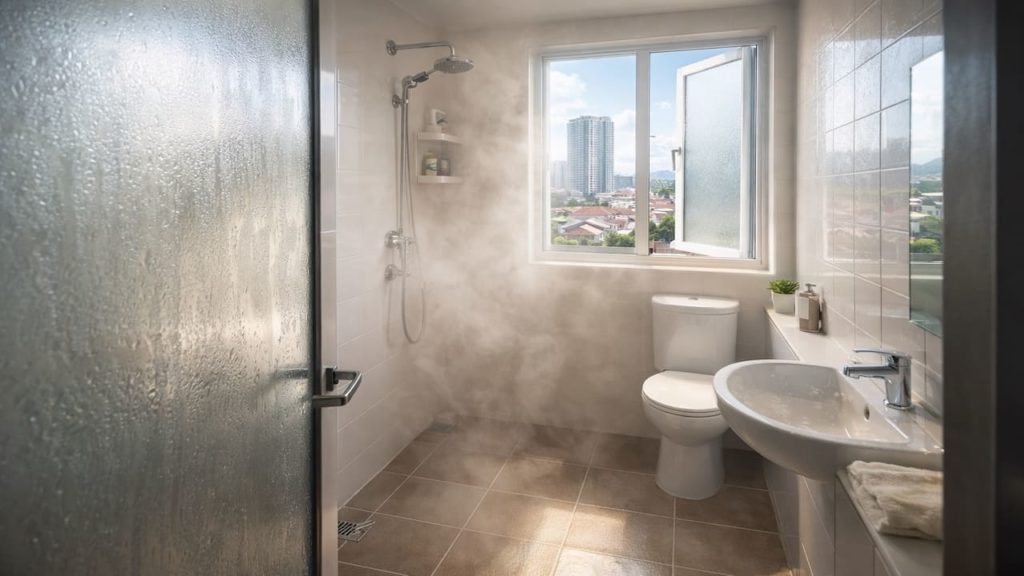
- Wet bathrooms and indoor laundry raise humidity that spreads into bedrooms.
- Still air near windows allows moisture to settle and condense on the coldest spot.
People assume “new windows won’t sweat,” but even good glass will condense if indoor humidity stays high and the room runs cold.
4. How to prevent condensation long-term
Lower indoor humidity and improve air movement near windows so condensation cannot form.
This is the reliable approach in Malaysia because you cannot control outdoor humidity during wet weeks, but you can control indoor moisture load and airflow in condos and terrace houses. Control what you can.
- Dehumidify the room daily during rainy spells, using Dry mode or a dehumidifier with doors closed.
- Keep aircond set steady at 24–26°C instead of extreme cold that chills surfaces quickly.
- Ensure bathroom exhaust runs after showers and keep bathroom doors shut.
- Reduce indoor drying in bedrooms, and dry clothes in a ventilated area with airflow.
- Inspect and improve window seals, and clean drainage tracks so water does not sit.
Some worry this means higher electricity use, but preventing frame damage and mold is cheaper than repairing swollen wood, peeling paint, and persistent odor—prevention pays.
5. FAQs
Q1. Is window condensation normal in Malaysia?
Yes, it can be normal during humid weeks, especially when aircond runs at night. It becomes a problem when frames stay wet daily or mold starts forming.
Q2. Why is condensation worse at night?
Rooms often run cooler at night with aircond, and ventilation is lower with doors and windows closed. Moisture from breathing also builds up over hours.
Q3. Does condensation mean my window is leaking rainwater?
Not always, because condensation can form from indoor air moisture. Water on the inside surface is the key clue so check location before assuming a leak.
Q4. Should I open the window to stop condensation?
Sometimes it helps if outdoor air is drier, but during rainy season outdoor humidity is often higher. Try dehumidifying first, then ventilate only when conditions improve.
Q5. When should I call someone to check the window?
If condensation is mostly inside the frame, seals look damaged, or water pools in the track, an inspection helps. Persistent wet frames can cause swelling and mold.
Pro’s Tough Talk

Alright, I’ve been on site for 20+ years and handled hundreds of jobs, and “sweating windows” is one of the most misunderstood humidity problems, especially in Malaysia when rain sits for days.
Cause breaks into 3: humid air in the room, cold surfaces from aircond, and dead airflow near the glass. Fix it in 3 steps: pull humidity down first, stop blocking the window area with curtains and furniture, then keep air moving across the glass and dry the frame daily—done. Treating condensation by just wiping is like bailing water without plugging the leak, and blasting the aircond colder is like putting ice on a wet sponge and calling it dry.
And the classic move is ignoring the frame because “it’s just water.” Then the paint bubbles, the rubber seal goes funky, and your room smells weird. Condo or terrace house, same movie. Stop the humidity loop or the window will keep sweating. Now go do the checks, or enjoy your daily glass-mopping hobby.
Summary
Window condensation happens when humid indoor air meets cooler glass and frames, which is common in Malaysia during rainy weeks and aircond nights in condos and terrace houses. Water on frames is the part that causes damage.
Use the 5 checks to find the trigger: aircond timing, where the water sits, blocked airflow, hidden moisture sources, and seal gaps that bring in humid air. Then reduce humidity, increase airflow near the window, and keep surfaces dry so water cannot recycle back into the room.
Keep the routine simple—dehumidify before sleep, leave airflow space at windows, and wipe frames daily—dry air plus moving air stops sweating glass.