You notice your exterior wall staying damp after rain, and indoor air feels heavier, even when the gutter looks “mostly fine.”
In Malaysia heat and humidity, small gutter leaks can keep walls wet for days, and that moisture can creep inside through hairline gaps and slow drying. Damp wall.
In this guide, you’ll learn the 5 gutter checks that stop wall seepage and humidity rise so you can find the wet path, dry the wall faster, and prevent repeat moisture buildup.

Hi, I’m Ken. I write practical home guides for Malaysia—no fluff, just what works.
I hold a formal building design qualification and have spent about 20 years on job sites across hundreds of projects. My goal is simple: help you avoid costly mistakes with clear, safe steps—a quick way to decide what to do next.
1. Gutter makes walls damp: 5 checks
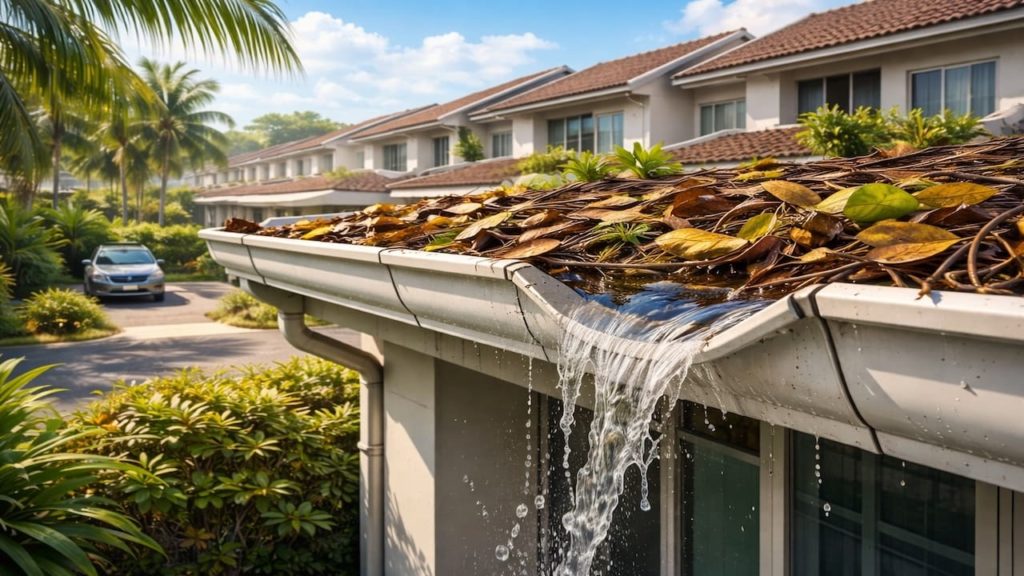
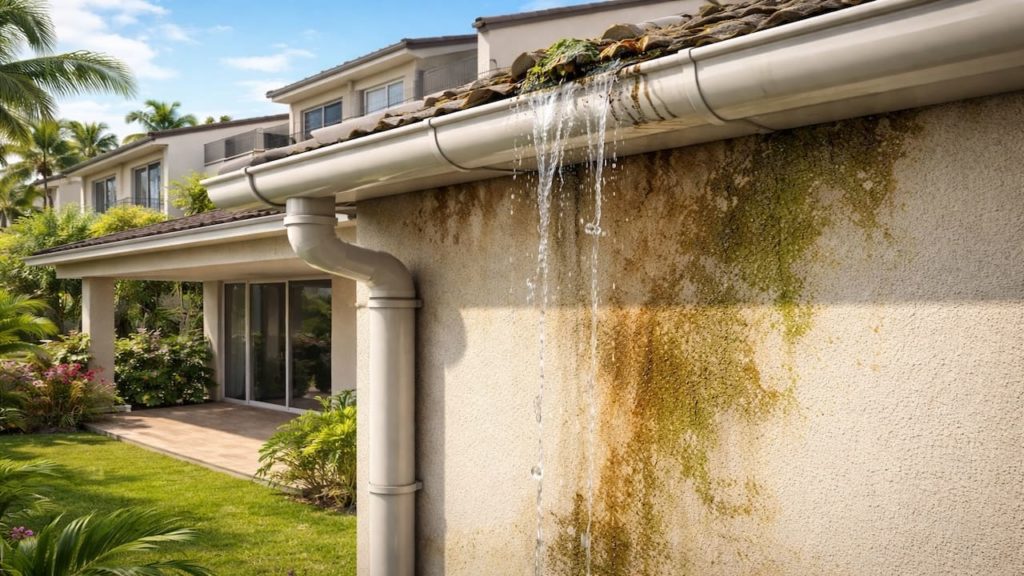
Check the drip path from roof edge to wall face because damp walls follow gravity and the true leak is often above the stain line.
Malaysia rain is intense and wind-driven, so water can hit the wall even without obvious overflow. But persistent damp usually means a steady leak or splash pattern. Track it.
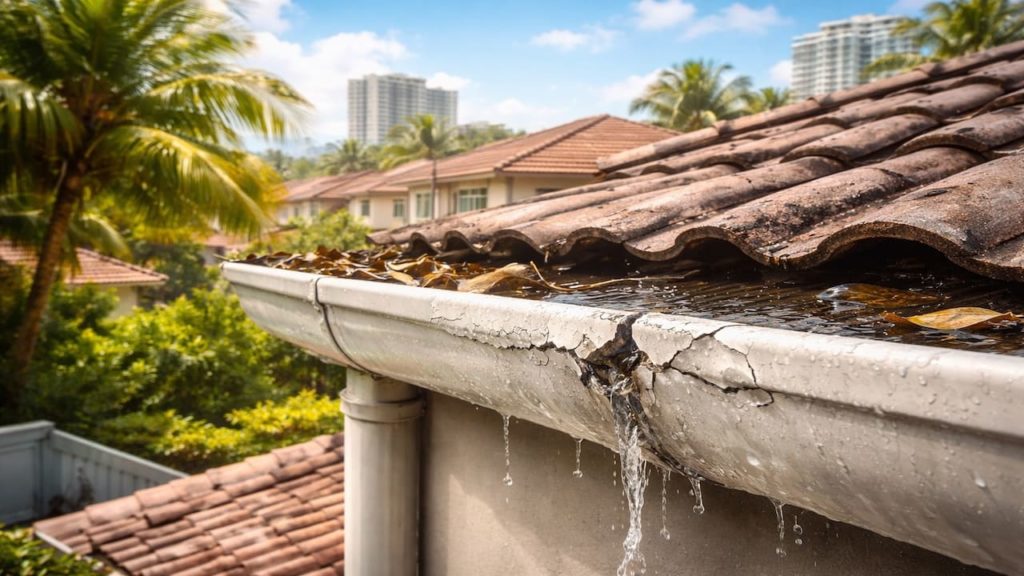
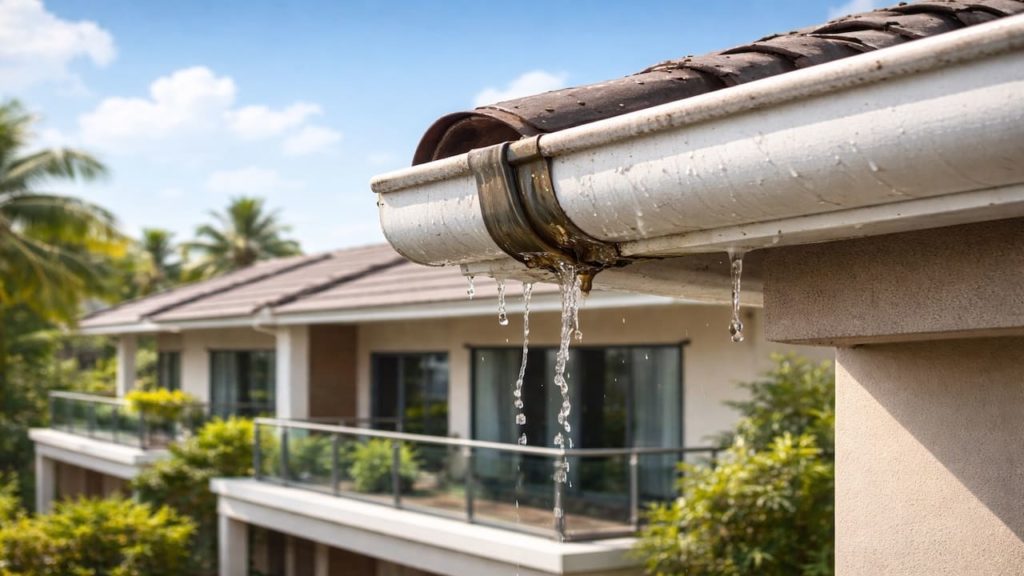
- Look for a wet streak that starts under a gutter joint or end cap near the top
- Check the fascia line for dark patches showing water sitting behind the gutter
- Inspect downpipe connections for drips that run along the wall surface
- Check for splash marks at the base of the wall from overflowing corners
- Test after rain by touching the wall at different heights to map the damp zone
You might think it is just “normal humidity,” and Malaysia is humid, true. But a damp wall that repeats after rain is not normal humidity, it is water entry.
2. Prevent seepage and indoor humidity rise
Prevent indoor humidity rise by stopping wall wetting at the source because wet walls act like a moisture battery that releases damp air indoors.
When exterior walls stay wet, they dry slowly in humid weather, and moisture can move through tiny cracks around window frames and junctions. Slow seepage. Fixing gutters reduces indoor musty smell too.
- Check if the gutter lip is too close to the wall and causes constant splashback
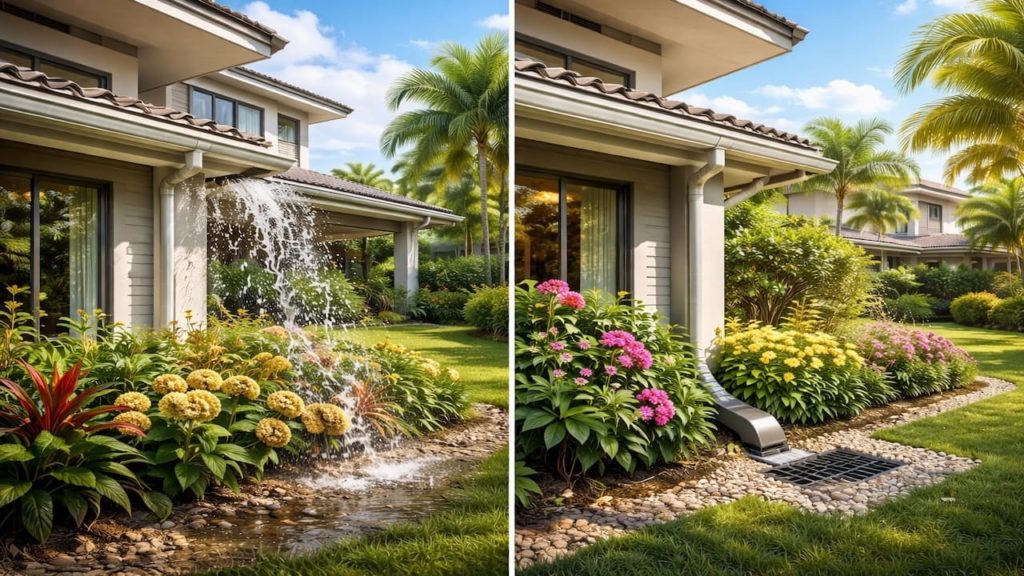
- Confirm the downpipe discharges away from the wall and not onto a soak area
- Inspect window head flashing or top seal for wet trails from above
- Look for peeling paint bubbles which often mark repeated wetting cycles
- Verify there is no water pooling at the base that keeps the wall wet overnight
You may want to buy a dehumidifier first, and it can help comfort. But if the wall keeps getting wet, the machine will just fight a losing battle. Stop the wetting first.
3. Why gutters cause damp walls in Malaysia homes
Damp walls happen when gutters leak or overflow close to the wall line and Malaysia humidity slows drying so the wall never fully recovers.
Common triggers are joint leaks, blocked outlets, wrong slope, or downpipes dumping water too near the foundation. Wind also blows overflow onto walls and windows. Tropical mix.
- Joint sealant failure from UV heat and daily wetting and cooling cycles
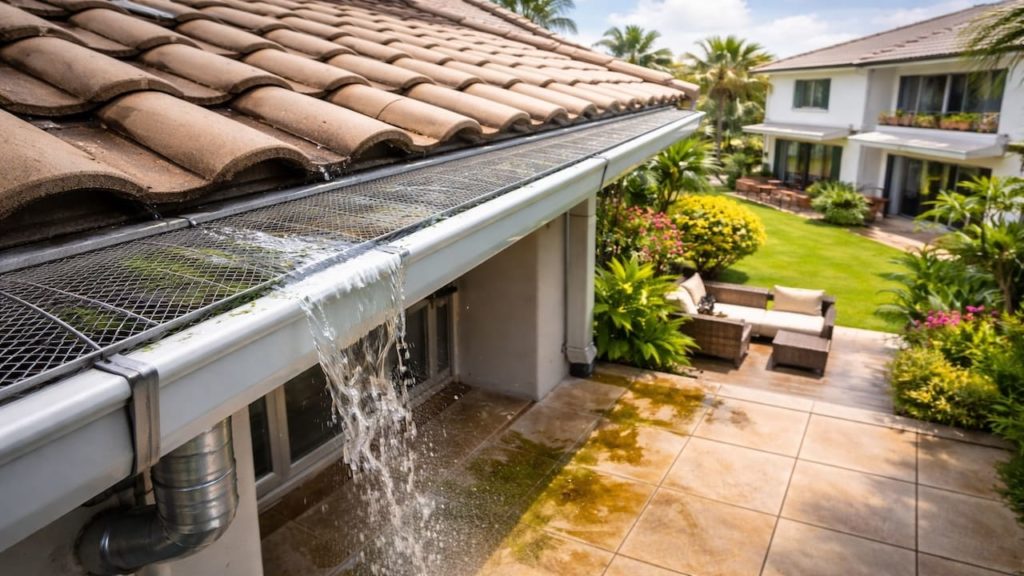
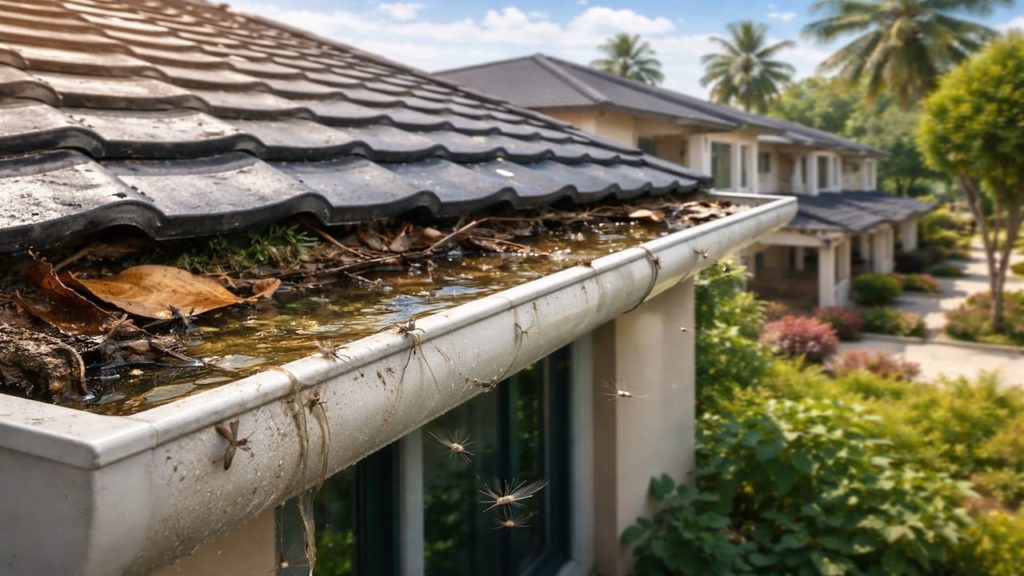
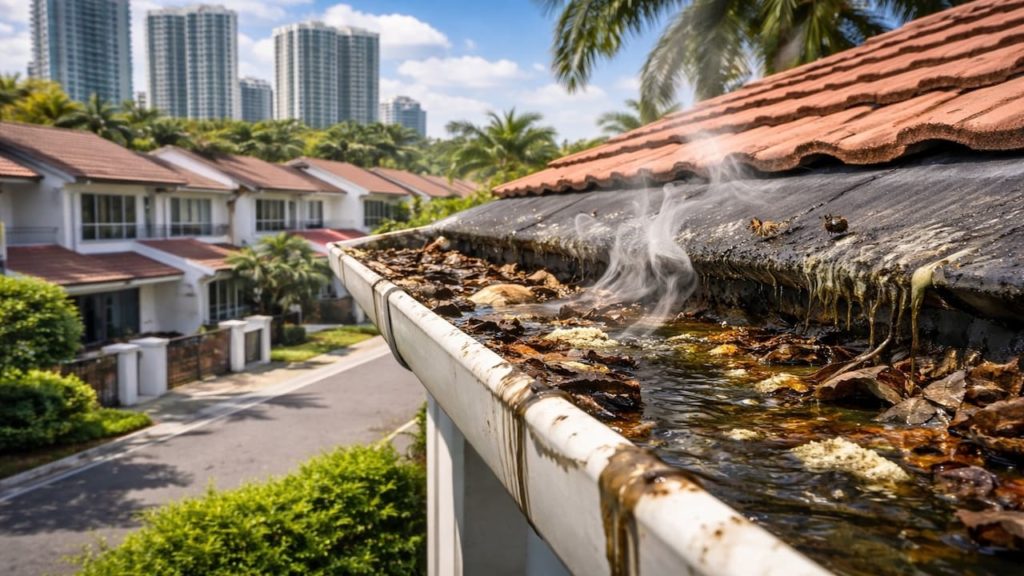
- Partial blockage that raises water level and pushes it out through seams
- Loose brackets causing a sag that keeps water sitting after rain
- Downpipe leaks at connectors that drip steadily along the wall
- Discharge point too close creating splash and soaking at the wall base
It is easy to blame “bad wall paint,” but paint is a symptom here. Fix the water source and the wall often improves without expensive wall work.
4. How to check and fix seepage risks safely
Use a clean-test-dry sequence so you confirm the leak before sealing anything and you avoid trapping moisture inside the wall.
Do checks during daylight and avoid wet ladders, since Malaysia surfaces stay slippery in humid air. Safety matters. Start with flow and joints, then move to discharge and wall drying.
- Clear debris at the nearest outlet and downpipe bend then retest flow
- Do a controlled pour and watch joints and end caps for tiny weeps
- Tighten brackets and restore slope so water drains instead of sitting
- Extend or redirect discharge away from the wall base with a simple elbow
- Let the wall dry and monitor if indoor humidity drops over the next 2 to 3 days
You might feel tempted to seal wall cracks immediately, but sealing over a still-wet wall can trap moisture. Stop the water first, then repair finishes when the wall is dry.
5. FAQs
Quick answers for damp walls caused by gutters in Malaysia, so you can pick the next check and avoid turning a small drip into indoor damp air.
Q1. How do I know the gutter is causing the damp wall?
If the damp line grows after rain and starts high near the roof edge or downpipe, the gutter system is a strong suspect. Mapping the wet path after rain helps confirm it.
Q2. Can a tiny gutter leak really raise indoor humidity?
Yes, because repeated wall wetting keeps moisture present for days in humid weather. That moisture can move through small gaps and raise the indoor “heavy air” feeling.
Q3. Should I repaint the wall first?
No, repainting without fixing water entry usually fails quickly. Fix the gutter leak and discharge first, then repaint once the wall stays dry after rain.
Q4. What is the fastest fix if water is soaking the wall base?
Redirect the downpipe discharge away from the wall and stop splash. Move water away from the wall base first because that area stays wet longest in Malaysia humidity.
Q5. When should I call a professional?
If the damp spreads indoors, you see ceiling marks, or the gutter is high and unsafe to access, get help. Slippery roofs and ladders are not worth the risk.
Pro’s Tough Talk

I’ve been on site for 20+ years and handled hundreds of jobs, and damp walls from gutters are the silent budget killer. Malaysia humidity is already high, so when your wall stays wet, the house feels like a steamed bun.
Cause is 3 things: a joint weeping onto the wall, a partial blockage pushing water out where it should not, or a downpipe dumping water right at the base. Steps are 3 too: clear and test the flow, watch the seam for tiny drips, then move discharge away and let the wall dry. Everybody has that “musty smell after rain” moment, and everybody has the “why is the paint bubbling” surprise.
Here’s the hard truth, wet walls will keep feeding indoor humidity. Water is like a slow sponge, it holds and releases, and it creeps like sweat under a helmet strap. One jab: the guy who says “just buy a bigger dehumidifier” is ignoring the leak like it is a joke. Fix the gutter path now, or keep living in your own tropical sauna.
Summary
Damp walls after rain usually mean a gutter leak, overflow, or downpipe discharge is wetting the wall repeatedly. In Malaysia humidity, the wall then dries too slowly.
Clear and test flow, fix sag and joints, and redirect discharge away from the wall base. If damp persists indoors, escalate before mold and paint damage spread.
Do one controlled pour test today and map the wet path—one clear cause leads to one clean fix and your home feels lighter after the next rain.