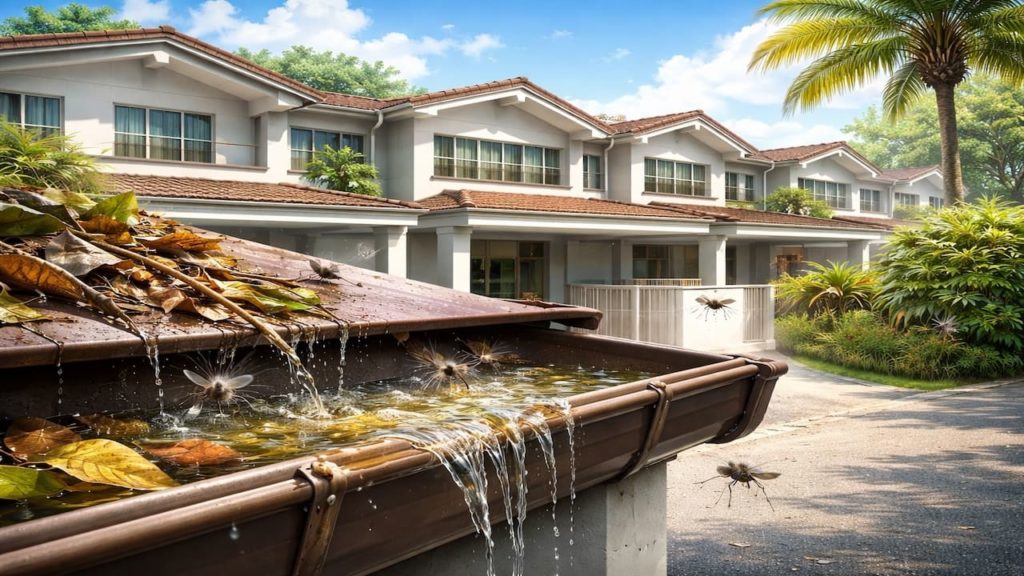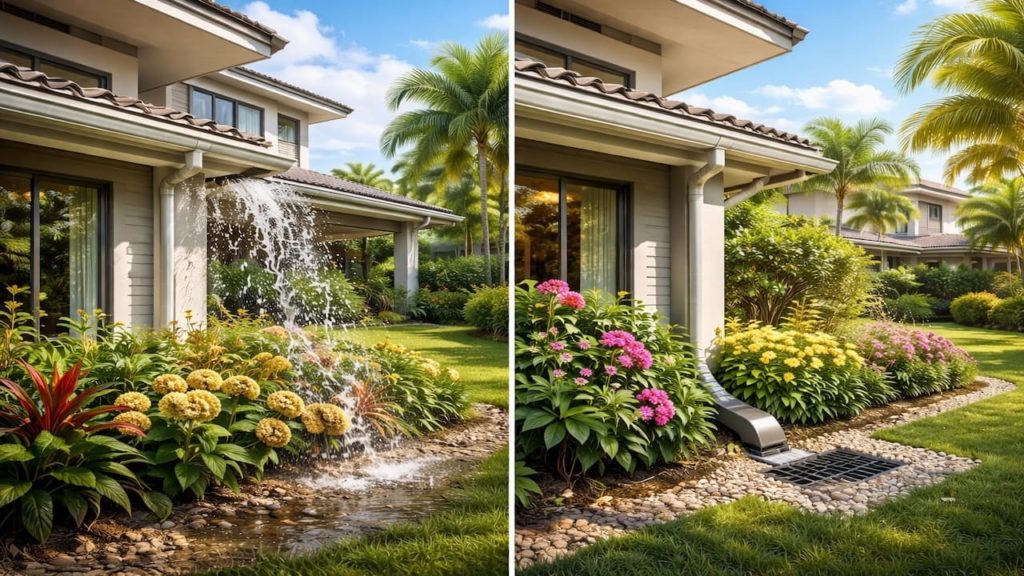
You notice plants near the porch or boundary wall getting shredded, soil washing out, or leaves turning spotty where gutter water splashes down.
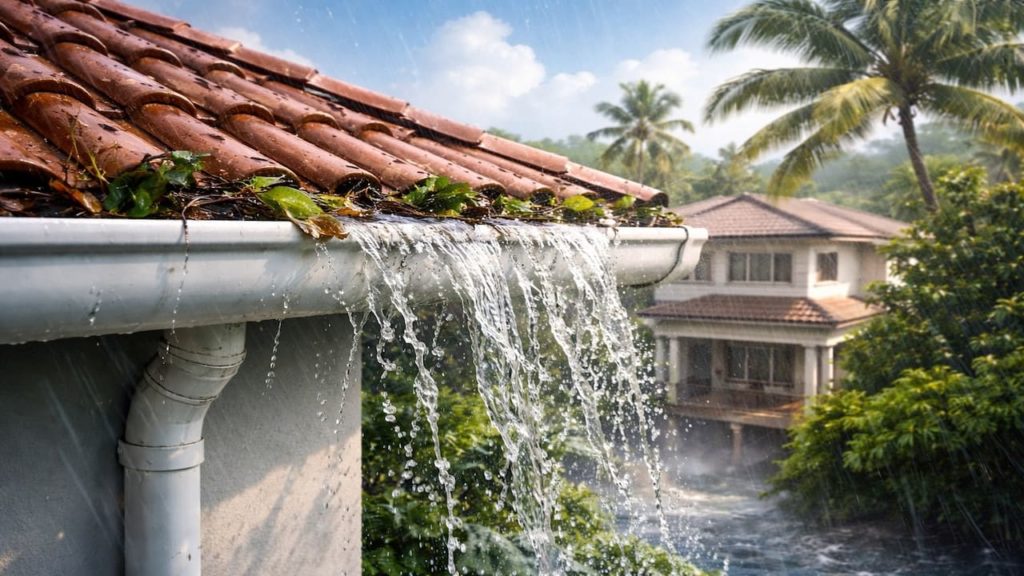
In Malaysia, heavy downpours hit in bursts, and runoff can fall like a small waterfall from condos and terrace houses, damaging soft landscaping fast. Messy.
In this guide, you’ll learn how to redirect runoff neatly so you protect plants and soil without installing ugly exposed pipes.

Hi, I’m Ken. I write practical home guides for Malaysia—no fluff, just what works.
I hold a formal building design qualification and have spent about 20 years on job sites across hundreds of projects. My goal is simple: help you avoid costly mistakes with clear, safe steps—a quick way to decide what to do next.
1. Gutter splash damages plants: 5 fixes
Stop plant damage by breaking the splash and controlling where the water lands during peak storm minutes.
Malaysia rain can overwhelm poor drainage, and even a short roof edge drop can batter plants like a hose. The goal is to spread energy, not fight water. Simple.
- Place a wide flat splash plate at the impact zone to spread water gently over a larger area.
- Create a shallow rock bed with smooth stones so droplets lose force before hitting soil and stems.
- Add a discreet ground-level channel cover to guide water away from plant roots and patio tiles.
- Use a short hidden diverter under the gutter lip to push flow toward a safer landing spot.
- Adjust gutter brackets to stop one-spot overflow that creates a concentrated waterfall on your plants.
Some people think they must move all plants, but usually you just need to change the landing zone. Control the splash line and your garden survives storms.
2. Redirect runoff without ugly pipes
You can redirect runoff with low-profile solutions that sit near the ground and blend with landscaping.
On Malaysia homes, visible pipes can look messy on a porch or condo corridor edge, and they can also create trip risks. Keep it tidy. Use materials that handle humidity and algae growth.
- Use a slim pop-up style extension at ground level that opens only during strong flow.
- Install a covered mini trench drain along the splash zone with a neat grate finish.
- Build a decorative stone swale that looks like landscaping but functions as a runoff path.
- Position a planter border that doubles as a splash barrier and redirects water sideways.
- Guide flow into a gravel soakaway pocket so water disappears underground instead of bouncing.
You might worry these look like “construction,” but done cleanly they look like garden design. That is the trick. Function disguised as landscaping.
3. Why splash damage happens in Malaysia
Splash damage is impact energy plus poor drainage and Malaysia storm bursts raise both water volume and speed.
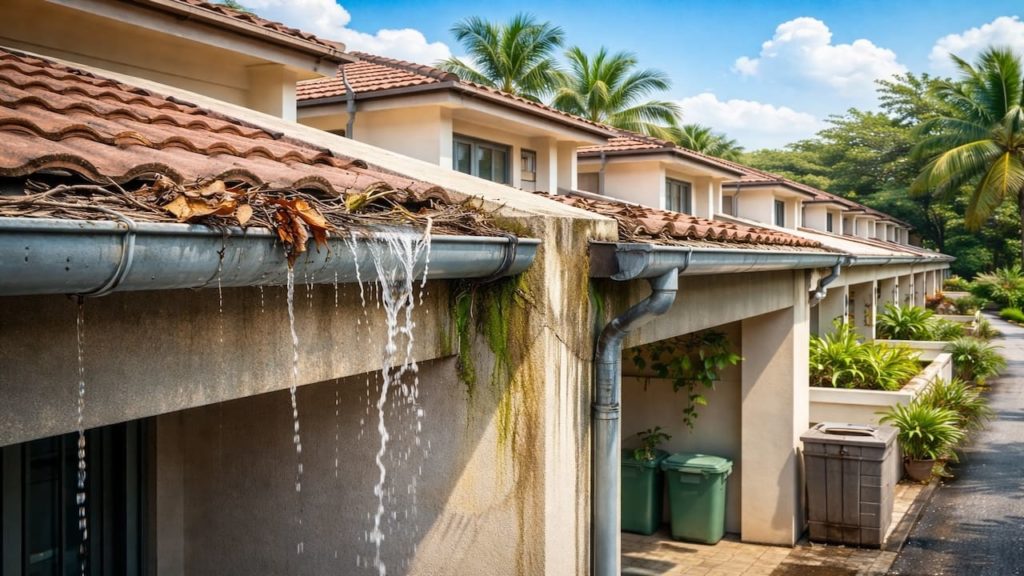
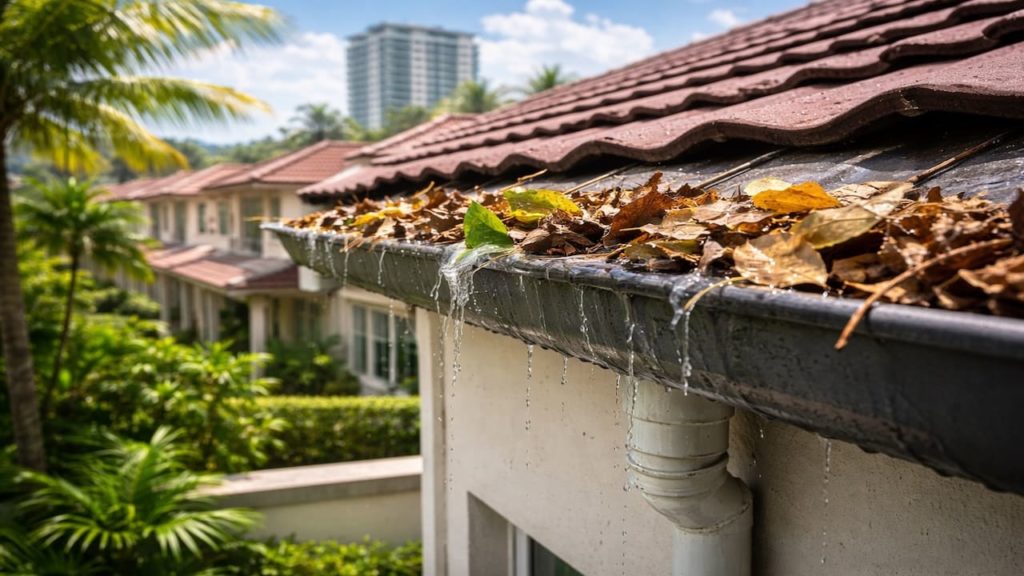
When a gutter overflows at one point, the water falls in a concentrated stream, and plants take the hit. Humidity then keeps soil wet, so roots weaken and fungus spreads. Double damage.
- One-spot overflow sends a focused waterfall onto a small plant area.
- Hard ground surfaces bounce droplets upward, damaging leaves and spreading muddy splash.
- Soil erodes and exposes roots, making plants unstable during the next storm.
- Wet season algae and moss make landing zones slippery and redirect water unpredictably.
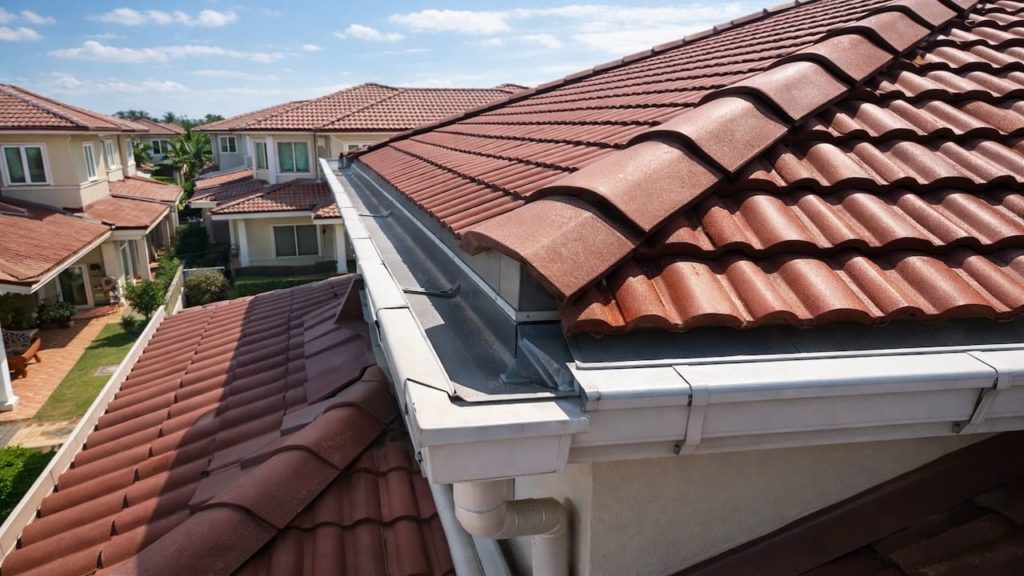
- Roof valleys can dump extra volume into one gutter section near landscaping beds.
It can look like “the plant is weak,” but the real issue is repeated impact. Reduce impact and plants recover quickly.
4. How to protect plants and keep the area clean
Fix overflow first then shape the landing zone so you do not build a fancy splash bed under a gutter that still floods.
Malaysia humidity makes mold and algae spread where water hits repeatedly—so redirecting runoff also protects walls, tiles, and entrances. Clean wins.
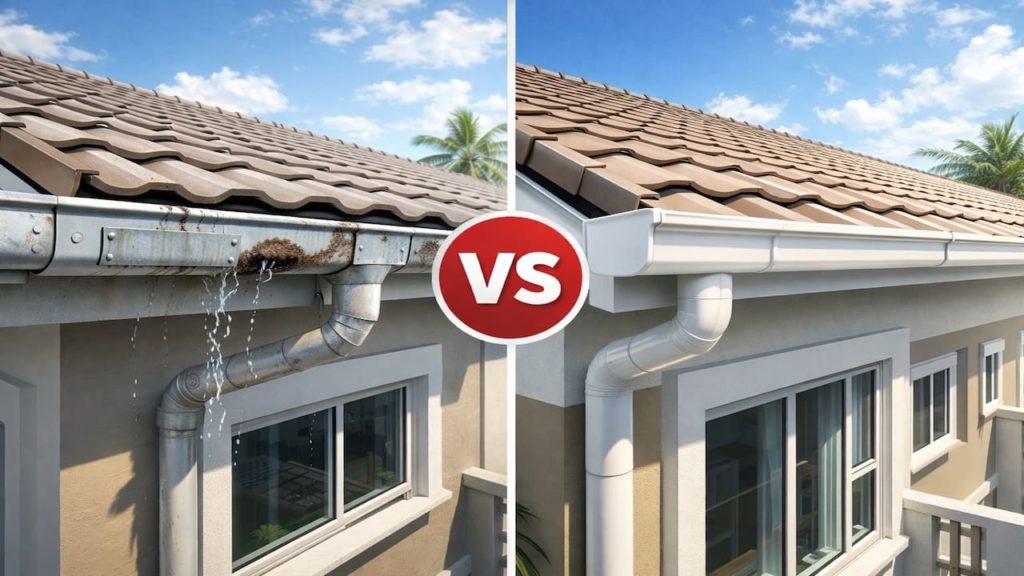
- Confirm the gutter is draining well and not overflowing due to a blocked outlet or sagging section.
- Mark the exact splash zone after rain, then widen the landing area with rock or gravel.
- Create a slight slope away from plants so water moves toward a soakaway or drain path.
- Add a low border or curb stone to keep runoff from cutting through soil beds.
- After the next storm, check for new erosion lines and adjust the redirect path early.
If you keep seeing a concentrated stream, treat it as a gutter flow problem, not a landscaping problem. Fix the source, then finish the garden details.
5. FAQs
Q1. Can gutter splash really kill plants?
Yes, repeated impact breaks stems, strips leaves, and erodes soil around roots. In Malaysia, wet stress can also trigger fungus faster.
Q2. What is the simplest fix with no installation?
A wide splash plate and a stone bed reduce impact quickly. They also look clean if you keep the edges neat.
Q3. Do I need to add a long visible pipe to redirect water?
No, you can use low-profile ground drains, rock swales, or pop-up style extensions that stay hidden when dry. Break the splash and spread the flow and you protect plants without ugly piping.
Q4. Why does splash damage happen only in heavy rain?
Peak storm minutes raise water volume and can trigger overflow at one weak spot. Concentrated streams cause the worst impact.
Q5. When should I call a professional?
If the gutter is high, overflow repeats, or you need a proper drain path, call. A safe solution beats improvised setups on slippery tiles.
Pro’s Tough Talk

I’ve been on site for 20+ years and handled hundreds of rainwater and gutter problems in tropical heat and wet-season rain. Plant damage from gutter splash is like getting punched by the same wave every storm. Eventually something breaks.
Three causes: the gutter overflows at one spot, the landing zone is hard and bouncy, and the soil bed has no drain path. Steps: fix the overflow point, build a stone splash bed to kill impact, then guide the water into a soakaway or covered channel.
Don’t blame yourself, and don’t call every contractor a villain, but if you just move the plant and ignore the waterfall, the next plant dies too. You know the two classics: you replant, it rains, the soil is gone again, and you go “how.” Control where water lands and the garden stops suffering or keep paying for new plants like it’s a monthly subscription.
Summary
Gutter splash damages plants when overflow creates a concentrated drop that erodes soil and batters stems. Malaysia downpours make it happen quickly.
Fix drainage and overflow first, then reduce impact with splash plates, stone beds, and low-profile channels that blend into landscaping. Shape the landing zone.
After the next storm, mark the splash point, widen the landing area, and redirect runoff into a soakaway or covered drain. Neat runoff control protects plants and next read about one-spot overflow causes.