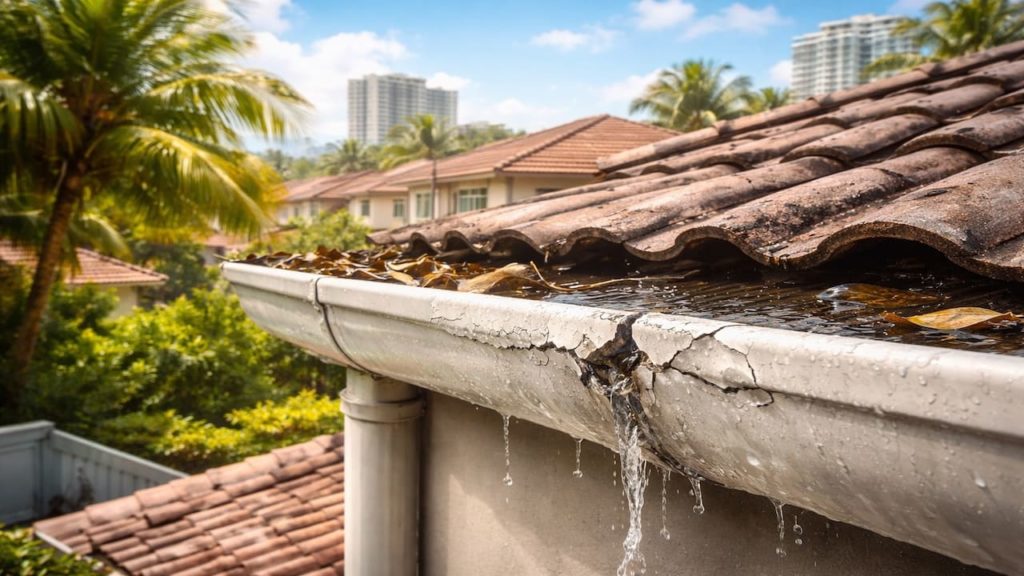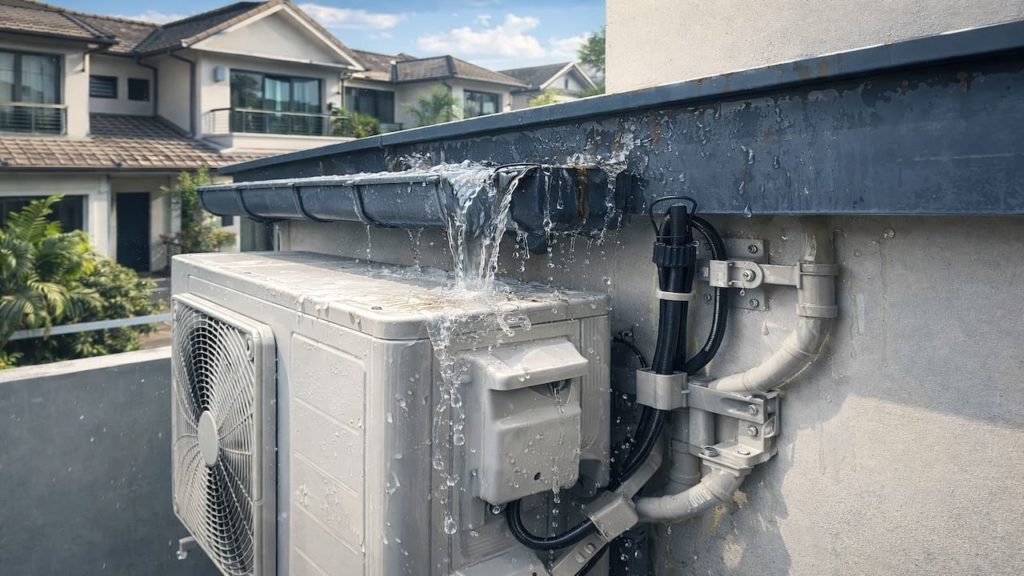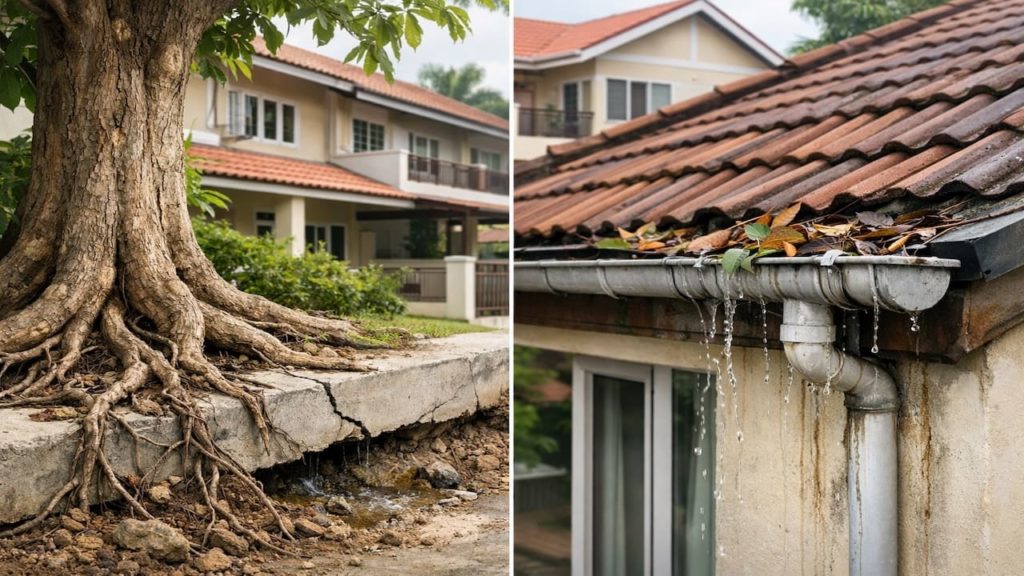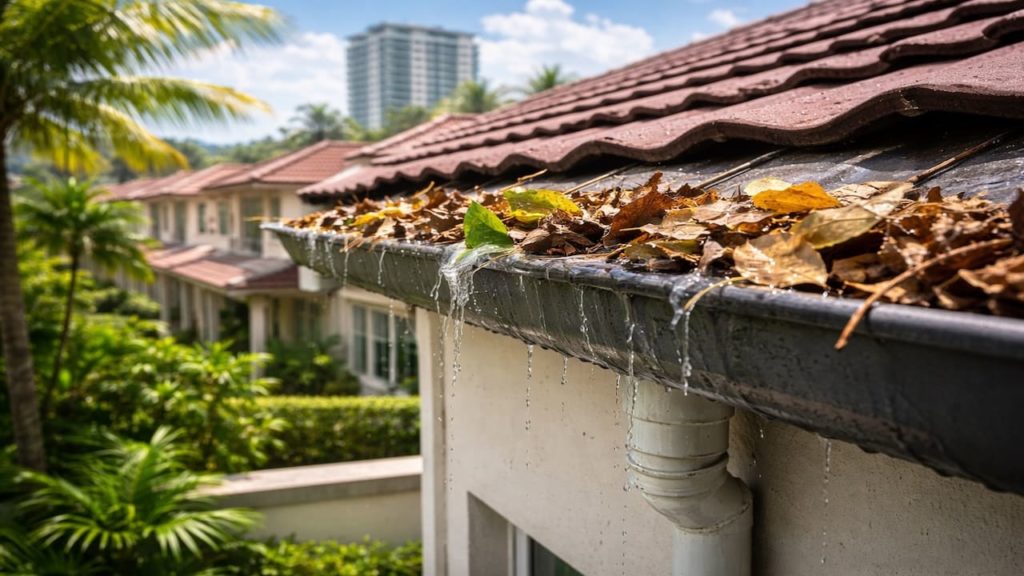
You notice water sitting in the gutter, slow dripping, or a sudden spill when Malaysia’s heavy rain hits your roof edge.
In Malaysia, wet-season bursts plus year-round humidity turn leaves into soggy mats, and condos and terrace houses both get blocked fast.
In this guide, you’ll learn how to spot a leaf clog early and fix flow before backups stain walls or invite mosquitoes.

Hi, I’m Ken. I write practical home guides for Malaysia—no fluff, just what works.
I hold a formal building design qualification and have spent about 20 years on job sites across hundreds of projects. My goal is simple: help you avoid costly mistakes with clear, safe steps—a quick way to decide what to do next.
1. Gutter clogged with leaves: 5 signs
Leaf clogs announce themselves before the big overflow if you know what to look for after a storm.
When tropical rain comes hard, a small blockage becomes a bathtub in minutes—then water finds the easiest escape route.
- Water drips from the middle of the gutter run instead of only from the downpipe outlet.
- You hear a “glug glug” sound as trapped water burps past a leaf plug.
- Streaks appear on fascia or wall paint right under one short section.
- Mosquitoes hover near the roof edge because water sits longer than it should.
- During rain, the gutter line looks full and calm, not moving toward the outlet.
Some people think “it’s normal in monsoon,” but stains and damp don’t care about excuses. Catch the sign, fix the flow.
2. Fix flow before water backs up
Clear the outlet path first because most leaf mats choke the downpipe mouth and trap everything upstream.
Malaysia’s humidity makes leaf sludge slippery, so keep it simple and safe with gloves and a small scoop. No risky hero moves.
- Wait for a dry break, then start at the downpipe opening and pull out wet leaf clumps.
- Bag the debris right away so it does not wash back in with the next rain.
- Pour a small bucket of water and confirm it runs to the outlet without pooling.
- Hose from the top gently, then check strong discharge at the downpipe exit.
- If flow is weak, flush the downpipe from the bottom upward with a hose pulse.
“I’ll clean it later” often becomes wall mold later. Restore movement now, then set a simple wet-season routine.
3. Why leaves clog gutters in Malaysia
Leaves clog faster when moisture turns them into paste and Malaysia’s climate keeps that paste sticky all year.
Heat plus rain breaks leaves into small fibers, and those fibers catch roof grit and seed pods like a net. Messy mix.
- Frequent storms keep debris wet, so it compresses instead of blowing out.
- Algae film makes the gutter floor tacky, and leaves grab on instead of sliding.
- Roof grit and dust bind to leaves and harden into a dam at joints and bends.
- Short gutter runs under roof valleys get slammed with concentrated water and debris.
- Loose brackets create a sag bowl where leaves settle and never reach the outlet.
It is not just “too many trees.” Drain design and wet weather together create the clog.
4. How to prevent repeat leaf clogs
Reduce what enters and remove what sticks so leaves stop forming a plug during the next heavy downpour.
Think in Malaysia terms: frequent quick checks beat rare big cleanups, especially in rainy months. Small habit.
- Install a simple outlet screen and clean it often, because it clogs before the gutter does.
- After big rain, do a 2 minute visual check for one “full” section near bends.
- Fix sag points by re-seating brackets so water carries debris toward the outlet.
- Trim overhanging branches when possible, even a little reduces leaf load.
- Schedule a wet-season cleanup every 4 to 6 weeks, not once a year.
Guards help, but they are not magic. Keep slope correct and outlets clear, and backups fade.
5. FAQs
Q1. Can a leaf clog cause leaks inside the house?
Yes, overflow can soak fascia and seep into roof edges, especially in long Malaysian rain. If you see ceiling marks, act fast.
Q2. Is it safe to clean gutters during rainy season?
Only during a dry window and with stable footing. Wet tiles and ladders in humidity are a bad combo.
Q3. How do I know the clog is in the downpipe?
If the gutter fills but the downpipe outlet shows little discharge, that points to a restriction. Strong outlet flow is the proof not the sound.
Q4. Do gutter guards stop leaves completely?
No, small debris and roof grit still build up, and guards can hide problems. They reduce frequency, not eliminate cleaning.
Q5. When should I call a pro?
If access is high, the gutter is sagging, or you keep getting overflow after cleaning, call. Repairs matter more than repeated scooping.
Pro’s Tough Talk

I’ve been on site for 20+ years and handled hundreds of gutters in tropical heat and stupid-heavy rain. A leaf clog is like a wet towel shoved in a straw. You can stare at it all day, it still won’t drain.
Three causes, simple. One, the outlet mouth is jammed. Two, the gutter sags and becomes a pond. Three, the downpipe is half-blocked with sludge that smells like old tea. Do this: clear the outlet, flush and confirm discharge, then brace the sag so water actually moves.
Don’t blame yourself, and don’t label every contractor as evil, but some installs are “close enough” and you pay the price. You know the real-life scene: midnight rain, bucket in hand, slippers on wet tiles, and you’re muttering “why me.” Fix the drain path and the drama ends unless you enjoy free indoor water features.
Summary
Leaf clogs show clear signs like slow flow, stains, and standing water near the roof edge. Malaysia’s humidity turns leaves into sticky paste.
Start at the outlet, remove leaf mats, then test flow by watching downpipe discharge. If it repeats, correct sag and consider a screen.
Do a quick check after the next storm, clear the outlet, and set a wet-season schedule. Small checks prevent big backups and next you should read about gutter overflowing checks.