You want a simple gutter maintenance plan that keeps runoff controlled all year, not just after something overflows in Malaysia rain.
In humid heat, fine grit turns into sludge, storms arrive suddenly, and gutters fail quietly through small clogs, sagging, and slow drainage. Routine matters.
In this guide, you’ll learn the 5 maintenance tips that keep gutters draining smoothly year round so you prevent overflow, reduce wall damp, and avoid emergency fixes.

Hi, I’m Ken. I write practical home guides for Malaysia—no fluff, just what works.
I hold a formal building design qualification and have spent about 20 years on job sites across hundreds of projects. My goal is simple: help you avoid costly mistakes with clear, safe steps—a quick way to decide what to do next.
1. Gutter maintenance plan: 5 tips
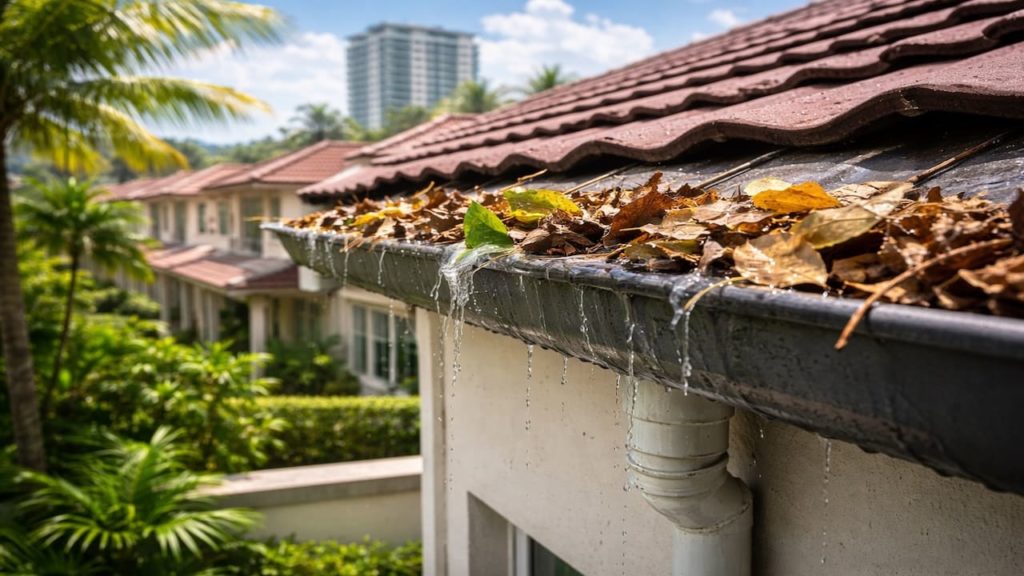
Maintain gutters by focusing on outlets elbows and slope not perfect cleanliness because runoff control depends on flow and shape.
Malaysia homes face heavy bursts, wind-driven rain, and sticky debris, so a smart plan targets the choke points that actually cause overflow. Less work, more control. Good plan.
- Check outlets and downpipe elbows first because most clogs start there
- Do a quick after-rain inspection for pooling marks and new splash stains
- Clear fine sand and roof grit with scooping not blasting to avoid elbow plugs
- Tighten loose brackets before they create sagging low spots and standing water
- Confirm discharge drains away from walls and does not pool at ground drains
You might think you need to clean the whole run monthly, but targeted checks often prevent 80% of problems. Efficiency wins.
2. Keep runoff controlled all year round
Year round control comes from a seasonal rhythm and fast checks because Malaysia weather swings between dry heat and sudden storms.
Make short routines you can complete quickly in dry windows, and use the next storm as your “test.” If the system drains quietly, your plan is working—simple feedback loop. Calm maintenance.
- Before rainy season do a full outlet and elbow clean plus a controlled pour test
- During rainy season do 10 minute visual checks for overflow splash and pooling
- After a major storm inspect corners and joints for new weeps and bracket movement
- In dry months clear roof grit and sand nests that compact during the next rains
- Every quarter confirm slope by looking for standing water lines inside the gutter
Some people argue “I will do it when it overflows.” That turns maintenance into emergency work on slippery days. Routine beats panic.
3. Why
Gutter problems repeat when flow restrictions and low spots are left unchecked and Malaysia humidity keeps debris heavy and slow to dry.
Small sludge rings in elbows, small sags, and small joint gaps grow into big overflow during peak rain. The plan works because it breaks that chain early. Preventive logic.
- Fine sand compacts at outlets and reduces capacity even with no leaves visible
- Elbow sludge creates backpressure that pushes water out at seams and corners
- Loose brackets create dips that hold water and accelerate rust and smell
- Ground drain pooling causes downpipe backflow and slow emptying after storms
- Wind-driven rain increases splash damage when discharge and slope are weak
You might think the gutter is “old” and nothing can help. But many issues are maintenance and geometry, not age alone.
4. How
Follow a simple test and adjust routine to keep runoff predictable so you avoid spending money on repeated sealing and repainting.
Pick safe daylight windows, do not climb in wet conditions, and use controlled water testing. Malaysia surfaces stay slick, so ground-based checks and short ladder time are the goal. Safe method.
- Use a phone zoom to inspect corners outlets and obvious sag from the ground
- Scoop debris into a bag and keep outlet openings clear of compacted sediment
- Flush gently and watch discharge strength at the bottom to confirm no elbow plug
- Tighten brackets and add support where pooling marks show a dip forming
- Record the problem spots and recheck them after the next heavy rain
You might want to buy accessories first, but accessories do not fix a clogged elbow or wrong slope. Basic flow control comes first.
5. FAQs
Quick answers for a year round gutter maintenance plan in Malaysia, so you can keep runoff controlled without turning it into a monthly headache.
Q1. How often should I check gutters in Malaysia?
Do quick visual checks during rainy season and deeper outlet and elbow checks before and during peak rains. Frequency depends on dust, trees, and roof grit, not just the calendar.
Q2. What is the most important maintenance point?
The outlet and first downpipe elbow because hidden clogs start there. Strong discharge is the best sign your system is healthy.
Q3. Should I clean gutters even if there are no leaves?
Yes, fine sand and roof grit can still compact and block outlets. No leaves does not mean no clog especially in dusty and windy conditions.
Q4. How can I tell if my gutter slope is getting worse?
Look for pooling marks, dirt lines, and water that sits hours after rain. Sagging brackets and repeated corner overflow also point to slope issues.
Q5. When should I consider upgrades instead of maintenance?
If overflow continues in heavy rain despite clear outlets, stable brackets, and strong discharge, upgrades like extra downpipes may be needed. Confirm the basics first.
Pro’s Tough Talk

I’ve been on site for 20+ years and handled hundreds of jobs, and the best gutter plan is the one you actually follow. Malaysia rain does not care about your intentions.
Cause is 3 things when people skip maintenance: outlets choke with sand, elbows clog with sludge, and brackets loosen until a dip forms. Steps are 3 too: check discharge strength, remove sediment by scooping not blasting, then tighten support where pooling marks appear. Everybody has the “I will do it later” moment, and everybody has the “why is my porch flooding” moment.
Here’s the truth, small checks prevent big storms from bullying your house. Water is like traffic at a narrow exit, it backs up fast, and sludge sticks like melted candy in a straw. One jab: the guy who waits for overflow is basically paying for drama. Do the routine, or keep starring in the same rainy season episode.
Summary
A good gutter maintenance plan focuses on outlets, elbows, slope, and discharge, because those decide runoff control. In Malaysia humidity, fine grit and sludge create hidden clogs fast.
Use a seasonal rhythm: deeper checks before peak rains, short after-rain inspections during storms, and bracket tightening when pooling marks appear. Record problem corners and retest after the next downpour.
Do one outlet and discharge test this week—one consistent routine keeps runoff controlled and you avoid emergency repairs when the next storm hits.