Your autogate chain feels loose, and now the gate jerks, rattles, or slips when it starts moving. In a terrace house driveway, that sound travels fast.
In Malaysia, heat and humidity speed up rust, wash away light lubrication, and expand metal just enough to change tension. After heavy rain, grit also gets inside.
In this guide, you’ll learn how to confirm chain looseness and stop slipping before damage spreads using simple tension checks, sprocket wear clues, and safe tightening steps.

Hi, I’m Ken. I write practical home guides for Malaysia—no fluff, just what works.
I hold a formal building design qualification and have spent about 20 years on job sites across hundreds of projects. My goal is simple: help you avoid costly mistakes with clear, safe steps—a quick way to decide what to do next.
1. Autogate chain loose: 5 checks
A loose chain always shows up as movement and timing changes.
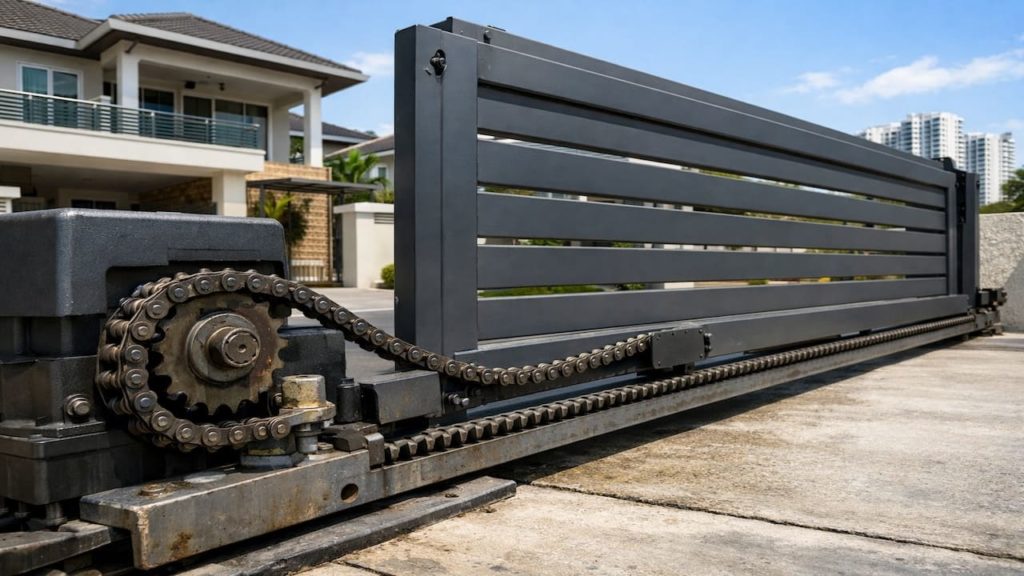
When tension drops, the chain slaps, the gate hesitates, or the motor sounds strained, especially in Malaysia humidity where rust stiffens links. Noisy chain.
- Mark chain sag point with masking tape
- Test gate travel by hand in manual mode
- Listen for chain slap during first movement
- Inspect chain links for rusted stiff joints
- Check sprocket teeth for hooked wear shape
You might think it is just “normal old chain noise”—but consistent slap, slip, or uneven motion is a warning, so check now and protect the motor.
2. Tension, sprocket wear, & slipping symptoms
Slipping usually means tension is low or teeth are worn.
If the chain climbs teeth or jumps under load, the sprocket may be hooked, or the chain pitch is stretched from heat cycles and wet seasons. Clear sign.
- Check tensioner travel remaining before further tightening
- Tighten tensioner nut one quarter turn only
- Align sprockets using straight edge and sightline
- Replace chain if links bind after cleaning
- Replace sprocket if teeth look sharp pointed
Some people keep tightening until it feels “solid”—that can overload bearings and bend brackets, so adjust gently and confirm the real wear source.
3. Why chains go loose in Malaysia wet weather
Heat rain and dirt slowly change chain length and friction.
Hot afternoons expand metal, cool nights pull it back, and water plus dust grind the pins like sandpaper. Malaysia rain makes that cycle relentless. Wear.
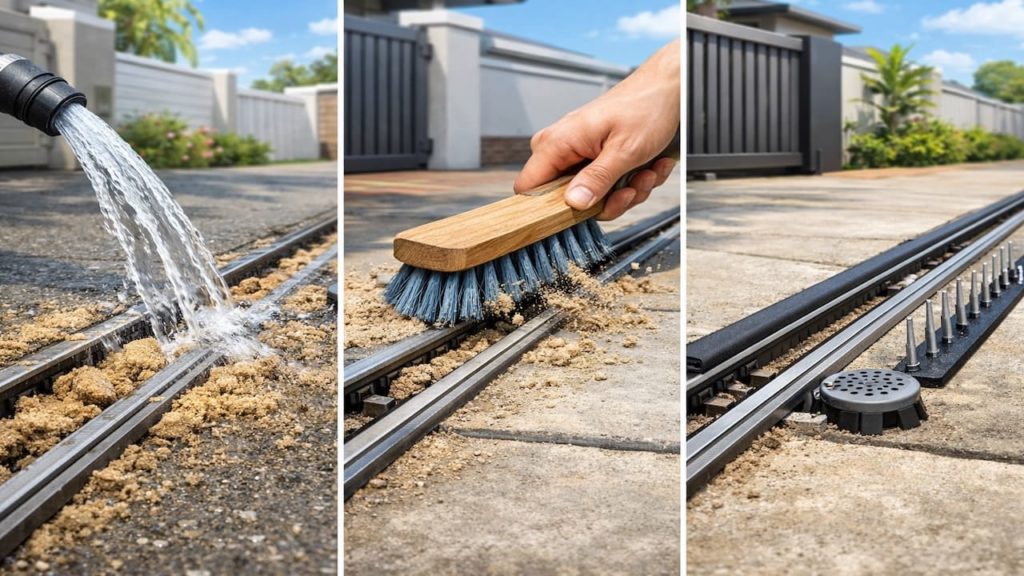
- Wash grit off chain using light water mist
- Dry chain fully before adding protective lubricant
- Check bracket bolts for loosened mounting points
- Inspect tensioner spring for fatigue and sag
- Verify chain guard is not rubbing chain
You may blame the installer right away—sometimes it is setup, but most loose chains come from environment, usage, and skipped cleaning, not one mistake.
4. How to tighten the chain safely and prevent slip
Tighten in small steps and confirm smooth travel each time.
Do not tune by sound alone, because too tight is as bad as too loose, and Malaysia humidity hides stiffness until the next rainy night. Slow and steady.
- Turn off power and lock out remote use
- Clean chain with cloth to remove wet grime
- Adjust tensioner until sag reduces slightly only
- Cycle gate twice and recheck chain alignment
- Apply thin chain lubricant then wipe excess
It is tempting to rush and “just tighten more”—but the safer win is balanced tension plus clean movement, so stop when slip ends and travel stays smooth.
5. FAQs
Q1. How loose is too loose for an autogate chain?
If the chain visibly slaps the guard or jumps teeth during starts, it is too loose. If it sags so much that it rubs the frame, act quickly.
Q2. Can a loose chain damage the motor?
Yes, because slipping causes repeated shock loads and heat, and the motor works harder to overcome jerks. Over time, brackets and bearings also suffer.
Q3. Should I just tighten the chain until it is super tight?
No, because overtightening loads bearings and can warp mounts. Correct tension is just enough to stop slip and slap, then you verify smooth manual travel.
Q4. What if the chain is rusty but still moves?
Rust often hides stiff joints that bind under load, especially after rain. Clean it first, then decide whether replacement is cheaper than repeated adjustments.
Q5. When should I replace the sprocket?
If the teeth look sharp, hooked, or uneven, a new chain will still slip. Replace worn sprockets together with a stretched chain for best results.
Pro’s Tough Talk

I’ve been on site for 20+ years and handled hundreds of gates, and a loose chain is the loudest “help me” sign a system can give. Malaysia humidity makes metal age faster. Fact.
Three causes show up nonstop: chain stretch from daily load, sprocket teeth worn into hooks, and mounts loosening after rain soaks the ground. You didn’t ruin your life. The system just drifted.
Three steps you do today: kill power, clean the chain, then tighten in tiny turns and test by hand. If it still slips, stop chasing tension and inspect the sprocket. Be smart.
Stop the slip first then decide if parts need replacement. A loose chain is like a bicycle chain on a rusty gear, it will bite you when you least expect it. And if you keep “tighten harder” as your plan, that’s a rookie move.
You know the two classics: you hear the rattle at night and pretend it is “just wind,” then it gets worse. And you press the remote again and again like it helps. Keep doing that and the gate will clap back with a loud snap. Enjoy.
Summary
Loose autogate chains usually show slap, jerk, or slipping starts, and Malaysia rain and heat speed up wear and rust. Check sag, stiff links, and sprocket teeth before tuning anything.
If tightening stops slip but the chain still binds or the teeth look hooked, use that as the replacement line. Balanced tension matters more than silence.
Clean the chain and adjust tension in small steps today. Next, read our guide on autogate jerks on start to confirm you are not masking a deeper load issue.