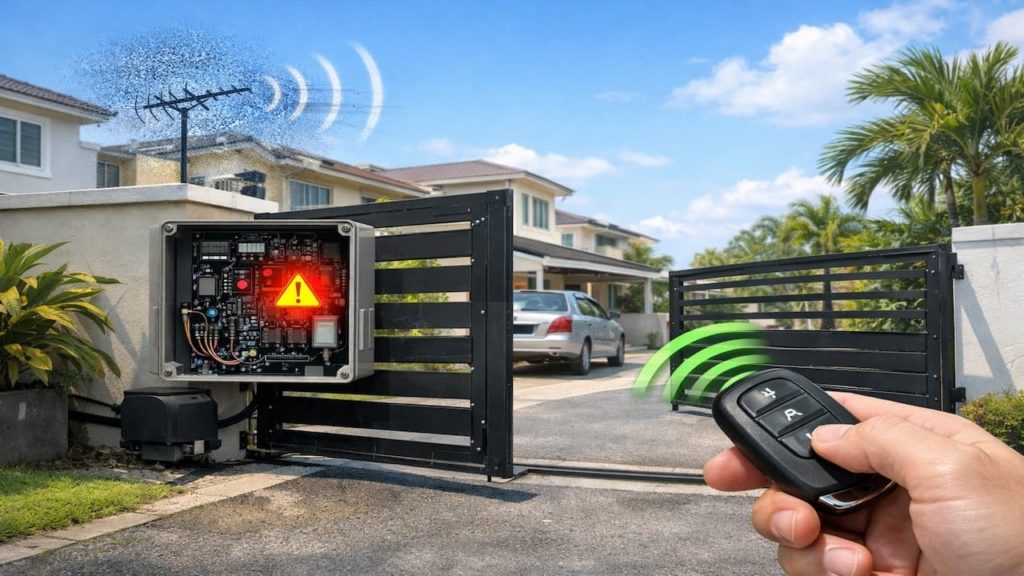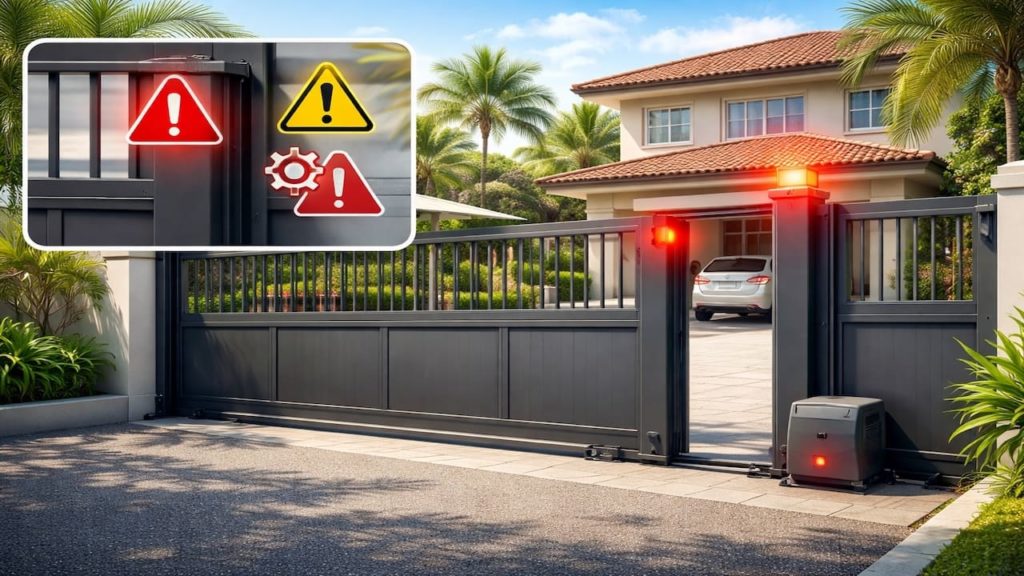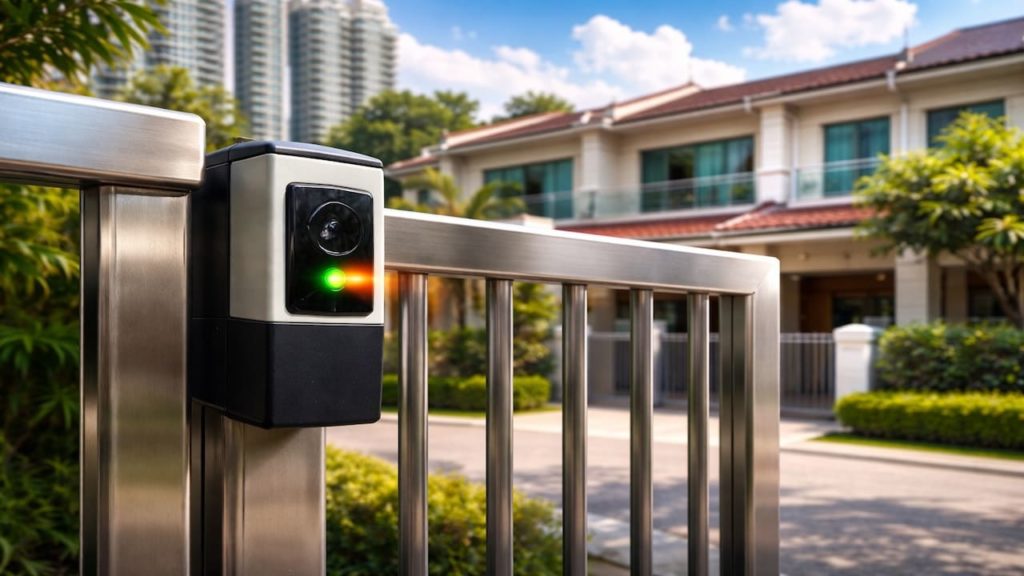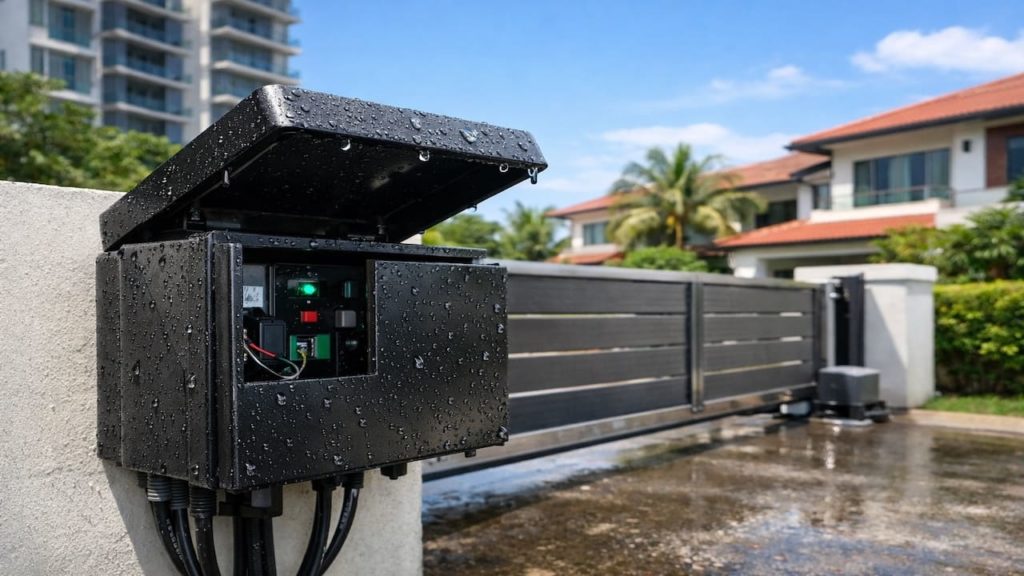
You opened the autogate controller box and found moisture, droplets, or a damp board. If you searched this, you want to dry it safely without making the damage worse.
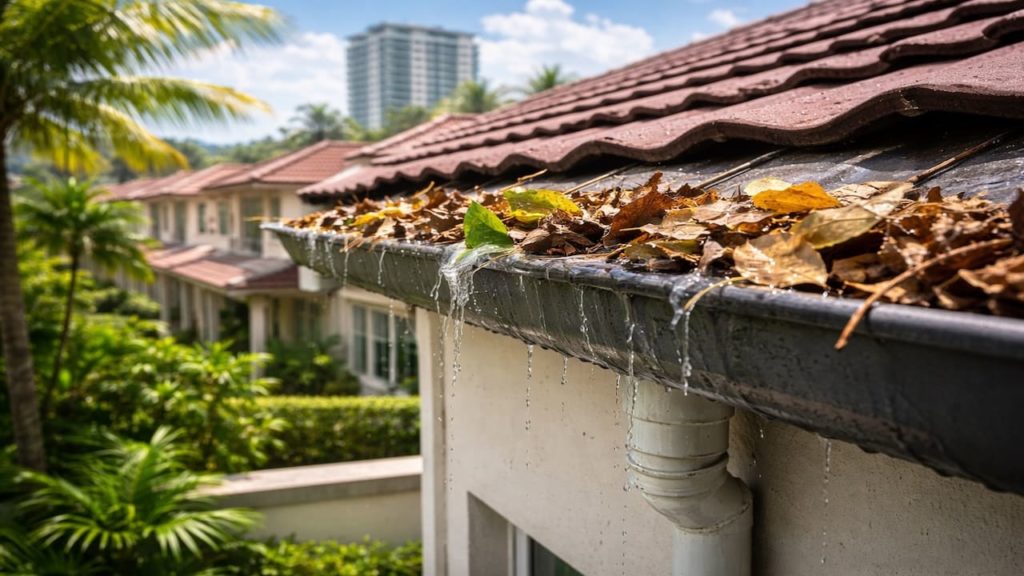
In Malaysia, high humidity, sudden storms, and wind-driven rain push water into small cable gaps, and condensation forms inside sealed-looking boxes. Sneaky.
In this guide, you’ll learn how to dry a wet controller box safely and prevent repeat leaks with simple power steps, careful drying, and sealing upgrades that work in terrace houses and condos.

Hi, I’m Ken. I write practical home guides for Malaysia—no fluff, just what works.
I hold a formal building design qualification and have spent about 20 years on job sites across hundreds of projects. My goal is simple: help you avoid costly mistakes with clear, safe steps—a quick way to decide what to do next.
1. Autogate controller box wet: 5 steps
Do this first cut power before you touch anything inside the box because wet electronics can shock you and can short the board. Safety.
Malaysia weather makes “almost dry” boxes dangerous, since condensation can bridge tiny contacts even when there is no puddle. Treat it as live until proven otherwise — always.
- Switch off mains and isolate the gate breaker
- Unplug backup battery connector if present
- Take clear photos before removing any wires
- Blot water gently using lint free cloth
- Leave box open in dry ventilated space
You may want to blast it with a hair dryer fast. That can push moisture deeper and warp plastic, then the leak returns. Slow drying wins, and it protects the board.
2. Drying safely & sealing for humid weather
The goal is dry the board fully then block the entry paths so humid air and rain cannot repeat the same failure. Clean fix.
Most water enters through cable glands, top lid gaps, or cracked conduits, and Malaysia sun hardens seals until they stop gripping. Once you seal, you also need drainage logic to avoid trapped condensation.
- Use silica gel packs inside box temporarily
- Clean corrosion using contact cleaner spray
- Seal cable entries with proper rubber grommets
- Add drip loop on cables below box entry
- Mount box higher away from splash zone
Some people seal every hole with thick silicone. That can trap condensation forever and rot the board slowly. Seal entry points, but keep smart airflow and proper drip control.
3. Why controller boxes get wet in Malaysia
Boxes get wet because rainwater and humid air find the weakest gap and then condensation forms inside when temperatures swing. That is the trap.
Afternoon heat followed by night cooling makes moisture appear on metal parts like a cold drink sweating. Add ants and dust, and you get conductive grime on terminals. Ugly.
- Check lid gasket for cracks and flattening
- Inspect cable glands for loose clamping ring
- Look for conduit joints with missing glue
- Find water trails and rust stains inside box
- Check mounting position for direct rain exposure
You might think “My box is outdoors, wet is normal.” It is not normal, and it will cause random failures, beeping, and fuse trips. Fix the leak, and your gate becomes predictable again.
4. How to prevent repeat water ingress: upgrades that last
Prevent repeats by improving sealing and routing water away instead of only drying and hoping. Do it once.
In Malaysia, a good fix needs to survive UV, heavy rain, and insects, so use proper glands and clean routing. Tiny details decide the outcome — every time.
- Replace lid gasket with weather rated foam strip
- Install IP rated cable glands for each cable
- Create drip loop so water falls before entry
- Add small vent plug to reduce condensation
- Apply dielectric grease on exposed terminals
People say “I will just move the box inside.” Sometimes that works, but long cable runs and poor conduits still bring moisture along. Seal and route correctly, then relocating becomes optional, not a desperate move.
5. FAQs
Q1. Can I turn the gate back on after it looks dry?
Only after it has dried for at least a full day in a ventilated place, and you see no condensation or damp smell. Malaysia humidity makes “looks dry” misleading.
Q2. What if I see green or white corrosion on terminals?
That is a sign of oxidation and possible high resistance, which causes random stops and beeps. Clean with contact cleaner and replace badly pitted connectors.
Q3. Should I use a hair dryer or heat gun?
Avoid heat guns, and use only gentle airflow if needed, not direct heat on the board. Slow drying prevents hidden damage and warped seals which matters in humid weather.
Q4. Why does the box get wet even without visible leaks?
Condensation forms when warm humid air cools inside the box at night. Adding a vent plug and reducing trapped air pockets can help a lot.
Q5. When should I replace the controller board?
Replace if the board has burnt marks, repeated fuse trips, or unstable behavior after proper drying and cleaning. Water damage can create invisible shorts.
Pro’s Tough Talk

I’ve been on site for 20+ years and handled hundreds of jobs, and a wet controller box is basically your gate begging for a breakdown. Malaysia humidity is like a wet blanket, and storms shove water into any lazy cable hole. Brutal.
Only 3 causes. One, bad entry points, loose glands and cracked conduits. Two, bad placement, mounted where splash and wind-driven rain hit. Three, trapped condensation, sealed too tight with no vent so it sweats inside like a cold can. Nasty.
Three steps, right now. Step 1, kill power and disconnect the battery, no hero moves. Step 2, dry it slow with airflow and silica, then clean terminals properly. Step 3, seal the entries with real glands and add drip loops so water falls away. Done.
Here is the rule Drying is not a repair sealing is the repair because wiping water is like mopping a floor while the tap is still running. You are not careless and the installer is not a villain, but the system is cold and it punishes shortcuts.
The box is a “tiny aquarium” when you let rain in, and your board becomes “wet toast” the next time you power it. If your fix is just stuffing tissue inside, yeah that is my jab. Rainy season lightning and the gate beeping at 11 pm, relatable. Ants crawling into the warm box like it is a condo lobby, relatable. Fix it today, or enjoy your gate doing random nonsense on the worst day.
Summary
If your controller box is wet, cut power first, dry it slowly, and clean any corrosion before re-energizing. Malaysia humidity makes quick resets risky and unreliable.
If the board still behaves randomly after proper drying and sealing, treat it as damage and plan a replacement or professional inspection. Do not keep cycling it.
Do this now isolate power and seal cable entries with drip loops after drying is complete. If your gate also stops in rain or trips fuses, read those guides next.