Your autogate motor suddenly sounds louder, rougher, or more “grindy” than before. You start wondering if it will die on the next open. That worry is real.
In Malaysia, heat, humidity, and wet-season grit speed up wear in bearings, gears, and rollers. Some noises are normal, but others are warnings you should not ignore. Simple sorting helps.
In this guide, you’ll learn the 5 signs that separate normal motor noise from real wear and what to check before the sound becomes a stuck gate or a burned board.

Hi, I’m Ken. I write practical home guides for Malaysia—no fluff, just what works.
I hold a formal building design qualification and have spent about 20 years on job sites across hundreds of projects. My goal is simple: help you avoid costly mistakes with clear, safe steps—a quick way to decide what to do next.
1. Autogate motor noisy: 5 signs
Noise pattern tells you more than loudness alone because each sound maps to a different wear point.
A healthy system has consistent tone and speed, even if it is not silent. A failing part changes with load, position, and weather—especially after rain and during hot afternoons. Pattern first.
- Grinding sound that rises with gate load
- High pitch whining that was not there
- Clicking ticks repeating once per rotation
- Rumbling vibration felt through control box
- Noise gets worse near the same gate spot
You might think any noise means failure. But some hum is normal, and plastic gears can sound slightly different as they warm up. The warning signs are change and repeatability.
2. Normal sounds vs gear or bearing wear
Gears and bearings fail differently and you can hear it if you listen the right way.
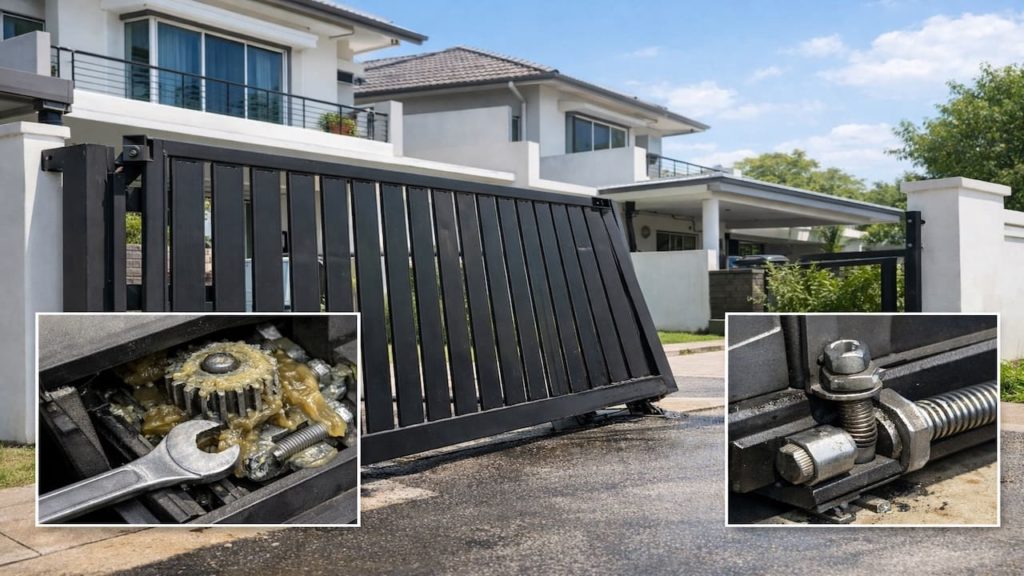
Gears often whine or click under load, while bearings rumble and vibrate, especially when Malaysia humidity washes grease away and grit enters housings. Porch dust matters.
- Listen during open and close for same noise
- Check if noise changes when gate is unloaded
- Inspect gearbox area for grease leaks or dry
- Check mounting bolts for looseness and flex
- Test manual movement to find binding friction
Some people replace the motor first because it is the “big part.” But a tight hinge, bent track, or loose bracket can make a good motor sound bad. Fix drag before buying hardware.
3. Why motors get noisy faster in Malaysia homes
Heat and moisture break lubrication and invite grit so wear accelerates even with light daily use.
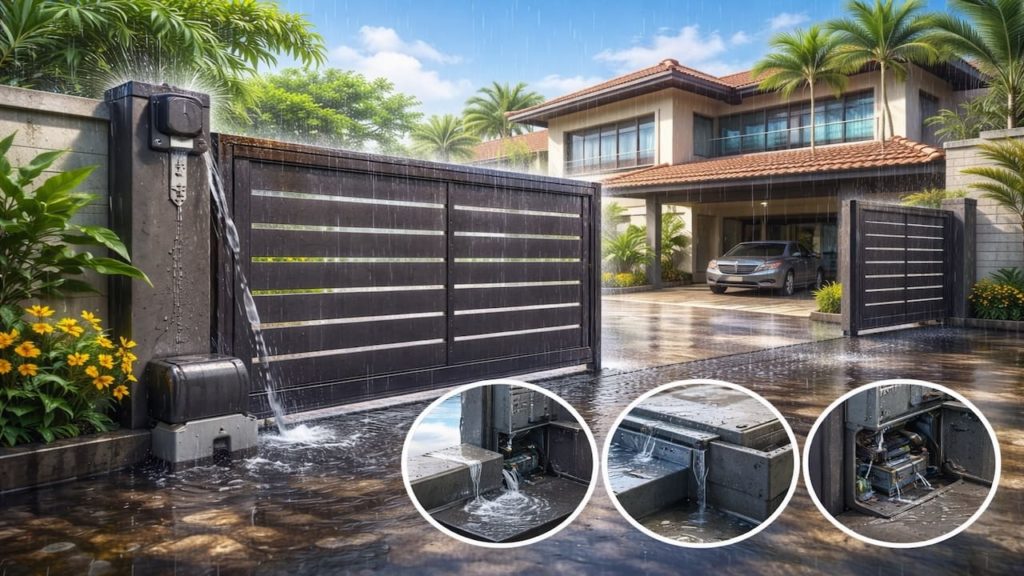
Outdoor units breathe damp air, then bake under the sun, and that cycle pushes water into seals and pulls grease out. Add rain splash and sand from driveways, and bearings suffer. Reality.
- Humidity washing grease from bearings over time
- Rust on shafts creating rough rolling surface
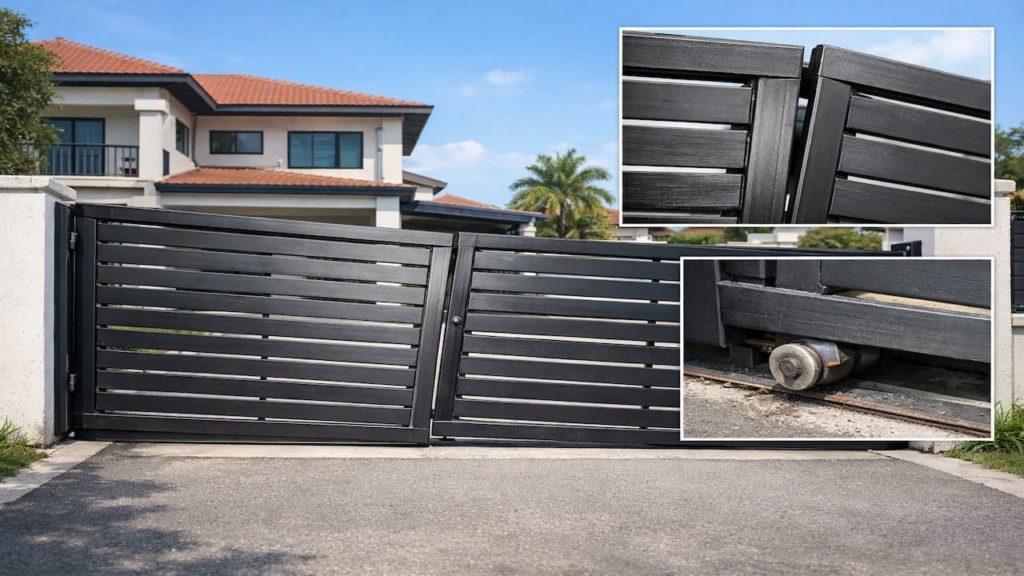
- Sand and grit entering track and rollers
- Water inside motor cover causing corrosion spots
- Gate misalignment increasing motor load constantly
You may feel it is “still working so ignore it.” That is how gears strip and boards overload later. Noise is a message, not background music. Pay attention.
4. How to check noise safely and prevent breakdown
Reduce load and confirm the source before replacing parts to avoid wasting money and time.
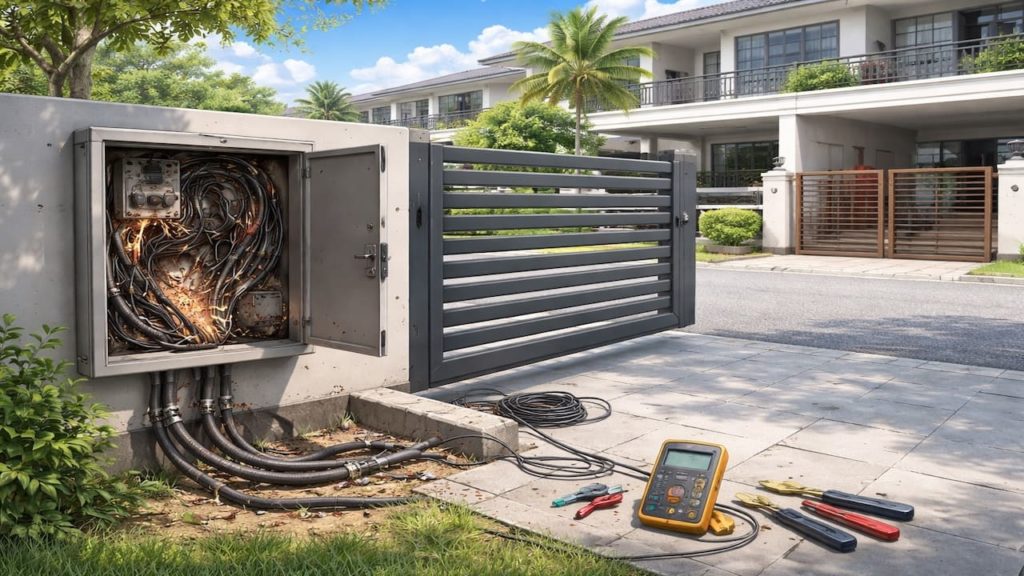
Do checks when the area is dry and clear. Malaysia porches stay damp, so keep hands off exposed terminals and focus on mechanical inspection first. Safety.
- Clean track and roller path to reduce drag
- Tighten motor mount bolts and brackets firmly
- Check gate balance and manual travel smoothness
- Inspect gearbox for play and abnormal wobble
- Stop using if smell smoke or overheating
You might want to increase force settings to “push through” noise. That can break gears faster and cook capacitors. Fix the load and wear points instead. Smarter.
5. FAQs
Q1. Is it normal for an autogate motor to hum?
Yes, a steady hum is normal, especially during movement under load. What is not normal is a new grinding, clicking, or rumbling that keeps getting worse.
Q2. The noise is louder on closing than opening. What does that suggest?
It can point to binding, misalignment, or a track spot that loads the motor more in one direction. Check rollers, hinges, and the gate path for rubbing.
Q3. How do I tell gear wear from bearing wear?
Gears often whine or click in a repeating rhythm, while bearings rumble and vibrate through the housing. Rumbling vibration is a classic bearing warning in humid Malaysian setups.
Q4. Can rain cause sudden noisy motor sounds?
Yes, water can wash grit into rollers and reduce lubrication temporarily. Dry the area, clean the track, and see if the noise returns at the same spot again.
Q5. When should I stop using the gate and call a technician?
If you smell burning, see smoke, hear loud grinding, or the motor stalls, stop immediately. Continued use can strip gears or damage the control board from overload.
Pro’s Tough Talk

I’ve been on site for 20+ years and handled hundreds of autogates, and a noisy motor is not “just old.” Malaysia heat bakes the grease, humidity sneaks in, and driveway grit acts like sandpaper. That combo is a wear machine.
3 causes, easy split. First, the gate is dragging, so the motor groans like carrying a fridge up stairs. Second, bearings are dying, so you get rumble and vibration through the housing. Third, gears are wearing, so you hear whining or clicking in a repeat pattern. Do 3 steps. Clean the track and reduce drag. Check manual travel and find the tight spot. Then inspect mounts and gearbox play before you touch any settings.
Don’t blame yourself, and don’t call every installer useless, but the structure is ruthless: outdoor moving parts plus wet-season mess means wear is scheduled. A bad bearing is like a shopping trolley wheel that hates you, and stripped gears are like teeth with cavities. And stop cranking force up like you are “motivating” it, that is comedy. Two classics: it gets noisy when it rains, and it goes quiet right when you want to record proof. Bottom line Fix drag and identify wear before the gear strips or the next sound you hear is silence and regret.
Summary
If your autogate motor is noisy, focus on how the sound changes with load, position, and weather. That pattern tells you whether it is normal or a warning.
If cleaning and reducing drag does not change the noise, suspect bearing rumble or gear wear and decide whether to service, replace parts, or call a technician. Do not mask it with force settings.
Do a track clean and manual travel check today, then read the next guide on mid-open stops and random failures—Early noise fixes are cheaper than emergency breakdown calls.