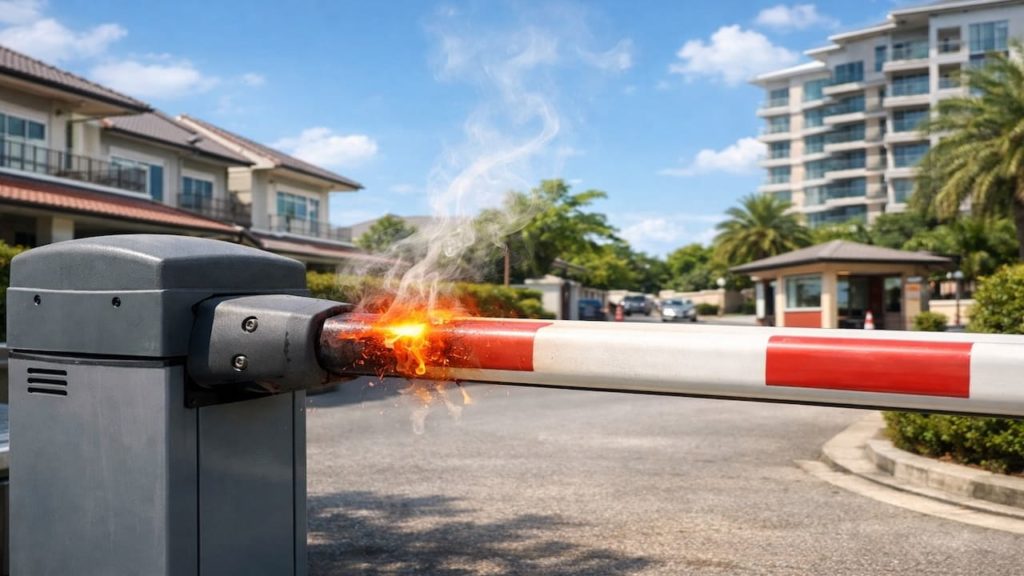
Your autogate arm feels hot, slows down, or stops after a few cycles, especially after a busy evening. In a Malaysia terrace house, that can trap cars and stress everyone out.
Overheating is usually not “just old parts.” Heat, humidity, and repeated openings push the arm motor past its duty cycle, then protection circuits step in. Annoying. Sometimes dangerous.
In this guide, you’ll learn how to spot overheating early and prevent repeated thermal trips by reading clear warning signs, understanding duty cycle limits, and applying simple cooling and load fixes that fit Malaysia weather.

Hi, I’m Ken. I write practical home guides for Malaysia—no fluff, just what works.
I hold a formal building design qualification and have spent about 20 years on job sites across hundreds of projects. My goal is simple: help you avoid costly mistakes with clear, safe steps—a quick way to decide what to do next.
1. Autogate arm overheats: 5 signs
Overheating shows up before the arm completely stops.
Most arm motors heat up internally long before the casing feels hot—Malaysia humidity also reduces heat shedding and makes small electrical losses matter. Watch patterns, not guesses. Clear.
- Feel arm casing warmth after two full cycles
- Notice slower opening speed during late afternoon heat
- Listen for buzzing hum then sudden stop
- Check LED fault code after motor cuts out
- Test restart only after ten minute cooldown
You might think the remote is the issue because the gate “ignores” you. But if it works again after cooling, the motor is protecting itself, then you must reduce load and heat. Simple.
2. Duty cycle overload & motor protection triggers
Duty cycle overload forces the controller to shut the arm down.
Duty cycle means how long the motor can run in a time window, and many arm units are not built for constant taxi style traffic—condo lanes and family peak times can exceed it fast. Physics. Protection triggers are intentional.
- Count openings per hour during peak arrival time
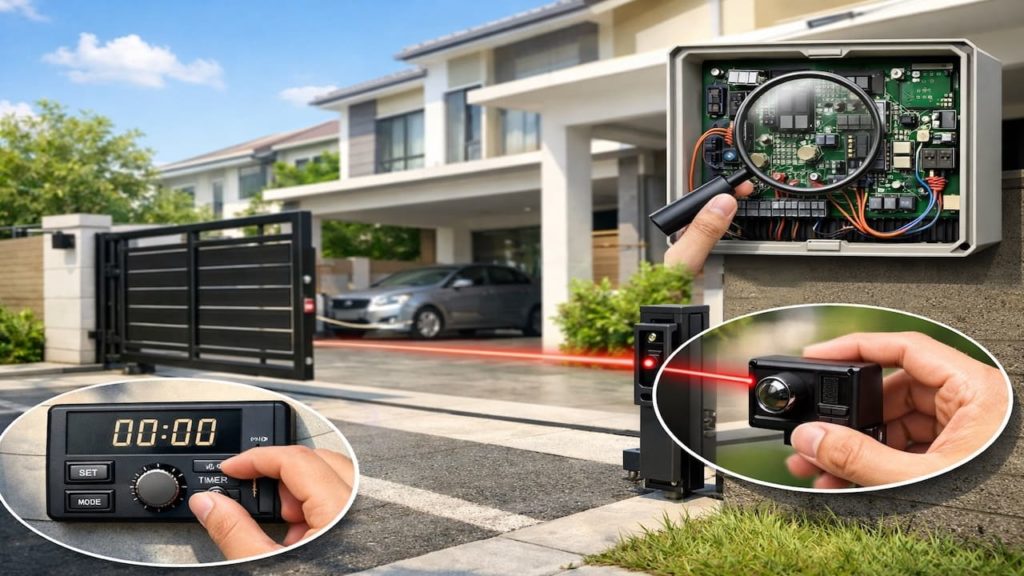
- Check controller setting for work time limit
- Inspect capacitor value and replace if weak
- Measure supply voltage drop during arm movement
- Confirm motor fan vents are not blocked
Some people keep pressing the button to “help it,” and that just adds heat and makes the cutoff longer. Respect the thermal limit, then fix the cause so the limit never needs to intervene. Better.
3. Why arm motors overheat in Malaysia weather
High load plus tropical heat creates rapid thermal buildup.
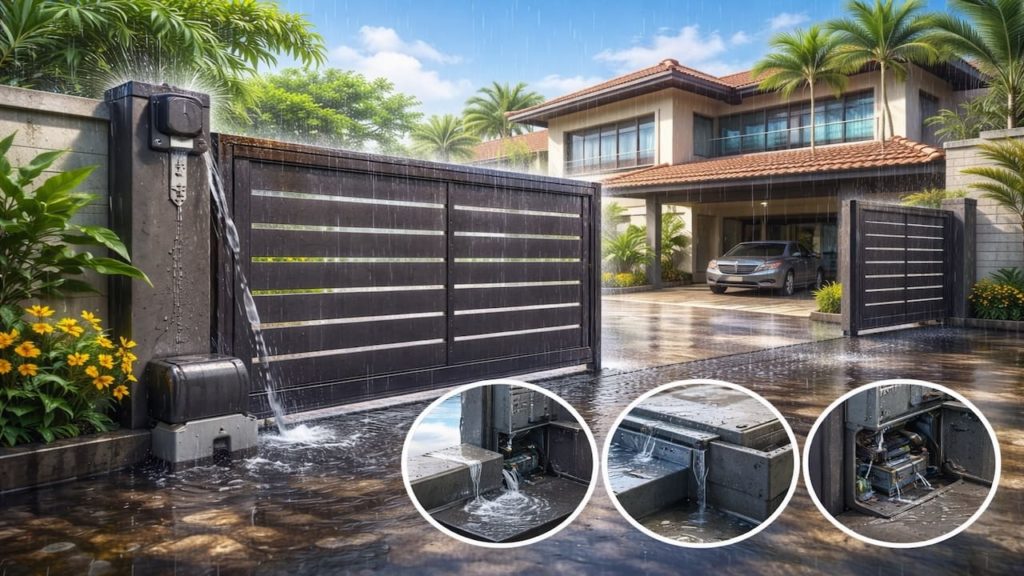
Malaysia sun heats the gate leaf and arm, then rain raises humidity and slows cooling, so the motor stays warm between cycles—small friction becomes big heat. Add sagging hinges and the motor fights harder. Reality.
- Check gate leaf swings freely in manual mode
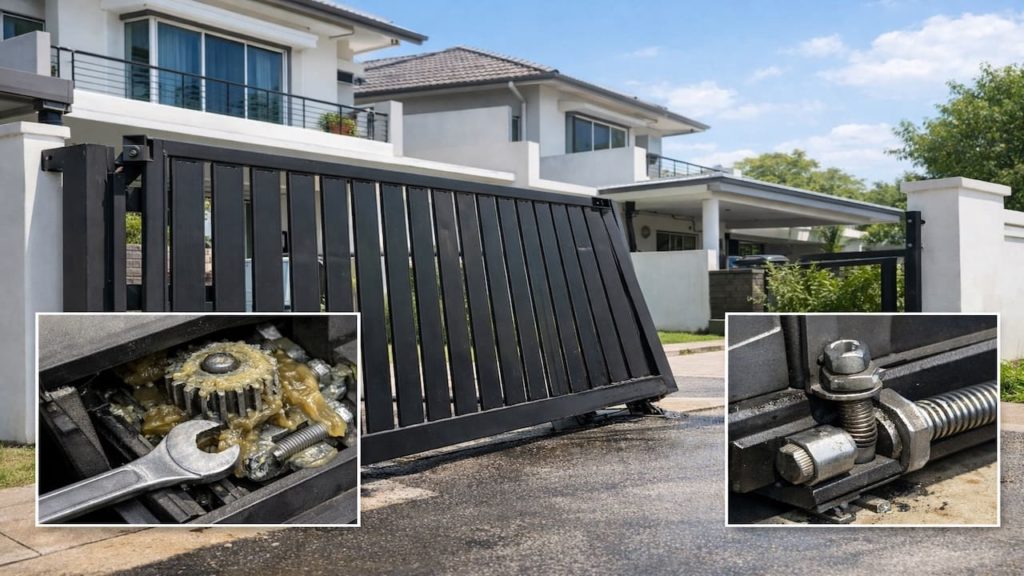
- Inspect hinges for rust and stiff movement
- Verify stopper position prevents over travel strain
- Look for arm bracket bending or loose bolts
- Clear insects nests near control box vents
You may blame “cheap motor” right away, but many overheating cases are simply a heavy gate, tight hinges, or wrong geometry. Fix the load path, then the same motor survives. Done.
4. How to cool the arm and prevent repeat shutdowns
Reduce mechanical drag and improve airflow to stop trips.
Start with safe cooldown habits, then correct the alignment and timing that create excess heat—Malaysia rain season makes swelling and corrosion repeat, so prevention must be routine. Consistent.
- Allow cooldown and avoid repeated button pressing
- Lubricate hinges with suitable outdoor grease sparingly
- Adjust arm angle so it pushes through mid stroke
- Set pause time to reduce back to back cycling
- Add small cover shade above control box area
It is tempting to increase force to “power through” tight hinges. That raises current, raises heat, and triggers protection sooner, so reduce drag first and tune force last. Safer.
5. FAQs
Q1. Is a hot autogate arm motor normal?
Warm is normal after a few runs, but too hot to touch or repeated stopping is not. In Malaysia afternoons, normal warmth can feel hotter, so focus on shutdown behavior.
Q2. Why does it stop, then work again later?
Many motors have thermal protection that opens when internal temperature is too high. After cooling, it resets and runs again, which is a classic overheating signature.
Q3. Can low voltage cause overheating?
Yes, because low voltage can increase current draw and reduce torque, so the motor labors longer. Fixing power stability often reduces heat more than new parts.
Q4. Should I add a fan or extra vents?
Extra airflow can help, but do not open paths that invite rain splash and insects. Improve shading and keep existing vents clear before modifying the casing.
Q5. When should I replace the arm motor?
If the motor overheats even with free swinging hinges, correct geometry, and stable voltage, the winding or capacitor may be failing. Replace then add surge and moisture protection.
Pro’s Tough Talk

I’ve been on site for 20+ years and handled hundreds of autogates, and overheating arms are the silent rage maker. Malaysia heat cooks the metal, humidity wraps it like a wet blanket, then the motor taps out.
It’s 3 causes most of the time: the gate is heavy or dragging, the duty cycle is exceeded by real life traffic, and voltage is unstable after rain storms or shared building loads. You didn’t ruin it. The system just hits its limits.
Do 3 steps now: stop mashing the remote, let it cool for 10 minutes, then test the gate in manual mode for friction. After that, check hinge stiffness and bracket looseness. Basic.
Fix the drag and the schedule and the heat problem shrinks. Treat the motor like a marathon runner, not a sprinter on repeat, and don’t blame every contractor like they stole your lunch. One jab.
Two relatable moments: you press the button again because you’re late, and it stops even harder. Then you tell yourself you’ll “service it next weekend” while the squeak gets louder. Keep that up and your gate will start taking smoke breaks.
Summary
Autogate arm overheating usually shows as slower movement, buzzing, and shutdown that recovers after cooling. Malaysia heat and humidity make duty cycle limits and drag problems show up sooner.
Use a clean decision line: if the gate swings freely and voltage is stable, focus on duty cycle settings and motor health. If manual movement feels heavy, fix hinges, alignment, and stoppers before touching force.
Reduce drag today and space out cycles to avoid thermal protection trips. Next, read our guide on gate sagging and hinge wear to remove the hidden load that makes arms overheat.