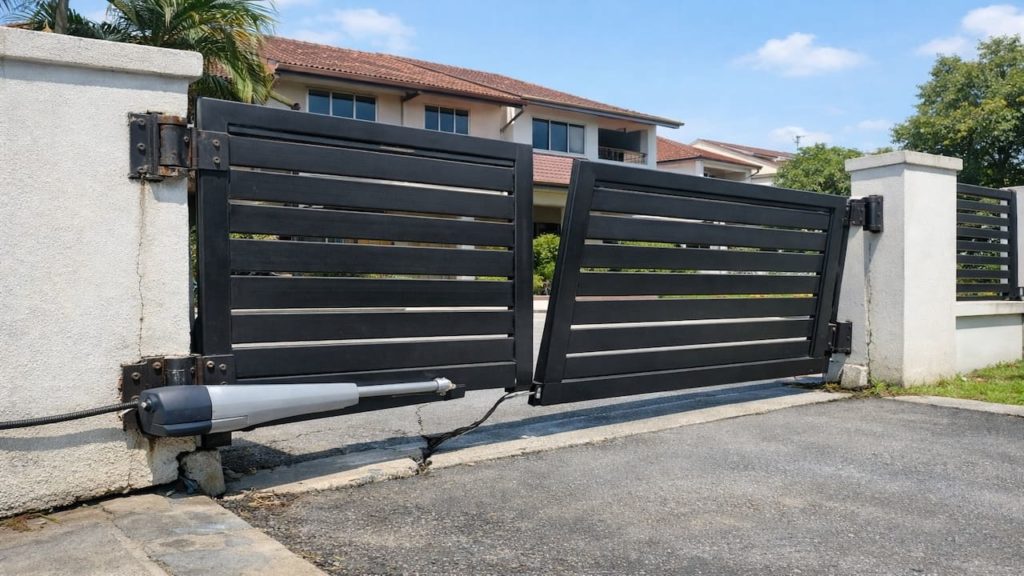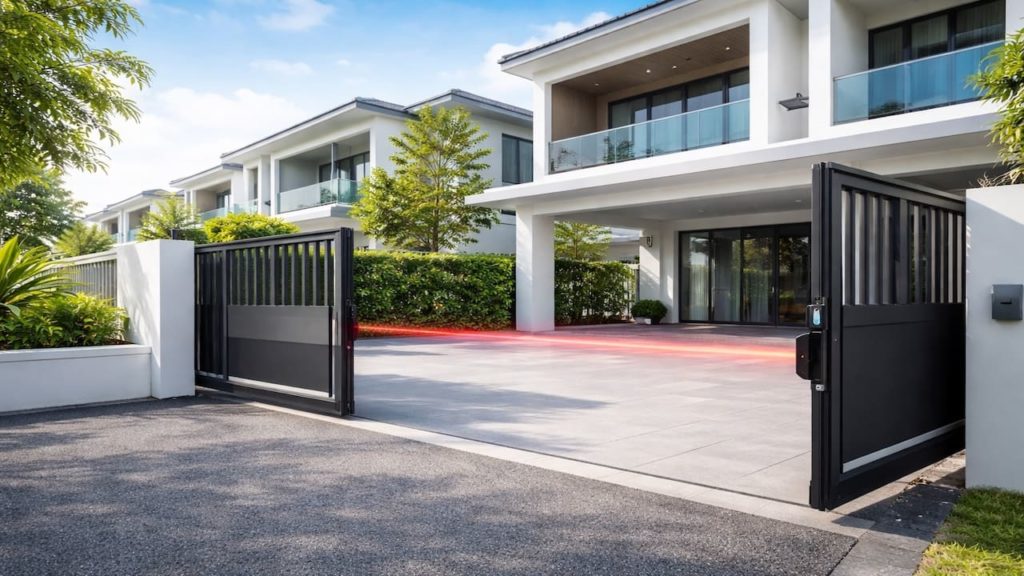
Your autogate starts closing, then suddenly reopens like it saw a ghost. You stand there waiting, and it does it again. Frustrating.
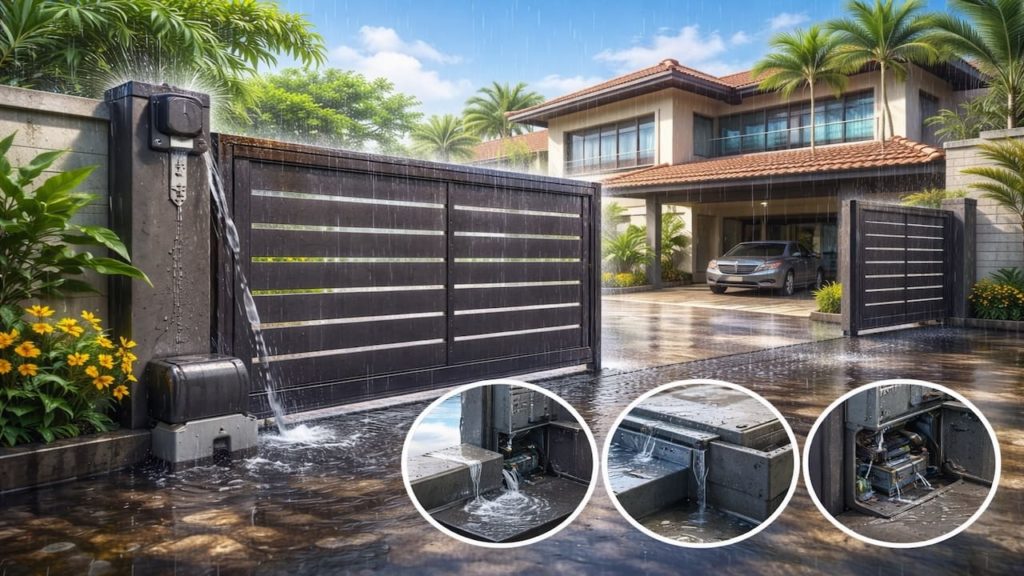
In Malaysia, rain mist, porch splash, and humid air can confuse safety beams and wiring, so the system thinks something is blocking the path. It can also be a sticky limit or a binding point. Usually fixable.
In this guide, you’ll learn the 5 checks that reveal why an autogate reopens while closing and how to spot safety beam misalignment and false triggers without disabling safety long term.

Hi, I’m Ken. I write practical home guides for Malaysia—no fluff, just what works.
I hold a formal building design qualification and have spent about 20 years on job sites across hundreds of projects. My goal is simple: help you avoid costly mistakes with clear, safe steps—a quick way to decide what to do next.
1. Autogate reopens on close: 5 checks
Assume a safety trigger first not a motor problem because reopening is usually the board trying to protect people.
When a gate reopens, the controller believes it detected an obstruction or unsafe condition. Malaysia wet season makes that detection more sensitive due to water and dirt. Start with safety inputs. Fast.
- Clean safety beam lenses and remove webs
- Check beam alignment lights stay stable
- Test close with path fully clear
- Inspect sensor wiring for loose terminals
- Check control box error LED during reopen
You might think the remote button caused it. But a reopen on close usually happens without any new remote press, because the safety input changed state. Confirm the input source first.
2. Safety beam alignment & false triggers
A weak or dirty beam acts like a constant invisible obstacle and forces reopening.
Porch areas get splashed by rain, car wash water, and wind-blown dust, and that film on lenses can break the beam intermittently. Heat can also shift brackets slightly. Small movement. Big effect.
- Wipe lenses with dry cloth then retest
- Realign brackets until both LEDs stay steady
- Check sensor height and facing direction level
- Secure cable so it cannot tug connectors
- Shield sensor from direct rain splash area
Some people tape over the beam or unplug it because “it works then.” That is not a fix, it is removing the alarm. If the beam is the issue, repair alignment and wiring so safety stays real.
3. Why false triggers are common in Malaysia homes
Humidity and pests create sudden safety input changes and the board responds by reopening.
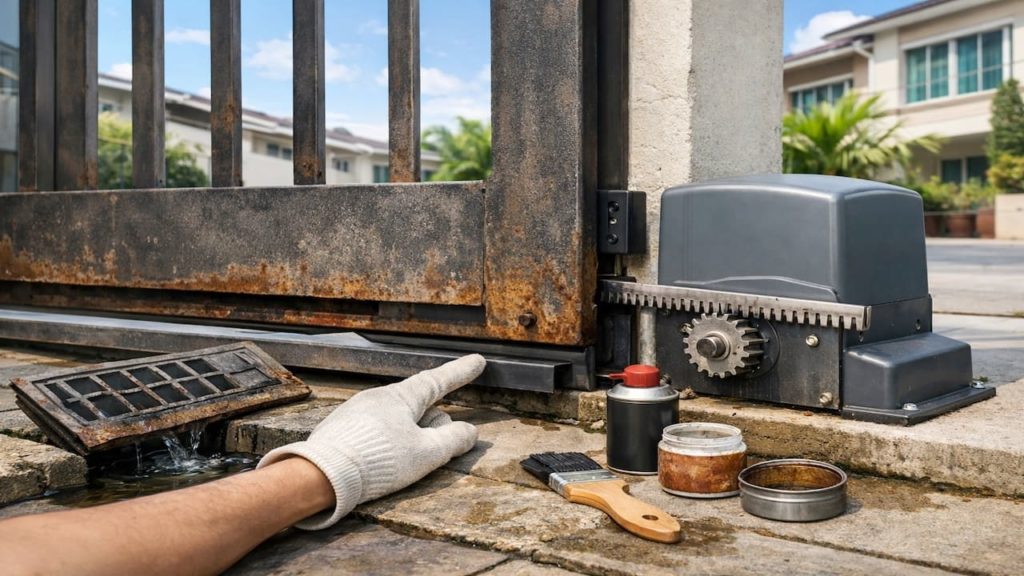
Water inside a connector can momentarily short the sensor line, and ants love warm control boxes and sensor housings. Add rust or vibration, and you get random reopen behavior. It is a pattern.
- Water droplets crossing beam during storms
- Condensation inside sensor cover after sunset
- Corrosion at terminal blocks changing resistance
- Ants inside housing bridging small contacts
- Loose plug vibrating under motor movement
You may feel it is “too sensitive” and want to lower safety. But most systems are set that way for a reason, and the real issue is unstable input, not sensitivity itself. Stabilize the hardware.
4. How to confirm the trigger and stop reopening
Do a controlled test to isolate beam versus mechanical resistance then adjust close force only last.
Test when conditions are dry if possible, and repeat twice. Malaysia porches stay damp, so dry the sensor area and the control box door seal before judging changes. Clean tests.
- Close gate while watching sensor indicator lights
- Wiggle sensor cable gently and observe LEDs
- Bypass beam briefly for diagnostic test only
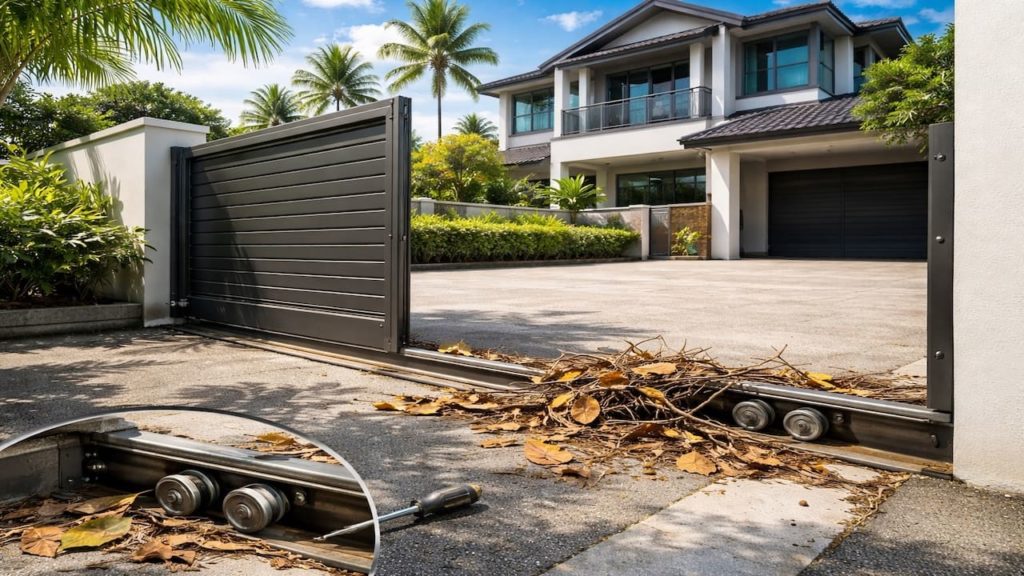
- Check gate path for rubbing and tight spots
- Retest after resealing connectors and glands
You might think increasing closing force solves it. That can hide the symptom while stressing gears and hinges. Fix the false trigger first, then fine tune force if needed. Safer.
5. FAQs
Q1. Is reopening on close always caused by the safety beam?
Most of the time, yes, because reopening is a safety response. If there is no beam installed, check other safety inputs like edge sensors, loop detectors, or obstruction detection settings.
Q2. It only reopens at night or after rain. Why?
Condensation and water film on lenses are common at night in humid air. Dry and clean the lenses, then check that alignment LEDs stay stable for several minutes.
Q3. The beam looks aligned, but it still reopens randomly. What next?
Check wiring, terminals, and connector corrosion. Loose or wet connections cause the most random reopen events in Malaysia porches with splash and vibration.
Q4. Can insects really cause reopening on close?
Yes, ants can bridge small contacts or disturb terminals inside housings and control boxes. Inspect for nests and seal cable entry points after cleaning.
Q5. Is it safe to disable the beam to stop the issue?
Only for a brief diagnostic test with the area clear, then reconnect immediately. If bypassing fixes it, repair or replace the beam system instead of leaving it disabled.
Pro’s Tough Talk

I’ve been on site for 20+ years and handled hundreds of autogates, and reopening on close is the system yelling “I think I hit something.” In Malaysia humidity, the beam gets cranky, and porch splash turns a clean lens into a foggy window. Annoying, but predictable.
3 causes, clean split. First, beam misalignment or dirty lenses, so the receiver flickers like a weak Wi-Fi bar. Second, wiring is unstable, wet terminals, loose plugs, corrosion, ants doing a parade inside the box. Third, mechanical drag makes the controller think it hit a wall. Do 3 steps. Clean and realign until LEDs stay solid. Tug-test the cable and tighten terminals. Then check tight spots on the gate path.
Don’t blame yourself, and don’t call every installer a villain, but the structure is harsh: outdoor electronics plus wet-season mess equals false triggers. A bad beam is like a nervous security guard who screams at shadows, and a loose wire is like a blinking traffic light. And please stop “forcing it closed” like you are winning a wrestling match. Two classics: it reopens when you are late, and it behaves perfectly when you show a friend. Bottom line Fix the beam and wiring before touching force settings or you will keep chasing ghosts.
Summary
If your autogate reopens while closing, treat it as a safety trigger first and inspect beam lenses, alignment, and wiring stability. That is the fastest path.
If cleaning and alignment do not help, look for wet terminals, corrosion, pests, and loose plugs, then check for mechanical rubbing that mimics an obstruction. Decide based on what changes the behavior.
Do the beam and wiring checks today, then move to the next guide on sensor blinking and limit learning—Stable safety inputs stop the reopen loop without risking people or hardware.